• Home
  • /
  • IBSA Fund Story
  • /
  • IBSA Fund: School Feeding Programme Highlights Connection Between Family Farming and School Feeding

IBSA Fund: School Feeding Programme Highlights Connection Between Family Farming and School Feeding


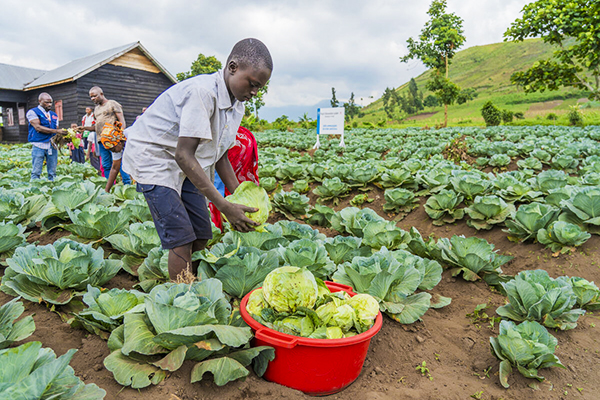
Monitoring and evaluation of the School Feeding Programme was the theme of the third workshop organized by the “Seeds for Tomorrow” project, financed by the IBSA Fund, to discuss the connection between family farming and school feeding. The aim of the workshop was to share Brazil’s experiences and good practices on how the monitoring and evaluation model for the National School Feeding Programme (PNAE) was created and how it is controlled through the School Feeding Councils.   Brazil’s Evolution of Monitoring and Evaluation Priscila Porrua, monitoring and evaluation coordinator of the FNDE (National Fund for Education Development) in Brazil, opened the event by presenting a history of the PNAE. She recalled that in the past Brazil had a school feeding campaign with a welfare bias and no monitoring system. “Only in 2009, with the regulation of the National School Feeding Programme, was it necessary to redesign a logical matrix to be able to monitor. School Feeding Councils were created, which contributed to inserting social control into the monitoring of the programme, with visits to schools in a continuous and permanent action,” he said. Among the monitoring actions are, for example, monitoring managers so that they buy local products. It also includes checking sanitary issues, quantity, and quality of food. Priscila explained the steps involved in creating a monitoring model. “You have to answer the following questions: what is the objective of the programme; what change is expected; what is the theory of the programme; and how is it going to work, in other words, what is the logic model?” She gave an example of a logic model built in the PNAE, with functions, activities, results and impacts of the PNAE, in the institutional and technical-operational dimension. “The model must include targets with measurable impact indicators. All the actions have a normative basis, i.e. they aim to check that the obligations of each body are being met.” She believes that the Republic of Congo is at an advantage in promoting this process currently. “Only in 2020 did Brazil manage to carry out a nationwide evaluation of the PNAE. In the Republic of Congo, the process can be the result of reflection now, avoiding the mistakes we have already made.”   Mapping Existing School Feeding Projects To do this, she says it is important to promote an internal dialog to map out what already exists as a school feeding project in the country. “It’s an exercise to identify what exists, who it serves, who does what, what the characteristics are. Then determine the objective, whether it will be a campaign or an action, for example. Determine how to do it and, finally, how to measure it,” she said. She used a metaphor to explain the difference between evaluation and monitoring. “Evaluation is a photograph, a specific piece of information about the process. Monitoring is a movie that follows how things are going, how processes are unfolding. The two are complementary.”   The Role of Multisectoral Collaboration The coordinator of the “Seeds for Tomorrow” project in the Republic of Congo, Nadia Goodman, stressed the importance of multisectoral action in this dialog. “It’s important to promote the participation of various actors in the construction of the school feeding evaluation and monitoring model. We are privileged to have representatives from different key areas of government at this event: a very good representation from the Ministries of Education, Agriculture and Planning, Statistics and Regional Integration.”   Questions on Monitoring and Funding Mechanisms One of the questions raised was how the Monitoring Centers (CECANE) work, a partnership between the FNDE and universities to create extension and research projects with students who are part of the PNAE monitoring area. “The FNDE decentralizes the resources and the technical teams from the universities monitor the managers,” explained Priscila. There was also interest in knowing how the National School Feeding Programme is funded. Priscila explained that the calculation is made per pupil. “The amounts for purchasing food are calculated in a table with amounts per pupil and per year. Federal transfers are smaller, so they are complemented by municipal transfers, which invest their own resources in school meals.”   School Feeding Council (CAE) The second part of the workshop featured a presentation by Maria Julia de Miguel Amistá, from the PNAE Social Control Support Coordination, on the School Feeding Council (CAE). The CAE is a collegiate supervisory body responsible for certifying food quality, hygiene and sanitary control, financial execution, and accountability. There is one CAE per municipality, and it is made up of one representative from the municipal executive, two education workers, two parents and two from civil society, all of whom have alternates. Since it is made up of volunteers, the FNDE provides training courses for the councilors. Maria Julia described CAE’s areas of activity in the various stages of the school feeding procurement and preparation process. CAE’s role is to monitor the bidding process for the purchase of food; to certify the quality of the products purchased; the suitability of storage in terms of hygiene and refrigeration; and to check that the food has adequate sanitary characteristics. “They also check the preparation and distribution, making sure that the equipment is suitable for preparing the food and that the hygiene conditions in the kitchen and canteens are correct; that the menus are being followed,” she said. She explained that the menus must meet the requirements of the law, with foods indicated by the nutritionist, with justifications in the event of a change, and verification that they do not include prohibited foods. In the end, the menu must also pass the acceptability test. When it finds an irregularity, the CAE is instructed to talk to the school management locally so that the error can be rectified. If there is no change, the CAE can contact the municipal control body, or refer the matter to the FNDE at federal level. Madame Felicite Moukengue, Director of School Feeding from the Ministry of Education (MEPPSA) of the Republic of Congo, pointed out that there are no nutritionists in schools in the Republic of Congo, but that there is a body corresponding to the CAE, the COGES (Management Committees) responsible for checking hygiene issues, stocking, and preparing school meals, made up of nine members, including the school principal, a president, parents, and cooks. In addition to government representatives from the Republic of Congo and the experts invited from the FNDE, the workshop was attended by Paola Barbieri, representative of the Brazilian Cooperation Agency; Anna Graziano, WFP representative and the focal point from the South-South and Triangular Cooperation Unit in Rome; and Maria Giulia Senesi, from the project coordination team at the WFP Centre of Excellence against Hunger in Brazil.   Continuity This workshop was the third in a series of three online events held this year as part of the “Seeds for Tomorrow” project. The first, on August 29, focused on institutions and public policies to strengthen family farmers. The second workshop, on September 19, dealt with local purchases linked to the school feeding programme. At the end of the last workshop, representatives of the government of the Republic of Congo signaled their interest in continuing technical support actions to strengthen initiatives to integrate school meals with local agriculture.   About the project Launched in June 2023, the “Seeds for Tomorrow” project aims to leverage Brazil’s expertise to enhance food security, education, and market access for farmers in the Republic of Congo. In RoC, the project is facilitated by the WFP Centre of Excellence against Hunger in Brazil and WFP Congo, in partnership with the Government of the Republic of Congo (MAEP, MEPPSA), the Government of Brazil (ABC, FNDE and MDA) and the United Nations Office for South-South Cooperation (UNOSSC). The project is financed by the India, Brazil and South Africa Fund for Poverty and Hunger Alleviation (IBSA Fund).   Original article: https://centrodeexcelencia.org.br/en/monitoramento-e-avaliacao-da-alimentacao-escolar-modelo-brasileiro-compartilhado-em-workshop/  
Related Post


  • All Post
  • ATCT Featured Publications POM
  • BAPA+40
  • Blog
  • Capacity Development Initiatives
  • CICETE Featured Publications POM
  • CIKD
  • Cities Clusters - Agriculture
  • Cities Clusters - COVID-19
  • Cities Clusters - COVID-19 Knowledge Products
  • Cities Clusters - DRR
  • Cities Clusters - E-commerce
  • Cities Clusters - Tourism
  • Cities Clusters - Tourism Knowledge Products
  • Cities Clusters - Transport
  • Cities Clusters - Waste
  • Cities Project
  • Cities Project COVID-19 Newsletters
  • Cities Project COVID-19 Response
  • Cities Project Knowledge Products
  • Classic (untouched)
  • Climate Action
  • COMSATS Featured Publications POM
  • COMSATS Featured Solutions POM
  • Converted from Divi
  • Converted from Mixed
  • Converted from WPBakery
  • COVID-19
  • COVID-19 Page Featured Solutions
  • DRR Knowledge Products
  • DRR News
  • Empty Post
  • Events
  • Featured Event UN-Habitat POM
  • Financing for Development
  • Financing Mechanisms
  • g7+
  • Gender Events
  • Gender News
  • Good Practices in SSTrC Series
  • Good Practices Publications
  • Good Practices Thematic Series & Special Editions
  • Good Practices Vol. 2
  • Good Practices Vol. 3
  • GSSDC
  • Highlighted
  • Highlighted Publications
  • IAEA Featured Solutions POM
  • IBRAF Featured Publications POM
  • IBSA Fund
  • IBSA Fund Annual Reports
  • IBSA Fund News and Stories
  • IBSA Fund Publication
  • IBSA Fund Story
  • ICGEB Featured Events POM
  • ICGEB Featured Publications POM
  • ICGEB Featured Solutions POM
  • ILO Featured Events POM
  • ILO Featured Publications POM
  • ILO Featured Solutions POM
  • India-UN Development Partnership Fund
  • India-UN Fund Publication
  • India-UN Fund Story
  • IsDB
  • IsDB Featured Publications POM
  • IsDB SCC
  • News
  • Norec Featured Publications POM
  • Norec Featured Solutions POM
  • Peace and Development
  • PGTF Publications
  • PGTF Story
  • PICA Featured News POM
  • PICA Featured Publications POM
  • PICA Featured Solutions POM
  • PIDF Featured Publications POM
  • Publications
  • Regional Updates
  • Research
  • ROK-UNOSSC Facility
  • SGP Featured Publication POM
  • SGP Featured Solutions POM
  • Solution
  • South South in Action
  • South-South Global Thinkers
  • South-South Ideas
  • South-South Ideas Series
  • South-South in Action Series
  • Southern Response to COVID-19
  • SSN4PSI Featured Publications POM
  • SSN4PSI Featured Solutions POM
  • Training
  • UN Day for SSC 2020
  • UN Fund for SSC
  • UN SSC Day Publications
  • UN-Habitat Featured Publications POM
  • UN-HABITAT Featured Solutions POM
  • UNCCT
  • UNEP Featured Publications POM
  • UNFPA
  • UNFSSC Publication
  • UNFSSC Story
  • UNIDO Featured Publications POM
  • UNIDO Featured Solutions POM
  • UNIDO POM Events
  • UNOCT Featured Publications POM
  • UNV
  • UNV Featured Publications POM
  • WB Featured Publications POM
  • WB Featured Solutions POM
  • Webinars
  • WFP Featured Events POM
  • WFP Featured Publication POM
  • WFP Featured Solutions POM
  • WIPO
  • Workshops and Seminars
  • Youth4South
  • z Across the Globe 1
  • z Across the Globe 2
  • z Across the Globe 4
  • z Across the Globe 5
  • z Across the Globe 6
  • z Across the Globe 7
  • z Across the Globe 8
  • z ES BAPA+40
  • z ES Eventos
  • z ES Noticias
  • z ES Noticias Destacadas
  • z ES Publicaciones
  • z ES Publicaciones Destacadas
  • z ES Serie Buenas Prácticas en la CSSyT
  • z ES Serie El Sur-Sur en Acción
  • z FR Actualités
  • z FR BAPA+40
  • z FR Événements
  • z FR Publications
  • z FR Publications en vedette
  • z FR Série Bonnes pratiques en CSST
  • z FR Série Sud-Sud en action
  • z Highlighted News
  • z Photos
  • z Videos
  • z ZH BAPA+40
  • z ZH Events
  • z ZH News

ABOUT

Terms of Service

Privacy Policy

Disclosures

RESOURCES

Terms of Service

Privacy Policy

Disclosures

ENGAGE

Terms of Service

Privacy Policy

Disclosures

Copyright © UNOSSC/UNDP

wpChatIcon
wpChatIcon

Alliance Application Form

Submit an Expression of Interest and/or Demand Signal. UNOSSC reviews submissions on a rolling basis.

1. Official name of organization / institution / government entity (exclusions to apply) *
2. Country *
3. Region *
4. SDG *
Secondary SDG *
5. Partner category *
6. Website *
7. Brief description of your institution (max. 150 words) *
Name for the Lead *
Title for the Lead *
Email address for the Lead *
Name for the co-lead
Title for the co-lead
Email address for the co-lead
Section 3. Expression of Interest in the Alliance *
Additional information on proposed areas of engagement may be requested through the platform following initial review by the Alliance Secretariat.
Section 4. Due Diligence and Integrity Declaration *

Submission Note:

  • Submission of this Expression of Interest form does not automatically confer participation in the Alliance.
  • All submissions will be reviewed by the Alliance Secretariat, including basic eligibility screening and proportionate due diligence, as appropriate.
  • Participation in Alliance activities is determined based on relevance to articulated cooperation needs, alignment with Alliance principles, and integrity considerations.
  • Engagement under the Alliance is voluntary, non-binding, and facilitative in nature, and does not constitute funding approval, contractual commitment, or institutional membership.
  • The Alliance Secretariat may contact submitting entities for additional information or clarification during the review process.

Submission of Demand Form

Description of Demand

Indicate the type of support or cooperation requested through the Alliance.
Please briefly describe the challenge, gap, or priority. (Max. 300 words)

Thematic and Geographic Focus

Please indicate the main focus areas of your demand:

A. Thematic Areas (select up to three)
B. Geographic Focus (select all that apply)

Proposed Engagement Modalities

Please indicate how you would like to engage through the Alliance (select all that apply):

Expected Outcomes

Please indicate the main results you seek to achieve through this engagement. (Max. 200 words)
Examples:
• Capacity strengthened
• Partnerships established
• Sectoral or regional strategies co-developed
• Solutions piloted
• Knowledge generated
• Policies informed

Timeline and Readiness (if applicable)

1. Expected timeframe for engagement:
2. Current stage:

Additional Information

Please provide any additional information, documents, or links relevant to this submission.
(Max. 200 words or upload link)

Submission of Offer Form

Description of Contribution

Indicate the type of contribution your institution can provide and describe the expertise, resources, or solutions you may offer.
Please briefly describe your proposed contribution. (Max. 300 words)

Thematic and Geographic Focus

Please indicate the main focus areas of your interest:

A. Thematic Areas (select up to three)
B. Geographic Focus (select all that apply)

Proposed Engagement Modalities

Please indicate how you would like to engage through the Alliance (select all that apply):

Expected Outcomes

Please indicate the main results you aim to achieve through this engagement. (Max. 200 words)
Examples:
• Capacity strengthened
• Partnerships established
• Sectoral or regional strategies co-developed
• Solutions piloted
• Knowledge generated
• Policies informed

Timeline and Readiness (if applicable)

1. Expected timeframe for engagement:
2. Current stage:

Additional Information

Please provide any additional information, documents, or links relevant to this submission.
(Max. 200 words or upload link)

Organization Registration

Authentication & Due Diligence This prototype simulates identity verification, due diligence confirmation, and an authentication step before submission. *

First Name *
Last Name *
Email address *
Password *
Confirm Password *
Name of institution / organization *
Country / Region *
Organization Type *
Organization other *
Function / role *
Organization logo *
Maximum file size: 1 GB

Login

Login / email *
Password *
Remember me

Forgot password?

Connect form

Your name *
Email *
Organization / institution *
Job title / role *
Reason for connecting:
Short message

Scroll to Top