India, Brazil and South Africa (IBSA) support training to improve the rearing practices of local farmers
14 March 2017
A Livestock breeding and reproduction workshop was hosted by Saint Lucia from 13 to 17 March in the context of the IBSA Fund project ‘Poverty Reduction in Saint Lucia through Livestock Development’.
“The support of the IBSA Fund has been instrumental at advancing this critical government priority of developing the livestock sector in Saint Lucia, so as to further diversify our economy and be less dependent on food imports,” said Mr. John Calixte, Permanent Secretary of the Ministry of Agriculture of Saint Lucia.
The IBSA Fund project, implemented by the Food and Agriculture Organization of the United Nations (FAO) in partnership with the Ministry of Agriculture, Fisheries, Physical Planning, National Resources and Co-operatives of Saint Lucia, has made significant strides towards improving the livelihoods of 150 sheep, goat, swine and poultry farmers in the island nation.
In the spirit of South-South cooperation, the workshop is being run by three livestock experts from neighboring Caribbean countries: Dr. Cedric Lazarus, the Jamaican Livestock Development Officer at FAO; Dr. Gabrielle Young, a swine and small ruminant expert from Trinidad and Tobago, currently working in Jamaica with the private sector to develop small-holders’ production; and Mr. Dwight Mckie, a small ruminant expert originally from Saint Vincent, and currently employed by the Ministry of Industry, Commerce, Agriculture and Fisheries of Jamaica.
Beyond IBSA Fund support, that is facilitated through the United Nations Office for South-South Cooperation as Fund Manager, contributions to the project are coming from other sources.
“Jamaica believes it is important to work closely with Caribbean countries in the spirit of solidarity to jointly enhance our small livestock production,” said Mr. Mckie. He explained that the government of Jamaica officially released him to provide a weeklong theoretical and practical training of sheep and goat farmers in Saint Lucia.
“We’ve been participating in the workshops and activities for the last year and a half, and regularly attend the farmer field school since it started, and have gotten so many great practical tips,” Irene Gabriel, a goat and sheep farmer in Saint Lucia, informed participants. “Besides goats, we have started to breed sheep and have tripled our herd.”
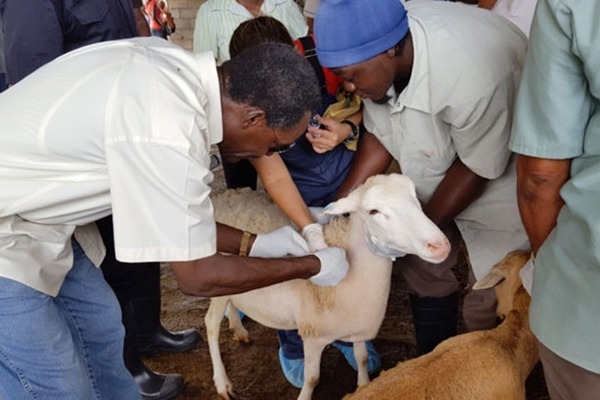
Mr. John Calixte opened the workshop, along with the Chief Veterinary Officer, Dr. Auria King-Cenec, and an IBSA Representative. Held at the Beausejour Agricultural Station and nearby facilities, workshop trainings included presentations by technical experts, discussions with farmers, government extension workers, and herders’ cooperatives representatives. There were also practical exercises with animals on the livestock station, including some belonging to farmers and those housed on site. Some of these animals were bred during the workshop with inputs provided by through this IBSA Fund project.
For more information, contact
ines.tofalo@undp.org
About the Partners
The India, Brazil and South Africa Facility for Poverty and Hunger Alleviation (IBSA Fund) is a remarkable example of cooperation among developing countries, and a pioneering initiative implementing South-South cooperation in partnership with the United Nations system. The IBSA Fund has received USD 33 million in contributions and implements projects for the benefit of 15 partner countries advancing all 17 Sustainable Development Goals.
The Ministry of Agriculture, Fisheries, Physical Planning, National Resources and Co-operatives of Saint Lucia works to sustain a diversified national income base from agriculture and fisheries activities, and to enhance the integrity of rural livelihood systems by generating the capacity for efficiency and competitive production, and by supporting the marketing of respective and related goods and services.
The Food and Agriculture Organization of the United Nations (FAO) is leading international efforts to defeat hunger. Achieving food security for all is at the heart of its efforts – to make sure people have regular access to enough high-quality food to lead active, healthy lives. FAO’s three main goals are: the eradication of hunger, food insecurity and malnutrition; the elimination of poverty and the driving forward of economic and social progress for all; and, the sustainable management and utilization of natural resources, including land, water, air, climate and genetic resources for the benefit of present and future generations.
The United Nations Office for South-South Cooperation (UNOSSC) aims to be a robust knowledge hub providing advisory and consulting services to Member States, United Nations entities, IGOs, NGOs and other stakeholders on South-South and triangular cooperation (SSTrC). UNOSSC engages with Member States globally, regionally, as well as within the United Nations system to facilitate practical expressions of Southern solidarity towards the achievement of internationally agreed development goals. Among its various functions, UNOSSC manages and supports implementation across three South-South cooperation trust funds, namely the India, Brazil and South Africa Facility for Poverty and Hunger Alleviation (IBSA Fund), the United Nations Fund for South-South Cooperation (UNFSSC), and The Perez-Guerrero Trust Fund for South-South Cooperation (PGTF).