IBSA Fund: Family Farming Drives School Meals and Local Prosperity
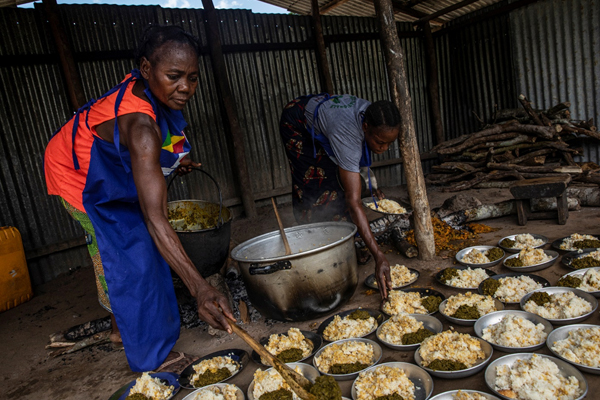
Rural producer shares her experience with direct sales of her food for school meals, as part of IBSA Fund project to expand school feeding and regional food systems through South-South Cooperation. Photo: WFP
In the Republic of Congo, smallholder farmers face systemic challenges in accessing consistent markets for their agricultural products. Poor infrastructure, limited transport options, and fragmented value chains often leave local producers – particularly women – with little guarantee that their harvest will reach consumers. For many, the effort and cost of finding buyers outweigh the return, undermining both livelihoods and food security.
The “Enhancing Family Farmers’ Access to Local Markets in the Republic of Congo through South-South Cooperation” project – launched in 2024 with support from the India, Brazil and South Africa Facility for Poverty and Hunger Alleviation (IBSA Fund) – is helping to change this narrative. Implemented by the Government of Congo in collaboration with the World Food Programme (WFP), the project addresses these barriers by linking smallholder farmers directly to local schools as part of a home-grown school feeding initiative.
In the Bouenza region, Madame Victorine Bisseyou, a member of the Massounkou farmer cooperative, is one of many farmers whose income and dignity have been restored through this approach. “We are nearby, so it is ideal for us to deliver our products to the Mayalama school,” she explained. “Otherwise, we would have to go back and forth with the goods, looking for a market to sell our products – and there is no transportation.”
The project’s model not only ensures reliable markets for farmers, but also guarantees prompt payments, fostering a sense of economic security for rural cooperatives.
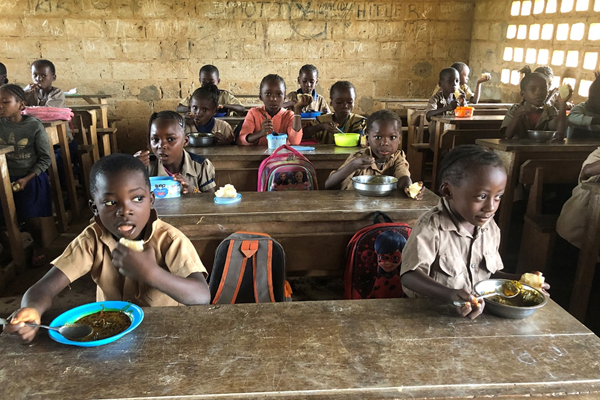
IBSA Funded project expands school feeding and regional food systems the Republic of Congo. Photo: WFP
Targeting the regions of Bouenza, Pool, and Plateaux, the initiative has trained over 10 producer groups and 65 policymakers and technical staff from the Ministries of Agriculture and of Preschool and Primary Education.
Ten pilot schools now receive nutritious meals sourced from nearby smallholder farms – meals that include cassava, a culturally important staple. This integrated model of agricultural development and school nutrition directly supports SDG 2: Zero Hunger, while contributing to local economic resilience.
“This project lays the foundation for a new dynamic between family farming and local markets,” said WFP Country Representative Mr. Sidi Mohamed Babah. “It empowers small producers – particularly women – and contributes to improved school attendance and learning outcomes through reliable access to school meals.”
National leadership has also welcomed the initiative. The Minister of Agriculture, Livestock and Fisheries, Mr. Valentin Ngobo, emphasized the strategic need to invest in infrastructure to sustain and scale such efforts. “We must prioritize the construction and improvement of agricultural roads and the establishment of suitable storage and preservation facilities,” he stated. “These actions are essential to reduce post-harvest losses, improve product quality, and increase the competitiveness of our farmers.”
This project illustrates how such partnerships can deliver tangible results in food security, agricultural capacity, and local empowerment – seeds sown today that promise stronger, self-sustaining communities tomorrow.