ILO Reaffirms Commitment to South-South Cooperation through Knowledge Exchange and Capacity-Building
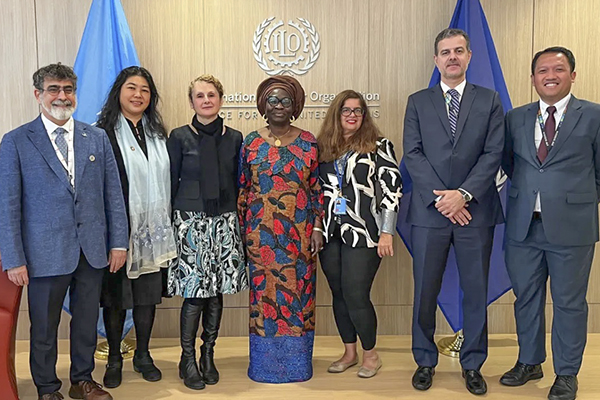
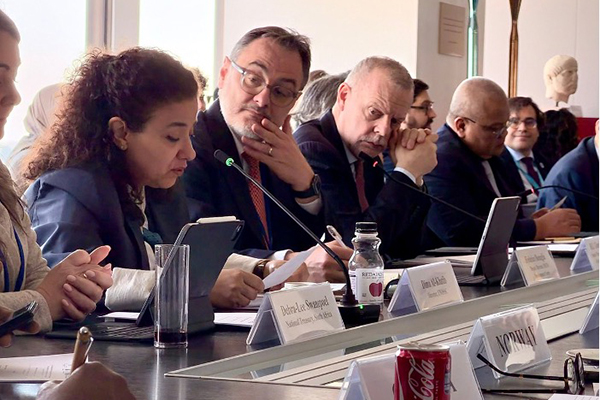
From left to right: Carlos Carrion-Crespo, Multilateral Relations Officer, ILO; Xiaojun Grace Wang, Trust Fund Director, UNOSSC; Muserref Yetim, Clinical Professor in the Program in International Relations, NYU; Cynthia Samuel-Olonjuwon, Special Representative to the UN and Director of ILO Office for the UN; Anita Amorim, Head, Emerging and Special Partnerships Unit, ILO; José Gilberto Scandiucci, Minister Counsellor, Permanent Mission of Brazil to the UN; and Dwi Wisnu Budi Prabowo, First Secretary, Permanent Mission of Indonesia to the UN.The ILO and its UN partners also organized a discussion on AI’s potential to drive inclusive growth and social justice, all of which took place at the High-Level Committee on South-South (SSTC) of the UN General Assembly.
NEW YORK (ILO News) – The International Labour Organization (ILO) has reaffirmed its unwavering dedication to promoting social justice and decent work through South-South and Triangular Cooperation (SSTC) at the 22nd Session of the High-Level Committee on South-South Cooperation, held at the United Nations General Assembly (UNGA) in New York on 28 May.
Representing the ILO, Anita Amorim, Head of the Emerging and Special Partnerships Unit, highlighted the organization’s pivotal role in facilitating knowledge exchange and capacity-building among developing countries. She emphasised the ILO’s commitment to supporting the Global South as they share best practices and lessons learned in areas such as social protection, skills development, and labour market policies, to better equip them to address a range of challenges that they face.
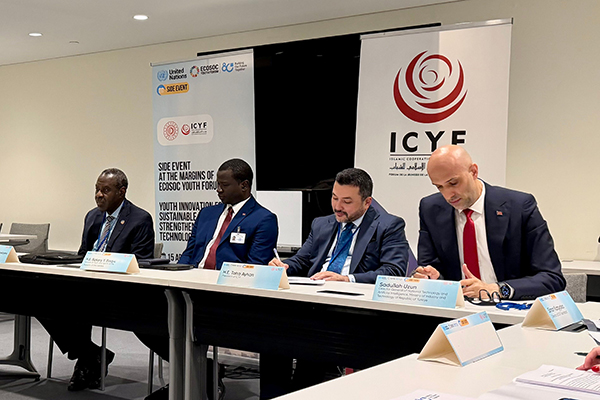
In addition, the ILO and the United Nations Office for South-South Cooperation (UNOSSC) organized a panel discussion on the sidelines of the SSTC, to explore ways in which Artificial Intelligence (AI) and Science, Technology, and Innovation (STI) can be leveraged to tackle pressing development challenges in the Global South. The government of Indonesia and Brazil, global leaders, diplomats, and leading experts took part, and the discussion was informed by policy frameworks and collaborative models emerging from BRICS, the G20, and broader SSTC networks.
The event addressed the dual promise and peril of AI in transforming economies, societies, and labour markets in developing countries.
Key topics discussed included the role of AI in job transformation, skills development, and social protection in the Global South; the value of social dialogue and collective bargaining in designing inclusive technology strategies; and policy recommendations emphasizing investment in underfunded sectors such as the care and green economies, as well as worker redeployment over displacement.
Cynthia Samuel-Olonjuwon, Director of the ILO Office for the United Nations in New York, moderated the session. Drawing from her leadership in labour and social policy across Africa, she emphasised that “AI is not just about automation—it is about equity, capacity, and decent work. Through South-South cooperation, we can shape a digital future that includes everyone.”
The panel included José Gilberto Scandiucci, Minister-Counsellor at the Permanent Mission of Brazil to the UN, who reflected on Brazil’s G20 and BRICS leadership roles and highlighted Brazil’s push for just transitions, worker protections, and inclusive AI governance. He stressed that AI was a central theme in the BRICS Employment Working Group under Brazil’s 2025 presidency and a key priority for South Africa’s G20 chair personship.
Dwi Wisnu Budi Prabowo, Permanent Mission of Indonesia to the UN, highlighted Indonesia’s efforts to promote South-South and Triangular Cooperation, particularly in digital inclusion and capacity-building. He underscored that AI is a double-edged transformation and called for multi-stakeholder dialogue, employment-centred policies, and inclusive innovation to ensure no one is left behind.
Joining remotely, a representative of the International Organisation of Employers (IOE) reinforced the employers’ participation in the debate regarding inclusive AI and reaffirmed the importance of social dialogue. ITUC provided key comments as well on workers’ perspectives.
Xiaojun Grace Wang, from the UNOSSC, concluded the event by highlighting the power of innovative financing and partnerships in scaling STI solutions across the Global South. She reinforced the call for global labour standards that address AI-related inclusion.
The event concluded with clear policy recommendations for strengthening cooperation on AI governance and digital equity and renewed partnerships across governments, UN agencies, academia, and the private sector to support sustainable AI adoption in the Global South.
Lessons from these forums, including policy frameworks on digital skilling and responsible AI use, are expected to inform further recommendations on aligning technology with social justice and labour standards. For countries across the Global South, South-South Cooperation remains not only a practical tool, but it is also a political choice to build digital futures that are inclusive, worker-centred, and anchored in social justice.
By serving as a platform for participants to share best practices and solutions based on their own experiences, the ILO-organized session provided a space for countries of the Global South to provide recommendations and policy proposals based on their own experiences and needs.
The ILO’s overall participation in the SSTC, and its leading role in advocating for social justice and decent work, aligns with the organization’s broader strategy to leverage SSTC to help achieve the Sustainable Development Goals (SDGs). This is in line with the ILO’s commitment to strengthening solidarity and collaboration among developing nations, and its own goal of enhancing the effectiveness of its programmes and initiatives, ensuring that they are tailored to the specific needs and contexts of partner countries.
Source: https://www.ilo.org/resource/news/ilo-reaffirms-commitment-south-south-cooperation-through-knowledge-exchange