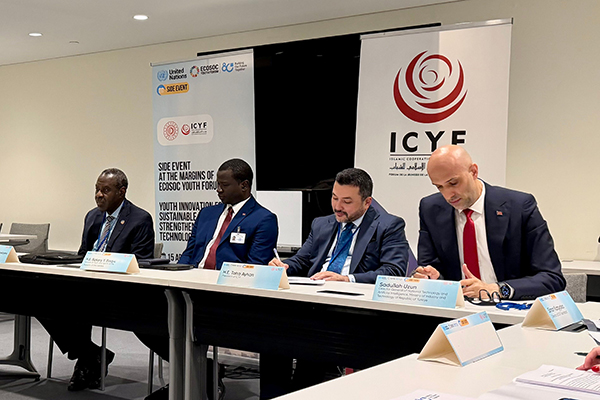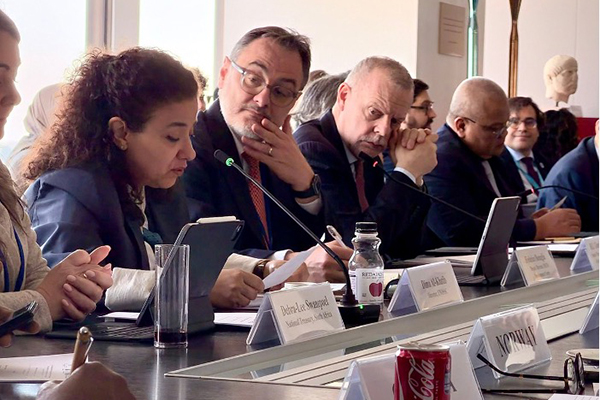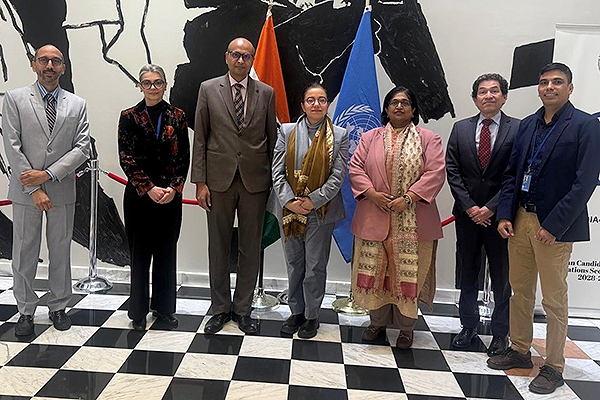
The Board of Directors of the India-UN Development Partnership Fund met at the Permanent Mission of India to the United Nations 2 April 2026 to advance the Fund’s strategic direction and further strengthen its delivery of sustainable development results. The United Nations Office for South-South Cooperation (UNOSSC) serves as the Fund Manager and Secretariat of the Board.
Since its establishment in 2017, the India-UN Development Partnership Fund has emerged as a leading platform for countries of the Global South to co-develop and implement solutions that respond directly to national priorities. Through a demand-driven and locally led approach, the Fund has allocated $73 million – $39 million under the General Window and $34 million under the Commonwealth Window – to 92 projects across 65 countries, in collaboration with 13 United Nations entities. With a strong focus on least developed countries (LDCs), landlocked developing countries (LLDCs), and small island developing States (SIDS), the Fund reflects a commitment to reaching those facing the greatest development challenges.
Across regions and sectors, the Fund is delivering tangible results. From expanding digital access and strengthening infrastructure to enhancing health, education, and climate resilience, projects are translating local knowledge into scalable solutions. In Zambia, for example, more than 34,000 users – 72 per cent women and 50 per cent youth – have adopted digital payment systems for essential services, while thousands have gained mobile money literacy. In Malawi, support for financial inclusion frameworks and digital identity systems is helping to advance inclusive digital economies.
In the Caribbean, the Fund is supporting a regional effort to strengthen maternal and child health through the elimination of mother-to-child transmission (EMTCT) of infectious diseases. Implemented by the Pan American Health Organization/World Health Organization (PAHO/WHO) in partnership with national authorities, the initiative is helping countries sustain and expand hard-won gains in eliminating HIV and syphilis transmission, while addressing emerging health priorities. By strengthening leadership, laboratory systems, and surveillance, the project is reinforcing integrated health services and expanding access to timely diagnosis and treatment—demonstrating the value of South-South cooperation in advancing shared health outcomes. In Lao PDR, the Fund is also supporting efforts to address hunger through large-scale rice fortification. Implemented by the World Food Programme (WFP) in partnership with the Ministry of Health, the initiative is expanding access to essential micronutrients by fortifying a widely consumed staple food. By integrating iron, vitamin A and zinc into daily diets, the project is helping to improve health outcomes for women and children while strengthening national food systems. Drawing on South-South cooperation, including lessons from India’s extensive rice fortification programme, the initiative combines policy development, technical capacity-building, and community engagement. As pilot models are rolled out and fortified rice begins reaching schools and communities, the project represents a scalable and sustainable approach to improving nutrition and advancing long-term development outcomes.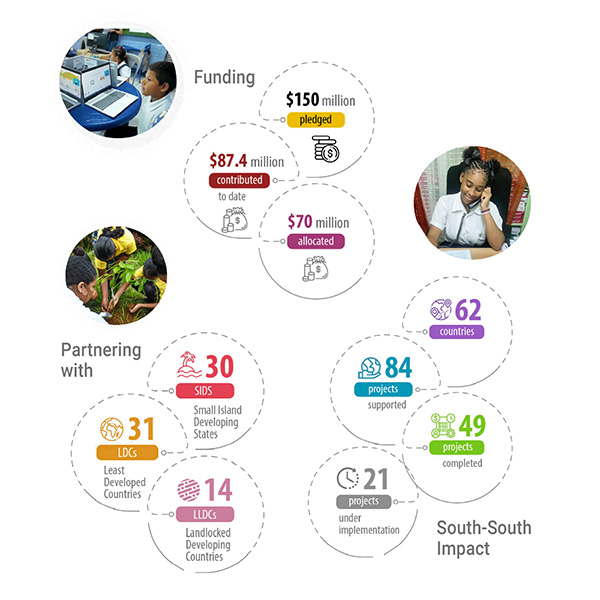
At its core, the Fund embodies the principles of South-South cooperation – solidarity, mutual respect, and shared progress. Countries are not only beneficiaries but equal partners, contributing expertise, innovation, and resources. This collaborative approach is helping to build resilience, expand opportunity, and accelerate progress towards the Sustainable Development Goals (SDGs).
Discussions during the meeting reaffirmed the importance of strengthening results-based management, enhancing monitoring and reporting systems, and ensuring that evidence continues to guide programme delivery. Board members also highlighted the growing importance of visibility and knowledge sharing to amplify impact and promote the exchange of good practices across countries.
Looking ahead, the Board endorsed a series of forward-looking actions, including enhanced communications efforts and a joint independent assessment of the Fund. These steps will further position the India–UN Development Partnership Fund as a dynamic instrument for advancing South-South cooperation and delivering sustainable development impact at scale.
Board members included H.E. Dr. Acquino Vimal, Joint Secretary, United Nations Economic and Social Division, Ministry of External Affairs, New Delhi; H.E. Ms. Yojna Patel, Deputy Permanent Representative of India to the United Nations in New York; and Ms. Dima Al-Khatib, Director of UNOSSC.