• Home
  • /
  • India-UN Fund Story
  • /
  • India-UN Fund: A Lifeline for Mothers and Newborns in Kyrgyzstan – Strengthening Maternal Health

India-UN Fund: A Lifeline for Mothers and Newborns in Kyrgyzstan – Strengthening Maternal Health


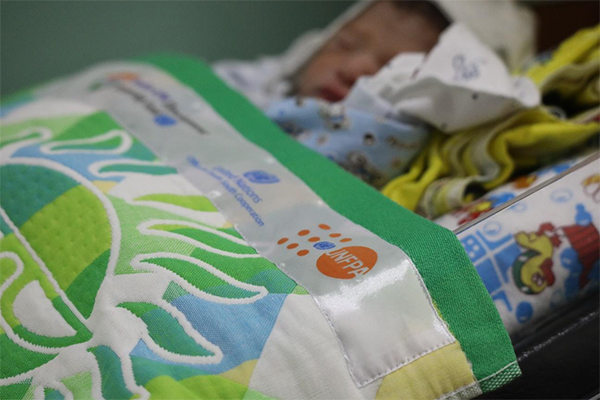
Preeclampsia and eclampsia are the leading causes of maternal and perinatal mortality in the Kyrgyz Republic, though competent pregnancy management and timely assistance can prevent most deaths. Photo credits: UNFPA / Gulaiym Shigaibaeva, Osh.
  In remote regions of Kyrgyzstan, expectant mothers once faced significant barriers to quality maternal healthcare, with distance, resource constraints, and limited access to specialized medical expertise standing in the way of safe deliveries. “Preeclampsia and eclampsia are the leading causes of maternal and perinatal mortality in the Kyrgyz Republic,” said UNFPA’s Gulaiym Shigaibaeva in Osh. “Though competent pregnancy management and timely assistance can prevent most deaths.” Despite high coverage of antenatal services and skilled birth attendance, maternal mortality rates stood at 27.3 per 100,000 live births in 2022. Addressing this challenge, a project supported the India-UN Development Partnership Fund, managed by the United Nations Office for South-South Cooperation (UNOSSC), and implemented by the United Nations Population Fund (UNFPA), equipped maternity hospitals in some of Kyrgyzstan’s most remote regions with telemedicine technology that is revolutionizing maternal and neonatal care. The initiative, titled “Increase access of rural women to quality reproductive and maternal health services in maternity hospitals with the highest number of deliveries”, is ensuring that no mother has to give birth without the support of qualified specialists.  
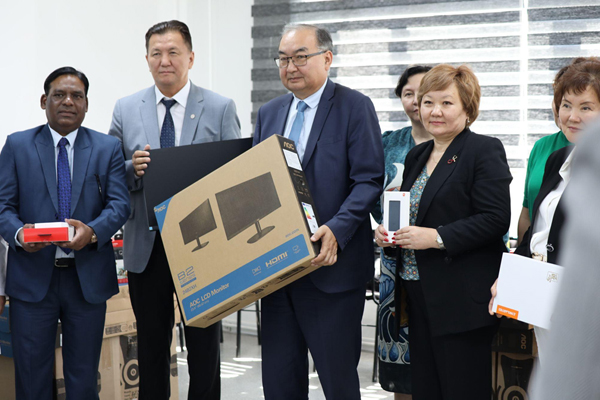
By leveraging technology and fostering collaboration, the technical equipment handover to five pilot maternity hospitals demonstrates the commitment of all involved partners to ensuring the safety and well-being of women and newborns across the country. Photo credits: UNFPA / Gulaiym Shigaibaeva, Bishkek.
  “It is a great honor for me to be a part of the equipment handover event as well as a project related to the health of the population of the Kyrgyz Republic,” said Mr. Mohan Singh, Chargé d’Affaires of the Embassy of India in the Kyrgyz Republic. “Health is the most important value in life, and when it comes to mothers, the issue becomes paramount. And when we invest in the health of a mother, we invest not only in the health of one person, but also in the health of her children, her loved ones and, accordingly, the whole society. Such health-related costs become not expenses, but investments. And when we invest in the health of the population, we contribute to the development of the country itself.” Partnering healthcare institutions have been supported to utilize telemedicine to conduct remote consultations with medical experts, enabling real-time decision-making during labor and early postnatal care. Indian expertise has played a critical role in designing a telemedicine platform optimized for maternal and child health, while continuous capacity-building workshops are equipping healthcare providers with the knowledge and skills to enhance quality of care. New equipment, including video-conferencing tools and digital tablets, is improving the monitoring of labor processes and allowing swift responses to complications, reducing the risk of preventable maternal and newborn deaths. A core element of the project is the strengthening healthcare governance and embedding international best practices into Kyrgyzstan’s national maternal healthcare system. In line with the National Quality Strategy of the Ministry of Health of the Kyrgyz Republic, which underscores the need for safer and more responsive healthcare services, health professionals participated in a two-day workshop on quality improvement. This training aimed to enhance the clinical knowledge of maternity hospital staff and improve continuous quality monitoring in maternal healthcare. Health professionals are already seeing the impact of this knowledge in their daily work. Rakhat Izabekova, Head of the Neonatal Intensive Care Unit at the Jalal-Abad Regional Clinical Hospital, underscored the importance of structured planning and accountability in quality management. “The Quality Committee at our hospital plays an important role in preventing infant and maternal mortality, as well as in the fight against infections,” he said. “Our goal is to ensure that the mother and child can be discharged home healthy, as well as to ensure patient satisfaction in general. Based on the new information I received at the seminar, I realized that we need to carefully plan each step and, most importantly, make a realistic plan.” For the Ministry of Health, the initiative represents a significant step toward achieving systemic change. Aizhamal Shambetova, Deputy Minister of Health of the Kyrgyz Republic, emphasized the importance of focusing on care during the intrapartum and postpartum period. “Improving the quality of health care is critical for our health system,” she said. “We would benefit from focusing perinatal care on the intrapartum and postpartum period, as this is critical to saving lives and preventing stillbirths. It is not only about increasing the coverage of interventions, but also about ensuring that every woman and newborn receives skilled, evidence-based and respectful care. The workshop to build the capacity of health professionals in the area of quality of health services for mothers and newborns is a positive step towards achieving this goal.”  
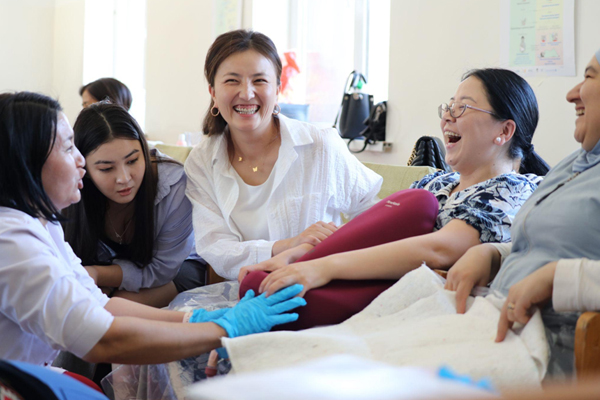
Midwives during a competencies training. Photo credits: UNFPA / Gulaiym Shigaibaeva, Osh.
  Beyond direct healthcare interventions, the project is fostering a culture of accountability and quality-driven leadership among medical professionals. “The topics studied will help us plan and more effectively organize work to improve patient satisfaction and the quality of medical services provided,” said Damira Tursunbekova, Head of the Department of Quality Management of Medical Services at the Osh Interregional United Clinical Hospital. “Empathy and focus on the patient’s needs are critical, and safety begins at the entrance to the hospital: this includes the presence of ramps and clear signs on the stairs. From my own experience, I have seen that even one person can have a significant impact on changing quality standards.” With telemedicine-enabled maternal health services, enhanced clinical knowledge, and a renewed commitment to quality assurance, the India-UN Fund project is making childbirth safer and healthcare systems more resilient.  
Related Post


  • All Post
  • ATCT Featured Publications POM
  • BAPA+40
  • Blog
  • Capacity Development Initiatives
  • CICETE Featured Publications POM
  • CIKD
  • Cities Clusters - Agriculture
  • Cities Clusters - COVID-19
  • Cities Clusters - COVID-19 Knowledge Products
  • Cities Clusters - DRR
  • Cities Clusters - E-commerce
  • Cities Clusters - Tourism
  • Cities Clusters - Tourism Knowledge Products
  • Cities Clusters - Transport
  • Cities Clusters - Waste
  • Cities Project
  • Cities Project COVID-19 Newsletters
  • Cities Project COVID-19 Response
  • Cities Project Knowledge Products
  • Classic (untouched)
  • Climate Action
  • COMSATS Featured Publications POM
  • COMSATS Featured Solutions POM
  • Converted from Divi
  • Converted from Mixed
  • Converted from WPBakery
  • COVID-19
  • COVID-19 Page Featured Solutions
  • DRR Knowledge Products
  • DRR News
  • Empty Post
  • Events
  • Featured Event UN-Habitat POM
  • Financing for Development
  • Financing Mechanisms
  • g7+
  • Gender Events
  • Gender News
  • Good Practices in SSTrC Series
  • Good Practices Publications
  • Good Practices Thematic Series & Special Editions
  • Good Practices Vol. 2
  • Good Practices Vol. 3
  • GSSDC
  • Highlighted
  • Highlighted Publications
  • IAEA Featured Solutions POM
  • IBRAF Featured Publications POM
  • IBSA Fund
  • IBSA Fund Annual Reports
  • IBSA Fund News and Stories
  • IBSA Fund Publication
  • IBSA Fund Story
  • ICGEB Featured Events POM
  • ICGEB Featured Publications POM
  • ICGEB Featured Solutions POM
  • ILO Featured Events POM
  • ILO Featured Publications POM
  • ILO Featured Solutions POM
  • India-UN Development Partnership Fund
  • India-UN Fund Publication
  • India-UN Fund Story
  • IsDB
  • IsDB Featured Publications POM
  • IsDB SCC
  • News
  • Norec Featured Publications POM
  • Norec Featured Solutions POM
  • Peace and Development
  • PGTF Publications
  • PGTF Story
  • PICA Featured News POM
  • PICA Featured Publications POM
  • PICA Featured Solutions POM
  • PIDF Featured Publications POM
  • Publications
  • Regional Updates
  • Research
  • ROK-UNOSSC Facility
  • SGP Featured Publication POM
  • SGP Featured Solutions POM
  • Solution
  • South South in Action
  • South-South Global Thinkers
  • South-South Ideas
  • South-South Ideas Series
  • South-South in Action Series
  • Southern Response to COVID-19
  • SSN4PSI Featured Publications POM
  • SSN4PSI Featured Solutions POM
  • Training
  • UN Day for SSC 2020
  • UN Fund for SSC
  • UN SSC Day Publications
  • UN-Habitat Featured Publications POM
  • UN-HABITAT Featured Solutions POM
  • UNCCT
  • UNEP Featured Publications POM
  • UNFPA
  • UNFSSC Publication
  • UNFSSC Story
  • UNIDO Featured Publications POM
  • UNIDO Featured Solutions POM
  • UNIDO POM Events
  • UNOCT Featured Publications POM
  • UNV
  • UNV Featured Publications POM
  • WB Featured Publications POM
  • WB Featured Solutions POM
  • Webinars
  • WFP Featured Events POM
  • WFP Featured Publication POM
  • WFP Featured Solutions POM
  • WIPO
  • Workshops and Seminars
  • Youth4South
  • z Across the Globe 1
  • z Across the Globe 2
  • z Across the Globe 4
  • z Across the Globe 5
  • z Across the Globe 6
  • z Across the Globe 7
  • z Across the Globe 8
  • z ES BAPA+40
  • z ES Eventos
  • z ES Noticias
  • z ES Noticias Destacadas
  • z ES Publicaciones
  • z ES Publicaciones Destacadas
  • z ES Serie Buenas Prácticas en la CSSyT
  • z ES Serie El Sur-Sur en Acción
  • z FR Actualités
  • z FR BAPA+40
  • z FR Événements
  • z FR Publications
  • z FR Publications en vedette
  • z FR Série Bonnes pratiques en CSST
  • z FR Série Sud-Sud en action
  • z Highlighted News
  • z Photos
  • z Videos
  • z ZH BAPA+40
  • z ZH Events
  • z ZH News

ABOUT

Terms of Service

Privacy Policy

Disclosures

RESOURCES

Terms of Service

Privacy Policy

Disclosures

ENGAGE

Terms of Service

Privacy Policy

Disclosures

Copyright © UNOSSC/UNDP

wpChatIcon
wpChatIcon

Alliance Application Form

Submit an Expression of Interest and/or Demand Signal. UNOSSC reviews submissions on a rolling basis.

1. Official name of organization / institution / government entity (exclusions to apply) *
2. Country *
3. Region *
4. SDG *
Secondary SDG *
5. Partner category *
6. Website *
7. Brief description of your institution (max. 150 words) *
Name for the Lead *
Title for the Lead *
Email address for the Lead *
Name for the co-lead
Title for the co-lead
Email address for the co-lead
Section 3. Expression of Interest in the Alliance *
Additional information on proposed areas of engagement may be requested through the platform following initial review by the Alliance Secretariat.
Section 4. Due Diligence and Integrity Declaration *

Submission Note:

  • Submission of this Expression of Interest form does not automatically confer participation in the Alliance.
  • All submissions will be reviewed by the Alliance Secretariat, including basic eligibility screening and proportionate due diligence, as appropriate.
  • Participation in Alliance activities is determined based on relevance to articulated cooperation needs, alignment with Alliance principles, and integrity considerations.
  • Engagement under the Alliance is voluntary, non-binding, and facilitative in nature, and does not constitute funding approval, contractual commitment, or institutional membership.
  • The Alliance Secretariat may contact submitting entities for additional information or clarification during the review process.

Submission of Demand Form

Description of Demand

Indicate the type of support or cooperation requested through the Alliance.
Please briefly describe the challenge, gap, or priority. (Max. 300 words)

Thematic and Geographic Focus

Please indicate the main focus areas of your demand:

A. Thematic Areas (select up to three)
B. Geographic Focus (select all that apply)

Proposed Engagement Modalities

Please indicate how you would like to engage through the Alliance (select all that apply):

Expected Outcomes

Please indicate the main results you seek to achieve through this engagement. (Max. 200 words)
Examples:
• Capacity strengthened
• Partnerships established
• Sectoral or regional strategies co-developed
• Solutions piloted
• Knowledge generated
• Policies informed

Timeline and Readiness (if applicable)

1. Expected timeframe for engagement:
2. Current stage:

Additional Information

Please provide any additional information, documents, or links relevant to this submission.
(Max. 200 words or upload link)

Submission of Offer Form

Description of Contribution

Indicate the type of contribution your institution can provide and describe the expertise, resources, or solutions you may offer.
Please briefly describe your proposed contribution. (Max. 300 words)

Thematic and Geographic Focus

Please indicate the main focus areas of your interest:

A. Thematic Areas (select up to three)
B. Geographic Focus (select all that apply)

Proposed Engagement Modalities

Please indicate how you would like to engage through the Alliance (select all that apply):

Expected Outcomes

Please indicate the main results you aim to achieve through this engagement. (Max. 200 words)
Examples:
• Capacity strengthened
• Partnerships established
• Sectoral or regional strategies co-developed
• Solutions piloted
• Knowledge generated
• Policies informed

Timeline and Readiness (if applicable)

1. Expected timeframe for engagement:
2. Current stage:

Additional Information

Please provide any additional information, documents, or links relevant to this submission.
(Max. 200 words or upload link)

Organization Registration

Authentication & Due Diligence This prototype simulates identity verification, due diligence confirmation, and an authentication step before submission. *

First Name *
Last Name *
Email address *
Password *
Confirm Password *
Name of institution / organization *
Country / Region *
Organization Type *
Organization other *
Function / role *
Organization logo *
Maximum file size: 1 GB

Login

Login / email *
Password *
Remember me

Forgot password?

Connect form

Your name *
Email *
Organization / institution *
Job title / role *
Reason for connecting:
Short message

Scroll to Top