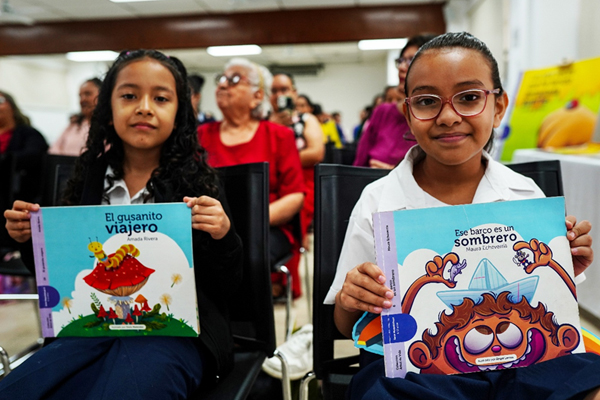
Children across El Salvador are discovering the joy of reading with their families, thanks to a groundbreaking initiative that has brought inclusive storybooks, digital platforms, and community engagement directly into homes. The transformation is especially visible among children with disabilities, who now have access to stories in Braille, audio, and digital formats alongside their peers.
This change has been driven by the Reading at Home project, funded by the India-UN Development Partnership Fund through the United Nations Office for South-South Cooperation (UNOSSC), and implemented by UNICEF in close partnership with the Ministry of Education, Science and Technology, the Office of the First Lady of El Salvador, and the Fundación para la Educación Integral Salvadoreña (FEDISAL).
Putting Reading at the Heart of Family Life
At the core of the project is a family-centered model that places reading at the heart of daily routines. More than 180 inclusive titles featuring culturally relevant stories of Salvadoran children were created and distributed nationwide in print, Braille, audio, and digital versions. The country’s online reading platform was also expanded to host over 500 accessible resources.
For learners with visual and hearing impairments, 50 resource centers were equipped with assistive technologies, ensuring that no child is left behind.
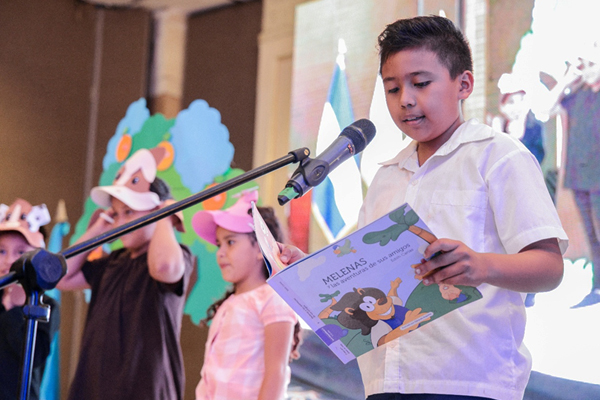 The project extended well beyond the delivery of books. Over 4,200 teachers received training to integrate inclusive storybooks into classrooms, while 36,000 families participated in workshops designed to make reading at home interactive and engaging. In total, more than 44,000 children – including 2,300 with disabilities – benefited across 400 schools. For many families, reading has become a shared activity that strengthens language skills, builds confidence, and nurtures closer bonds between parents and children.
South-South Learning in Action
South-South cooperation has been a cornerstone of the project’s success. Peer exchanges with Paraguay and the Dominican Republic provided valuable lessons on accessible publishing, community engagement, and digital tools, shaping El Salvador’s own inclusive model. Now, El Salvador’s achievements are feeding into regional knowledge-sharing, offering a framework other countries in the Global South can adapt and scale.
The project extended well beyond the delivery of books. Over 4,200 teachers received training to integrate inclusive storybooks into classrooms, while 36,000 families participated in workshops designed to make reading at home interactive and engaging. In total, more than 44,000 children – including 2,300 with disabilities – benefited across 400 schools. For many families, reading has become a shared activity that strengthens language skills, builds confidence, and nurtures closer bonds between parents and children.
South-South Learning in Action
South-South cooperation has been a cornerstone of the project’s success. Peer exchanges with Paraguay and the Dominican Republic provided valuable lessons on accessible publishing, community engagement, and digital tools, shaping El Salvador’s own inclusive model. Now, El Salvador’s achievements are feeding into regional knowledge-sharing, offering a framework other countries in the Global South can adapt and scale.
 Lasting Impact
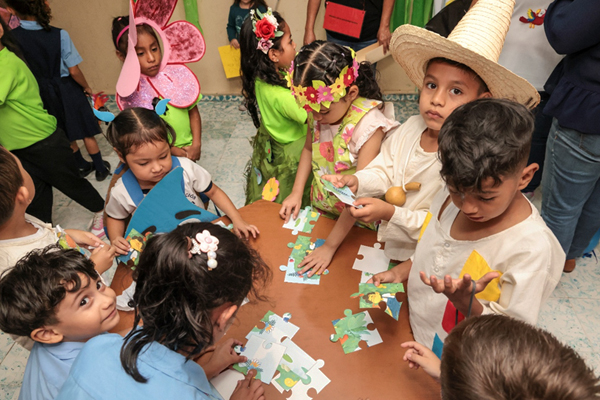
Sustainability is built into the model. The Ministry of Education has already integrated home-based reading into the National Literacy Plan, with plans to expand from 400 to 1,000 schools over the next two years. FEDISAL will continue driving community outreach, while the Office of the First Lady is leading national campaigns to promote a culture of inclusive reading. Strengthened capacities among teachers, publishers, and education officials ensure that momentum will continue.
Advancing the SDGs
By promoting equitable and inclusive access to education, the initiative contributes directly to SDG 4 (Quality Education) and SDG 10 (Reduced Inequalities). Its collaborative framework, rooted in South-South partnerships, exemplifies SDG 17 (Partnerships for the Goals).
Lasting Impact
Sustainability is built into the model. The Ministry of Education has already integrated home-based reading into the National Literacy Plan, with plans to expand from 400 to 1,000 schools over the next two years. FEDISAL will continue driving community outreach, while the Office of the First Lady is leading national campaigns to promote a culture of inclusive reading. Strengthened capacities among teachers, publishers, and education officials ensure that momentum will continue.
Advancing the SDGs
By promoting equitable and inclusive access to education, the initiative contributes directly to SDG 4 (Quality Education) and SDG 10 (Reduced Inequalities). Its collaborative framework, rooted in South-South partnerships, exemplifies SDG 17 (Partnerships for the Goals).
The project extended well beyond the delivery of books. Over 4,200 teachers received training to integrate inclusive storybooks into classrooms, while 36,000 families participated in workshops designed to make reading at home interactive and engaging. In total, more than 44,000 children – including 2,300 with disabilities – benefited across 400 schools. For many families, reading has become a shared activity that strengthens language skills, builds confidence, and nurtures closer bonds between parents and children.
South-South Learning in Action
South-South cooperation has been a cornerstone of the project’s success. Peer exchanges with Paraguay and the Dominican Republic provided valuable lessons on accessible publishing, community engagement, and digital tools, shaping El Salvador’s own inclusive model. Now, El Salvador’s achievements are feeding into regional knowledge-sharing, offering a framework other countries in the Global South can adapt and scale.
Lasting Impact
Sustainability is built into the model. The Ministry of Education has already integrated home-based reading into the National Literacy Plan, with plans to expand from 400 to 1,000 schools over the next two years. FEDISAL will continue driving community outreach, while the Office of the First Lady is leading national campaigns to promote a culture of inclusive reading. Strengthened capacities among teachers, publishers, and education officials ensure that momentum will continue.
Advancing the SDGs
By promoting equitable and inclusive access to education, the initiative contributes directly to SDG 4 (Quality Education) and SDG 10 (Reduced Inequalities). Its collaborative framework, rooted in South-South partnerships, exemplifies SDG 17 (Partnerships for the Goals).