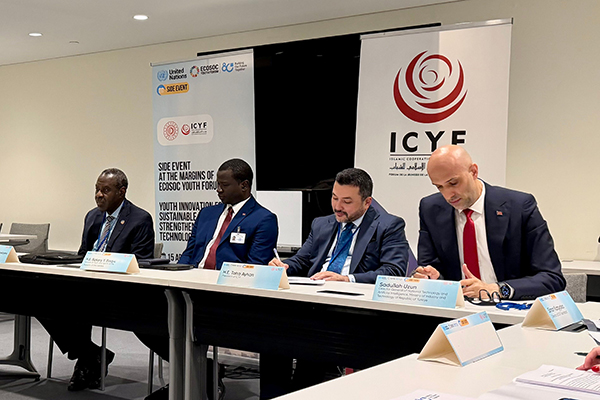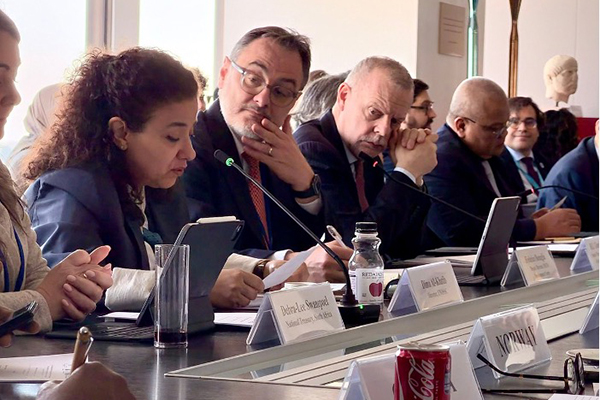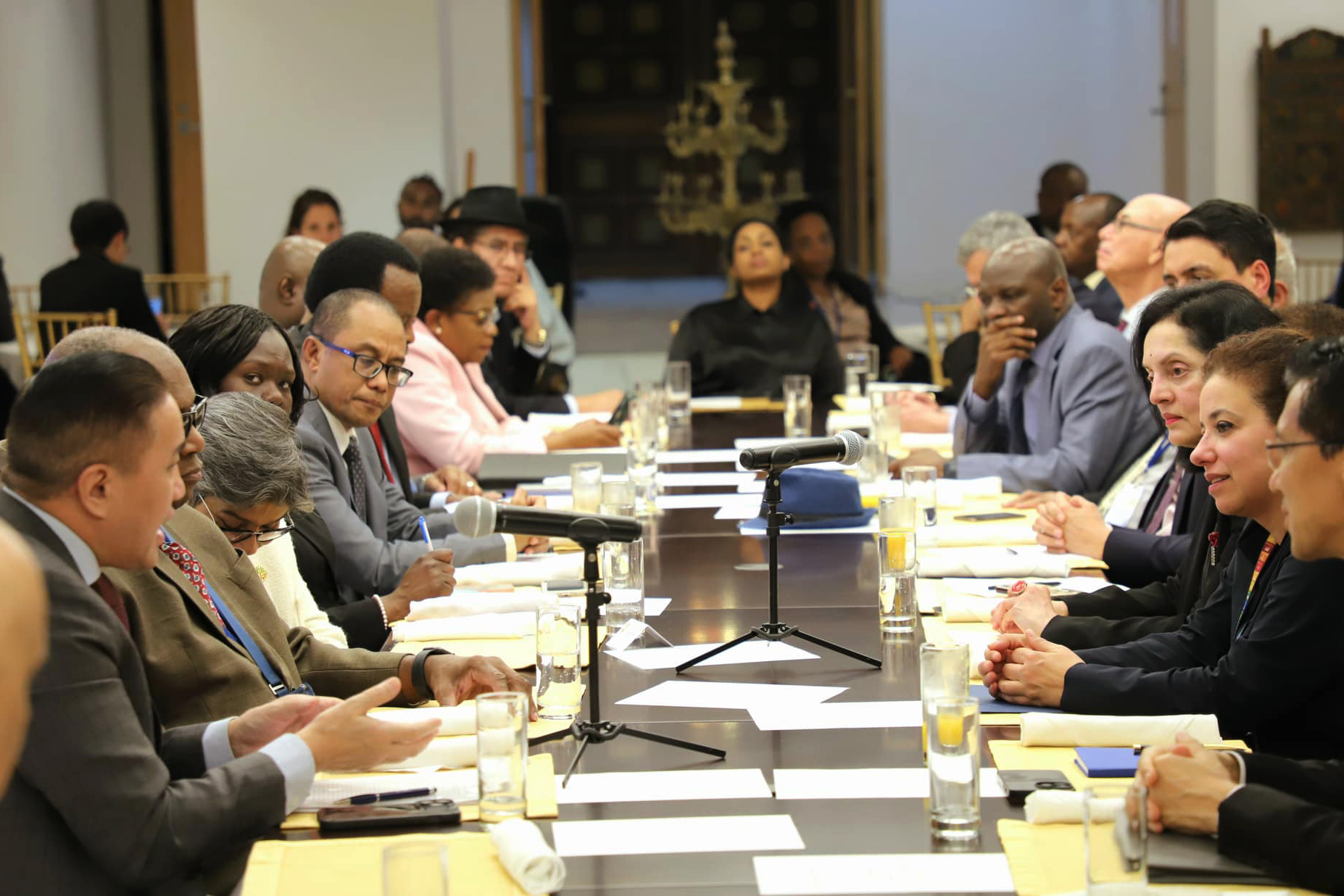
Permanent Representatives of Small Island Developing States (SIDS) and Least Developed Countries (LDCs) were hosted by the Permanent Mission of India to discuss the pivotal role of South-South cooperation in addressing development challenges, ahead of 4th International Conference on Small Island Developing States (SIDS4) and the 3rd UN Conference on Landlocked Developing Countries (LLDC3) later this year. It was noted that this is the first time that these two groups of Member States have convened together.
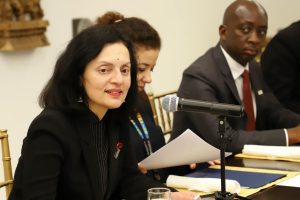 “In these turbulent times South-South cooperation has never been more important,” said H.E. Ambassador Ruchira Kamboj, Permanent Representative of India to the United Nations. “Following the two landmark conferences India is ready to engage in follow-up action,” the Ambassador emphasized, noting the support the India-UN Development Partnership Fund could provide in this regard.
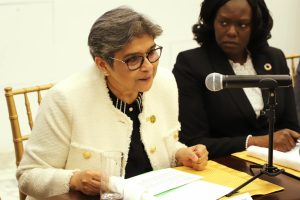 Rabab Fatima, High Representative for the Least Developed Countries, Landlocked Developing Countries and Small Island Developing States, commended the Government of India and the India-UN Development Partnership Fund, managed by UNOSSC, for their role in “expanding opportunities for LLDCs and SIDS through South-South cooperation.” The India-UN Development Partnership Fund is “particularly important for the most vulnerable countries that my Office supports,” said the High Representative.
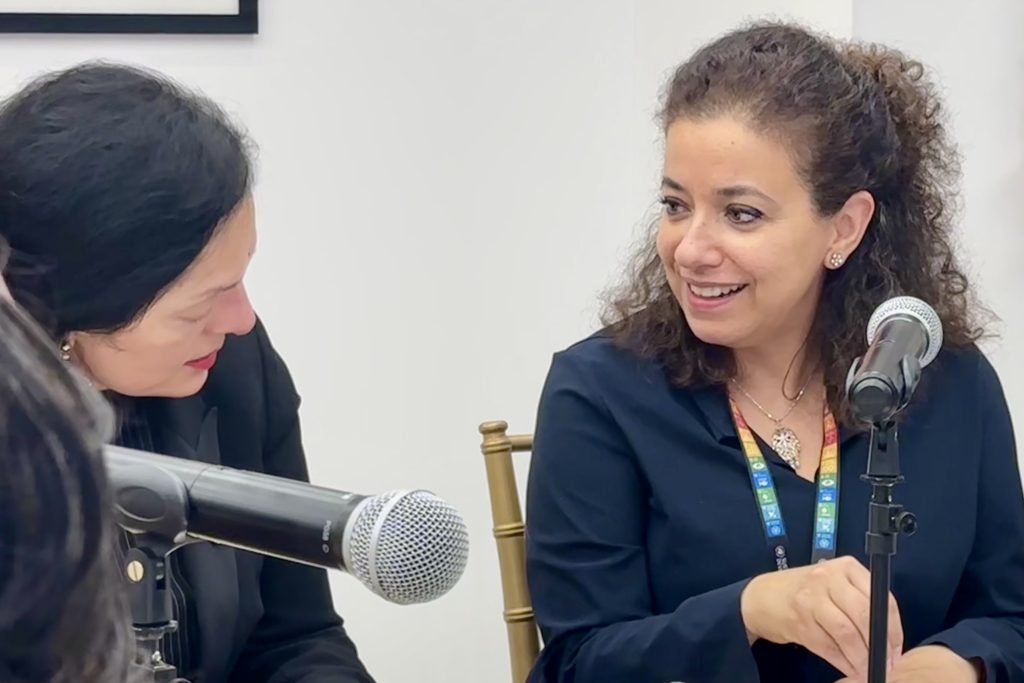 “Looking ahead, we are on the cusp of two seminal conferences: the 4th International Conference on Small Island Developing States in Antigua and Barbuda, and the 3rd United Nations Conference on Landlocked Developing Countries in Rwanda, said UNOSSC Director Dima Al-Khatib. “These onferences are agenda-setting milestones that will shape the next decade of action and support for SIDS and LLDCs. They are a clarion call for strategic partnerships and for plans that are not only robust but also responsive to the evolving needs of our nations.”
Central to the discussions among the over 40 Permanent Representatives present was the acknowledgment of the indispensable role played by the UN-India Development Partnership Fund which supports Southern-owned and -led, demand-driven and transformational sustainable development projects across the developing world – with a particular focus on Least Developed Countries and Small Island Developing States.
The LLDCs have benefited from a combined total of $18.7 million from the India-UN Fund and the IBSA Fund, representing 17% of the total allocated budget for these two Funds. Through them, 20 projects have supported 15 LLDCs across Africa, Asia, Latin America, and Europe & CIS.
“The India-UN Development Partnership Fund embodies the spirit of South-South cooperation, and is a clear demonstration of what partners like India and the UN can achieve when working together alongside developing countries across several SDGs,” said Ms. Dima Al-Khatib.
During LLDC3, UNOSSC will co-organize with the Office of the High Representative for the Least Developed Countries, Landlocked Developing Countries and Small Island Developing States, a Ministerial Meeting on South-South Cooperation that will focus on the theme of South-South cooperation for sustainable, resilient and transformative development in LLDCs, and will result in the adoption of a ‘Call to Action’ by the Member States. At the meeting, UNOSSC will showcase five illustrative case studies, covering different regions, which demonstrate how South-South cooperation is addressing LLDC developmental challenges.
Beyond UNOSSC’s contributions to policy-setting at international conferences, and South-South Trust Fund management, UNOSSC also supports knowledge generation and sharing through the South-South Galaxy platform, showcasing over 1,000 solutions that span across all 17 SDGs.
Click here for updates from India-UN Fund projects and to learn more about their activities during 2023.
“Looking ahead, we are on the cusp of two seminal conferences: the 4th International Conference on Small Island Developing States in Antigua and Barbuda, and the 3rd United Nations Conference on Landlocked Developing Countries in Rwanda, said UNOSSC Director Dima Al-Khatib. “These onferences are agenda-setting milestones that will shape the next decade of action and support for SIDS and LLDCs. They are a clarion call for strategic partnerships and for plans that are not only robust but also responsive to the evolving needs of our nations.”
Central to the discussions among the over 40 Permanent Representatives present was the acknowledgment of the indispensable role played by the UN-India Development Partnership Fund which supports Southern-owned and -led, demand-driven and transformational sustainable development projects across the developing world – with a particular focus on Least Developed Countries and Small Island Developing States.
The LLDCs have benefited from a combined total of $18.7 million from the India-UN Fund and the IBSA Fund, representing 17% of the total allocated budget for these two Funds. Through them, 20 projects have supported 15 LLDCs across Africa, Asia, Latin America, and Europe & CIS.
“The India-UN Development Partnership Fund embodies the spirit of South-South cooperation, and is a clear demonstration of what partners like India and the UN can achieve when working together alongside developing countries across several SDGs,” said Ms. Dima Al-Khatib.
During LLDC3, UNOSSC will co-organize with the Office of the High Representative for the Least Developed Countries, Landlocked Developing Countries and Small Island Developing States, a Ministerial Meeting on South-South Cooperation that will focus on the theme of South-South cooperation for sustainable, resilient and transformative development in LLDCs, and will result in the adoption of a ‘Call to Action’ by the Member States. At the meeting, UNOSSC will showcase five illustrative case studies, covering different regions, which demonstrate how South-South cooperation is addressing LLDC developmental challenges.
Beyond UNOSSC’s contributions to policy-setting at international conferences, and South-South Trust Fund management, UNOSSC also supports knowledge generation and sharing through the South-South Galaxy platform, showcasing over 1,000 solutions that span across all 17 SDGs.
Click here for updates from India-UN Fund projects and to learn more about their activities during 2023.
“In these turbulent times South-South cooperation has never been more important,” said H.E. Ambassador Ruchira Kamboj, Permanent Representative of India to the United Nations. “Following the two landmark conferences India is ready to engage in follow-up action,” the Ambassador emphasized, noting the support the India-UN Development Partnership Fund could provide in this regard.
Rabab Fatima, High Representative for the Least Developed Countries, Landlocked Developing Countries and Small Island Developing States, commended the Government of India and the India-UN Development Partnership Fund, managed by UNOSSC, for their role in “expanding opportunities for LLDCs and SIDS through South-South cooperation.” The India-UN Development Partnership Fund is “particularly important for the most vulnerable countries that my Office supports,” said the High Representative.
“Looking ahead, we are on the cusp of two seminal conferences: the 4th International Conference on Small Island Developing States in Antigua and Barbuda, and the 3rd United Nations Conference on Landlocked Developing Countries in Rwanda, said UNOSSC Director Dima Al-Khatib. “These onferences are agenda-setting milestones that will shape the next decade of action and support for SIDS and LLDCs. They are a clarion call for strategic partnerships and for plans that are not only robust but also responsive to the evolving needs of our nations.”
Central to the discussions among the over 40 Permanent Representatives present was the acknowledgment of the indispensable role played by the UN-India Development Partnership Fund which supports Southern-owned and -led, demand-driven and transformational sustainable development projects across the developing world – with a particular focus on Least Developed Countries and Small Island Developing States.
The LLDCs have benefited from a combined total of $18.7 million from the India-UN Fund and the IBSA Fund, representing 17% of the total allocated budget for these two Funds. Through them, 20 projects have supported 15 LLDCs across Africa, Asia, Latin America, and Europe & CIS.
“The India-UN Development Partnership Fund embodies the spirit of South-South cooperation, and is a clear demonstration of what partners like India and the UN can achieve when working together alongside developing countries across several SDGs,” said Ms. Dima Al-Khatib.
During LLDC3, UNOSSC will co-organize with the Office of the High Representative for the Least Developed Countries, Landlocked Developing Countries and Small Island Developing States, a Ministerial Meeting on South-South Cooperation that will focus on the theme of South-South cooperation for sustainable, resilient and transformative development in LLDCs, and will result in the adoption of a ‘Call to Action’ by the Member States. At the meeting, UNOSSC will showcase five illustrative case studies, covering different regions, which demonstrate how South-South cooperation is addressing LLDC developmental challenges.
Beyond UNOSSC’s contributions to policy-setting at international conferences, and South-South Trust Fund management, UNOSSC also supports knowledge generation and sharing through the South-South Galaxy platform, showcasing over 1,000 solutions that span across all 17 SDGs.
Click here for updates from India-UN Fund projects and to learn more about their activities during 2023.