The benefits of at home reading for children, especially with their parents, are well-documented. Among these are improved cognitive development, language skills, concentration, and discipline; not to mention “soft” skills such as improved imagination and creativity, and the cultivation of a lifelong love of reading. At its most basic level, early childhood literacy is essential in preparing children for academic and, ultimately, economic success.
In El Salvador, where access to primary school education is almost universal but where the multidimensional poverty rate hovers at 27%, 53% of 10-year-old girls and boys do not understand simple text and 20% in the poorest quintile do not know how to read or write. In addition, studies have shown that more than 49% of second graders and 40% of third graders lack reading fluency, a crucial skill for comprehending and analyzing texts.
For the country’s government, this is an alarming state of affairs, as core literacy skills constitute the basic scaffolding for the acquisition of linguistic and mathematical skills, and educational success. Further, it explains to a large extent, the country’s early school dropout rates.
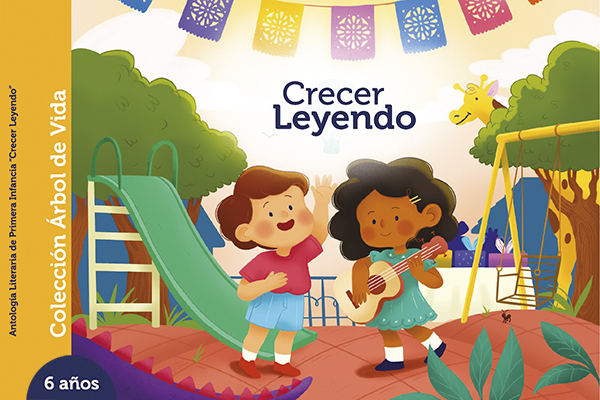
The Leyendo en Casa (Reading at Home) project seeks to help close the gap in access to stimulating reading by delivering books in different formats, and supporting materials, to vulnerable families with children between 3 and 10 years of age in the country’s poorest municipalities. This project is a joint initiative of the Ministry of Education, Science and Technology and UNICEF, and the project’s efforts will be key to fostering reading at home, which is a challenge for the Salvadoran educational system; and which, as a result of the closure of schools during the COVID-19 pandemic, has increased. Financial support for the project is provided by the India-UN Development Partnership Fund.
The project’s goals reach beyond teaching basic literacy and comprehension skills. El Salvador has a long history of world class writers, essayists, and poets, including Roque Dalton, Claudia Lars, and Salarrué, among others. The country’s National Reading Plan includes a special editorial line of Salvadoran authors and the production of related educational materials. The Leyendo en Casa project will contribute to the expansion and distribution of the work of Salvadoran authors to increase young readers’ exposure to the nation’s culture.
Launched in June, 2023, the project plans to reach more than 6,000 children, aged 3 to 10, and their families, along with 400 teachers in 84 schools from among 74 of the nation’s most vulnerable municipalities. In an example of South-South cooperation, the Fund is also financing an exchange with neighboring Nicaragua to build on its experience to improve reading and writing skills among children with disabilities.