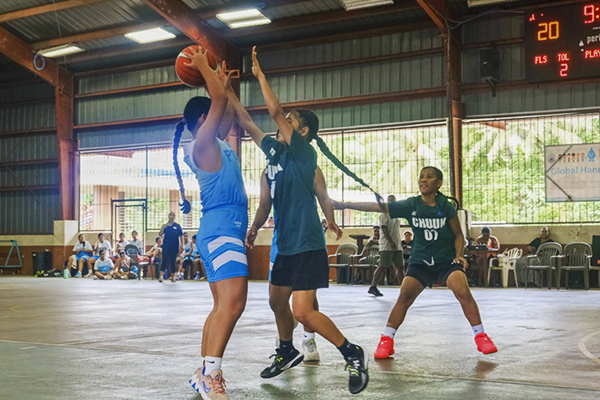
In the Federated States of Micronesia, gender inequality remains a significant challenge despite progressive policies. While the government ratified the Convention on the Elimination of All Forms of Discrimination Against Women (CEDAW) in 2004 and introduced the National Gender Policy in 2018, tangible progress has been slow.
Women continue to face barriers to leadership and decision-making positions, and social norms confine many to domestic and unpaid care work. The result is a gender imbalance that hampers efforts to achieve national development goals and the Sustainable Development Goals (SDGs), particularly in areas such as economic empowerment and access to essential services.
In response, the Government of the Federated States of Micronesia, in collaboration with the United Nations Development Programme, and with the support of the India-UN Development Partnership Fund, launched a project in 2020 aimed at advancing women’s economic empowerment and improving access to modern technologies. This initiative focuses on three core pillars: policy advocacy, income generation, and improving access to small-scale infrastructure.
The project aims to break down structural barriers and uplift women and girls across the Federated States of Micronesia, not only through sports, but also through leadership development, income-generating initiatives, and access to essential infrastructure.
Working closely with traditional leaders and communities, the project is creating an environment where young women can thrive, no matter their background or circumstances.
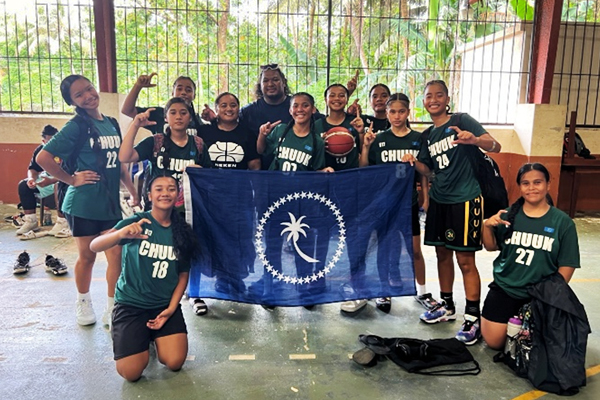 This challenging backdrop played a role in resilience-building for the girls basketball team of Chuuk State. With unwavering determination and months of intense training, the team proudly brought the championship title back to their state.
“Empowering women and girls isn’t just about education or employment; it’s also about giving them the space to excel in every area of life, including sports,” said Kevin Petrini, UNDP Deputy Resident Representative in the North Pacific. “We’re proud to support these talented athletes on their journey to excellence.”
“We didn’t win last time, but that only pushed us to work harder,” said Amy Aritos, team captain and this year’s Most Valuable Player. “We knew we had what it took, and this victory proves it. I’m incredibly proud of my team and how far we’ve come.”
This success story goes beyond the basketball court. It reflects a broader goal, organized by the Department of Health and Social Affairs, to empower young women across the Federated States of Micronesia through sports.
These tournaments are organized to offer more than just competition; they provide a platform for personal development, confidence building, and fostering camaraderie among girls from all states.
The United Nations Development Programme Pacific Office, a key partner in this initiative, views these games as a critical step in promoting gender equality and advancing opportunities for young women.
Through the Strengthening Gender Machinery Project, UNDP played a vital role in enabling the Chuuk team to participate in the games. From sponsoring travel arrangements to recognizing their hard work with support throughout the competition, the UNDP’s commitment helped turn the team’s dreams into reality.
Despite facing numerous obstacles, the Chuuk Girls High School basketball team stands as a beacon of what’s possible when young women are given the support and opportunities they deserve. Their journey to triumph is an inspiring example of resilience and the transformative power of sports.
This challenging backdrop played a role in resilience-building for the girls basketball team of Chuuk State. With unwavering determination and months of intense training, the team proudly brought the championship title back to their state.
“Empowering women and girls isn’t just about education or employment; it’s also about giving them the space to excel in every area of life, including sports,” said Kevin Petrini, UNDP Deputy Resident Representative in the North Pacific. “We’re proud to support these talented athletes on their journey to excellence.”
“We didn’t win last time, but that only pushed us to work harder,” said Amy Aritos, team captain and this year’s Most Valuable Player. “We knew we had what it took, and this victory proves it. I’m incredibly proud of my team and how far we’ve come.”
This success story goes beyond the basketball court. It reflects a broader goal, organized by the Department of Health and Social Affairs, to empower young women across the Federated States of Micronesia through sports.
These tournaments are organized to offer more than just competition; they provide a platform for personal development, confidence building, and fostering camaraderie among girls from all states.
The United Nations Development Programme Pacific Office, a key partner in this initiative, views these games as a critical step in promoting gender equality and advancing opportunities for young women.
Through the Strengthening Gender Machinery Project, UNDP played a vital role in enabling the Chuuk team to participate in the games. From sponsoring travel arrangements to recognizing their hard work with support throughout the competition, the UNDP’s commitment helped turn the team’s dreams into reality.
Despite facing numerous obstacles, the Chuuk Girls High School basketball team stands as a beacon of what’s possible when young women are given the support and opportunities they deserve. Their journey to triumph is an inspiring example of resilience and the transformative power of sports.
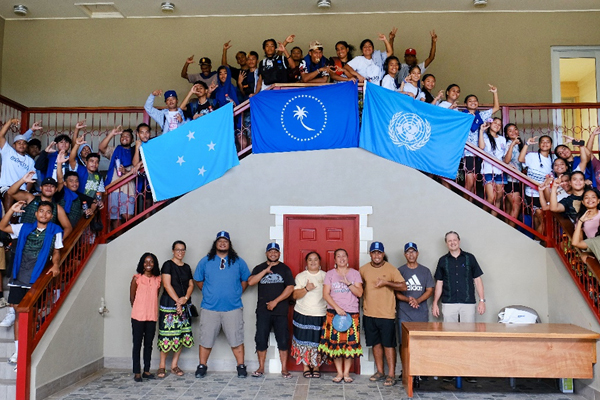 “We almost didn’t make it to the games,” shared the Department of Health and Social Affairs’s Sports and Physical Wellness Coordinator, Sebastian T. Tairuwepiy. “But with the Gender Machinery Project’s help, the team was able to come to Pohnpei and show just how much they’ve grown. Their victory is a testament to their hard work, and we look forward to seeing what they accomplish next.”
With the 2024 Holiday Games and the 3rd under 17 Games on the horizon, the Chuuk team is already preparing to defend their title. Head Coach Raisa Ruda, who has guided the team through their challenges, remains confident in their potential. “It’s a blessing to see how far these girls have come,” Coach Raisa said. “They’ve shown incredible determination and grit, and I’m beyond proud of them. This is just the beginning for them – there’s so much more to come.”
As the success of these athletes continues to ripple through their communities, it becomes clear that the impact of initiatives like these extend far beyond sports. They are laying the foundation for a generation of strong, empowered women ready to take on any challenge that comes their way.
“We almost didn’t make it to the games,” shared the Department of Health and Social Affairs’s Sports and Physical Wellness Coordinator, Sebastian T. Tairuwepiy. “But with the Gender Machinery Project’s help, the team was able to come to Pohnpei and show just how much they’ve grown. Their victory is a testament to their hard work, and we look forward to seeing what they accomplish next.”
With the 2024 Holiday Games and the 3rd under 17 Games on the horizon, the Chuuk team is already preparing to defend their title. Head Coach Raisa Ruda, who has guided the team through their challenges, remains confident in their potential. “It’s a blessing to see how far these girls have come,” Coach Raisa said. “They’ve shown incredible determination and grit, and I’m beyond proud of them. This is just the beginning for them – there’s so much more to come.”
As the success of these athletes continues to ripple through their communities, it becomes clear that the impact of initiatives like these extend far beyond sports. They are laying the foundation for a generation of strong, empowered women ready to take on any challenge that comes their way.
This challenging backdrop played a role in resilience-building for the girls basketball team of Chuuk State. With unwavering determination and months of intense training, the team proudly brought the championship title back to their state.
“Empowering women and girls isn’t just about education or employment; it’s also about giving them the space to excel in every area of life, including sports,” said Kevin Petrini, UNDP Deputy Resident Representative in the North Pacific. “We’re proud to support these talented athletes on their journey to excellence.”
“We didn’t win last time, but that only pushed us to work harder,” said Amy Aritos, team captain and this year’s Most Valuable Player. “We knew we had what it took, and this victory proves it. I’m incredibly proud of my team and how far we’ve come.”
This success story goes beyond the basketball court. It reflects a broader goal, organized by the Department of Health and Social Affairs, to empower young women across the Federated States of Micronesia through sports.
These tournaments are organized to offer more than just competition; they provide a platform for personal development, confidence building, and fostering camaraderie among girls from all states.
The United Nations Development Programme Pacific Office, a key partner in this initiative, views these games as a critical step in promoting gender equality and advancing opportunities for young women.
Through the Strengthening Gender Machinery Project, UNDP played a vital role in enabling the Chuuk team to participate in the games. From sponsoring travel arrangements to recognizing their hard work with support throughout the competition, the UNDP’s commitment helped turn the team’s dreams into reality.
Despite facing numerous obstacles, the Chuuk Girls High School basketball team stands as a beacon of what’s possible when young women are given the support and opportunities they deserve. Their journey to triumph is an inspiring example of resilience and the transformative power of sports.
“We almost didn’t make it to the games,” shared the Department of Health and Social Affairs’s Sports and Physical Wellness Coordinator, Sebastian T. Tairuwepiy. “But with the Gender Machinery Project’s help, the team was able to come to Pohnpei and show just how much they’ve grown. Their victory is a testament to their hard work, and we look forward to seeing what they accomplish next.”
With the 2024 Holiday Games and the 3rd under 17 Games on the horizon, the Chuuk team is already preparing to defend their title. Head Coach Raisa Ruda, who has guided the team through their challenges, remains confident in their potential. “It’s a blessing to see how far these girls have come,” Coach Raisa said. “They’ve shown incredible determination and grit, and I’m beyond proud of them. This is just the beginning for them – there’s so much more to come.”
As the success of these athletes continues to ripple through their communities, it becomes clear that the impact of initiatives like these extend far beyond sports. They are laying the foundation for a generation of strong, empowered women ready to take on any challenge that comes their way.