India-UN Fund: Moldova Advances Data Governance Through South-South Cooperation
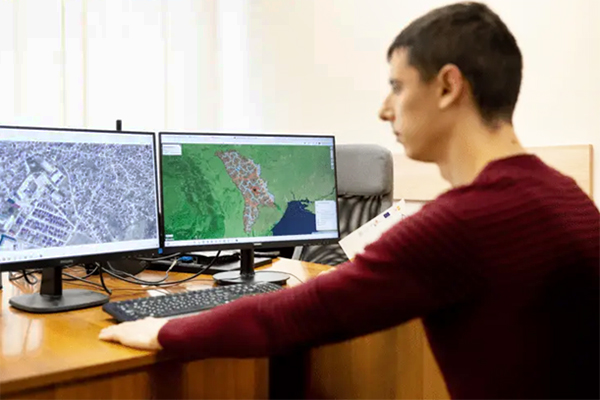
A specialist of the National Bureau of Statistic in Moldova. Photo: UNFPA
Recognizing the urgent need to build effective and resilient statistical systems, Moldova has tapped into the expertise of countries of the Global South. With financial support of the India-UN Development Partnership Fund facilitated by the United Nations Office for South-South Cooperation (UNOSSC), Moldova is building a data system capable of accurately tracking demographic changes and responding to humanitarian and emergency situations. The country is moving away from reliance on traditional, paper-based data collection methods.
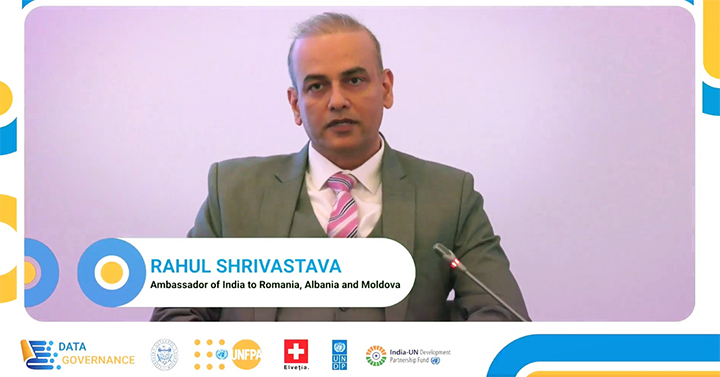
“Good data governance is widely practiced in India and has proven to be effective and beneficial,” said H.E. Rahul Shrivastava, Ambassador of India to Romania, Albania, and Moldova. “By utilizing quality data, the government can reach the poorest segments of society.”
The project, supported by the United Nations Population Fund (UNFPA Moldova) in collaboration with the National Bureau of Statistics and the Ministry of Labor and Social Protection, focuses on transitioning from outdated methods to a modern, register-based statistical approach. This shift is essential for ensuring that Moldova has the data infrastructure necessary to monitor demographic trends accurately and respond effectively to emergencies.
The project addresses critical challenges within Moldova’s data system, equipping it with modern tools to effectively monitor demographic changes. This transformation involves a significant shift from traditional data collection methods – such as paper-based surveys, and exclusive reliance on field data – to more advanced approaches employed by both developing and developed nations. By integrating administrative data with other data sources (including private, spatial, and big data) and conducting targeted longitudinal studies, the project aims to provide a deeper understanding of the factors driving demographic shifts in Moldova.
The achieved outputs have strengthened the capacity of the National Bureau of Statistics of Moldova, facilitated the development of essential tools, and enabled the implementation of new technologies to establish an administrative data exchange platform. Additionally, the project has organized various exchange programs with Indian counterparts, fostering knowledge sharing and enhancing data governance both within Moldova and across countries in the Global South.
“In the realm of digital transformation, we witness the advantages of data governance. We are currently amidst a digital revolution in India,” said H.E. Rahul Shrivastava. “Every month, we conduct 6 million transactions, representing 46% of global digital transactions, all thanks to effective data governance. When we leverage data effectively, demographic challenges can be transformed into demographic dividends. This transformation has been evident in India, a strong partner of Moldova, and we are eager to share our experiences.”
Through this partnership, Moldova has engaged with nations such as India, Uruguay, Argentina, and others in the Western Balkans and Europe, gaining valuable insights and learning best practices in demographic resilience. One of the most significant outcomes of this collaboration is the execution of the second wave of the Generations and Gender Survey. This comprehensive study, involving 10,000 respondents from across Moldova, provides critical data on demographic trends, including low fertility, aging, and migration. The findings from this survey will be instrumental in crafting policies aimed at strengthening Moldova’s demographic resilience.
Additionally, exchange programs with Indian counterparts have focused on improving data governance and integrating non-traditional data sources into Moldova’s official statistics. These programs have enhanced Moldova’s technical capabilities and fostered mutual learning, allowing the country to share its experiences and contribute to the global conversation on data management and statistical modernization.

 “In the realm of digital transformation, we witness the advantages of data governance. We are currently amidst a digital revolution in India,” said H.E. Rahul Shrivastava. “Every month, we conduct 6 million transactions, representing 46% of global digital transactions, all thanks to effective data governance. When we leverage data effectively, demographic challenges can be transformed into demographic dividends. This transformation has been evident in India, a strong partner of Moldova, and we are eager to share our experiences.”
Through this partnership, Moldova has engaged with nations such as India, Uruguay, Argentina, and others in the Western Balkans and Europe, gaining valuable insights and learning best practices in demographic resilience. One of the most significant outcomes of this collaboration is the execution of the second wave of the Generations and Gender Survey. This comprehensive study, involving 10,000 respondents from across Moldova, provides critical data on demographic trends, including low fertility, aging, and migration. The findings from this survey will be instrumental in crafting policies aimed at strengthening Moldova’s demographic resilience.
Additionally, exchange programs with Indian counterparts have focused on improving data governance and integrating non-traditional data sources into Moldova’s official statistics. These programs have enhanced Moldova’s technical capabilities and fostered mutual learning, allowing the country to share its experiences and contribute to the global conversation on data management and statistical modernization.
“In the realm of digital transformation, we witness the advantages of data governance. We are currently amidst a digital revolution in India,” said H.E. Rahul Shrivastava. “Every month, we conduct 6 million transactions, representing 46% of global digital transactions, all thanks to effective data governance. When we leverage data effectively, demographic challenges can be transformed into demographic dividends. This transformation has been evident in India, a strong partner of Moldova, and we are eager to share our experiences.”
Through this partnership, Moldova has engaged with nations such as India, Uruguay, Argentina, and others in the Western Balkans and Europe, gaining valuable insights and learning best practices in demographic resilience. One of the most significant outcomes of this collaboration is the execution of the second wave of the Generations and Gender Survey. This comprehensive study, involving 10,000 respondents from across Moldova, provides critical data on demographic trends, including low fertility, aging, and migration. The findings from this survey will be instrumental in crafting policies aimed at strengthening Moldova’s demographic resilience.
Additionally, exchange programs with Indian counterparts have focused on improving data governance and integrating non-traditional data sources into Moldova’s official statistics. These programs have enhanced Moldova’s technical capabilities and fostered mutual learning, allowing the country to share its experiences and contribute to the global conversation on data management and statistical modernization.