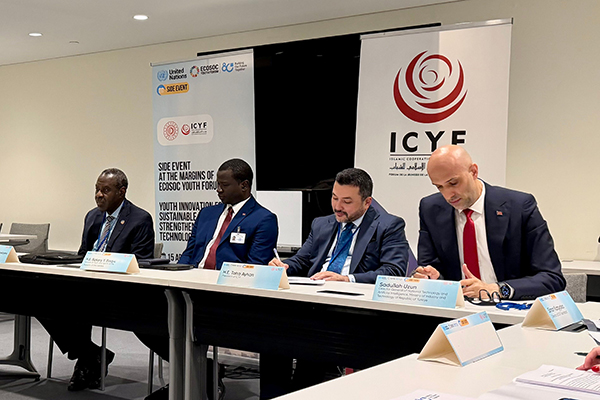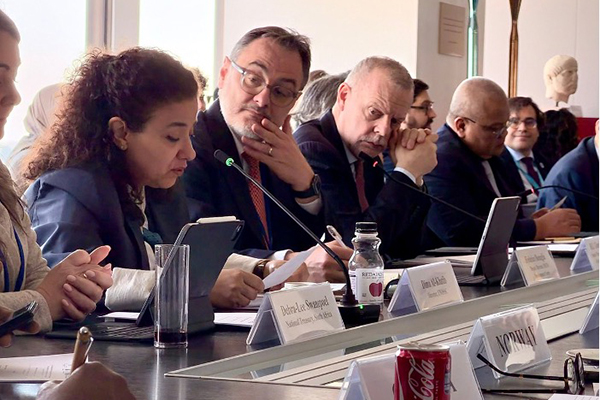
The Inter-regional Expert Meeting on the Measurement of South-South Cooperation took place 4-6 June 2024 in Doha, Qatar. The meeting was organized by the United Nations Conference on Trade and Development (UNCTAD) and the United Nations Economic and Social Commission for West Asia (ESCWA), in collaboration with the UN Regional Commissions, and other partners. It was hosted by the Ministry of Foreign Affairs of the State of Qatar. UNCTAD is the co-custodian of SDG indicator 17.3.1 (additional financial resources to developing countries).
This meeting is part of the United Nations Development Account project on Quantifying South-South Cooperation to Mobilize Funds for the Sustainable Development Goals. It followed the 2023 first Expert Meeting held in Brasilia which launched the project and discussed implementation of the global, voluntary framework to measure South-South cooperation. This voluntary framework was developed jointly by the countries of the Global South. The framework was presented in Qatar during the different meeting segments, including the technical capacity development workshop focusing on application of the framework and its manual by national authorities in the collection and analysis of data on South-South cooperation toward enabling the reporting of country-owned data on the SDG indicator on development support.
Development Account projects are one of the entry points identified in the Guidelines for the Integration of South-South and Triangular Cooperation into the Country- and Regional-level Work of the United Nations Development System.
The Meeting brought together pioneering countries and pilot countries as well as project partners in the preparatory expert meeting segment to advance methodological and data collection work for sharing with further countries to guide future reporting of data on SDG indicator 17.3.1. The pioneering countries (Brazil, Colombia and Mexico) shared their frameworks while the Ibero-American General Secretariat (SEGIB) presented their regional data collection framework used to prepare their bi-annual South-South and Triangular Cooperation Report. The pilot countries are Africa (Namibia and Nigeria); Asia-Pacific (Malaysia); Latin America and Caribbean (Ecuador and Peru) and Arab States (Jordan).
The event included discussions on strategic issues related to South-South cooperation; the importance of South-South cooperation for accelerating progress towards the 2030 Agenda for Sustainable Development; and the role of data in related research, development, and policy agendas.
Toward enhancing the voice of the Global South in development finance debates broadly, meeting participants were drawn from national, regional and international experts on South-South cooperation and its measurement from development cooperation agencies, statistical offices, and ministries. Senior officials from countries, regional and international organizations, project partners, and the academic community were invited to discuss and agree on strategies for integration of the framework to strengthen South-South cooperation.
The United Nations Office for South-South Cooperation (UNOSSC) was represented by the Chief of Intergovernmental and UN Systems Affairs, Mr. Denis Nkala, who contributed to the discussion on the finalization of a framework to measure South-South cooperation. His presentation focused on how UNOSSC can support the many countries that have expressed a willingness to collect South-South cooperation data in step with the framework, but need capacity building to do so.
Mr. Nkala introduced the various tools that the Office has developed, including the United Nations Systemwide Strategy on South-South and Triangular Cooperation and the South-South Galaxy that captures examples of progress made by the countries that embark in this process.
UNCTAD noted that over 100 countries have already indicated their interest in using the framework, as well as their need for capacity building support. The goal is to finalise the framework by July 2026 after testing it in the pilot countries.