• Home
  • /
  • News
  • /
  • International Day of Women and Girls in Science: Global Report Calls for Closing Gender Gaps in STEM Across the Global South

International Day of Women and Girls in Science: Global Report Calls for Closing Gender Gaps in STEM Across the Global South


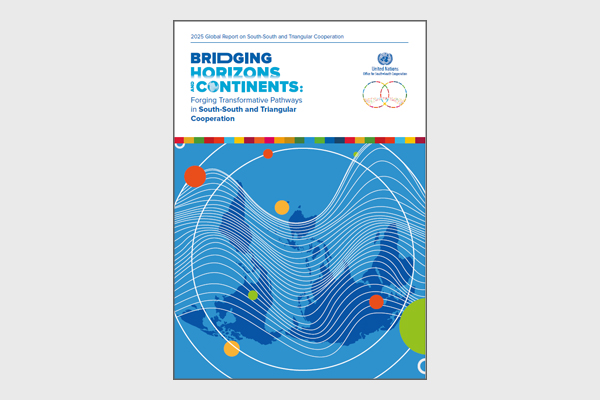
Observed annually on 11 February, the International Day of Women and Girls in Science underscores the urgent need to advance women’s full participation in science, technology and innovation. The 2025 Global Report on South-South and Triangular Cooperation reinforces this call, highlighting persistent gender in science, technology and innovation (STI) across the Global South. Readers are encouraged to explore the full Global Report for detailed findings and policy recommendations. Key findings include alarmingly low female participation in STEM fields and digital economies, compounded by poverty and infrastructure barriers. For example, only 30% of those working in Science, Technology, Engineering and Mathematics (STEM) in the Global South are women, and in sub‐Saharan Africa just 24% of women use the internet (versus 35% of men). These trends threaten to undermine half the population. The report stresses that women’s full participation and leadership in STI is vital to sustainable development. It issues clear policy recommendations to embed gender-responsive design in all South-South and triangular cooperation initiatives, as well as empower women’s groups and ensure equal access to leadership roles. A main message is that systemic interventions (education, funding, infrastructure) must target women and girls to close these gaps. Gender gaps in STI and digital access Women remain underrepresented in education and innovation ecosystems. The report finds that only 30% of STEM practitioners in the Global South are women – far below parity. This suggests that cultural norms and barriers deter many girls from scientific and technical careers. Similarly, severe digital divides persist: in Africa only about 24% of women use the Internet compared to 35% of men. Low digital literacy and costly connectivity disproportionately exclude women. As noted, underserved groups – “particularly women, rural residents, the poor, [and] the less educated” – face acute digital skill gaps. This means millions of women and girls are effectively offline, missing out on online education, e‑commerce and innovation tools. Without closing these gaps, women cannot fully engage in STI education or benefit from new digital industries. Barriers and intersectional challenges Multiple intersecting factors exacerbate gender inequality in STI. The report emphasises that the compound “polycrisis” of COVID‑19, climate shocks and economic stress has “disproportionately affected” marginalized groups including women. Persistent poverty is a major barrier: in 2023 10.3% of women in developing countries lived in extreme poverty, and if trends hold an estimated 8.0% (342.4 million women and girls) will still be poor by 2030. Such economic disadvantage limits girls’ education and access to training. Rural and remote communities also suffer infrastructure deficits (electricity, broadband), worsening the digital divide. The report highlights that women’s needs must be explicitly addressed: e.g. in school enrolment campaigns, STI curricula and vocational training, accounting for age, disability and location. Policy implications and best practices The report calls for gender-responsive South-South cooperation/STI policies. Key recommendations include building inclusive platforms and multi-stakeholder partnerships that “ensure that women participate equally in leadership and decision-making roles”. For example, South-South cooperation networks should involve women’s organisations and gender equality advocates from the design stage. Triangular cooperation guidelines explicitly urge programmes to “advance gender equality and the empowerment of women and girls” as a core principle. High‑level summits echo this: the 3rd South Summit affirmed that “women’s full and equal participation and leadership… are vital for achieving sustainable development”. Best practices cited include targeted scholarship funds for female scientists, ICT training tailored for women and girls, and monitoring schemes that collect gender-disaggregated STI data. The evidence underlines that investing in women and girls yields broad gains – boosting female STEM enrolment and internet access strengthens innovation capacity for entire communities. By addressing cultural norms and structural constraints, South-South cooperation initiatives can create a more equitable STI ecosystem in the future. Read the 2025 Global Report on South-South and Triangular Cooperation.
Related Post


  • All Post
  • ATCT Featured Publications POM
  • BAPA+40
  • Blog
  • Capacity Development Initiatives
  • CICETE Featured Publications POM
  • CIKD
  • Cities Clusters - Agriculture
  • Cities Clusters - COVID-19
  • Cities Clusters - COVID-19 Knowledge Products
  • Cities Clusters - DRR
  • Cities Clusters - E-commerce
  • Cities Clusters - Tourism
  • Cities Clusters - Tourism Knowledge Products
  • Cities Clusters - Transport
  • Cities Clusters - Waste
  • Cities Project
  • Cities Project COVID-19 Newsletters
  • Cities Project COVID-19 Response
  • Cities Project Knowledge Products
  • Classic (untouched)
  • Climate Action
  • COMSATS Featured Publications POM
  • COMSATS Featured Solutions POM
  • Converted from Divi
  • Converted from Mixed
  • Converted from WPBakery
  • COVID-19
  • COVID-19 Page Featured Solutions
  • DRR Knowledge Products
  • DRR News
  • Empty Post
  • Events
  • Featured Event UN-Habitat POM
  • Financing for Development
  • Financing Mechanisms
  • g7+
  • Gender Events
  • Gender News
  • Good Practices in SSTrC Series
  • Good Practices Publications
  • Good Practices Thematic Series & Special Editions
  • Good Practices Vol. 2
  • Good Practices Vol. 3
  • GSSDC
  • Highlighted
  • Highlighted Publications
  • IAEA Featured Solutions POM
  • IBRAF Featured Publications POM
  • IBSA Fund
  • IBSA Fund Annual Reports
  • IBSA Fund News and Stories
  • IBSA Fund Publication
  • IBSA Fund Story
  • ICGEB Featured Events POM
  • ICGEB Featured Publications POM
  • ICGEB Featured Solutions POM
  • ILO Featured Events POM
  • ILO Featured Publications POM
  • ILO Featured Solutions POM
  • India-UN Development Partnership Fund
  • India-UN Fund Publication
  • India-UN Fund Story
  • IsDB
  • IsDB Featured Publications POM
  • IsDB SCC
  • News
  • Norec Featured Publications POM
  • Norec Featured Solutions POM
  • Peace and Development
  • PGTF Publications
  • PGTF Story
  • PICA Featured News POM
  • PICA Featured Publications POM
  • PICA Featured Solutions POM
  • PIDF Featured Publications POM
  • Publications
  • Regional Updates
  • Research
  • ROK-UNOSSC Facility
  • SGP Featured Publication POM
  • SGP Featured Solutions POM
  • Solution
  • South South in Action
  • South-South Global Thinkers
  • South-South Ideas
  • South-South Ideas Series
  • South-South in Action Series
  • Southern Response to COVID-19
  • SSN4PSI Featured Publications POM
  • SSN4PSI Featured Solutions POM
  • Training
  • UN Day for SSC 2020
  • UN Fund for SSC
  • UN SSC Day Publications
  • UN-Habitat Featured Publications POM
  • UN-HABITAT Featured Solutions POM
  • UNCCT
  • UNEP Featured Publications POM
  • UNFPA
  • UNFSSC Publication
  • UNFSSC Story
  • UNIDO Featured Publications POM
  • UNIDO Featured Solutions POM
  • UNIDO POM Events
  • UNOCT Featured Publications POM
  • UNV
  • UNV Featured Publications POM
  • WB Featured Publications POM
  • WB Featured Solutions POM
  • Webinars
  • WFP Featured Events POM
  • WFP Featured Publication POM
  • WFP Featured Solutions POM
  • WIPO
  • Workshops and Seminars
  • Youth4South
  • z Across the Globe 1
  • z Across the Globe 2
  • z Across the Globe 4
  • z Across the Globe 5
  • z Across the Globe 6
  • z Across the Globe 7
  • z Across the Globe 8
  • z ES BAPA+40
  • z ES Eventos
  • z ES Noticias
  • z ES Noticias Destacadas
  • z ES Publicaciones
  • z ES Publicaciones Destacadas
  • z ES Serie Buenas Prácticas en la CSSyT
  • z ES Serie El Sur-Sur en Acción
  • z FR Actualités
  • z FR BAPA+40
  • z FR Événements
  • z FR Publications
  • z FR Publications en vedette
  • z FR Série Bonnes pratiques en CSST
  • z FR Série Sud-Sud en action
  • z Highlighted News
  • z Photos
  • z Videos
  • z ZH BAPA+40
  • z ZH Events
  • z ZH News

ABOUT

Terms of Service

Privacy Policy

Disclosures

RESOURCES

Terms of Service

Privacy Policy

Disclosures

ENGAGE

Terms of Service

Privacy Policy

Disclosures

Copyright © UNOSSC/UNDP

wpChatIcon
wpChatIcon

Alliance Application Form

Submit an Expression of Interest and/or Demand Signal. UNOSSC reviews submissions on a rolling basis.

1. Official name of organization / institution / government entity (exclusions to apply) *
2. Country *
3. Region *
4. SDG *
Secondary SDG *
5. Partner category *
6. Website *
7. Brief description of your institution (max. 150 words) *
Name for the Lead *
Title for the Lead *
Email address for the Lead *
Name for the co-lead
Title for the co-lead
Email address for the co-lead
Section 3. Expression of Interest in the Alliance *
Additional information on proposed areas of engagement may be requested through the platform following initial review by the Alliance Secretariat.
Section 4. Due Diligence and Integrity Declaration *

Submission Note:

  • Submission of this Expression of Interest form does not automatically confer participation in the Alliance.
  • All submissions will be reviewed by the Alliance Secretariat, including basic eligibility screening and proportionate due diligence, as appropriate.
  • Participation in Alliance activities is determined based on relevance to articulated cooperation needs, alignment with Alliance principles, and integrity considerations.
  • Engagement under the Alliance is voluntary, non-binding, and facilitative in nature, and does not constitute funding approval, contractual commitment, or institutional membership.
  • The Alliance Secretariat may contact submitting entities for additional information or clarification during the review process.

Submission of Demand Form

Description of Demand

Indicate the type of support or cooperation requested through the Alliance.
Please briefly describe the challenge, gap, or priority. (Max. 300 words)

Thematic and Geographic Focus

Please indicate the main focus areas of your demand:

A. Thematic Areas (select up to three)
B. Geographic Focus (select all that apply)

Proposed Engagement Modalities

Please indicate how you would like to engage through the Alliance (select all that apply):

Expected Outcomes

Please indicate the main results you seek to achieve through this engagement. (Max. 200 words)
Examples:
• Capacity strengthened
• Partnerships established
• Sectoral or regional strategies co-developed
• Solutions piloted
• Knowledge generated
• Policies informed

Timeline and Readiness (if applicable)

1. Expected timeframe for engagement:
2. Current stage:

Additional Information

Please provide any additional information, documents, or links relevant to this submission.
(Max. 200 words or upload link)

Submission of Offer Form

Description of Contribution

Indicate the type of contribution your institution can provide and describe the expertise, resources, or solutions you may offer.
Please briefly describe your proposed contribution. (Max. 300 words)

Thematic and Geographic Focus

Please indicate the main focus areas of your interest:

A. Thematic Areas (select up to three)
B. Geographic Focus (select all that apply)

Proposed Engagement Modalities

Please indicate how you would like to engage through the Alliance (select all that apply):

Expected Outcomes

Please indicate the main results you aim to achieve through this engagement. (Max. 200 words)
Examples:
• Capacity strengthened
• Partnerships established
• Sectoral or regional strategies co-developed
• Solutions piloted
• Knowledge generated
• Policies informed

Timeline and Readiness (if applicable)

1. Expected timeframe for engagement:
2. Current stage:

Additional Information

Please provide any additional information, documents, or links relevant to this submission.
(Max. 200 words or upload link)

Organization Registration

Authentication & Due Diligence This prototype simulates identity verification, due diligence confirmation, and an authentication step before submission. *

First Name *
Last Name *
Email address *
Password *
Confirm Password *
Name of institution / organization *
Country / Region *
Organization Type *
Organization other *
Function / role *
Organization logo *
Maximum file size: 1 GB

Login

Login / email *
Password *
Remember me

Forgot password?

Connect form

Your name *
Email *
Organization / institution *
Job title / role *
Reason for connecting:
Short message

Scroll to Top