The fourth Momento ADELANTE, held on January 21, 2025, brought together over 100 participants from diverse countries and institutions to explore the transformative potential of triangular cooperation in addressing pressing global challenges. This event, led by the European Commission’s Directorate for International Partnerships (DG INTPA) together with the United Nations Office for South-South Cooperation (UNOSSC), aimed to share reflections, lessons learned, and emerging trends within the Triangular Cooperation framework.
The Momento opened with remarks from Geert Anckaert of the European Commission’s Directorate-General for International Partnerships (DG INTPA), who highlighted ADELANTE’s achievements in fostering regional cooperation between the European Union (EU) and Latin America and the Caribbean (LAC). These achievements were made possible through invaluable partnerships with diverse countries and institutions. With initiatives funded under a 15-million-euro budget, ADELANTE’s focus spans critical areas such as climate change, digitalisation, and education.
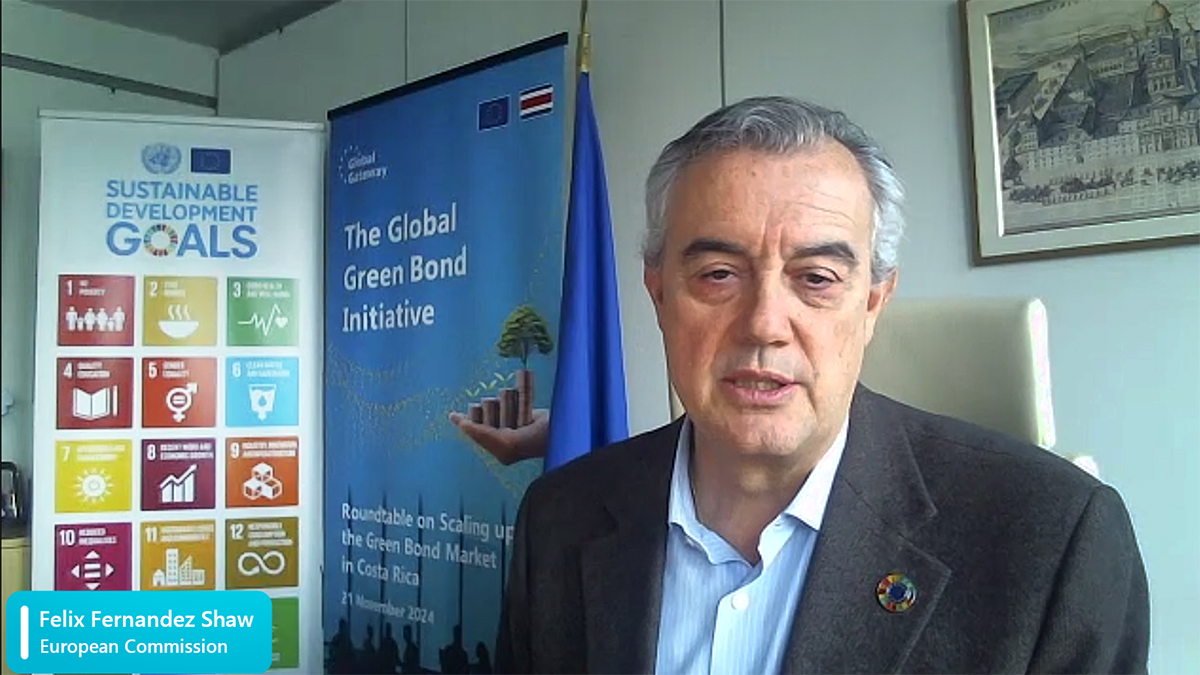 Félix Fernández-Shaw, Director for Latin America and the Caribbean at DG INTPA, emphasised the EU’s shift from traditional donor-recipient dynamics towards more horizontal partnerships. He highlighted triangular cooperation’s integration into the EU’s Global Gateway strategy, which addresses global issues like supply chain resilience and health. Mr. Fernández-Shaw called for the institutionalisation of triangular cooperation to reduce overhead costs and maximise its integration into development frameworks.
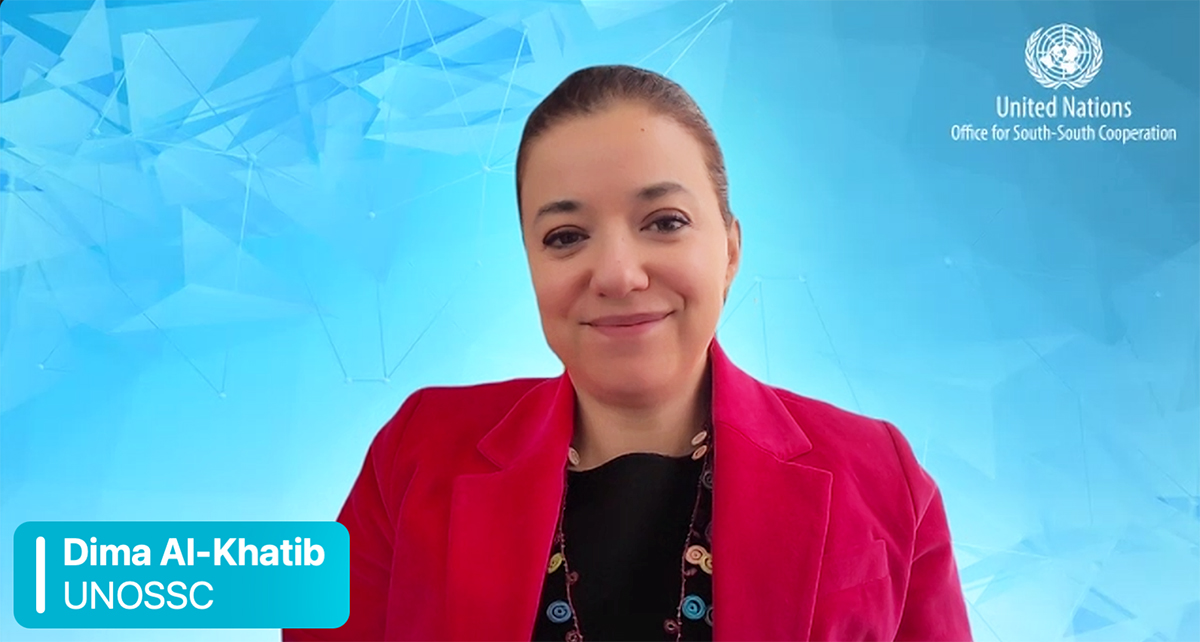 Dima Al-Khatib, Director of UNOSSC, underscored the critical role of triangular cooperation in advancing the Sustainable Development Goals (SDGs), and in facilitating broader access to knowledge, expertise and resources. “Urgent, collective, and effective actions – involving innovation and commitment of all partners – are needed to support the bridging of development gaps,” said the Director, reflecting on the role of multilateral organisations in advancing the triangular cooperation agenda. The Director also highlighted the important role of the new UNOSSC Triangular Cooperation Window, which was launched in Lisbon in partnership with Portugal. The Window provides a flexible and responsive mechanism that addresses the specific needs and priorities of developing countries.
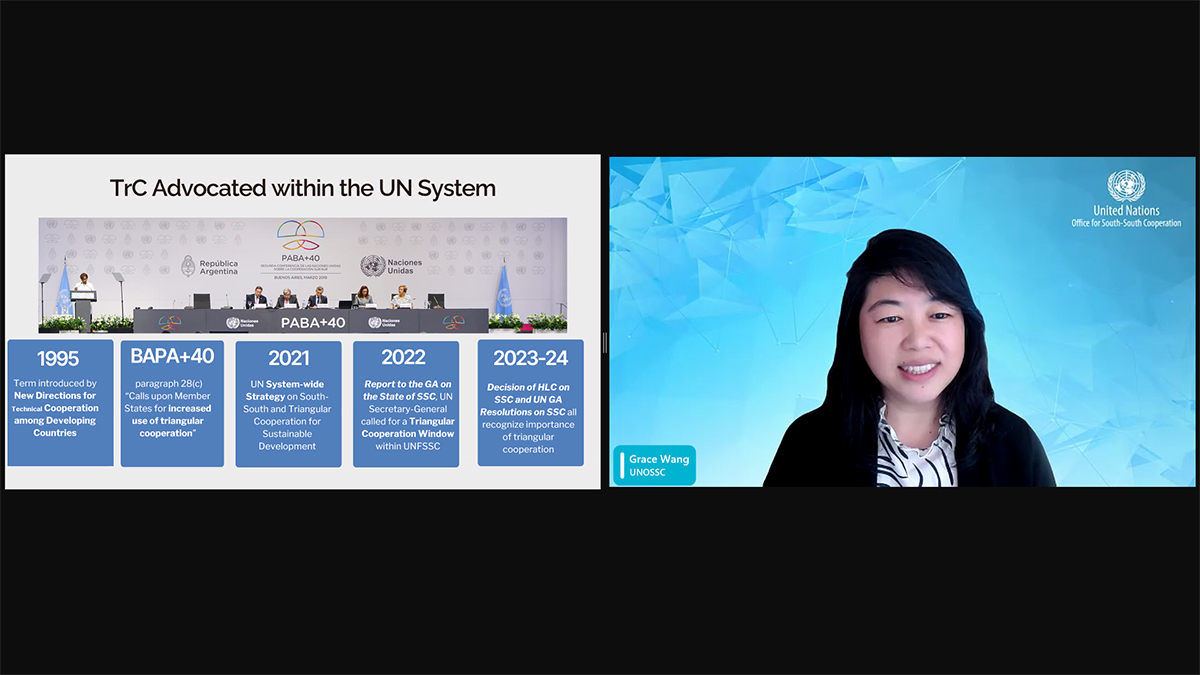 Grace Wang, Trust Fund Director at UNOSSC provided insights on the operationalisation of the Triangular Cooperation Window, emphasising its adaptability to diverse development needs.
“The new Triangular Cooperation Window within the United Nations Fund for South-South Cooperation will mobilize sources of expertise, knowledge, and resources to support the acceleration of SDGs, through support to South-South and triangular cooperation initiatives,” said Ms. Wang. She showcased examples such as the Republic of Korea’s work in the Lower Mekong Basin, demonstrating triangular cooperation’s innovation and impact capacity. Ms. Wang also addressed the vital role of emerging economies in facilitating technology transfer and capacity building while acknowledging challenges like resource limitations and knowledge gaps.
Grace Wang, Trust Fund Director at UNOSSC provided insights on the operationalisation of the Triangular Cooperation Window, emphasising its adaptability to diverse development needs.
“The new Triangular Cooperation Window within the United Nations Fund for South-South Cooperation will mobilize sources of expertise, knowledge, and resources to support the acceleration of SDGs, through support to South-South and triangular cooperation initiatives,” said Ms. Wang. She showcased examples such as the Republic of Korea’s work in the Lower Mekong Basin, demonstrating triangular cooperation’s innovation and impact capacity. Ms. Wang also addressed the vital role of emerging economies in facilitating technology transfer and capacity building while acknowledging challenges like resource limitations and knowledge gaps.
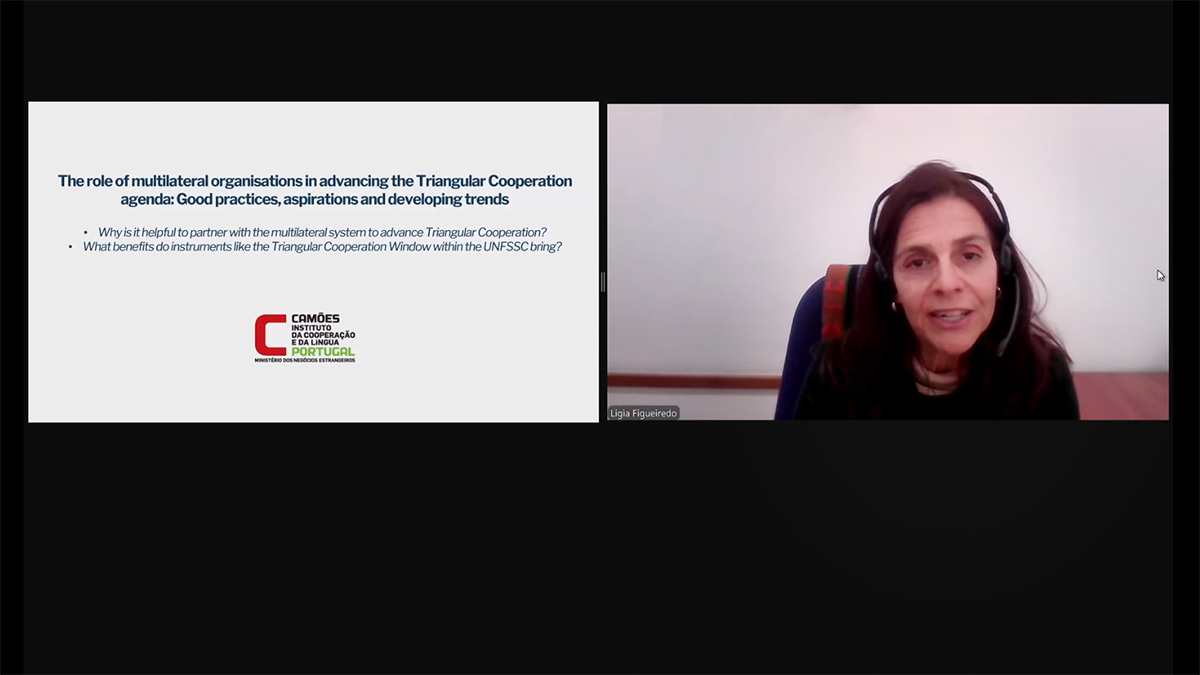 Lígia Figueiredo, Director at Camões, I.P., highlighted Portugal’s financial contributions and strategic partnerships that have expanded triangular cooperation’s reach beyond traditional Portuguese-speaking countries. She emphasised triangular cooperation’s value in building trust and technical diplomacy among nations and encouraged partnering with multilateral organisations such as UNOSSC and the EU for a rapid advancing in SDGs achievement. “Triangular cooperation exemplifies the type of collaboration that is both transformative and future-oriented, creating a win-win for all parties,” said Ms. Figueiredo, noting that new Triangular Cooperation Window represents an opportunity to create synergies and scale up opportunities, and encouraging all partners to join Portugal in contributing to the Window.
 Moncef Soudani, Manager at the Islamic Development Bank (IsDB) shared insights on creating national ecosystems for triangular cooperation. He emphasised the importance of political will and long-term strategies and noted the need for innovative financing models to overcome funding constraints.
 Ama Brandford-Arthur, Senior Partnership Officer at the International Fund for Agricultural Development (IFAD) highlighted triangular cooperation’s demand-driven nature, sharing success stories in agriculture and nutrition. She stressed the importance of creating synergies amongst projects, robust governance mechanisms and data-driven evaluations to maximise impact. “What is important to note about triangular cooperation is that it triggers a response from partner countries themselves,” said Ms. Brandford-Arthur, emphasizing that, “All partners can bring something to the table, including sharing support and home-grown solutions, among others.”
 Verónica Suárez, Head of Institutional Relations at the Uruguayan Agency for International Cooperation (AUCI), as a member of the Global Partnership Initiative on Effective Triangular Cooperation (GPI), showcased the country’s innovative use of decentralised cooperation frameworks, emphasising the value of documenting lessons learned to enhance scalability and sustainability.
Participants underscored the role of knowledge platforms – including UNOSSC’s South-South Galaxy – and learning networks as repositories of best practices. These platforms enable peer-to-peer learning and facilitate dialogue among diverse actors. Recommendations included enhancing advocacy, ensuring accessibility, and maintaining regular updates to maximise their relevance and impact.
The fourth Momento ADELANTE reaffirmed the transformative potential of triangular cooperation in addressing global challenges through inclusive and dynamic partnerships. With multilateral organisations playing a pivotal role. The event concluded with a call to deepen reflections and expand collaborations to drive sustainable development and build resilient societies.
Watch the recording here: https://www.youtube.com/watch?v=3mAJ2Q9txU8
Read more about Momentos ADELANTE: https://www.adelante2.eu/en/momentos
Verónica Suárez, Head of Institutional Relations at the Uruguayan Agency for International Cooperation (AUCI), as a member of the Global Partnership Initiative on Effective Triangular Cooperation (GPI), showcased the country’s innovative use of decentralised cooperation frameworks, emphasising the value of documenting lessons learned to enhance scalability and sustainability.
Participants underscored the role of knowledge platforms – including UNOSSC’s South-South Galaxy – and learning networks as repositories of best practices. These platforms enable peer-to-peer learning and facilitate dialogue among diverse actors. Recommendations included enhancing advocacy, ensuring accessibility, and maintaining regular updates to maximise their relevance and impact.
The fourth Momento ADELANTE reaffirmed the transformative potential of triangular cooperation in addressing global challenges through inclusive and dynamic partnerships. With multilateral organisations playing a pivotal role. The event concluded with a call to deepen reflections and expand collaborations to drive sustainable development and build resilient societies.
Watch the recording here: https://www.youtube.com/watch?v=3mAJ2Q9txU8
Read more about Momentos ADELANTE: https://www.adelante2.eu/en/momentos
Félix Fernández-Shaw, Director for Latin America and the Caribbean at DG INTPA, emphasised the EU’s shift from traditional donor-recipient dynamics towards more horizontal partnerships. He highlighted triangular cooperation’s integration into the EU’s Global Gateway strategy, which addresses global issues like supply chain resilience and health. Mr. Fernández-Shaw called for the institutionalisation of triangular cooperation to reduce overhead costs and maximise its integration into development frameworks.
Dima Al-Khatib, Director of UNOSSC, underscored the critical role of triangular cooperation in advancing the Sustainable Development Goals (SDGs), and in facilitating broader access to knowledge, expertise and resources. “Urgent, collective, and effective actions – involving innovation and commitment of all partners – are needed to support the bridging of development gaps,” said the Director, reflecting on the role of multilateral organisations in advancing the triangular cooperation agenda. The Director also highlighted the important role of the new UNOSSC Triangular Cooperation Window, which was launched in Lisbon in partnership with Portugal. The Window provides a flexible and responsive mechanism that addresses the specific needs and priorities of developing countries.
Grace Wang, Trust Fund Director at UNOSSC provided insights on the operationalisation of the Triangular Cooperation Window, emphasising its adaptability to diverse development needs.
“The new Triangular Cooperation Window within the United Nations Fund for South-South Cooperation will mobilize sources of expertise, knowledge, and resources to support the acceleration of SDGs, through support to South-South and triangular cooperation initiatives,” said Ms. Wang. She showcased examples such as the Republic of Korea’s work in the Lower Mekong Basin, demonstrating triangular cooperation’s innovation and impact capacity. Ms. Wang also addressed the vital role of emerging economies in facilitating technology transfer and capacity building while acknowledging challenges like resource limitations and knowledge gaps.
Lígia Figueiredo, Director at Camões, I.P., highlighted Portugal’s financial contributions and strategic partnerships that have expanded triangular cooperation’s reach beyond traditional Portuguese-speaking countries. She emphasised triangular cooperation’s value in building trust and technical diplomacy among nations and encouraged partnering with multilateral organisations such as UNOSSC and the EU for a rapid advancing in SDGs achievement. “Triangular cooperation exemplifies the type of collaboration that is both transformative and future-oriented, creating a win-win for all parties,” said Ms. Figueiredo, noting that new Triangular Cooperation Window represents an opportunity to create synergies and scale up opportunities, and encouraging all partners to join Portugal in contributing to the Window.
Moncef Soudani, Manager at the Islamic Development Bank (IsDB) shared insights on creating national ecosystems for triangular cooperation. He emphasised the importance of political will and long-term strategies and noted the need for innovative financing models to overcome funding constraints.
Ama Brandford-Arthur, Senior Partnership Officer at the International Fund for Agricultural Development (IFAD) highlighted triangular cooperation’s demand-driven nature, sharing success stories in agriculture and nutrition. She stressed the importance of creating synergies amongst projects, robust governance mechanisms and data-driven evaluations to maximise impact. “What is important to note about triangular cooperation is that it triggers a response from partner countries themselves,” said Ms. Brandford-Arthur, emphasizing that, “All partners can bring something to the table, including sharing support and home-grown solutions, among others.”
Verónica Suárez, Head of Institutional Relations at the Uruguayan Agency for International Cooperation (AUCI), as a member of the Global Partnership Initiative on Effective Triangular Cooperation (GPI), showcased the country’s innovative use of decentralised cooperation frameworks, emphasising the value of documenting lessons learned to enhance scalability and sustainability.
Participants underscored the role of knowledge platforms – including UNOSSC’s South-South Galaxy – and learning networks as repositories of best practices. These platforms enable peer-to-peer learning and facilitate dialogue among diverse actors. Recommendations included enhancing advocacy, ensuring accessibility, and maintaining regular updates to maximise their relevance and impact.
The fourth Momento ADELANTE reaffirmed the transformative potential of triangular cooperation in addressing global challenges through inclusive and dynamic partnerships. With multilateral organisations playing a pivotal role. The event concluded with a call to deepen reflections and expand collaborations to drive sustainable development and build resilient societies.
Watch the recording here: https://www.youtube.com/watch?v=3mAJ2Q9txU8
Read more about Momentos ADELANTE: https://www.adelante2.eu/en/momentos