• Home
  • /
  • News
  • /
  • New Project Supported by the IBSA Fund Aims to Improve Farmers’ Access to Local Markets in the Republic of Congo

New Project Supported by the IBSA Fund Aims to Improve Farmers’ Access to Local Markets in the Republic of Congo


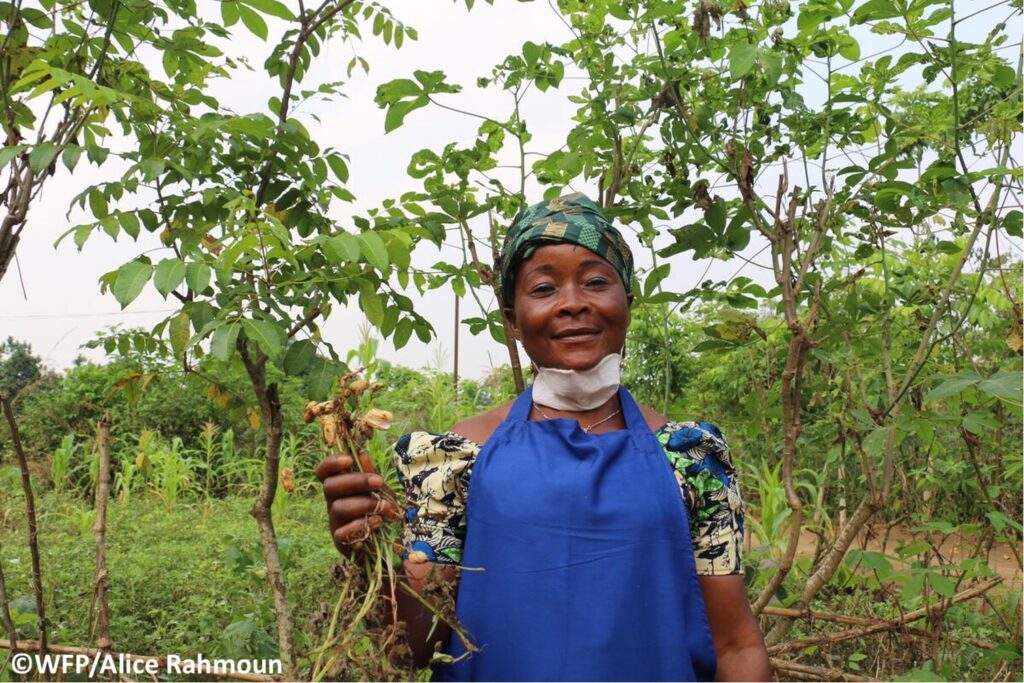
The United Nations World Food Programme (WFP) Centre of Excellence against Hunger in Brazil, the Government of the Republic of Congo (RoC) and the Government of Brazil have launched a new South-South cooperation project with the aim of contributing to the food security and nutritional status of smallholder farmers, particularly women, and school children in the RoC. The project, called “Enhancing Family Farmers’ Access to Local Markets in the Republic of Congo through South-South Cooperation” and funded by the IBSA Fund will enable RoC’s Ministries to tap into the wealth of expertise and innovations available in Brazil , with a focus on pro-family farming and school feeding programmes.

The project will focus its actions on institutional capacity strengthening for policy makers at central and local levels, through a “training of trainers” approach and on-the-job coaching, with the participation of the Ministry of Agriculture, Livestock and Fisheries and of the Ministry of Pre-school, Primary, Secondary Education and Literacy in the RoC. The project will also focus on capacity strengthening at the grassroot level for family farmer associations/cooperatives in targeted districts in the Bouenza, Plateaux and Pool departments, through delivery of equipment, tailored training, and in-field demonstrations by the Ministry of Agriculture, Livestock and Fisheries staff trained by their peers from IBSA countries.

“South-South Trilateral Cooperation is a relevant tool to strengthen local capacity especially in relation to social safety nets and school feeding and WFP has wide experience in facilitating cost-effective and adaptable, results oriented and demand driven SSTC initiatives”, said Daniel Balaban, Director of the WFP Centre of Excellence against Hunger in Brazil. “WFP also focus on mutual benefits and learning as key pillars for strengthening national systems and programmes in countries from the Global South, generating benefits for the most vulnerable people and risk and suffering from hunger and malnutrition”, he added.

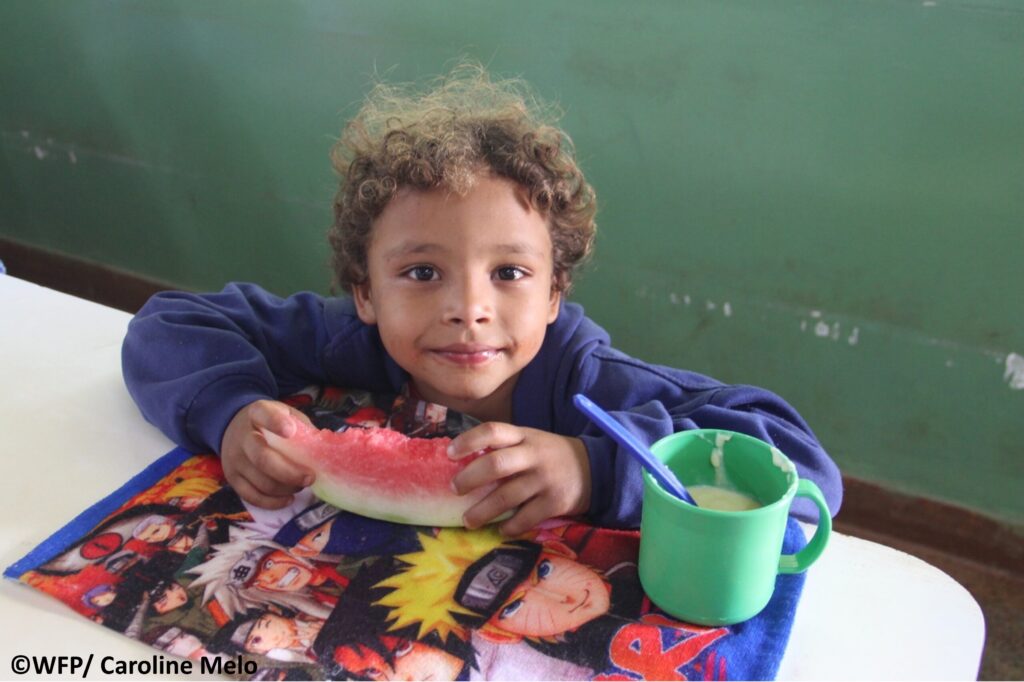
This project will also help enhance the institutional capacity of the Ministry of Pre-school, Primary, Secondary Education and Literacy at central and local levels to adequately implement its National School Feeding Policy with a view to transition from a WFP-led to a fully Government-led national Programme with a strong component of locally purchased food. The School Feeding Programme in RoC currently targets 388 schools supported with McGovern-Dole funds and 144 schools assisted in cash-based transfer modalities (Cantines Ya Buala and Mbala Pinda), providing nutritious meals to an estimated 173,000 students in 10 out of the country’s 12 departments.

In the RoC, food insecurity affects 33,3% percent of households, with high prevalence in rural areas, while 38% of the population is undernourished, and 19,6% of children under the age of five suffer from chronic malnutrition. Over the years, the country has implemented several initiatives to eradicate poverty notably through the implementation of the country strategic plan (the latest covering the 2019-2024 period) and development strategies and policies at the sectoral level. The main gaps in institutional capacity, at policy and technical levels, to support smallholder farmers include difficulty in accessing credit and natural resources, insufficient technical assistance services, poor rural infrastructure, weak agricultural modernisation, inadequate food storage and processing practices/equipment, and limited capacity of farmer associations/cooperatives.
Sharing the Brazilian Experience through South-South Cooperation

Institutional purchase from family farmers is a key strategy for the Brazil’s Government to strengthen family farming. Programmes such as the Food Procurement Programme (PAA), the National Programme for Strengthening Smallholder Agriculture (PRONAF), and institutions such as The Brazilian Agricultural Research Corporation (EMBRAPA) and the state technical assistance and rural extension companies (EMATER) allowed farmers to get greater access to research and technology to increase production, generating greater income and better conditions for the sector.

The Brazilian National School Feeding Programme (PNAE) is among the largest school feeding programmes in the world due to its geographic coverage and number of beneficiaries and is regarded as a role model for including family farming products on school menus.

Cecilia Malaguti, head of the Trilateral South-South Cooperation with International Organization of the Brazilian Cooperation Agency, said: “South-South Cooperation has the goal of developing capacities based on sharing good practices and successful experiences with partner countries from the South. This project will be an opportunity for the Brazilian government to share one of its most recognized policies, the National School Feeding Programme, highlighting its link with smallholder farming, its multisectoral approach, its possibility to play a key role in fighting hunger, promoting food and nutrition security and sovereignty, collaborating, in this way,  to developing smallholder farming in the Republic of the Congo.“

The project which will run for two years includes market assessments, workshops, field visits, production of documents and manuals, distribution of farming equipment among other activities.
Related Post


  • All Post
  • ATCT Featured Publications POM
  • BAPA+40
  • Blog
  • Capacity Development Initiatives
  • CICETE Featured Publications POM
  • CIKD
  • Cities Clusters - Agriculture
  • Cities Clusters - COVID-19
  • Cities Clusters - COVID-19 Knowledge Products
  • Cities Clusters - DRR
  • Cities Clusters - E-commerce
  • Cities Clusters - Tourism
  • Cities Clusters - Tourism Knowledge Products
  • Cities Clusters - Transport
  • Cities Clusters - Waste
  • Cities Project
  • Cities Project COVID-19 Newsletters
  • Cities Project COVID-19 Response
  • Cities Project Knowledge Products
  • Classic (untouched)
  • Climate Action
  • COMSATS Featured Publications POM
  • COMSATS Featured Solutions POM
  • Converted from Divi
  • Converted from Mixed
  • Converted from WPBakery
  • COVID-19
  • COVID-19 Page Featured Solutions
  • DRR Knowledge Products
  • DRR News
  • Empty Post
  • Events
  • Featured Event UN-Habitat POM
  • Financing for Development
  • Financing Mechanisms
  • g7+
  • Gender Events
  • Gender News
  • Good Practices in SSTrC Series
  • Good Practices Publications
  • Good Practices Thematic Series & Special Editions
  • Good Practices Vol. 2
  • Good Practices Vol. 3
  • GSSDC
  • Highlighted
  • Highlighted Publications
  • IAEA Featured Solutions POM
  • IBRAF Featured Publications POM
  • IBSA Fund
  • IBSA Fund Annual Reports
  • IBSA Fund News and Stories
  • IBSA Fund Publication
  • IBSA Fund Story
  • ICGEB Featured Events POM
  • ICGEB Featured Publications POM
  • ICGEB Featured Solutions POM
  • ILO Featured Events POM
  • ILO Featured Publications POM
  • ILO Featured Solutions POM
  • India-UN Development Partnership Fund
  • India-UN Fund Publication
  • India-UN Fund Story
  • IsDB
  • IsDB Featured Publications POM
  • IsDB SCC
  • News
  • Norec Featured Publications POM
  • Norec Featured Solutions POM
  • Peace and Development
  • PGTF Publications
  • PGTF Story
  • PICA Featured News POM
  • PICA Featured Publications POM
  • PICA Featured Solutions POM
  • PIDF Featured Publications POM
  • Publications
  • Regional Updates
  • Research
  • ROK-UNOSSC Facility
  • SGP Featured Publication POM
  • SGP Featured Solutions POM
  • Solution
  • South South in Action
  • South-South Global Thinkers
  • South-South Ideas
  • South-South Ideas Series
  • South-South in Action Series
  • Southern Response to COVID-19
  • SSN4PSI Featured Publications POM
  • SSN4PSI Featured Solutions POM
  • Training
  • UN Day for SSC 2020
  • UN Fund for SSC
  • UN SSC Day Publications
  • UN-Habitat Featured Publications POM
  • UN-HABITAT Featured Solutions POM
  • UNCCT
  • UNEP Featured Publications POM
  • UNFPA
  • UNFSSC Publication
  • UNFSSC Story
  • UNIDO Featured Publications POM
  • UNIDO Featured Solutions POM
  • UNIDO POM Events
  • UNOCT Featured Publications POM
  • UNV
  • UNV Featured Publications POM
  • WB Featured Publications POM
  • WB Featured Solutions POM
  • Webinars
  • WFP Featured Events POM
  • WFP Featured Publication POM
  • WFP Featured Solutions POM
  • WIPO
  • Workshops and Seminars
  • Youth4South
  • z Across the Globe 1
  • z Across the Globe 2
  • z Across the Globe 4
  • z Across the Globe 5
  • z Across the Globe 6
  • z Across the Globe 7
  • z Across the Globe 8
  • z ES BAPA+40
  • z ES Eventos
  • z ES Noticias
  • z ES Noticias Destacadas
  • z ES Publicaciones
  • z ES Publicaciones Destacadas
  • z ES Serie Buenas Prácticas en la CSSyT
  • z ES Serie El Sur-Sur en Acción
  • z FR Actualités
  • z FR BAPA+40
  • z FR Événements
  • z FR Publications
  • z FR Publications en vedette
  • z FR Série Bonnes pratiques en CSST
  • z FR Série Sud-Sud en action
  • z Highlighted News
  • z Photos
  • z Videos
  • z ZH BAPA+40
  • z ZH Events
  • z ZH News

ABOUT

Terms of Service

Privacy Policy

Disclosures

RESOURCES

Terms of Service

Privacy Policy

Disclosures

ENGAGE

Terms of Service

Privacy Policy

Disclosures

Copyright © UNOSSC/UNDP

wpChatIcon
wpChatIcon

Alliance Application Form

Submit an Expression of Interest and/or Demand Signal. UNOSSC reviews submissions on a rolling basis.

1. Official name of organization / institution / government entity (exclusions to apply) *
2. Country *
3. Region *
4. SDG *
Secondary SDG *
5. Partner category *
6. Website *
7. Brief description of your institution (max. 150 words) *
Name for the Lead *
Title for the Lead *
Email address for the Lead *
Name for the co-lead
Title for the co-lead
Email address for the co-lead
Section 3. Expression of Interest in the Alliance *
Additional information on proposed areas of engagement may be requested through the platform following initial review by the Alliance Secretariat.
Section 4. Due Diligence and Integrity Declaration *

Submission Note:

  • Submission of this Expression of Interest form does not automatically confer participation in the Alliance.
  • All submissions will be reviewed by the Alliance Secretariat, including basic eligibility screening and proportionate due diligence, as appropriate.
  • Participation in Alliance activities is determined based on relevance to articulated cooperation needs, alignment with Alliance principles, and integrity considerations.
  • Engagement under the Alliance is voluntary, non-binding, and facilitative in nature, and does not constitute funding approval, contractual commitment, or institutional membership.
  • The Alliance Secretariat may contact submitting entities for additional information or clarification during the review process.

Submission of Demand Form

Description of Demand

Indicate the type of support or cooperation requested through the Alliance.
Please briefly describe the challenge, gap, or priority. (Max. 300 words)

Thematic and Geographic Focus

Please indicate the main focus areas of your demand:

A. Thematic Areas (select up to three)
B. Geographic Focus (select all that apply)

Proposed Engagement Modalities

Please indicate how you would like to engage through the Alliance (select all that apply):

Expected Outcomes

Please indicate the main results you seek to achieve through this engagement. (Max. 200 words)
Examples:
• Capacity strengthened
• Partnerships established
• Sectoral or regional strategies co-developed
• Solutions piloted
• Knowledge generated
• Policies informed

Timeline and Readiness (if applicable)

1. Expected timeframe for engagement:
2. Current stage:

Additional Information

Please provide any additional information, documents, or links relevant to this submission.
(Max. 200 words or upload link)

Submission of Offer Form

Description of Contribution

Indicate the type of contribution your institution can provide and describe the expertise, resources, or solutions you may offer.
Please briefly describe your proposed contribution. (Max. 300 words)

Thematic and Geographic Focus

Please indicate the main focus areas of your interest:

A. Thematic Areas (select up to three)
B. Geographic Focus (select all that apply)

Proposed Engagement Modalities

Please indicate how you would like to engage through the Alliance (select all that apply):

Expected Outcomes

Please indicate the main results you aim to achieve through this engagement. (Max. 200 words)
Examples:
• Capacity strengthened
• Partnerships established
• Sectoral or regional strategies co-developed
• Solutions piloted
• Knowledge generated
• Policies informed

Timeline and Readiness (if applicable)

1. Expected timeframe for engagement:
2. Current stage:

Additional Information

Please provide any additional information, documents, or links relevant to this submission.
(Max. 200 words or upload link)

Organization Registration

Authentication & Due Diligence This prototype simulates identity verification, due diligence confirmation, and an authentication step before submission. *

First Name *
Last Name *
Email address *
Password *
Confirm Password *
Name of institution / organization *
Country / Region *
Organization Type *
Organization other *
Function / role *
Organization logo *
Maximum file size: 1 GB

Login

Login / email *
Password *
Remember me

Forgot password?

Connect form

Your name *
Email *
Organization / institution *
Job title / role *
Reason for connecting:
Short message

Scroll to Top