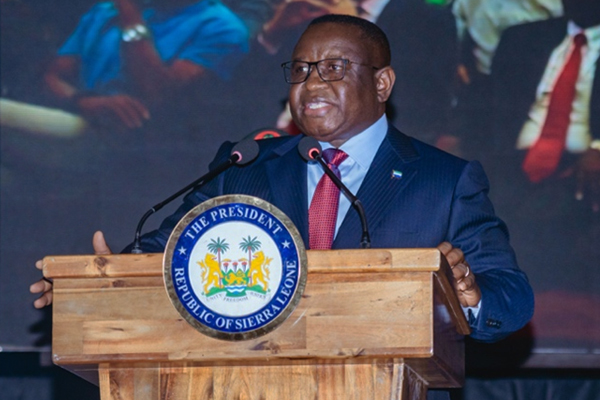
The 3rd Africa High-level Forum on South-South and Triangular Cooperation for Sustainable Development was convened under the patronage of His Excellency Dr. Julius Maada Bio, President of the Republic of Sierra Leone. This Forum followed the adoption of the Declaration of the Second High-level Forum on South-South and Triangular Cooperation for Sustainable Development, which was held in Kampala from 15 to 17 January 2024.
First convened in 2021, the Forum serves as an institutional platform for promoting South-South and triangular cooperation in Africa under the leadership of the African Peer Review Mechanism (APRM) Continental Secretariat, the leading peer-review body of the African Union, in close collaboration with key partners. Third edition partners included the Islamic Development Bank, the Saudi Fund for Development, the United Nations Development Programme, the African Development Bank, the Organisation of Southern Cooperation, the Deutsche Gesellschaft für Internationale Zusammenarbeit (GIZ) office to the African Union, the African Union Economic and Social Council, the United Nations Office for South-South Cooperation, and other strategic partners. The Forum brought together more than 25 African countries as well as representatives from non-African countries including Saudi Arabia, Germany, India and China. UN entities including the World Food Programme (WFP) and the United Nations Development Programme (UNDP) and the UN Resident Coordinator in Sierra Leone were also key partners.
Featuring eight thematic discussion sessions spanning topics related to economic resilience, global financial architecture, digital transformation, and engagement of non-state actors to promote inclusive and participatory governance in Africa and, building national ecosystems for South-South and triangular cooperation, the Forum aimed at raising awareness and deepening understanding of the current state of South-South and triangular cooperation in Africa, the implementation of the BAPA+40 outcome document in Africa and, the significance of these cooperation modalities in the second-ten-year implementation plan of Agenda 2063.
Participants shared challenges, lessons learned, and the comparative advantages of these cooperation modalities in African countries, highlighting impactful initiatives across the continent such as from Algeria, Rwanda and Tunisia.
In his remarks, H.E. Dr. Julius Maada Bio, President of the Republic of Sierra Leone noted that, Africa would no-longer wait to be invited to the table, a point that was also highlighted by the United Nations Office for South-South Cooperation Director, Dima Al-Khatib, in her video message at the opening session.
In her remarks, the Director highlighted the fact that countries of the Global South are no longer peripheral actors but drivers of economic growth, hubs of innovation, and a source of human capital and vast natural resources. She further noted that South-South and triangular cooperation are key to advancing Africa’s transformation – deepening collaboration across regions and unlocking African-led and owned solutions.
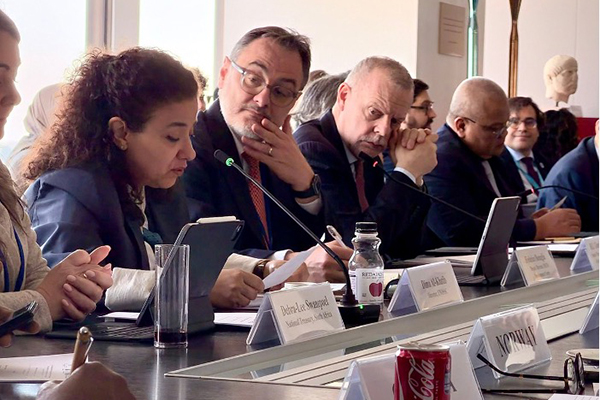
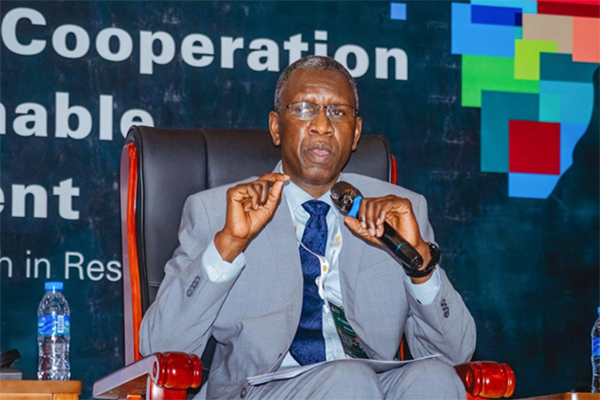 Mr. Samba Thiam, Senior Policy Development Advisor, represented the Director at the High-level Forum as panelist and discussant on the sessions pertaining to the building of national eco-systems for South-South cooperation as well as during the Strategic South-South Dialogue to Build National Capacities through Human Talent, Technology and Infrastructure session.
While sharing the UNOSSC mandate and key achievements, he noted that while South-South and triangular cooperation have been expanding, there is a need to facilitate and leverage these modalities more systematically at the regional level in partnership with regional entities such as the African Peer Review Mechanism. He stressed that South-South and triangular cooperation anchored in solidarity is even more important, particularly at the regional level as the foundation of global cooperation and multilateralism that are increasingly under threat.
The Declaration called for, among other things, AU Member States to further prioritize and leverage South-South and triangular cooperation as a strategic mechanism to close financing gaps for Agenda 2063 implementation, and to strengthen partnerships with multilateral institutions as well as for the systematic embedding of South-South and triangular cooperation into national governance systems – through policy, legal, and institutional frameworks including national development plans. Participants also encouraged the APRM and the United Nations Office for South-South Cooperation to strengthen collaboration on knowledge management and the exchange of best practices across the Global South. Participants further urged African countries to develop innovative financing approaches to accelerate the implementation of Agenda 2063 and the SDGs – mobilizing catalytic resources, expanding the use of blended finance instruments, and leveraging South-South Trust Funds to support initiatives in agriculture, health, digitalization, and climate resilience.
Click here for more information on the APRM webpage.
Mr. Samba Thiam, Senior Policy Development Advisor, represented the Director at the High-level Forum as panelist and discussant on the sessions pertaining to the building of national eco-systems for South-South cooperation as well as during the Strategic South-South Dialogue to Build National Capacities through Human Talent, Technology and Infrastructure session.
While sharing the UNOSSC mandate and key achievements, he noted that while South-South and triangular cooperation have been expanding, there is a need to facilitate and leverage these modalities more systematically at the regional level in partnership with regional entities such as the African Peer Review Mechanism. He stressed that South-South and triangular cooperation anchored in solidarity is even more important, particularly at the regional level as the foundation of global cooperation and multilateralism that are increasingly under threat.
The Declaration called for, among other things, AU Member States to further prioritize and leverage South-South and triangular cooperation as a strategic mechanism to close financing gaps for Agenda 2063 implementation, and to strengthen partnerships with multilateral institutions as well as for the systematic embedding of South-South and triangular cooperation into national governance systems – through policy, legal, and institutional frameworks including national development plans. Participants also encouraged the APRM and the United Nations Office for South-South Cooperation to strengthen collaboration on knowledge management and the exchange of best practices across the Global South. Participants further urged African countries to develop innovative financing approaches to accelerate the implementation of Agenda 2063 and the SDGs – mobilizing catalytic resources, expanding the use of blended finance instruments, and leveraging South-South Trust Funds to support initiatives in agriculture, health, digitalization, and climate resilience.
Click here for more information on the APRM webpage.
Mr. Samba Thiam, Senior Policy Development Advisor, represented the Director at the High-level Forum as panelist and discussant on the sessions pertaining to the building of national eco-systems for South-South cooperation as well as during the Strategic South-South Dialogue to Build National Capacities through Human Talent, Technology and Infrastructure session.
While sharing the UNOSSC mandate and key achievements, he noted that while South-South and triangular cooperation have been expanding, there is a need to facilitate and leverage these modalities more systematically at the regional level in partnership with regional entities such as the African Peer Review Mechanism. He stressed that South-South and triangular cooperation anchored in solidarity is even more important, particularly at the regional level as the foundation of global cooperation and multilateralism that are increasingly under threat.
The Declaration called for, among other things, AU Member States to further prioritize and leverage South-South and triangular cooperation as a strategic mechanism to close financing gaps for Agenda 2063 implementation, and to strengthen partnerships with multilateral institutions as well as for the systematic embedding of South-South and triangular cooperation into national governance systems – through policy, legal, and institutional frameworks including national development plans. Participants also encouraged the APRM and the United Nations Office for South-South Cooperation to strengthen collaboration on knowledge management and the exchange of best practices across the Global South. Participants further urged African countries to develop innovative financing approaches to accelerate the implementation of Agenda 2063 and the SDGs – mobilizing catalytic resources, expanding the use of blended finance instruments, and leveraging South-South Trust Funds to support initiatives in agriculture, health, digitalization, and climate resilience.
Click here for more information on the APRM webpage.