• Home
  • /
  • DRR News
  • /
  • Regional Webinar hosted by COMSATS on ’Impacts of Climate Change on South Asian Monsoon’

Regional Webinar hosted by COMSATS on ’Impacts of Climate Change on South Asian Monsoon’


28 July 2020 – monsoons are significant for South Asia, as they contribute 80 per cent of annual rainfall in South Asia. But monsoon season is becoming increasingly unpredictable because of global warming. Extreme precipitation is rising in South Asia interspersed with periods of drought and flooding.

To understand the long term variation in atmospheric and precipitation patterns causing a shift in monsoon pattern and its implications for South Asia the COMSATS Centre for Climate and Sustainability (CCCS) hosted a Webinar on “Impacts of Climate Change on South Asian Monsoon” on 28th of July, 2020.

The webinar brought together experts from Bangladesh, Nepal, Pakistan and Sri Lanka to present their assessments on the variability of the monsoon and its relationship with the changing global climate system and to share the adverse implications of climate-mediated changes for their respective countries and the South Asian region.

Speakers participating in the Webinar included Dr. Mohammad Ismail, Associate Professor, Dhaka University, Bangladesh, Dr. Madan Sigdel, Associate Professor, Tribhuvan University, Nepal, Dr. Zaheer Ahmad Babar, Director, Meteorological Department, Pakistan, Ms. Anusha Rashanti Warnasooriya, Director, Department of Meteorology, Sri Lanka and Dr. Vanisa Surapipith, Senior Researcher, National Astronomical Research Institute, Thailand. Professor Lin Zhaohui, Director International Centre for Climate and Environment Sciences, Chinese Academy of Sciences, Beijing, China also attended the webinar. Ambassador Shahid Kamal, Head of CCCS opened the Webinar and moderated the sessions.
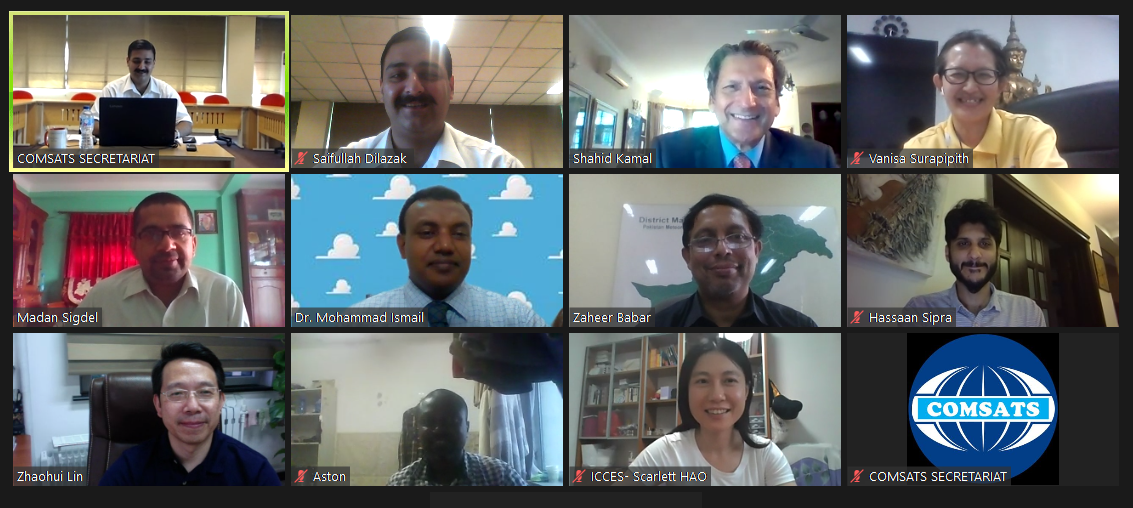
Dr. Mohammad Ismail highlighted the causes of climate change and its impacts on Bangladesh and mitigation actions being taken by the government to tackle climate-related challenges. Dr. Madan Sigdel spoke about vulnerabilities for Nepal due to changing climate as weather-induced disasters were increasing due to increasing monsoon variability. Dr. Zaheer Ahmad Babar presented current trends and future projections about the shifting patterns of monsoon in Pakistan because of climate change marked by increased monsoon rainfall except for Balochistan where the trend was decreasing. Ms. Anusha Rashanti Warnasooriya, explained the increasingly extreme weather conditions in Sri Lanka due to climate change with summer monsoon causing more loss and damage than the winter monsoon marked by flooding and drought. Dr. Vanisa Surapipith pointed out how atmospheric aerosols are contributing to climate change and how poor air quality by the burning of fossil fuels was causing alterations in precipitation patterns leading towards new research in Thailand.

The Webinar fostered regional cooperation in promoting sharing of knowledge and experience by experts from South Asia on climate induced shifts to the monsoon system in the region and measures being adopted to address the challenges of the changing South Asian monsoon as it has significant impacts on environmental and socio-economic conditions in South Asia.

The webinar helped to enrich understanding of the risks and vulnerabilities South Asian countries are facing because of the variability in monsoon rainfall patterns due to climate change. There was mutual learning about the actions each country was taking to tackle the challenges of extreme weather hazards. Mitigation and adaptation measures to counter the negative impacts of climate change were recognized as being essential to better manage the effects of monsoon. There was a realization of the need to enhance the capacity for reliable forecasting of the South Asian monsoon.  Need to allocate greater resources to strengthen science and research capacity was emphasized. Cooperation among South Asian countries in addressing monsoon challenges was appreciated. Finally, the webinar was a tangible expression of the significance of South-South Cooperation in promoting exchanges in information, experiences and expertise on issues of climate change and sustainable development.

COMSATS Centre for Climate & Sustainability (CCCS) is a virtual and physical network of centres, institutions and organizations working on environmental risks for achieving Sustainable Development Goals (SDGs). CCCS focuses on the nexus between climate change and sustainable development in developing-country settings. The Centre promotes, coordinates and facilitates South-South & Triangular Cooperation for climate action and attainment of Sustainable Development Goals in line with the policy and practices of developing countries and their international obligations. Click here to learn more and connect with CCCS.
Related Post


  • All Post
  • ATCT Featured Publications POM
  • BAPA+40
  • Blog
  • Capacity Development Initiatives
  • CICETE Featured Publications POM
  • CIKD
  • Cities Clusters - Agriculture
  • Cities Clusters - COVID-19
  • Cities Clusters - COVID-19 Knowledge Products
  • Cities Clusters - DRR
  • Cities Clusters - E-commerce
  • Cities Clusters - Tourism
  • Cities Clusters - Tourism Knowledge Products
  • Cities Clusters - Transport
  • Cities Clusters - Waste
  • Cities Project
  • Cities Project COVID-19 Newsletters
  • Cities Project COVID-19 Response
  • Cities Project Knowledge Products
  • Classic (untouched)
  • Climate Action
  • COMSATS Featured Publications POM
  • COMSATS Featured Solutions POM
  • Converted from Divi
  • Converted from Mixed
  • Converted from WPBakery
  • COVID-19
  • COVID-19 Page Featured Solutions
  • DRR Knowledge Products
  • DRR News
  • Empty Post
  • Events
  • Featured Event UN-Habitat POM
  • Financing for Development
  • Financing Mechanisms
  • g7+
  • Gender Events
  • Gender News
  • Good Practices in SSTrC Series
  • Good Practices Publications
  • Good Practices Thematic Series & Special Editions
  • Good Practices Vol. 2
  • Good Practices Vol. 3
  • GSSDC
  • Highlighted
  • Highlighted Publications
  • IAEA Featured Solutions POM
  • IBRAF Featured Publications POM
  • IBSA Fund
  • IBSA Fund Annual Reports
  • IBSA Fund News and Stories
  • IBSA Fund Publication
  • IBSA Fund Story
  • ICGEB Featured Events POM
  • ICGEB Featured Publications POM
  • ICGEB Featured Solutions POM
  • ILO Featured Events POM
  • ILO Featured Publications POM
  • ILO Featured Solutions POM
  • India-UN Development Partnership Fund
  • India-UN Fund Publication
  • India-UN Fund Story
  • IsDB
  • IsDB Featured Publications POM
  • IsDB SCC
  • News
  • Norec Featured Publications POM
  • Norec Featured Solutions POM
  • Peace and Development
  • PGTF Publications
  • PGTF Story
  • PICA Featured News POM
  • PICA Featured Publications POM
  • PICA Featured Solutions POM
  • PIDF Featured Publications POM
  • Publications
  • Regional Updates
  • Research
  • ROK-UNOSSC Facility
  • SGP Featured Publication POM
  • SGP Featured Solutions POM
  • Solution
  • South South in Action
  • South-South Global Thinkers
  • South-South Ideas
  • South-South Ideas Series
  • South-South in Action Series
  • Southern Response to COVID-19
  • SSN4PSI Featured Publications POM
  • SSN4PSI Featured Solutions POM
  • Training
  • UN Day for SSC 2020
  • UN Fund for SSC
  • UN SSC Day Publications
  • UN-Habitat Featured Publications POM
  • UN-HABITAT Featured Solutions POM
  • UNCCT
  • UNEP Featured Publications POM
  • UNFPA
  • UNFSSC Publication
  • UNFSSC Story
  • UNIDO Featured Publications POM
  • UNIDO Featured Solutions POM
  • UNIDO POM Events
  • UNOCT Featured Publications POM
  • UNV
  • UNV Featured Publications POM
  • WB Featured Publications POM
  • WB Featured Solutions POM
  • Webinars
  • WFP Featured Events POM
  • WFP Featured Publication POM
  • WFP Featured Solutions POM
  • WIPO
  • Workshops and Seminars
  • Youth4South
  • z Across the Globe 1
  • z Across the Globe 2
  • z Across the Globe 4
  • z Across the Globe 5
  • z Across the Globe 6
  • z Across the Globe 7
  • z Across the Globe 8
  • z ES BAPA+40
  • z ES Eventos
  • z ES Noticias
  • z ES Noticias Destacadas
  • z ES Publicaciones
  • z ES Publicaciones Destacadas
  • z ES Serie Buenas Prácticas en la CSSyT
  • z ES Serie El Sur-Sur en Acción
  • z FR Actualités
  • z FR BAPA+40
  • z FR Événements
  • z FR Publications
  • z FR Publications en vedette
  • z FR Série Bonnes pratiques en CSST
  • z FR Série Sud-Sud en action
  • z Highlighted News
  • z Photos
  • z Videos
  • z ZH BAPA+40
  • z ZH Events
  • z ZH News

ABOUT

Terms of Service

Privacy Policy

Disclosures

RESOURCES

Terms of Service

Privacy Policy

Disclosures

ENGAGE

Terms of Service

Privacy Policy

Disclosures

Copyright © UNOSSC/UNDP

wpChatIcon
wpChatIcon

Alliance Application Form

Submit an Expression of Interest and/or Demand Signal. UNOSSC reviews submissions on a rolling basis.

1. Official name of organization / institution / government entity (exclusions to apply) *
2. Country *
3. Region *
4. SDG *
Secondary SDG *
5. Partner category *
6. Website *
7. Brief description of your institution (max. 150 words) *
Name for the Lead *
Title for the Lead *
Email address for the Lead *
Name for the co-lead
Title for the co-lead
Email address for the co-lead
Section 3. Expression of Interest in the Alliance *
Additional information on proposed areas of engagement may be requested through the platform following initial review by the Alliance Secretariat.
Section 4. Due Diligence and Integrity Declaration *

Submission Note:

  • Submission of this Expression of Interest form does not automatically confer participation in the Alliance.
  • All submissions will be reviewed by the Alliance Secretariat, including basic eligibility screening and proportionate due diligence, as appropriate.
  • Participation in Alliance activities is determined based on relevance to articulated cooperation needs, alignment with Alliance principles, and integrity considerations.
  • Engagement under the Alliance is voluntary, non-binding, and facilitative in nature, and does not constitute funding approval, contractual commitment, or institutional membership.
  • The Alliance Secretariat may contact submitting entities for additional information or clarification during the review process.

Submission of Demand Form

Description of Demand

Indicate the type of support or cooperation requested through the Alliance.
Please briefly describe the challenge, gap, or priority. (Max. 300 words)

Thematic and Geographic Focus

Please indicate the main focus areas of your demand:

A. Thematic Areas (select up to three)
B. Geographic Focus (select all that apply)

Proposed Engagement Modalities

Please indicate how you would like to engage through the Alliance (select all that apply):

Expected Outcomes

Please indicate the main results you seek to achieve through this engagement. (Max. 200 words)
Examples:
• Capacity strengthened
• Partnerships established
• Sectoral or regional strategies co-developed
• Solutions piloted
• Knowledge generated
• Policies informed

Timeline and Readiness (if applicable)

1. Expected timeframe for engagement:
2. Current stage:

Additional Information

Please provide any additional information, documents, or links relevant to this submission.
(Max. 200 words or upload link)

Submission of Offer Form

Description of Contribution

Indicate the type of contribution your institution can provide and describe the expertise, resources, or solutions you may offer.
Please briefly describe your proposed contribution. (Max. 300 words)

Thematic and Geographic Focus

Please indicate the main focus areas of your interest:

A. Thematic Areas (select up to three)
B. Geographic Focus (select all that apply)

Proposed Engagement Modalities

Please indicate how you would like to engage through the Alliance (select all that apply):

Expected Outcomes

Please indicate the main results you aim to achieve through this engagement. (Max. 200 words)
Examples:
• Capacity strengthened
• Partnerships established
• Sectoral or regional strategies co-developed
• Solutions piloted
• Knowledge generated
• Policies informed

Timeline and Readiness (if applicable)

1. Expected timeframe for engagement:
2. Current stage:

Additional Information

Please provide any additional information, documents, or links relevant to this submission.
(Max. 200 words or upload link)

Organization Registration

Authentication & Due Diligence This prototype simulates identity verification, due diligence confirmation, and an authentication step before submission. *

First Name *
Last Name *
Email address *
Password *
Confirm Password *
Name of institution / organization *
Country / Region *
Organization Type *
Organization other *
Function / role *
Organization logo *
Maximum file size: 1 GB

Login

Login / email *
Password *
Remember me

Forgot password?

Connect form

Your name *
Email *
Organization / institution *
Job title / role *
Reason for connecting:
Short message

Scroll to Top