Solution description
Images are Available Upon Request, No Place to add them in The Application Form!
Mini Prototype for the Sun Allies’ Airborne Shield for
Local Shading and Solar Energy Harvesting or Orientation
INTRODUCTION
The proposed innovative South-South and Triangular cooperation solution to be prototype, tested or scaled-up within the project is called the “Sun Allies ©”.
The Current Application Project is titled “Mini Prototype for the Sun Allies’ Airborne Shield for Local Shading and Solar Energy Harvesting or Orientation”.
The Proposed Innovative Solution “Sun Allies ©” involved Locally Shading Direct Sun Irradiation in Hot Arid Areas by Daytime. The novelty of this vision is concluded in that, here the sun radiations are not thought of as a source to catch energy from, instead it is thought of as harmful radiations, which can be reduced upon requirement, and can be allowed upon desire. This Original Solution’s Vision represents an innovative, multi-purpose cutting-edge game-changer project that targets the Climate Change Dilemma and all its resulting effects, e.g. Global Warming, Climate Extremes, Droughts, Forced Displacement, Lack and Waste of Energy and Water Resources.
THE CURRENT APPLICATION PROJECT ABSTRACT
The Current Application Project will be an experimental application of the Proposed Innovative Solution “Sun Allies ©” that studied the Climate Change Dilemma and proposed a solution by reducing intensity of direct sun irradiation locally by daytime. Thus, it is necessary to develop a representing prototype for local shading by an airborne shield as a basic step towards sustainability of energy and water management systems and services via a set of airborne shields now or space shields in the future, to be used passively, i.e. consuming no energy, by daytime mainly for local Shading, and for local Sustainable Eco-Recovery (SER), primarily for weather, climate and water eco-cycle aspects. These airborne shields can be used by daytime to Reflect Sun Rays (RSR) using Reflecting Foils or Paints, or be used by daytime as an Air-Based Solar Power (ABSP) station to harvest solar energy with no land wasted or occupied using Thin-Film Solar Cells.
This Current Application Project tactical goal will be providing a mini prototype to the Proposed Innovative Solution, while the Current Application Project strategic goals will coincide with the Proposed Innovative Solution applicable and feasible practical goals.
This mini prototype (< 100 m2), as a step between the already exiting miniature prototype (1 m2) and the industrial competitive prototype (> 10,000 m2), paves the way for the Proposed Innovative Solution that evades limitations of traditional land-mounted infrastructure, offers competitive advantages over present energy and water management systems and services, and in turn; it generates revenues via service usage fees, sales of basic assets or components, their spare parts, harvested or oriented solar energy or solarly desalinated water.
Results of this Current Application Project will be utilized to develop realization of the Proposed Innovative Solution, which is well sited for sustainable scalable economic success, and can enhance its ESG and Climate Justice impact goals, including all the 17 UN-SDGs, all affected by climate change and its resulting effects. This will enable to reduce CO2 emissions, encourage social solidarity, secure humans health, safety and comfort, enhance the welfare and well-being of individuals and communities, restore the original normal human day lifestyle that was abandoned due to higher temperatures by daytime, improve public mood and relaxation, in turn increase human productivity and creativity, and also enhance decision-making inclusion.
This Current Application Project for mini prototype development will be carried out via applying an integrated scientific approach based on an evidence-based and result oriented attitude, including practice-based design methodology, measuring targeted parameters, and analyzing feedback to achieve a fail-safe supporting and positioning design for a light-weight shield in the atmospheric lower layers to serve shading a hot arid area by daytime, using the currently available technologies via a group of aerostats and a few drones.
The shield consists of many square identical cells orientable initially by direct remote control and temporarily via merging Digitization, Quantum Computing, Machine Learning and eventually employing Artificial Intelligence (AI), to reduce the atmospheric temperatures and the water evaporation rates below this shield to ensure governance of usage of energy resources wasted for air conditioning and governance of usage of water resources needed for various vital activities, especially agriculture.
Development of such prototype requires close interactive cooperation between the Current Application Project partners to exchange latest cutting-edge technologies and industrial components and to build the necessary capabilities to realize this original game-changer Innovative Solution on a larger scale.
This Current Application Project’s priorities will concentrate on using measurements and feedback results to draft and publish scientific papers and to enlighten experts, policymakers, media and general public about this creative new solution. But, the most important output of this Current Application Project will be optimization of the next industrial prototype design that is planned to be implemented in a further phase.
THE PROPOSED INNOVATIVE SOLUTION SUBJECT BACKGROUND
Based on various UN sources, fossil fuels, coal, oil and gas, are by far the largest contributor to global climate change, accounting for over 75% of global greenhouse gases emissions and nearly 90% of all CO2 emissions. As greenhouse gases emissions blanket the Earth, they trap the sun’s heat. The main causes of climate change are:
- Generating Power by burning fossil fuels causing a large chunk of global emissions of powerful greenhouse gases that blanket the Earth and trap the sun’s heat;
- Mining, Construction Industry, Manufacturing Goods produce emissions due to power generation and other processes are the largest contributors to greenhouse gas emissions;
- Cutting Down Forests that absorb carbon dioxide to create farms, pastures, etc. causing emissions and limiting nature’s ability to keep emissions out of the atmosphere;
- Using Transportation, mainly cars, trucks, ships, and planes run on fossil fuels are major contributors of greenhouse gases, especially carbon dioxide emissions;
- Producing Food causing emissions of CO2, methane, etc., including deforestation and clearing of land, digestion by cows and sheep, production and using fertilizers, and using energy to run farm equipment or fishing boats, packaging and distributing food;
- Powering Residential and Commercial Buildings consume over half of all electricity, also using coal, oil, and natural gas for heating and cooling, especially by air conditioners;
- Consuming or Wasting Too Much food, energy, water resources, or goods such as clothing, electronics, and plastics, irrational wealthy lifestyles and private households.
Based on these UN sources, those previous causes lead to global warming. So, the world is now warming faster than at any point in recorded history. Warmer temperatures over time are changing weather patterns and disrupting the usual balance of nature. This poses many risks to human beings and all other forms of life on Earth. Those are:
- Hotter Temperatures. The last decade is the warmest on record; nearly all land areas are seeing more hot days and heat waves. This increases heat-related illnesses and makes working outdoors more difficult. Wildfires start more easily and spread more rapidly;
- More Severe Storms being more intense and frequent in many regions. As temperatures rise, more moisture evaporates, which exacerbates extreme rainfall and flooding, causing more destructive storms, e.g. tropical storms, cyclones, hurricanes, and typhoons. Such storms often destroy homes and communities, causing deaths and huge economic losses;
- Increased Drought, as water availability becomes scarcer in more regions. Global warming increases risk of agricultural droughts affecting crops, and ecological droughts increasing the vulnerability of ecosystems. Droughts stir destructive sand and dust storms. Deserts are expanding, reducing land for growing food or for graze;
- A Warming, Rising Ocean that soaks up most of the heat from global warming. The ocean warming rate has strongly increased over the past two decades, across all depths of the ocean. As the ocean warms, its water volume expands; also ice sheets melt, both cause sea levels to rise, threatening coastal and island communities. In addition, the ocean absorbs more carbon dioxide from the atmosphere, becomes more acidic, endangering marine life and coral reefs;
- Loss of Species, as climate change poses risks, increase as temperatures climb, to their survival on land and in the ocean. The world is losing species at a rate 1,000 times greater than at any other time in recorded human history. Forest fires, extreme weather, and invasive pests and diseases are among many threats related to climate change;
- Not Enough Food, climate changes and extreme weather events, lead to a global rise in hunger and poor nutrition. Destroy fisheries, crops, and livestock or reduce their productivity. Make the ocean more acidic. Put marine resources at risk. Changes in snow and ice cover disrupted seafood supplies. Heat stress declines crop yields and affects livestock;
- More Health Risks, due to climate change as the biggest health threat facing humanity. Its impacts are already harming health, through air pollution, disease, extreme weather events, forced displacement, pressures on mental health, and increased hunger and poor nutrition, etc. causing death of around 13 million people annually, overloading health care systems;
- Poverty and Displacement, due to climate change as a factor that put and keep people in poverty. Floods may sweep away urban slums, destroy homes and livelihoods. Heat reduces outdoor jobs. Water scarcity affects crops. Weather-related events displaced 23.1 million people annually (2010–2019), leaving many more vulnerable to poverty.
According to NASA, global climate change is not a future problem. Changes to Earth’s climate driven by increased human emissions of heat-trapping greenhouse gases are already having widespread effects on the environment: Glaciers and ice sheets are shrinking, river and lake ice is breaking up earlier, plant and animal geographic ranges are shifting, and plants and trees are blooming sooner.
Some changes (such as droughts, wildfires, and extreme rainfall) are happening faster than scientists previously assessed. In fact, according to the Intergovernmental Panel on Climate Change (IPCC) modern humans have never before seen the observed changes in our global climate, and some of these changes are irreversible over the next hundreds to thousands of years. The magnitude and rate of climate change and associated risks depend strongly on near-term mitigation and adaptation actions, and projected adverse impacts and related losses and damages escalate with every increment of global warming.
The traditional techniques to deal with the climate change dilemma are mainly: Mitigation of GreenHouse Gases (GHG) emissions causing climate change, and Adaptation to the current level and expected increase in GHG emissions. Those are backed by auxiliary and incentive Programs for: Technology Transfer, Environmental Finance, Gender Balance, Carbon Trade, etc.
THE PROPOSED INNOVATIVE SOLUTION VISION
The Proposed Innovative Solution studied the Heat Balance of Planet Earth’s Atmosphere, and noticed that most, environmental activists, politicians, decision-makers, scientists, researchers, etc. are focusing on the impacts of human activities as the main cause of climate change, trying to reduce them via various means, technologies and strategies adopted by the UNFCCC, proposed, discussed and developed in a series of Conferences of the Parties (COPs) and IPCC events, conferences and researches.
The Proposed Innovative Solution concluded that those technologies or strategies are means to survive or live with the problem, not to solve it! Either locally or universally! Either for the present or for the future time!
Rare scientists and researchers adopted another approach to solve this problem radically. Thus, they believe that those solutions may even partially or gradually revoke or reverse the effects of the accumulated precedents of the climate change. Currently, all those solutions are aiming to reduce the amount of the direct sun irradiation arriving to the surface of the Earth. The logic of those solutions is based on the law of energy conservation (the first law of thermodynamics) combined with insulation and/or reflection theories. Blocking or reflecting a portion of the direct sun irradiation arriving to Earth’s surface will reduce the overall annual average temperature locally. Moreover, those potential radical solutions have great practical advantages in terms of negotiation, since they turn the climate change negotiations from Zero Sum (Win/Lose) Situation, to competition for viable business opportunities, i.e. Win/Win Situation, for long time period.
That’s why; the Space version of the Proposed Innovative Solution was demonstrated at the UNFCCC Conference COP18-CMP8: Doha 2012 held in Qatar, November 26 – December 7, 2012. The Solution Author was invited to participate by two IGOs: Organization of Islamic Cooperation (Committee on Scientific and Technical Cooperation) COMSTECH and Qatar Development Network (QDN); as well as two NGOs: Response To Climate Change (RTCC) and Climate Markets and Investment Association (CMIA), after reviewing and discussing his Solution scientifically in their specialized committees. Furthermore, Qatar Development Network (QDN) allocated a distinguished booth in the exhibition accompanying the conference activities to present this space version to the attending public and media.
Later, the Solution Author was invited to present his Solution in a special symposium held at the headquarters of the Egyptian Engineers Syndicate on September 9, 2015. This was followed by an intensive study of the Solution in the National Projects Committee and in the Innovation and Applied Research Support Committee of the Egyptian Engineers Syndicate, where two Applicability and Technical Validation reports were issued supporting the Solution, including recommendations to present it officially to the relevant authorities in the Egyptian state.
Actually, on November 25, 2015, the head of the Egyptian Engineers Syndicate Eng. Tarek Elnabarawy sent official correspondences to Eng. Sherif Ismail, Prime Minister of Egypt, and to Eng. Ibrahim Mahlab, Assistant to the President of the Republic of Egypt for National and Strategic Projects. These correspondences were redirected to several ministries relevant to the Solution and so they discussed it with its Author. They then responded positively within 2016 to the head of the Egyptian Engineers Syndicate, stating their recommendations to form a National Scientific-Technical Committee to conduct the essential applied researches to pave the way for implementing this Solution. In the same context, this Solution was published in the Peer-Reviewed Scientific Journal of the Egyptian Society of Engineers.
In 2023, China, UAE, Qatar, and KSA presented wonderful shows employing huge numbers of drones in a coordinated and synchronized manner. Thus, the Solution Author developed, and IP protected, a new atmospheric version of his Solution using an airborne shield via aerostats and/or drones instead of the space one. This version will radically change the economics of the Solution and reduce its large initial costs to new more acceptable values that pave the way for implementing the Solution within the atmosphere.
Other solutions to reduce intensity of the arriving direct sun irradiation include:
- Painting Everything White, including buildings, lands and streets to increase the percentage of the reflected direct sun irradiation. This proposal was criticized for being: Impractical, unsustainable, without financial return, unaesthetic, requires a binding agreement, must be applied in large areas, its effectiveness duration is medium, about two years, after which the painting must be repeated, and critically it cannot be applied in cultivated areas as they are naturally green in color to be able to carry out photosynthesis, so that the plant can live and produce fruits. Thus, as a conclusion this solution is an expensive impractical proposal;
- Creating a Canopy of Dust of sulfur in the upper atmospheric layers (Paul Crutzen – Nobel Prize in Chemistry 1995) or of dust from exploding asteroids in the near space above the atmosphere (Scottish and American scientists), to reduce arriving direct sun irradiation, simulating the effect of volcanic emissions. Those proposals were criticized for being: Impractical, sulfur dust canopy is environmentally harmful and may cause acid rain, the target shaded location is not and cannot be specified, thus canopies will not only cool hot areas but will also cool cold areas further, those canopies effects are irreversible, their effectiveness duration is six months, then the procedure should be repeated again. Their business model are futile due to the lack of stakeholders’ identification and the lack of financial return;
- Creating Artificial Clouds by sucking tons of sea water and sending it as a mist to suitable atmospheric layers to form clouds, that reduce the arriving direct sun irradiation, simulating the effect of clouds in softening the atmosphere. This proposal was criticized for being: Impractical, the shaded location is not and cannot be specified, thus formed clouds will not only cool hot areas but will also cool cold areas further, the effectiveness duration is few hours, then the procedure should be repeated again. This proposal business model is futile due to the lack of stakeholders’ identification and the lack of financial return. Bill Gates, the famous Microsoft millionaire, financed this trial by three billions of dollars, the project stopped due to depletion of funding in high operating cost, which proved the project’s economic infeasibility.
This brief discussion emphasizes, the Proposed Innovative Solution conclusion that all of the above trials to reduce the arriving direct sun irradiation, in order to locally reduce the overall average temperature are still immature to solve the climate change dilemma and its resulting effects! Either locally or universally! At the present time! The main shortages in those trials are inherited in their business models, especially due to lack of the features necessary for business continuity and/or sustainable development.
THE PROPOSED INNOVATIVE SOLUTION FEATURES
The Current Application Project will be an experimental application of the Proposed Innovative Solution “Sun Allies ©”, which has the following aspects:
Statement of the Proposed Innovative Solution Problem: Inability to locally and timely control the intensity of the arriving direct sun irradiation by daytime in hot arid areas.
Higher temperatures with water scarcity represent the heaviest effects of the climate change dilemma. Thus, air conditioning, cooling and ventilation of hot areas are needed, also severe loss of water resources by evaporation from lakes and plants is observed.
The Proposed Innovative Solution enables locally and timely control intensity of the arriving direct sun irradiation by daytime, in a passive way, i.e. consuming no energy.
The Proposed Innovative Solution Hypothesis: If an airborne shield was supported and positioned, over a target area to be shaded by daytime, via a group of aerostats and a few drones to reduce the intensity of the arriving direct sun irradiation by daytime, then: the intensity of Sun rays, atmospheric temperatures, and atmospheric pressures will all decrease locally, the wind will be attracted to that location, whereas the relative humidity will increase, the chances of rainfall will increase naturally, as well as the water evaporation rates will decrease.
All of those effects are scientifically logical, basically probable, practically applicable, environmentally safe, and economically feasible.
The Proposed Innovative Solution’s airborne shields can provide reliable and fail-safe means for local Shading, local Sustainable Eco-Recovery (SER), mainly for weather, climate and water eco-cycle aspects. Also, they can be locally used by daytime to Reflect Sun Rays (RSR) using Reflecting Foils or Paints, or be locally used by daytime as an Air-Based Solar Power (ABSP) stations to harvest solar energy with no land wasted or occupied, using Thin-Film Solar Cells.
Accordingly, those airborne shields will locally secure safety and thermal comfort for humans, animals, plants, etc.; also locally secure energy and water resources and ensure governance of their local usages. Eventually, all those locally combined activities will passively solve the climate change dilemma and will radically prevent its resulting effects, just on the local level. In this case, this Proposed Innovative Solution would be a successful promising mitigation technology that can be feasibly and sustainably applied on the local level, especially in hot arid areas.
Alternatively, applying this Proposed Innovative Solution in a wide manner, especially on the Space Level, would make it one of the most promising geoengineering projects that can be considered as a radical solution to the climate change dilemma and all its resulting effects universally, e.g. global warming, climate extremes, droughts, forced displacement, lack and waste of energy and water resources, etc.
The Proposed Innovative Solution Business Model provides the first fail-safe radical solution to the climate change dilemma. It capitalizes on the growing demand for energy and water resources and services. By using this Solution’s airborne shields and their infrastructure and smart operating algorithms, contracted services can be provide directly to its customers, minimizing their need for burning polluting fossil fuel or for using expensive water desalination processes. This allows the Proposed Innovative Solution to offer competitive sustainable services to each of its customer segments.
The Proposed Innovative Solution Makes Money as a service usage fees-based business model, offering local Shading, local SER, local RSR and it may work as a local ABSP station, i.e. its primary way to generate revenue is service usage fees. Therefore, this Innovative Solution offers different services to cater to diverse needs of its customers. Thus, the Proposed Innovative Solution revenue streams consist of: Service Usage Fees; Sales of Assets or Components, and their Spare Parts; Sales of Oriented or Harvested Solar Energy or Solarly Desalinated Water; Advertising Contracts; Other Contracts or Agreements; Donations, Awqaf, etc. The dominant Solution value propositions are in the form of cost or waste reductions, the Solution services fees will take half of those reductions values. Also, revenues from the same project will be based on fixed price list; its values will be annually increased by inflating triply, due to consumption rate growth, population growth, and financial inflation.
The Proposed Innovative Solution Channels, or Go-to-Market Strategy, consist of:
Content Marketing Channels: The Solution Company starts integrated marketing campaigns via its website and pages, social media, community and co-creation forums, media, press releases, and outdoors advertising along with networking in events, conferences, fairs, etc. with environmental, sustainability, etc., NGOs activities, to enrich customer awareness about this Innovative Solution technology, system, infrastructure, services, opportunities, etc. Those marketing channels will also enable interested customers to evaluate all elements of the Innovative Solution offerings;
Regulatory Compliance Preparation as a Trustful Marketing Channel: The Company prepares necessary working governmental agreement via communicating governments and its related agencies. Those governmental documents can be used as an effective marketing tool to resident customers to make use of the Solution offerings locally;
Direct to Consumer Sales Channels: Through direct sales teams either in offices or via planned direct sales visits. The Solution Company will try to close deals with customers via signing long-term tailored smart contracts, securing them personalized sales experiences to purchase offerings, i.e. their acquisition.
The Proposed Innovative Solution customer relationships consist of:
Local Alliance with Each Consumer: Due to technology, system, infrastructure, services, collaboration opportunities, etc. nature. The Solution Company would establish local operational and maintenance local alliances with every customer to deliver its system and its on-site services;
VIP Customer Support: Via this local the Solution Company alliance infrastructure, all highly customized high-touch VIP deep and enduring customer support and services will be delivered face to face to this specific customer;
Community Engagement: Each local alliance will host a community and co-creation forums, via social media platforms, to promote brand engagement, customer related feedbacks, backers’ updates, fosters trust and loyalty cards, to conclude customers’ expectations, try to meet them.
THE CURRENT APPLICATION PROJECT FEATURES
As was stated above, the Current Application Project will provide a mini airborne prototype for the Proposed Innovative Solution “Sun Allies ©”, its related main aspects were presented above; the main aspects related to this proposed Project are as follows:
Statement of the Current Application Project Technical Problem: Absence of a representative prototype to apply the Proposed Innovative Solution by enabling locally and timely control the intensity of the arriving direct sun irradiation by daytime, in a passive way, i.e. consuming no energy, to be used in hot arid areas. This prototype will merge aerostats, drones, and thin-film solar cells technologies.
The Current Application Project Solution: Providing a mini prototype that more reliably represents the Proposed Innovative Solution features, abilities, potentials, etc. and would present its services, on a lower scale in terms of served area and service time.
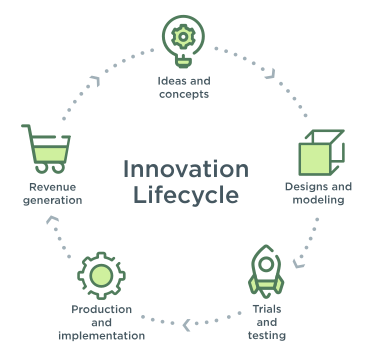
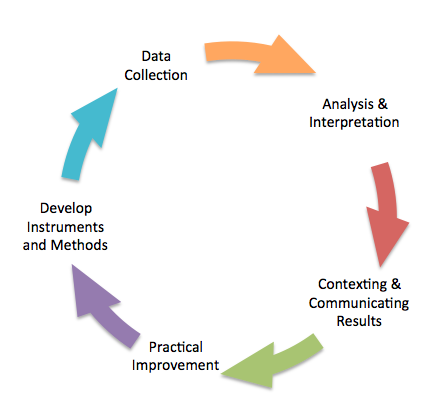
This prototype will go through all standard phases of the research and development or innovation cycle, giving a special care to validation, testing, performance evaluation, feedback data analysis and reporting, improvement, etc.
The Current Application Project’s Mini Prototype will be designed to provide reliable and fail-safe means for local Shading, local Sustainable Eco-Recovery (SER), and could be locally used by daytime to Reflect Sun Rays (RSR) or be locally used by daytime as an Air-Based Solar Power (ABSP) station to harvest solar energy.
The Current Application Project’s Mini Prototype (< 100 m2) will bridge the most critical weakness of the Proposed Innovative Solution that was evaluated according to the already exiting miniature prototype (1 m2) to be TRL4, i.e. Technology Validated in Lab, hopefully pushing it up to TRL6, i.e. technology has a fully functional prototype or representational model, or higher. The already exiting miniature prototype (1 m2) gave clear evidences of initial results and technological readiness to provide local shading, affecting various local parameters regarding weather, climate, and water eco-cycle aspects. This miniature prototype also gave clear evidences of initial results and technological readiness to locally Reflect Sun Rays (RSR) and to locally work as an Air-Based Solar Power (ABSP) station to harvest solar energy.
THE CURRENT APPLICATION PROJECT METHODOLOGY
This Current Application Project for mini prototype development will be carried out via applying an integrated scientific approach based on an evidence-based and result oriented attitude, including practice-based design methodology, measuring targeted parameters, and analyzing feedback to achieve a fail-safe supporting and positioning design for a light-weight shield in the atmospheric lower layers to serve shading a hot arid area, using the currently available technologies via a group of aerostats and a few drones.
The shield consists of many square identical cells orientable initially by direct remote control and temporarily via merging Digitization, Quantum Computing, Machine Learning and eventually employing Artificial Intelligence (AI), to reduce the atmospheric temperatures and the water evaporation rates below this shield to ensure governance of usage of energy resources wasted for air conditioning and governance of usage of water resources needed for various vital activities, especially agriculture.
Development of such prototype requires close interactive cooperation between the Current Application Project partners to exchange latest cutting-edge technologies and industrial components and to build the necessary capabilities to realize this original game-changer Innovative Solution on a larger scale.
This Current Application Project’s priorities will concentrate on using measurements and feedback results to draft and publish scientific papers and to enlighten experts, policymakers, media and general public about this creative new solution. But, the most important output of this Current Application Project will be optimization of the next industrial prototype design that is planned to be implemented in a further phase.
THE CURRENT APPLICATION PROJECT OBJECTIVES
The Current Application Project has three main scientific objectives as expected results, those outputs are:
- Providing a Mini Prototype for the Shield of the Proposed Innovative Solution. This pre-competitive prototype will be the main tangible objective of this Current Application Project and will represent its main physical output for future commercialization.
- Building up research capitals in the forms of human capital, e.g. researchers, prototype operators, maintenance and development experts, etc. in addition to material capitals in the forms of manufacturing, measurement, maintenance instruments and infrastructure.
- Testing, evaluating, and developing this Mini Prototype for Local Shading by Airborne Shield are essential research and development activities that will be worked out via drafting and publishing scientific papers. Furthermore, this Mini Prototype will be available to potential partners, investors, policymakers, researchers, developers, users, etc. as an experimental device in countries from the Global South, showcasing current and/or futuristic tangible benefits and improvements.
The Current Application Project has aims indicating expected impacts to be established and sustained:
- Building up long-term innovation and development partnerships, based on an evidence-based and result oriented approach, to contribute to and/or accelerate South-South and/or Triangular cooperation via responding to their regional or local needs through optimizing exchange and transfer of knowledge, scientific skills, technologies, R&D environment, work ethics, good manufacturing practices, good industry participation practices, etc.
- Providing training to young or junior academic researchers and industrial developers to contribute to and/or accelerate South-South and/or Triangular cooperation via responding to their regional or local needs, focusing on their active participation and real involvement in all Current Application Project activities in order to establish and support sound research-based SMEs.
- Accelerating technological and socio-economic innovation and development processes to contribute to and/or accelerate South-South and/or Triangular cooperation via responding to their regional or local needs via real values creation, focusing on regional societies and vulnerable and marginalized groups as central players.
- Several ways will be used to ensure popularization of both the Proposed Innovative Solution and the Current Application Project via enhancing decision-making inclusion and expanding consultatory bases to contribute to and/or accelerate South-South and/or Triangular cooperation via responding to their regional or local needs by including innovation drivers and political decision-makers via mobility of scientists and experts, scientific workshops and public symposia, or similar activities, as a means to set out strategies for the political, societal and economic implementation of research findings and outputs in coordination with partners and companies involved in the application of the Current Application Project results. In all those communication and popularization ways, tailored means, mechanisms, forms, incentives, etc. will be provided to ensure active engagement from diverse stakeholders.
- Both the Proposed Innovative Solution and the Current Application Project are enhancing ESG and Climate Justice impact goals, including all the 17 UN-SDGs, all affected by climate change and its resulting effects. Both are targeting to reduce CO2 emissions, encourage social solidarity, secure humans health, safety and comfort, enhance the welfare and well-being of individuals and communities, restore the original normal human day lifestyle that was abandoned due to higher temperatures by daytime, improve public mood and relaxation, in turn increase human productivity and creativity, and also enhance decision-making inclusion. Those were some ways through which the Proposed Innovative Solution will contribute to and/or accelerate South-South and/or Triangular cooperation via responding to their regional or local needs.
This Current Application Project is just a major step stone in the lifecycle of the Proposed Innovative Solution. Thus, the South-South and Triangular cooperation between the Current Application Project partners has a factual potential to last for decades, as long as the customer pains driving demand for the Proposed Innovative Solution’s Services last. This future South-South and Triangular cooperation will naturally expand to cover wider scientific, economic, societal and technical prospects. The Current Application Project put the outlines to follow up this Cooperation Plan for at least a 2nd phase of this Current Application Project. Beyond this short term period, and according to the Proposed Innovative Solution marketing strategies and plans, realistic opportunities to expand developed South-South and Triangular cooperation plans to other targeted countries, their academic institutions and industrial networks will be highly probable in all hot arid areas, especially in the states of the Gulf Cooperation Council GCC and Africa.
Both the Proposed Innovative Solution and the Current Application Project will constitute an attractive and active hub to merge the United Nations Office for South-South Cooperation (UNOSSC) related activities targeting achievement of related UNOSSC Key Cooperation Goals via enhancing South-South and triangular cooperation as a means to accelerate the achievement of this specific Innovative Solution Sustainable Development Goals (SDGs). Through those interactive activities this targeted cooperation Policymaking and Implementation will be supported in the fields of managing, designing, and implementing South-South cooperation policies and initiatives. Parallelly, some specialties of the United Nations Capacity will be strengthened to enhance the UN‘s ability to provide support for the targeted cooperation. At the same time, some fields of the Proposed Innovative Solution related aspects, e.g. Knowledge Exchange, Capacity Development, and Technology Development and Transfer will be promoted to enable developing countries to pursue more resilient and sustainable development through knowledge sharing and capacity building. All those interactive activities will be guided by the strategic framework for 2022-2025 and served via facilitating intergovernmental processes, capacity development, knowledge co-creation and management, a South-South and triangular cooperation solution lab, and trust-fund management.
THE CURRENT APPLICATION PROJECT ESSENTIAL RESOURCES COMBINATION
The Current Application Project investigates complex multisided problems require a multidisciplinary and non-linear approach; that’s why our Proposed Innovative Solution should be validated via several multi-progressive size-upgraded prototypes. Accordingly, the Current Application Project needs some main Essential Resources, those are:
- Technology transfer of those technologies and methodologies related to design, manufacturing, assembly, operation and maintenance of light-weight flexible thin-film solar cells, light-weight solar network and system, integrated system for continuous orientation of the airborne shield’s cells, data processing integrated system, AI algorithms, aerostats, drones, etc.
- Import or localization of essential developed components and systems related to providing electric networks and systems, control elements for continuous orientation of the airborne shield’s cells, AI integrated system, measuring devices and elements, aerostats and their accessories, drones and their accessories, means, devices and sensors for safety purposes, etc.
- Human Resources are mainly from the Proposed Innovative Solution development team. Additional Experts and Researchers will be supplied from the hosting Academia: Ain Shams University – Faculty of Engineering. Additional Experts, Auditors and Consultants will be supplied from the Industrial Partner, Techno Advanced Group – TAG. This balanced HR Combination ensures work flow stability and skills integration. Any future HR gaps will be covered through the available capacity building support either nationally or internationally in cooperation with the UNOSSC.
- Among the Proposed Innovative Solution Stakeholders, the beneficiaries play a core role, those are mainly the Target Groups of this Solution, concluded as Energy and Water Resources Customers in Hot Arid Areas, e.g. Businesses, Governmental Entities, and Individuals, especially those interested in Solar Energy, Real Estates, Agricultural Activities and Investments. The other stakeholders are essential to facilitate the Proposed Innovative Solution initial startup and further scale up.
- The Required Financial Resources for the Proposed Innovative Solution are huge and needed as initial costs. Thus, the Solution progress should be slow but steady. This strategy was adopted by the Proposed Innovative Solution development team. That’s why the initial step was miniature prototype (1 m2), the Current Application Project is targeting mini prototype (< 100 m2), and it is just a step towards the industrial competitive prototype (> 10,000 m2). For the Current Application Project, the awarded fund will be $40,000 USD, and supplemented by additional $30,000 USD (1,500,000 EGP) for the Mini Prototype from national resources, which include a mix of 3 sources, namely the Hosting Academia, the Industrial Partner, and the Proposed Innovative Solution development team.
- The Required Time Duration is expected to be 6 months, but for safety factors and delay margins; the action plan was design for 8 months. The critical activities are mainly related to importing and clearance of imported components and receiving the regulatory permits related to operating drones and aerostats.
THE CURRENT APPLICATION PROJECT INITIAL COMPONENTS LIST
The Current Application Project investigates complex multisided problems; its proposed Mini Prototype will require Components and Systems with special specifications which may not be available in the Egyptian market. Thus, their purchasing order should be issued as early as possible to give enough time space for importing, shipping and clearance activities, those Components and Systems are as follows:
- Light-weight Flexible Thin-Film Solar Cells, Perovskite Solar Cells are preferred, to be stuck on the cells, which are constituting the Airborne Shield, each cell is square 25 cm side and made of foam 1 cm thickness;
- Light-weight airborne integrated solar electric network and system, starting from each cell, ending by the downward electric AC power delivery cable to the electricity grid;
- Light-weight integrated electromechanical Systems and Components (Hardware + Software) for continuous orientation of cells, which are constituting the airborne shield;
- Data processing integrated system (Hardware + Software), to develop AI algorithms to control continuous orientation of the cells, which are constituting the airborne shield;
- Some measuring devices and elements;
- Many Aerostats with their Accessories and Filling Gas, to support the Airborne Shield;
- Few Drones with their Accessories and Control Units, to monitor the Airborne Shield and also for its Maneuvering;
- Some means, devices and sensors for safety purposes;
- Other components may be needed while working in the Mini Prototype Project!
THE CURRENT APPLICATION FORM ORGANIZATIONAL ISSUES
The Current Application Project will be an experimental application of the Proposed Innovative Solution, to minimize repeating of related points, those notes were applied:
- The Existing Competitors Analysis for this Solution will be presented in the next part of this application form titled “Innovation and alignment to Sustainable Development Goals” as part of the Proposed Innovative Solution Uniqueness and Novelty.
- The ways this Solution is going to support South-South and Triangular cooperation was generally presented in Current Application Project aims in this part of this application form, and regarding the thematic areas of focus will be presented in the part of this application form titled “South-South and Triangular cooperation potential”.
- The Expected Impacts of this Solution and How They will be Measured will be presented in the part of this application form titled “The Impact of your solution”.
- The Analysis of the Existing Market for this Solution and its potential market viability, and sizes of this market on different levels will be presented in the part of this application form titled “Degree of replicability/scalability potential”.
- The Linkage Between this Solution’s Customers and their Services will be presented in the part of this application form titled “Territory coverage”.
Innovation alignment
THE PROPOSED INNOVATIVE SOLUTION UNIQUENESS AND NOVELTY
The Proposed Innovative Solution Competitors do exist in very few markets, due to its innovative nature; some new markets have been completely created via this Proposed Innovative Solution itself. When analyzing the Proposed Innovative Solution by Several Entrepreneurship Experts, it was classified as Radical Innovation. Since it introduces New Technologies and creates New Markets. Below are main Proposed Innovative Solution’s competitors on Earth, in atmosphere and in space:
- The Proposed Innovative Solution airborne shield offers reliable passive local Shading and local Sustainable Eco-Recovery SER. No shading competitors working in the atmosphere or from the space. Shading on Earth, on the level of windows and/or doors, is done via various Solar Shading Systems. Some of the major solar shading systems competing companies are Duco Ventilation & Sun Control, Glasscon GmbH, Hunter Douglas Inc., etc. It’s clear that Solar Shading Systems are limited scope competitors with respect to the scope of work of the Proposed Innovative Solution in the atmosphere. Local SER in open zones, considering its local effects on weather and climate, is an exclusive service that can be provided only via the Proposed Innovative Solution shields. On the other hand, air conditioning is a very well-known service that can successfully control some local meteorological variables, e.g. temperature, humidity, etc. in closed spaces, many local and international competitors provide this polluting, infeasible, energy-wasting service;
- The Proposed Innovative Solution airborne shield offers reliable passive local Sustainable Eco-Recovery SER, considering its local effects on water eco-cycle. Local SER in open zones is an exclusive service that can be provided only via the Proposed Innovative Solution shields;
- The Proposed Innovative Solution airborne shield offers reliable passive Air-Based Solar Power ABSP station for harvesting solar energy within atmosphere. This atmospheric service is an exclusive service that can be provided only via the Proposed Innovative Solution airborne shields. No other competitors are working for harvesting solar energy within the atmosphere. On the other hand, many local and international competitors are harvesting solar energy on the surface of the Earth via land-mounted installations, either fixed or moving to trace the sun, using solar PhotoVoltaic PV technology or via specially-designed mirrors for Concentrated Solar Power CSP In both PV and CSP land-mounted technologies vast land areas are occupied and cannot be used for other purposes;
- The Proposed Innovative Solution airborne shield offers reliable passive Reflect Sun Rays RSR within the atmosphere. Those sun rays can be smartly reflected within the atmosphere to a target area, e.g. a cold city, beach, stadium or a CSP land station. These atmospheric services are exclusive services that can be provided only via the Proposed Innovative Solution airborne shields. No other competitors are working for RSR within the atmosphere. In contrast, on the surface of the Earth, many competitors are reflecting sun rays via land-mounted mirrors, either fixed or moving to trace the sun, used for harvesting solar energy via CSP In some rare events, huge land-mounted mirrors tracing the sun were used for illuminating two cities, Viganella in Italy and Rjukan in Norway;
- The Proposed Innovative Solution shields offer exclusive collaboration opportunities in the atmosphere. Other competitors who can offer those atmospheric opportunities are very rare even in the near future.
A quadrant matrix to highlight the Proposed Innovative Solution’s differentiation from competitors and the status quo could not be provided in the current Application Form. But, as an informational summary, it could be concluded that all current competitors and status quo solutions are eventually land-mounted, compared to the present Proposed Innovative Solution Airborne Services, and also the futuristic Proposed Innovative Solution Space Services. This informational summary justifies the Proposed Innovative Solution’s ability to stands out in the Energy and Water Resources and Services market, regardless the fact that this solution has a first-mover advantage, especially if it was considered that it has been already registered as a World-Wide Intellectual Property.
The Proposed Innovative Solution SWOT Analysis assessed its strengths, weaknesses, opportunities, and threats, helping to identify critical factors that may impact its success in the highly competitive market of energy and water management systems and services. In fact, the Proposed Innovative Solution has a lot of strengths, and also opportunities arising from them, representing Unique Selling Points USP. This SWOT Analysis will be updated according to the Current Application Project results.
THE PROPOSED INNOVATIVE SOLUTION STRENGTHS
Applicable and Fail-Safe Scientifically-Based Project: The Solution concept and its applications are already applied and well-known but in different fields and on a relatively smaller scales. Thus, proofs of concept are available and visible. The Solution Author specialty in safety and his consultation experience ensure robust fail-safe designs;
Multitasking Shields: The Solution shields can be used for local Shading, local SER. Additionally, they can be used for RSR or as an ABSP Station. Finally, they can be used for other purposes, as extra business opportunities;
Instant Local Controllability and Customizability: The Solution shield is not one huge rigid unit, instead it consists of huge numbers of square orientable identical independently controlled cells, i.e. customizable control;
Revolutionary Cutting-Edge Technology from a Game-Changer Project: The Solution technology is a real revolution in energy and water management systems; its passive technology is a Cutting-Edge, and it will affect this market as a Game-Changer;
Uniqueness and Effectiveness: The Solution concept and its potential effective passive applications, due to unprecedented unique independent shield’s cells control that maximizes their effectiveness, guarantees competitiveness and price advantages;
Working within the Atmosphere or in the Space: The Solution shields are light thin agile, fast moving, with simple support and fast positioning;
Feasibility and Cost Efficiency: Passively working enables to reduce running costs and investments, passing on those savings to customers;
Diverse Innovative Expertises: Since the Solution development team has professors, researchers, experts in a wide spectrum of specialties, backgrounds and nationalities, which gives this Solution a competitive advantage.
THE PROPOSED INNOVATIVE SOLUTION OPPORTUNITIES
Sustainable Services: With its gradual growth, The Solution services would cover millions of people worldwide. Making use of the Solution services to sustainalize their energy and water management systems and services;
Scalable Services: The Solution services usage fees will be annually inflating triply due to consumption rate growth, population growth, and financial inflation, i.e. scalable even from the same customer, plus, new ones join;
Partnerships and Collaboration: The Solution can explore partnerships and collaboration with governments, ministries, as well as sovereign governmental agencies, public governmental authorities, emergency and humanitarian services, research and scientific communities, advertising agencies, communication service providers, etc.;
Potential Cross-Selling: The Solution can leverage its existing customer base and infrastructure to offer additional services or collaboration opportunities. Those may be related to advertisement, to security, intelligence, military, traffic, PRs, culture, tourism, to IoT connectivity, to research activities, to emergency or humanitarian services.
Based on the SWOT Analysis, the most critical weakness of the Proposed Innovative Solution is concluded in its current Technology Readiness Levels (TRL) that represents a decisive starting barrier hinders its progress forward. Although, the Proposed Innovative Solution introduced many proofs of concepts via the already exiting miniature prototype (1 m2), but it is still being evaluated via Technology Readiness Levels (TRL) to be TRL4, i.e. Technology Validated in Lab. There are nine technology readiness levels. TRL1 – lowest and TRL9 – highest. This emphasizes the urgent need to develop a more progressive and larger prototype for this Proposed Innovative Solution as soon as possible. This step was proposed to be our Current Application Project to develop a mini prototype (< 100 m2), as a more advanced step towards the target industrial prototype (> 10,000 m2) that will represent the most decisive marketing tool for this Proposed Innovative Solution.
THE PROPOSED INNOVATIVE SOLUTION ALIGNMENT WITH THE UN-SDGs
The Proposed Innovative Solution introduces many local passive services by daytime, i.e. consuming no energy, those are:
- Local Shading;
- Local Sustainable Eco-Recovery (SER), regarding weather and climate aspects;
- Local Sustainable Eco-Recovery (SER), regarding water eco-cycle aspects;
- Reflect Sun Rays (RSR) using Reflecting Foils or Paints;
- Work as an Air-Based Solar Power (ABSP) station to harvest solar energy with no land wasted or occupied using Thin-Film Solar Cells.
The first three services are delivered as one bundle, since they are all based on the controlled local shading effect.
Upon analyzing alignment of those services with the UN-SDGs, the following results were noticed and arranged descendingly as follows:
- Primary Direct UN-SDG: 13 – Climate Action: All Proposed Innovative Solution locally combined services will passively solve the climate change dilemma and will radically prevent its resulting effects, just on the local level. In this case, this Proposed Innovative Solution would be a successful promising mitigation technology that can be feasibly and sustainably applied on the local level, especially in hot arid areas by daytime. Alternatively, applying this Proposed Innovative Solution in a wide manner, especially on the Space Level, would make it one of the most promising geoengineering projects that can be considered as a radical solution to the climate change dilemma and all its resulting effects universally, e.g. global warming, climate extremes, droughts, forced displacement, lack and waste of energy and water resources, etc.
- Primary Direct UN-SDG: 07 – Affordable and Clean Energy: The Proposed Innovative Solution local services of Reflecting Sun Rays (RSR) and Working as an Air-Based Solar Power (ABSP) station involve processing Clean Solar Energy in a new innovative cheaper decentralized and mobile means.
- Primary Direct UN-SDG: 11 – Sustainable Cities and Communities: All Proposed Innovative Solution locally combined services can passively targeting Compounds, Cities, Real Estates, etc. either owned by Private Developers or Individual Customers, or managed by Governmental Municipalities of Cities. The main target in this case will be reducing atmospheric temperatures to reduce energy lost for all HVAC activities, saving a remarkable amount of various resources.
- Primary Direct UN-SDG: 12 – Responsible Consumption and Production: All Proposed Innovative Solution locally combined services can be passively used for various customers in Hot Arid Areas. The main target in this case will be reducing atmospheric temperatures to reduce energy lost for all HVAC activities or to reduce water evaporation rates, or Solar Energy Harvesting or Orientation. This ensures governance of usage of energy resources wasted for air conditioning and governance of usage of water resources needed for various vital activities, especially agriculture, i.e. saving a remarkable amount of various resources.
- Primary Indirect UN-SDGs: 17 – Partnerships for the Goals, 06 – Clean Water and Sanitation, 09 – Industry, Innovation and Infrastructure: Realization of the Proposed Innovative Solution needs both Active Partnerships, based on an evidence-based and result oriented approach, for those Goals and Industry, Innovation and Infrastructure through the Solutions Key Partners. Additionally, ensuring governance of usage of energy resources and governance of usage of water resources needed for various vital activities would secure Fresh and Clean Water resources and facilitate water desalination processes at more affordable prices.
- Secondary UN-SDGs: 01 – No Poverty, 02 – Zero Hunger, 03 – Good Health and Well-being, 04 – Quality Education, 05 – Gender Equality, 08 – Decent Work and Economic Growth, 10 – Reduced Inequalities, 14 – Life Below Water, 15 – Life on Land, 16 – Peace and Justice Strong Institutions: Realization of the Proposed Innovative Solution would ensure governance of usage of energy resources and governance of usage of water resources needed for various vital activities. Both of Energy and Water resources are determinant factors controlling achievement of all UN-SDGs, especially those Secondary Goals.
As can be concluded from the above brief analysis, Realization of the Proposed Innovative Solution and delivery of its services, i.e. the whole project lifecycle, is completely structured around the Five Pillars of the 2030 Agenda for Sustainable Development: People, Planet, Prosperity, Peace, and Partnerships.
Furthermore, the Proposed Innovative Solution services’ economics, impacts and resources are integrated and indivisible, and balance the three dimensions of sustainable development: the environmental, economic and social.
In general, the Proposed Innovative Solution and Services are related to the following Essential Fields: Water-Energy-Food Nexus, ClimateTech, Green Tech, Green City, Smart City, AgroTech, CleanTech, Sustainability, Sustainable Alternatives, Digitization, Quantum Computing, Machine Learning and eventually employing Artificial Intelligence (AI), etc.
THE NEEDED SUPPORT FROM UNOSSC AND OTHER POTENTIAL PARTNERS
Both the Proposed Innovative Solution and the Current Application Project lack some resources to bridge their current or prospective gaps or threats. Those gaps were scanned, analyzed and managed via planned mitigation activities and corrective actions. This periodic analysis was carried out by three of the Proposed Innovative Solution development team, since they are experienced lead auditors for several management system ISO standards, their work was centered on risk based thinking.
A fundamental data and research, knowledge sharing, gap was related to the latest Thin-Film Solar Cells technologies, and possibility to create a light-weight solar system that can be completely airborne. Other data and research, knowledge sharing, gaps were related to the specifications and availability of the components and systems needed for the proposed mini prototype, especially, control elements, AI integrated system, measuring devices, aerostats and their accessories, drones and their accessories, means, devices and sensors for safety purposes, etc.
A major data and research, knowledge sharing, gap was related to the interrelations and employment of Digitization, Quantum Computing, Machine Learning and eventually employing Artificial Intelligence (AI) and design of the plan to use them to control the orientation of the Shield’s Cells.
Those gaps emphasize the deep need for data and research, knowledge sharing, support from UNOSSC and/or from other potential partners.
In addition to this, both the Proposed Innovative Solution and the Current Application Project lack some resources to bridge their current or prospective gaps or threats. Those resources gaps are related to Financial and/or Funding, Governmental, Policy and/or Institutionalization, Regulatory Approvals, PR, Media, Social Media, Integration and/or scaling up, etc. support. Financial resources are decisive in the incubation and/or acceleration of the Proposed Innovative Solution. Governmental and Regulatory Approvals are decisive in permitting operation of Drones and/or Aerostats needed to carry and position the Airborne Shield. PR, Media, and Social Media are fundamental in increasing awareness about this Proposed Innovative Solution and as essential ways of its popularization. Those gaps also emphasize deep need for brokerage and co-funding support from UNOSSC and/or from other potential partners.
In all above gaps cases, the South-South and Triangular Cooperation Solutions Lab current partners may play an active role in this Proposed Innovative Solution. Taking into consideration that the origin countries of Masdar City, Gulf Organisation for Research and Development (GORD) and Zayed International Foundation for the Environment are themselves severe Hot Arid countries and they have ranked academia and R&D Centers. On the other hand, the International Atomic Energy Agency (IAEA), World Food Programme (WFP), and the United Nations Economic Commission for Europe (UNECE) are capable to bridge all stated gaps and threats to accelerate this specific Innovative Solution.
In addition to that, involving other South Countries such as Kuwait, Iraq, Oman, Yemen, Libya, Algeria, Sudan, Mauritania, Chad, etc. or their academia will enhance the targeted South-South and Triangular Cooperation. Furthermore Specifically, China has great opportunity to provide all methodologies, technologies and components necessary for this specific Proposed Innovative Solution. In fact, this will also encourage the East-East Axis of Cooperation. Several other countries may join this Axis of Cooperation, e.g. Pakistan, India, Malaysia, Singapore, Indonesia, Taiwan, South Korea, etc.
Solution impact
THE PROPOSED INNOVATIVE SOLUTION OUTPUTS AND IMPACTS
Both the Proposed Innovative Solution and the Current Application Project are targeting the following outputs as expected impacts:
- Providing a Mini Prototype for the Shield of the Proposed Innovative Solution. The performance of this physical output will be measured regarding its ability to decrease atmospheric temperatures and rates of water evaporation locally in the shaded area. In addition, the ability of this shield to harvest or reflect sun rays will be measured quantitatively and qualitatively.
- Building up research capitals in the forms of human capital, this will be evaluated quantitatively as number of beneficiaries and qualitatively via evaluation forms.
- Building up research capitals in the forms of material capitals, this will be evaluated quantitatively as number of added units and their market value and qualitatively via functional evaluation forms.
- Drafting and publishing scientific papers, this will be evaluated quantitatively as number of published scientific papers and qualitatively via number of citations.
- Building up long-term innovation and development partnerships, based on an evidence-based and result oriented approach, to contribute to and/or accelerate South-South and/or Triangular cooperation via responding to their regional or local needs, this will be evaluated quantitatively as number of partnerships, duration of each partnership, and qualitatively via functional evaluation forms.
- Providing training to young or junior academic researchers and industrial developers, this will be evaluated quantitatively as number of beneficiaries and qualitatively via evaluation forms related to their collaboration with SMEs.
- Accelerating technological and socio-economic innovation and development, this will be evaluated quantitatively as number of accepted, marketed innovations, and qualitatively via market response evaluation forms.
- Several ways will be used to ensure popularization of both the Proposed Innovative Solution and the Current Application Project; this will be evaluated quantitatively as number of events or posts and qualitatively via response or reach evaluation algorithms.
- Both the Proposed Innovative Solution and the Current Application Project are enhancing ESG and Climate Justice impact goals, including all the 17 UN-SDGs, all affected by climate change and its resulting effects. Both are targeting to reduce CO2 emissions, encourage social solidarity, secure humans health, safety and comfort, enhance the welfare and well-being of individuals and communities, restore the original normal human day lifestyle that was abandoned due to higher temperatures by daytime, improve public mood and relaxation, in turn increase human productivity and creativity, and also enhance decision-making inclusion. Those were some ways through which the Proposed Innovative Solution will contribute to and/or accelerate South-South and/or Triangular cooperation via responding to their regional or local needs. This will be evaluated quantitatively as the reduced quantity of CO2 emissions and qualitatively via Social Impact Assessment forms.
- The Current Application Project is just an experimental application of the Proposed Innovative Solution. Thus, no economic impacts are expected from this Current Application On the other hand, the Proposed Innovative Solution is planned to be a market competitive commercial project. Thus, Complete Business Analysis was carried out to evaluate its potential Financial Projections based on the current well-established evidence-based facts that were validated by the latest conclusions from the already exiting miniature prototype (1 m2).
The following Financial Projections are the recent versions of the Proposed Innovative Solution Implementation for a Real Estate City – One Million Population City (250 km2), and for an Agricultural Enterprise (100 km2), both located in a Hot Arid Area.
One Million Population City (250 km2)
I- Initial Major Cost Items (Calculated):
1- R&D, Prototyping Expenses: $ 50 M USD
2- Local: Shading, SER Initial Costs: $ 450 M USD
3- ABSP Initial Investments: $ 900 M USD
4- Added Opportunities Initial Investments: $ 100 M USD
Total Initial Costs $1500 M USD
II- Running Major Cost Items, (Calculated) annually increased:
1- Local: Shading, SER Running Costs: $ 50+ M USD
2- ABSP Added Running Costs: $ 90+ M USD
3- Added Opportunities Running Costs: $ 10+ M USD
Total Annual Costs $ 150+ M USD
III- Project Revenue Streams, (Calculated) annually increased:
1) Service Fees due to HVAC Energy Cuts: $ 200+M USD
2) ABSP Harvested Solar Energy Value: $ 1600+M USD
3) Contracted Additional Opportunities: $ 150+M USD
4) Service Fees due to Evap. Reductions: $ 50+M USD
Total Annual Recurring Revenue (ARR) $2000+M USD
IV- Results of Project Financial Analysis:
- System Service Life 10 years,
- Break-Even Point – Before the End of 1st Year of Operation;
- ROI- 2,740%,
- Annualized ROI- 39.7%;
- IRR – 133%,
- NPV @5.0%- 60,235 M$;
- Invested Amount- 3,000 M$;
- Returned Amount- 85,200 M$;
- Annually Reduced Emissions/M capita – 62 MTons CO2!
- Extra Harvested Solar Energy May Desalinate Billions m³ of Sea Water!
- + ESG Impacts!
Agricultural Enterprise (100 km2 > 24,000 Feddans)
I- Initial Major Cost Items (Calculated):
1- R&D, Prototyping Expenses: $ 20 M USD
2- Local: Shading, SER Initial Costs: $ 180 M USD
3- ABSP Initial Investments: $1400 M USD
4- Added Opportunities Initial Investments: $ 100 M USD
Total Initial Costs $1700 M USD
II- Running Major Cost Items, (Calculated) annually increased:
1- Local: Shading, SER Running Costs: $ 50+ M USD
2- ABSP Added Running Costs: $ 140+ M USD
3- Added Opportunities Running Costs: $ 10+ M USD
Total Annual Costs $ 200+ M USD
III- Project Revenue Streams, (Calculated) annually increased:
1) Service Fees due to HVAC Energy Cuts: $ 300+M USD
2) ABSP Harvested Solar Energy Value: $ 2900+M USD
3) Contracted Additional Opportunities: $ 100+M USD
4) Service Fees due to Evap. Reductions: $ 100+M USD
Total Annual Recurring Revenue (ARR) $3400+M USD
IV- Results of Project Financial Analysis:
- System Service Life 10 years,
- Break-Even Point – Before the End of 1st Year of Operation;
- ROI- 1,389%,
- Annualized ROI- 31%;
- IRR – 89.3%,
- NPV @5.0%- 37,784 M$;
- Invested Amount- 3,700 M$;
- Returned Amount- 55,100 M$;
- Annually Reduced Emissions/100 km2 – 26 MTons CO2!
- Extra Harvested Solar Energy May Desalinate Billions m3 of Sea Water!
- + ESG Impacts!
Replicability / scalability
THE PROPOSED INNOVATIVE SOLUTION OPPORTUNITIES DUE TO MARKET SIZE
The Proposed Innovative Solution has created some new markets completely, currently as Atmospheric Services or as Space Services in the future. Those land-mounted markets are the closest market indicators to this Proposed Innovative Solution.
In general, estimation of the Total Available Market (TAM) for some created new services is practically difficult. Thus, attention is dedicated to the Serviceable Available Market (SAM) or the segment of the TAM within the near regional geographical reach. Also, when estimating the Serviceable Obtainable Market (SOM) or the portion of SAM that can be captured, the cases when intensive needs are accompanied by high financial abilities were considered.
- Local Shading in atmosphere or from space represents a new self-generated market.
- Shading on Earth using fixed buildings that utilize shadows as a design element is usually huge and expensive. But, a separate market size of utilizing shadows as a design element cannot be estimated;
- Shading on Earth, on the level of windows and/or doors, is done via various Solar Shading Systems, which are classified by product type to blinds (40.0% and growing), shades, louvers, textiles, and also classified by geometry, by mechanism, by material. These systems help maintain ideal indoor temperatures by absorbing or reflecting solar radiation, decreasing the need for air conditioning. They are considered as eco-friendly building measures. Their largest market is in North America and their fastest growing market is in Europe. It’s clear that Solar Shading Systems, mounted on the building walls, ceilings, or roofs, etc. are limited scope competitors. However, their market size is a very good indicator for Demand. Thus, the average TAM is estimated to be USD 16 Billion by 2024. In turn, SAM is estimated to be USD 3.6 Billion by 2024. SOM is estimated to be USD 1.55 Billion by 2024;
- Providing local Sustainable Eco-Recovery SER, regarding weather and climate aspects, in the atmosphere or from the space represents a new self-generated market. This new market can be compared with the traditional energy consumption, mainly electricity, for air conditioning purposes. Air conditioning makes up to 70% of the Gulf Cooperation Council GCC’s annual peak electricity consumption, with cooling demand expected to triple by 2030. Cooling makes up over 70% of electricity consumption in the residential sector in KSA, and about 40% of its total annual electricity consumption. Air conditioning accounts for up to 60% of the peak load consumption in the UAE, and, in Qatar, it accounts for up to 70% during the summer and 50% annually. Accordingly, the total value of the annual electricity consumption in GCC’s states, Iraq, and Egypt is estimated to be USD 220 Billion by 2024, 50% of them are directed to air conditioning purposes which value is estimated to be USD 100 Billion by 2024. Local SER in the atmosphere or from the space can make a 50% cost reduction of this annual air conditioning energy costs, which value is estimated to be USD 50 Billion by 2024. Half of this cost reduction value will constitute the Service Usage Fees in the Proposed Solution revenue streams. Thus, Serviceable Available Market (SAM) is estimated to be USD 25 Billion by 2024. Practically, Serviceable Obtainable Market (SOM) is estimated to be USD 10 Billion by 2024 mainly from GCC’s states and Iraq, due to their intensive needs accompanied by high financial abilities;
- Providing local Sustainable Eco-Recovery SER, regarding water eco-cycle aspects, represents a new self-generated market. Practically, the estimation approach may consider current Water Resources Lost via Evaporation. For example, the value of the water resources annually evaporated from the surface of Lake Nasser in Egypt and Sudan borders is estimated to be USD 16 Billion. The Proposed Solution can make a 50% reduction in this lost water resources value, which is estimated to be USD 8 Billion. Half of this value saving will constitute the Service Usage Fees in the Proposed Solution revenue streams. Thus, considering other similar water resources in GCC’s states, Iraq, and Egypt Serviceable Available Market (SAM) is estimated to be USD 20 Billion by 2024. Practically, Serviceable Obtainable Market (SOM) is estimated to be USD 4 Billion by 2024;
- Air-Based Solar Power (ABSP) station for harvesting solar energy within the atmosphere represents a new self-generated market. This service can be compared, as a total, with the value of the currently harvested solar energy on the surface of the Earth via land-mounted installations, either fixed or moving to trace the sun, using solar photovoltaic PV panels technology or via specially-designed mirrors for Concentrated Solar Power CSP technology. According to a study by UNDP, UN Department of Economic and Social Affairs, and World Energy Council, the estimate of the potential solar energy that could be used by humans each year, representing TAM is estimated to be USD 3,360 Trillion at least. In turn, SAM is estimated to be USD 500 Trillion at least; SOM is estimated to be USD 100 Trillion at least;
- Reflecting of Sun Rays (RSR) within the atmosphere represents a new self-generated market. This service can be compared, as a total, with the value of the currently harvested solar energy on the surface of the Earth via land-mounted specially-designed mirrors, either fixed or moving to trace the sun, for Concentrated Solar Power CSP technology. Extracting from a study by UNDP, UN Department of Economic and Social Affairs, and World Energy Council, the potential CSP solar energy that could be used by humans each year, representing TAM is estimated to be USD 600 Trillion. In turn, SAM is estimated to be USD 100 Trillion; SOM is estimated to be USD 20 Trillion;
- The Proposed Innovative Solution airborne shields and their supporting system in the atmosphere or even their operating system or its maintenance and replacement infrastructure offer reliable exclusive opportunities to cooperate with the Solution Provider Company in the atmosphere. For example, those collaboration opportunities for advertising purposes only make TAM to be USD 25 Billion by 2024. In turn, SAM is estimated to be USD 10 Billion by 2024. SOM is estimated to be USD 4 Billion by 2024. The Solution development team believes that the other collaboration opportunities may multiply these numbers tenfold.
THE SOLUTION SUSTAINABILITY, REPLICABILITY AND SCALABILITY POTENTIAL
Sustainability, Replicability and Scalability of the Market Opportunities of this Proposed Innovative Solution, are governed by the current enormous demand and its steadily growing rates due to natural population growth, natural growth of Energy and Water Resources Consumption rates per captia, since both are still under the Universal Average of Energy and Water Resources Consumption rates per captia, especially in the South and Developing Countries, in addition to the highly accelerated rates of Hot Arid effects, i.e. higher Atmospheric Temperatures and high Water Evaporation Rates, due to intensified Global Warming effects, especially in the South and Developing Countries, along with some other minor factors. The other side of the Market Balance is the coming Competitive Offers, which will be blocked via the protected Intellectual Properties Rights in parallel with taking the lead in this New Innovative Technology, along with the expected Accumulated Expertise, Business History and Trade Name.
This Proposed Innovative Solution offers Additional Value Proposition introducing opportunities to cooperate via special contracts or agreements to use its shields and their supporting system in the atmosphere or even their operating system or their maintenance and replacement infrastructure. These opportunities may be used by Sovereign Governmental Agencies to carry out secret highly protected governmental activities for security, intelligence, communication, military, etc. purposes; or by Public Governmental Authorities to execute governmental activities for traffic monitoring and control, public relations, cultural or touristic events, etc. purposes; or by Mobile, Internet, Communication and Internet of Things (IoT) Connectivity Service Providers to improve their services connectivity, enabling seamless communication with maximum speed and minimum latency; or by Research and Scientific Communities to help research institutions, scientific communities, astronomers, etc. in their research activities, trial implementations, remote sensing or remote control tests, etc.; or by Emergency and Humanitarian Services during emergencies, disasters, humanitarian crises, etc. the need for intensive local monitoring, communicating, shading, cooling, illuminating, warming those crises zones becomes vital for saving human lives and/or vital assets. The Airborne Shield can support emergency and humanitarian services by providing reliable and controlled services in affected areas via special long-term governmental contracts, including using this project to redirect the paths of tornadoes, typhoons, etc. or even weaken them; or by Advertising Agencies to use its shields as an enormous projection screen or mirror to introduce their advertising content to the public in a new unprecedented wide real view manner. Here, the Proposed Innovative Solution is dealing with their actual needs and pains introducing them creative solutions and opportunities as Unique Selling Points USP. Those multidisciplinary examples clearly justify the ability of this Proposed Innovative Solution for integration into local, national, regional and sub-regional Policymaking and Programmatic Engagement.
Cooperation potential
THE PROPOSED SOLUTION LINKAGE TO THE THEMATIC AREAS OF FOCUS
Both the Proposed Innovative Solution and the Current Application Project will contribute to and/or accelerate South-South and Triangular cooperation in several thematic areas of focus; this can be justified as follows:
The Proposed Innovative Solution can play a crucial role in accelerating adoption of and investment in Climate Tech and Renewable Energy with focus on cost, access and efficiency aspects, including through South-South and Triangular cooperation. Since, it provides opportunities to the use of data, updated researches and market studies for better Climate Tech and Solar Energy investments decisions and for the development of green decisions and policies for accelerating energy transition and adoption of renewables.
Parallelly, the Proposed Innovative Solution provides opportunities to the use of microgrids and decentralized power systems. Since, it provides opportunities for independent local Energy and Water Management Systems and Services. Those Systems enable not only Governance of the Available Energy and Water Resources Usage, but also enable Harvesting or Orienting Solar Energy either to Generate Local Electrical Supplies or to Desalinate Local Water Resources Solarly. The fact that, the Proposed Innovative Solution Shield is designed to be Airborne by Aerostats and can be moved via Drones; make this Creative Solution Completely Mobile. In turn, this Integrated Independent System can travel periodically to serve several communities within a certain geographic area. Atmostly Importance of this System Mobility will stands out in all Emergency and Humanitarian Services in any Disaster Areas or Crises Zones.
Independently National-wise, the Proposed Innovative Solution provides opportunities to the use of dynamic combinations of multidisciplinary technologies, human capacities and financing schemes that have capacity to lead to accelerated energy transition to secure higher Energy and Water Resources availability and reach.
Additionally, the Proposed Innovative Solution can play a crucial role in enhancing agricultural productivity and climate resilience, including through South-South and Triangular cooperation. Since, it provides opportunities to the use of its new innovative ways for agricultural decisions, including combination of more traditional and new types of Precision Agriculture (PA) data, timely forecasts, regional agricultural advisory services, and support to crop management. Also, the Proposed Innovative Solution Airborne Shield is a very good platform to continuously monitor and record all agricultural related data, then send them for analysis and decision making algorithms, which may use AI assistance.
Parallelly, the Proposed Innovative Solution provides opportunities to the use of broader solutions that could be developed to focus on modeling more targeted interventions to alleviate hunger and food poverty and other combinations of technology, human capacity and financing that proved to lead to improved resilience.
The Proposed Innovative Solution enable not only Governance of the Available Energy and Water Resources Usage, but also enable Harvesting or Orienting Solar Energy either to Generate Local Electrical Supplies or to Desalinate Local Water Resources Solarly, those Local Water Resources are crucial to Sustainability and Scalability of both Agricultural and Livestock Enterprises, in turn ensure the National and Regional Food Security. The Shading Service provided by the Proposed Innovative Solution has a great effect on the quality and quantity of both Agricultural and Livestock production. The fact that, the Proposed Innovative Solution Shield is designed to be Airborne by Aerostats and can be moved via Drones; make this Creative Solution Completely Mobile. In turn, this Integrated Independent System can travel periodically to serve several Agricultural or Pastoral Communities within a certain geographic area.
Eventually, the Proposed Innovative Solution can play a crucial role in ensuring better informed urban planning decisions, including through South-South and Triangular cooperation. Since, it provides opportunities to the use of its Airborne Shield to improve access to public services and to decrease urban population vulnerability to climate related risks (e.g. global warming, extreme weather events).
In the same context, the Proposed Innovative Solution Airborne Shield may be used by Sovereign Governmental Agencies to carry out secret highly protected governmental activities for security, intelligence, communication, military, etc. purposes; or by Public Governmental Authorities to execute governmental activities for traffic monitoring and control, public relations, cultural or touristic events, etc. purposes; or by Mobile, Internet, Communication and Internet of Things (IoT) Connectivity Service Providers to improve their services connectivity, enabling seamless communication with maximum speed and minimum latency; or by Research and Scientific Communities to help research institutions, scientific communities, astronomers, etc. in their research activities, trial implementations, remote sensing or remote control tests, etc.; or by Emergency and Humanitarian Services during emergencies, disasters, humanitarian crises, etc. the need for intensive local monitoring, communicating, shading, cooling, illuminating, warming those crises zones becomes vital for saving human lives and/or vital assets. The Airborne Shield can support emergency and humanitarian services by providing reliable and controlled services in affected areas via special long-term governmental contracts, including using this project to redirect the paths of tornadoes, typhoons, etc. or even weaken them; or by Advertising Agencies to use its shields as an enormous projection screen or mirror to introduce their advertising content to the public in a new unprecedented wide real view manner.
In general, the Proposed Innovative Solution and Services are related to the following Essential Fields: Water-Energy-Food Nexus, ClimateTech, Green Tech, Green City, Smart City, AgroTech, CleanTech, Sustainability, Sustainable Alternatives, Digitization, Quantum Computing, Machine Learning and eventually employing Artificial Intelligence (AI), etc.
THE PROPOSED SOLUTION RESPONSE TO SOUTH TRUE NEEDS
Both the Proposed Innovative Solution and the Current Application Project are responding to the specific South-South and Triangular cooperation needs in the target regions. Taking into consideration, that most of the South Countries and Communities are living in Hot Arid Areas, it should be clearly noticed that they are also developing countries. This Fact, not only means the lack of sustainable and/or sufficient Energy and Water Resources, but also emphasizes the continuous degradation of their situation under the Climate Change Dilemma and all its resulting effects, e.g. Global Warming, Climate Extremes, Droughts, Forced Displacement, etc.
As examples for those true south countries needs, we may notice that Air conditioning makes up to 70% of the Gulf Cooperation Council GCC’s annual peak electricity consumption, with cooling demand expected to triple by 2030. Cooling makes up over 70% of electricity consumption in the residential sector in KSA, and about 40% of its total annual electricity consumption. Air conditioning accounts for up to 60% of the peak load consumption in the UAE, and, in Qatar, it accounts for up to 70% during the summer and 50% annually. At the same time, the water resources evaporated from the surface of Lake Nasser in Egypt and Sudan borders is estimated to be 10-16 Billion m3 annually. The Proposed Innovative Solution can make a 50% reduction in this lost water resources, which is estimated to be 5-8 Billion m3 annually. Whereas the Share of Egypt from Nile River water equals 55.5 Billion m3 annually, i.e. the Proposed Innovative Solution may add 9-14% to this Fresh Annual Water Income. Both Examples Ensure actuality and importance of the targeted needs that will be covered by the Proposed Innovative Solution.
Unfortunately, the Climate Change effects are getting worse, with no acknowledged radical solution yet. Fortunately unexpectedly, the Proposed Innovative Solution could be the radical solution of the Climate Change Dilemma, provided successful implementation in several diverse cases.
The long path for this universal acknowledgement essentially starts by successful gradually upgraded and developed prototypes. The Current Application Project represents a serious starting point for this promising journey.
Territory coverage
THE PROPOSED INNOVATIVE SOLUTION TERRITORY COVERAGE
Majority of both the Proposed Innovative Solution development team and the Current Application Project team and involved human resources are located in Cairo – Egypt. The already exiting miniature prototype (1 m2) is also there. The Current Application Project’s Mini Prototype (< 100 m2) will be by default, but not necessarily, executed there.
This default location may not be applied to the industrial competitive prototype (> 10,000 m2) that will pave the way for the Proposed Innovative Solution Implementation. Since, some states of the Gulf Cooperation Council GCC have more severe Hot Arid Weather and Climate conditions; in turn their locations will be more challenging for the performance of this industrial prototype.
Upon success of the industrial prototype, the Proposed Innovative Solution will be ready to enter the competitive market. In this stage, its Territory Coverage will be extended to Middle East and North Africa (MENA) region, in addition to Central and Latin America, i.e. where Hot Arid Weather and Climate conditions exist. The Proposed Innovative Solution will not be targeting everybody there and the Solution’s Services will not be demanded by all Customer Segments there. That’s why, it is important to link each Customer Segment to its Right Service or Value Proposition according to its True Needs.
THE PROPOSED INNOVATIVE SOLUTION’S CUSTOMERS AND THEIR SERVICES
The Proposed Innovative Solution offers its value propositions via its unique innovative solution that has a lot of strengths and opportunities, representing Unique Selling Points (USP); those were explored upon making SWOT analysis for this Proposed Innovative Solution. Its main customers and their value propositions are as follows:
- Businesses and Enterprises: The Solution’s key customer segments. Those may be real estate developers or cities councils interested in local Shading, local SER, considering its local effects on weather and climate, in addition to its local effects on water eco-cycle, principally to save wasted air conditioning energy and partially to reduce irrigation water evaporation. Others may be solar energy companies or consortiums mainly interested in ABSP for harvesting solar energy. Those investors may also be interested in RSR. At last, they may be large agrilands enterprises principally interested in local SER, considering its local effects on water eco-cycle, to reduce irrigation water evaporation and partially interested in local SER, considering its local effects on weather and climate, to improve quality and crop mix of their agriculture products or to improve quality and productivity of their livestock and poultry products. Thus, this Proposed Innovative Solution is dealing with clients’ actual pains and introducing them practical USP;
- Individual Customers: The Solution’s widest customer segments representing wealthy individual consumers. Those may be large real estate owners interested in local Shading, local SER, considering its local effects on weather and climate, in addition to its local effects on water eco-cycle, principally to save wasted air conditioning energy and partially to reduce irrigation water evaporation. Others may be large solar energy consumers or producers mainly interested in ABSP for harvesting solar energy. Those individual investors may also be interested in RSR. At last, they may be large agricultural landowners principally interested in local SER, considering its local effects on water eco-cycle, to reduce irrigation water evaporation and partially interested in local SER, considering its local effects on weather and climate, to improve quality and crop mix of their agriculture products or to improve quality and productivity of their livestock and poultry products. Thus, this Proposed Innovative Solution is dealing with clients’ actual pains and introducing them practical USP;
- Governments and Solution’s Related Ministries: Basic essential customer segment. First of all, the Solution shields would exist in the air or in the space above the territories of the state. Thus, agreement of government or its sovereign ministries and aviation will be a prerequisite to work there. Ministries of housing, utilities, energy, electricity, environment, scientific research and cities municipalities interested in local Shading, local SER, considering its local effects on weather and climate, in addition to its local effects on water eco-cycle, principally to save wasted air conditioning energy and partially to reduce irrigation water evaporation. Ministries of energy, electricity, environment and scientific research mainly interested in ABSP for harvesting solar energy. Those ministries may also be interested in RSR. At last, ministries of irrigation, agriculture, environment and scientific research principally interested in local SER, considering its local effects on water eco-cycle, to reduce irrigation water evaporation and partially interested in local SER, considering its local effects on weather and climate, to improve quality and crop mix of agriculture products or to improve quality and productivity of livestock and poultry products. Thus, this Proposed Innovative Solution is dealing with clients’ actual pains and introducing them practical USP;
- Advertising Agencies: May engage in events or campaigns related contracts with the Solution Company to use its shields in atmosphere as an enormous projection screen or mirror to introduce their advertising content to the public in a new unprecedented wide real view manner. Thus, this Proposed Innovative Solution is dealing with clients’ actual needs and pains introducing them creative solutions and opportunities as USP;
- Sovereign Governmental Agencies: May engage in special governmental contracts with the Solution Company to use its shields and their supporting system to carry out secret highly protected governmental activities for security, intelligence, communication, military, etc. purposes. Thus, this Proposed Innovative Solution is dealing with clients’ actual needs and pains introducing them creative solutions and opportunities as USP;
- Public Governmental Authorities: May engage in special governmental contracts with the Solution Company to use its shields and their supporting system to execute governmental activities for traffic monitoring and control, public relations, cultural or touristic events, etc. purposes. This Proposed Innovative Solution is dealing with clients’ actual needs and pains introducing them creative solutions and opportunities as USP;
- Mobile, Internet, Communication and Internet of Things (IoT) Connectivity Service Providers: May engage in special commercial contracts with the Solution Company to improve their services connectivity, enabling seamless communication with maximum speed and minimum latency. This Proposed Innovative Solution is dealing with clients’ actual needs and pains introducing them creative solutions and opportunities as USP;
- Research and Scientific Communities: May engage in special research agreements with the Solution Company to help research institutions, scientific communities, astronomers, etc. in their research activities, trial implementations, remote sensing or remote control tests, etc. Thus, this Proposed Innovative Solution is dealing with clients’ actual needs and pains introducing them creative solutions and opportunities as USP;
- Emergency and Humanitarian Services: During emergencies, disasters, humanitarian crises, etc. the need for intensive local monitoring, communicating, shading, cooling, illuminating, warming those crises zones becomes vital for saving human lives and/or vital assets. The Solution Company will support emergency and humanitarian services by providing reliable and controlled services in affected areas via special long-term governmental contracts, including using this project to redirect the paths of tornadoes, typhoons, etc. or even weaken them. Thus, this Proposed Innovative Solution is dealing with clients’ actual needs and pains introducing them creative solutions and opportunities as USP.
Collaborators
THE CURRENT APPLICATION PROJECT PARTNERS
The Current Application Project Egyptian Academic Partner is Ain Shams University – ASU, specifically its Faculty of Engineering in Cairo – Egypt.
Ain Shams University was founded in July 1950, as the third-oldest non-sectarian native public Egyptian university. The university’s academic structure includes 21 faculties, and 1 high institute plus 12 centers and special units.
Faculty of Engineering was initially established in 1839 as the School of Technical Operations, which developed in due course, and became the School of Arts and Industries in 1932, and later the School of Applied Engineering, and continued to exercise its mission until 1946 when a ministerial decree was issued giving the school the name of the Higher Institute of Engineering in Abbasiya. When Law No. 93 was issued in 1950 to establish Ibrahim Pasha University, the Higher Institute of Engineering became the nucleus of the Faculty of Engineering, and after the completion of the infrastructure and facilities, it became one of the faculties included in Ain Shams University.
The Current Application Project Academic Principal Investigator (PI) is Dr. Eng. Arafa Radwan, who is the Author of the Proposed Innovative Solution “Sun Allies ©” and leader of its development team. Dr. Eng. Arafa Radwan is an Academic Staff Member in Ain Shams University, Faculty of Engineering, Department of Design and Production Engineering. Cairo – Egypt. Dr. Eng. Arafa received his PhD in Safety Engineering – 2013, Bachelor of Laws – 2016. Additionally, he studied MBA, DBA, and many other Academic Studies and Training Courses. Dr. Eng. Arafa is also a Tutor, Consultant and Lead Auditor in several ISO and non-ISO Standards; he has an Industrial Consultation Experience in Various Industrial Fields over 30 years till now. Moreover, he is the Assistant Secretary General of the Arab Union for Development (AUD) – League of Arab States. Lastly, Dr. Eng. Arafa Radwan was appointed as a Judicial Expert in Cairo Economic Court, and even before this he is Accredited Judicial Expert in European Union (EU) Courts.
The Current Application Project Industrial Partner (IP) is Techno Advanced Group (TAG), Cairo – Egypt. The CEO of this Enterprise is Eng. Alaa El-Adl – Civil Engineer, Lead Auditor, and at the same time Certification Committee Member of the German Engineering Technology Service GmbH “GETS”, Stuttgart, Germany. He is also the Secretary General of the Arab Union for Development (AUD) – League of Arab States. Eng. Alaa joined the Proposed Innovative Solution development team as the Project Director.
THE PROPOSED INNOVATIVE SOLUTION DEVELOPMENT TEAM
Along the way from the appearance of the Space Version of the Proposed Innovative Solution in 2010 until now, the development team has been slowly and steadily built.
Some of the most involved Solution development team members are:
- Dr. Eng. Arafa Radwan – Academic Professor and Industrial Consultant, Ain Shams University, Cairo, Egypt – Project Author;
- Eng. Alaa El-Adl – Civil Engineer, Lead Auditor, CEO of Techno Advanced Group (TAG), Certification Committee Member of the German Engineering Technology Service GmbH “GETS”, Stuttgart, Germany – Project Director;
- Dr. Eng. Tarek Moussa – Academic Professor, Lead Auditor, Head of the Special Economic Unit of Material Engineering and Metallurgy, Ain Shams University, Cairo, Egypt – Project Material Selection Consultant;
- Diplomat Dr. Abeer Ali – Ambassador, Diplomat, Writer, PhD in International Relations, Egyptian Ministry of Foreign Affairs – Project International Relations Consultant;
- Dr. Nader Ibrahim – Managing Partner, Archer Advisors, Academic Adjunct Professor, Maastricht University, AUC, Cairo, Egypt – Project Financial Consultant;
- 6. Dr. Eng. Vyacheslav Vladimirovich Berezutskiy – Head of Labor and Environment Protection Department of the National Technical University “Kharkov Polytechnic Institute”, Ukraine – Project Environment and Safety Consultant;
- Dr. Ali Sobhy – CEO and Founder, Newline Consultants, Professor, Director Offshore Representative, UPM University, Kuala Lumpur, Malaysia – Project Marketing Consultant.
THE CURRENT APPLICATION PROJECT TEAM
The Current Application Project Team, will have the following key members from the Proposed Innovative Solution development team members:
- Dr. Eng. Arafa Radwan – Project PI;
- Dr. Eng. Tarek Moussa – Project Co-PI;
- Junior Academic Researcher;
- Junior Industrial Developer.
Additional R&D Academic and Industrial members may be added later.
THE CURRENT APPLICATION PROJECT INDUSTRIAL PARTNER PROFILE
Techno Advanced Group (TAG) is an Enterprise, established in Cairo – Egypt by 2021. The founders of the group have over thirty years of experience during which they held technical and administrative positions at the middle and upper management levels, and worked under various relevant European, Arab and International Umbrellas.
TAG mainly works in the fields of Business and Engineering Consultations, in addition to ISO Consultations and Certifications, including:
- Proactive auditing work and its reports and recommending the closure of non-conformity cases by developing and digitizing work systems.
- Supervising internal audit work and implementing audit work for the client, representing others in implementing external audit work in a large number of ISO standards and recommending the granting and issuance of certificates (certification).
- Delegating others to carry out monitoring, inspection and conformity assessment work, training and developing human resources and accrediting their certificates.
- Business development, project management, consulting, support, outsourcing, digitization, insurance and transfer of technologies in various industrial fields.
- Studies and research in various fields, developing and marketing client applications, systems and products, and developing their supply management chains.
- Establishing, developing and managing regional and international business platforms, establishing, developing, managing and employing real estate, movable assets, IPs, innovations, and also managing marketing events, conferences, networking forums.
TAG works mainly with the German Company TÜO – Technical Inspection Organization for Safety, Quality and Environmental Protection, as an Inspection and Certification Body. TÜO was founded in 1997 as a partnership.
The main activities were initially the certification of specialist waste disposal companies according to Section 56 KrWG and the implementation of activities for waste management officers in clinics and hospitals.
This was followed by a gradual expansion of the business areas to include certification according to the current ISO standards as well as industry-specific standards such as SQAS for CEFIC, Brussels (European Chemical and Petrochemical Industry Association), where one of the heads of the TÜO was actively involved in the development as project manager of SQAS.
As an experienced and internationally recognized certification company, TÜO is constantly expanding its service portfolio and its international network.
As an international certification company, TÜO combines the appropriate neutrality with committed partnerships and experienced auditors for its customers – and thus offers business partners the appropriate added value for the continuous improvement of their own corporate goals.
TÜO is active in Germany, Switzerland, Austria, Italy. Also, TÜO collaborates with TAG in Egypt, Libya, Sudan, the United Arab Emirates and the Kingdom of Saudi Arabia.
THE PROPOSED INNOVATIVE SOLUTION INTELLECTUAL PROPERTY
The World-Wide Intellectual Property of the Proposed Innovative Solution is currently registered by the name of the Solution/Project Author – Dr. Eng. Arafa Radwan, Cairo, Egypt. The Current Application Project or its extended or branched Projects or Activities will not change or affect Dr. Eng. Arafa Radwan’s World-Wide Intellectual Property Rights by any means or by any extent.
The Solution/Project Author – Dr. Eng. Arafa Radwan Retains Ownership of all New Intellectual Property and Know-How that may be created during the implementation of the Current Application Project.