South-Led Development Pathways: India-UN Development Partnership Fund Highlights National Ownership in South-South Cooperation
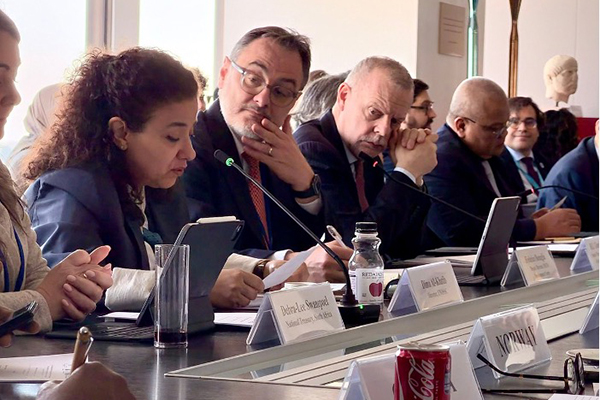
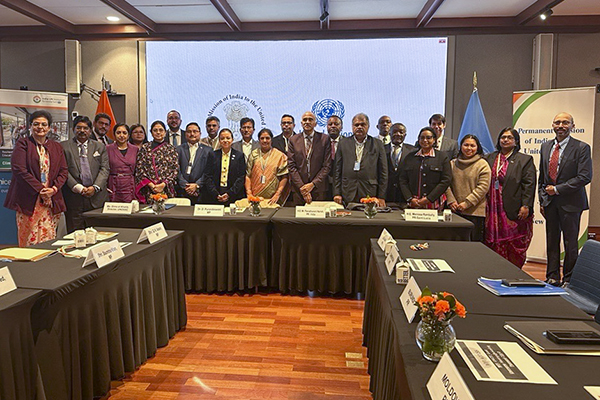
Fourteen Members of Parliament from India joined Ambassadors from Member States and representatives of United Nations agencies partnering with the India-UN Development Partnership Fund at UNICEF House in New York for the annual event of the India-UN Development Partnership Fund, “South-Led Development Pathways.” Participants celebrated how solidarity, mutual learning, and homegrown innovation across the Global South are shaping new pathways toward achieving the Sustainable Development Goals (SDGs).Opening the gathering, H.E. Mr. Parvathaneni Harish, Permanent Representative of India to the United Nations, reaffirmed India’s steadfast commitment to South-South cooperation and the guiding principle of Vasudhaiva Kutumbakam — “The World is One Family.”The essence of this program is to make sure that India’s development and partnership is guided by the priorities and focus areas of our partner countries, said H.E. Mr. Parvathaneni Harish, noting that the Fund primarily focuses on the development needs of Small Island Developing States, Least Developing Countries, and Landlocked Developing Countries. What makes this Fund unique is that projects are nationally driven, and tailor made.He was joined by a distinguished panel of speakers, including Dr. (Mrs.) D. Purandeswari, Hon’ble Member of Parliament and Head of Delegation of India; H.E. Ms. Menissa Rambally, Permanent Representative of Saint Lucia and Board Member of the Fund; and Ms. Dima Al-Khatib, Director of the United Nations Office for South-South Cooperation (UNOSSC).India has demonstrated that development is possible through inclusive and sustainable growth; our experiences in poverty reduction, health care, and education have guided our development initiatives in partner countries, said Dr. D. Purandeswari. “We believe in the principle of South-South cooperation and have worked with other developing countries to share our expertise, including through capacity building programs.”A key highlight of the event was the launch of the 2025 India-UN Development Partnership Fund Year-in-Review Report, produced by the United Nations Office for South-South Cooperation (UNOSSC) in consultation with the Fund’s Board of Directors and the Permanent Mission of India. Click on the image to download the reportThe report spotlights results from more than 80 projects implemented across 63 countries — from advancing inclusive education for children with disabilities in Nicaragua and strengthening flood resilience in Suriname, to expanding telemedicine for maternal health in the Kyrgyz Republic and providing vocational training opportunities for women and youth in Burundi.“India is well known as a proactive leader in South-South cooperation, providing development support in solidarity through various ways and approaches with the main aim to support economic growth and institutional capacity for many countries in the Global South,” said UNOSSC Director, Ms. Dima Al-Khatib. “As described and illustrated in the yearly report of the Fund that we are launching today, the projects implemented have been capitalizing on the technical expertise of the UN system on the ground and have been supporting locally-owned sustainable development initiatives, and leveraging South-South cooperation in sharing knowledge and expertise, scaling up initiatives across borders.”Ambassadors from Armenia, Bahrain, Belize, Burundi, Cameroon, Cyprus, Dominica, El Salvador, Guyana, Maldives, Moldova, Morocco, Saint Lucia, Solomon Islands, Sri Lanka, Tuvalu and Venezuela shared first-hand accounts of how India and the Fund are helping their countries advance national development priorities and address emerging challenges. Many expressed the need to expand such kind of funding mechanisms to enable South-South cooperation accelarating the achievement of SDGs.“The India-UN Development Partnership Fund exemplifies how partnering countries in the Global South can address directly their priority, development goals, through the many projects that have been implemented,” said H.E. Ms. Menissa Rambally. “I want to take this opportunity to applaud the Government of India for its demonstrated commitment in advancing the achievement of the sustainable development goals through South-South corporation.”“Within the interconnected crises facing the developing world and the rapidly changing development cooperation context, the need for South-South cooperation is increasing,” said H.E. Ms. Majda Moutchou, Deputy Permanent Representative of Morocco, on behalf of H.E. Ambassador Omar Hilale, President of the UN High-Level Committee on South-South Cooperation. “The India-UN Fund is a shining example of successful South-South cooperation. It is highly appreciated by all Member States, as a demand-driven and results-oriented fund, with visible, measurable, and transformative impact. The Fund embodies India’s cooperation model, which is human-centric, emphasizing mutual respect and partnership.”Each project illustrates solidarity in action – countries of the Global South designing and delivering their own solutions with United Nations support, proving that South-South cooperation delivers real results at scale.UNDP is proud to host the United Nations Office for South-South Cooperation, which manages the Fund, said Mr. Walid Badawi, Deputy Assistant Administrator and Deputy Director, Bureau of External Relations and Advocacy, UNDP. And as the Fund’s largest UN implementing agency, UNDP has delivered nearly half of its 84 projects, helping adapt India’s innovations to local contexts in 62 countries. “Looking ahead, UNDP remains committed to scaling Indian innovations and ensuring that South-led pathways drive SDG progress,” he concluded.Mr. Juan Santender, Deputy Director of the Public Partnership Division at UNICEF, also addressed the meeting.Established in 2017 with a commitment of US$150 million from the Government of India and managed by the United Nations Office for South-South Cooperation (UNOSSC), the Fund has supported nearly 90 projects spanning all 17 Sustainable Development Goals (SDGs) — from climate action and food security to digital inclusion and gender equality.Today, it stands as a flagship model of South-South cooperation — locally led, sustainable, and human-centred — exemplifying how collective progress among developing nations is accelerating the achievement of the 2030 Agenda.

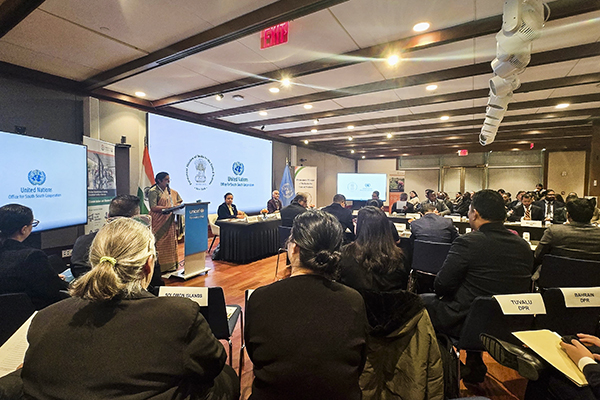 India has demonstrated that development is possible through inclusive and sustainable growth; our experiences in poverty reduction, health care, and education have guided our development initiatives in partner countries, said Dr. D. Purandeswari. “We believe in the principle of South-South cooperation and have worked with other developing countries to share our expertise, including through capacity building programs.”
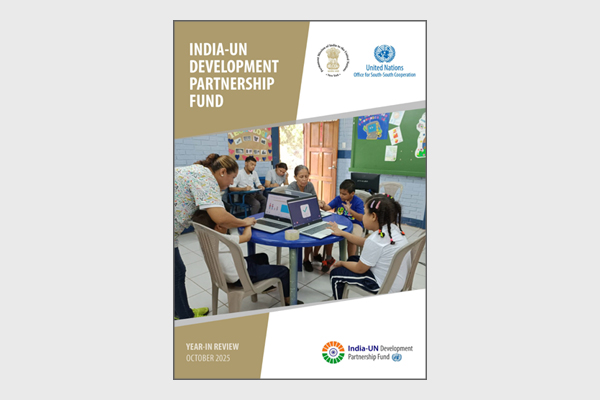
A key highlight of the event was the launch of the 2025 India-UN Development Partnership Fund Year-in-Review Report, produced by the United Nations Office for South-South Cooperation (UNOSSC) in consultation with the Fund’s Board of Directors and the Permanent Mission of India.
India has demonstrated that development is possible through inclusive and sustainable growth; our experiences in poverty reduction, health care, and education have guided our development initiatives in partner countries, said Dr. D. Purandeswari. “We believe in the principle of South-South cooperation and have worked with other developing countries to share our expertise, including through capacity building programs.”
A key highlight of the event was the launch of the 2025 India-UN Development Partnership Fund Year-in-Review Report, produced by the United Nations Office for South-South Cooperation (UNOSSC) in consultation with the Fund’s Board of Directors and the Permanent Mission of India.
 “India is well known as a proactive leader in South-South cooperation, providing development support in solidarity through various ways and approaches with the main aim to support economic growth and institutional capacity for many countries in the Global South,” said UNOSSC Director, Ms. Dima Al-Khatib. “As described and illustrated in the yearly report of the Fund that we are launching today, the projects implemented have been capitalizing on the technical expertise of the UN system on the ground and have been supporting locally-owned sustainable development initiatives, and leveraging South-South cooperation in sharing knowledge and expertise, scaling up initiatives across borders.”
Ambassadors from Armenia, Bahrain, Belize, Burundi, Cameroon, Cyprus, Dominica, El Salvador, Guyana, Maldives, Moldova, Morocco, Saint Lucia, Solomon Islands, Sri Lanka, Tuvalu and Venezuela shared first-hand accounts of how India and the Fund are helping their countries advance national development priorities and address emerging challenges. Many expressed the need to expand such kind of funding mechanisms to enable South-South cooperation accelarating the achievement of SDGs.
“The India-UN Development Partnership Fund exemplifies how partnering countries in the Global South can address directly their priority, development goals, through the many projects that have been implemented,” said H.E. Ms. Menissa Rambally. “I want to take this opportunity to applaud the Government of India for its demonstrated commitment in advancing the achievement of the sustainable development goals through South-South corporation.”
“Within the interconnected crises facing the developing world and the rapidly changing development cooperation context, the need for South-South cooperation is increasing,” said H.E. Ms. Majda Moutchou, Deputy Permanent Representative of Morocco, on behalf of H.E. Ambassador Omar Hilale, President of the UN High-Level Committee on South-South Cooperation. “The India-UN Fund is a shining example of successful South-South cooperation. It is highly appreciated by all Member States, as a demand-driven and results-oriented fund, with visible, measurable, and transformative impact. The Fund embodies India’s cooperation model, which is human-centric, emphasizing mutual respect and partnership.”
Each project illustrates solidarity in action – countries of the Global South designing and delivering their own solutions with United Nations support, proving that South-South cooperation delivers real results at scale.
UNDP is proud to host the United Nations Office for South-South Cooperation, which manages the Fund, said Mr. Walid Badawi, Deputy Assistant Administrator and Deputy Director, Bureau of External Relations and Advocacy, UNDP. And as the Fund’s largest UN implementing agency, UNDP has delivered nearly half of its 84 projects, helping adapt India’s innovations to local contexts in 62 countries. “Looking ahead, UNDP remains committed to scaling Indian innovations and ensuring that South-led pathways drive SDG progress,” he concluded.
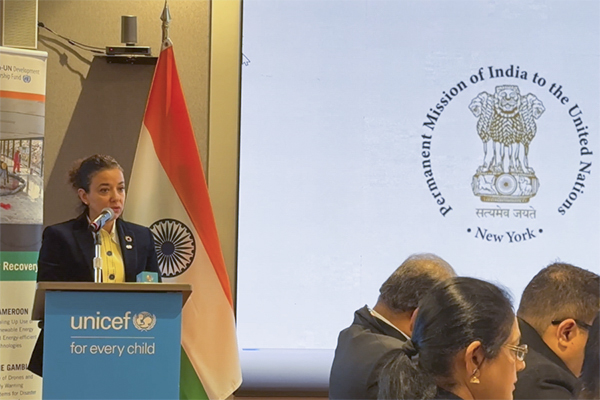
Mr. Juan Santender, Deputy Director of the Public Partnership Division at UNICEF, also addressed the meeting.
Established in 2017 with a commitment of US$150 million from the Government of India and managed by the United Nations Office for South-South Cooperation (UNOSSC), the Fund has supported nearly 90 projects spanning all 17 Sustainable Development Goals (SDGs) — from climate action and food security to digital inclusion and gender equality.
Today, it stands as a flagship model of South-South cooperation — locally led, sustainable, and human-centred — exemplifying how collective progress among developing nations is accelerating the achievement of the 2030 Agenda.
“India is well known as a proactive leader in South-South cooperation, providing development support in solidarity through various ways and approaches with the main aim to support economic growth and institutional capacity for many countries in the Global South,” said UNOSSC Director, Ms. Dima Al-Khatib. “As described and illustrated in the yearly report of the Fund that we are launching today, the projects implemented have been capitalizing on the technical expertise of the UN system on the ground and have been supporting locally-owned sustainable development initiatives, and leveraging South-South cooperation in sharing knowledge and expertise, scaling up initiatives across borders.”
Ambassadors from Armenia, Bahrain, Belize, Burundi, Cameroon, Cyprus, Dominica, El Salvador, Guyana, Maldives, Moldova, Morocco, Saint Lucia, Solomon Islands, Sri Lanka, Tuvalu and Venezuela shared first-hand accounts of how India and the Fund are helping their countries advance national development priorities and address emerging challenges. Many expressed the need to expand such kind of funding mechanisms to enable South-South cooperation accelarating the achievement of SDGs.
“The India-UN Development Partnership Fund exemplifies how partnering countries in the Global South can address directly their priority, development goals, through the many projects that have been implemented,” said H.E. Ms. Menissa Rambally. “I want to take this opportunity to applaud the Government of India for its demonstrated commitment in advancing the achievement of the sustainable development goals through South-South corporation.”
“Within the interconnected crises facing the developing world and the rapidly changing development cooperation context, the need for South-South cooperation is increasing,” said H.E. Ms. Majda Moutchou, Deputy Permanent Representative of Morocco, on behalf of H.E. Ambassador Omar Hilale, President of the UN High-Level Committee on South-South Cooperation. “The India-UN Fund is a shining example of successful South-South cooperation. It is highly appreciated by all Member States, as a demand-driven and results-oriented fund, with visible, measurable, and transformative impact. The Fund embodies India’s cooperation model, which is human-centric, emphasizing mutual respect and partnership.”
Each project illustrates solidarity in action – countries of the Global South designing and delivering their own solutions with United Nations support, proving that South-South cooperation delivers real results at scale.
UNDP is proud to host the United Nations Office for South-South Cooperation, which manages the Fund, said Mr. Walid Badawi, Deputy Assistant Administrator and Deputy Director, Bureau of External Relations and Advocacy, UNDP. And as the Fund’s largest UN implementing agency, UNDP has delivered nearly half of its 84 projects, helping adapt India’s innovations to local contexts in 62 countries. “Looking ahead, UNDP remains committed to scaling Indian innovations and ensuring that South-led pathways drive SDG progress,” he concluded.
Mr. Juan Santender, Deputy Director of the Public Partnership Division at UNICEF, also addressed the meeting.
Established in 2017 with a commitment of US$150 million from the Government of India and managed by the United Nations Office for South-South Cooperation (UNOSSC), the Fund has supported nearly 90 projects spanning all 17 Sustainable Development Goals (SDGs) — from climate action and food security to digital inclusion and gender equality.
Today, it stands as a flagship model of South-South cooperation — locally led, sustainable, and human-centred — exemplifying how collective progress among developing nations is accelerating the achievement of the 2030 Agenda.