• Home
  • /
  • Events
  • /
  • South-South and Triangular Cooperation Highlighted at COP30 in Belém

South-South and Triangular Cooperation Highlighted at COP30 in Belém


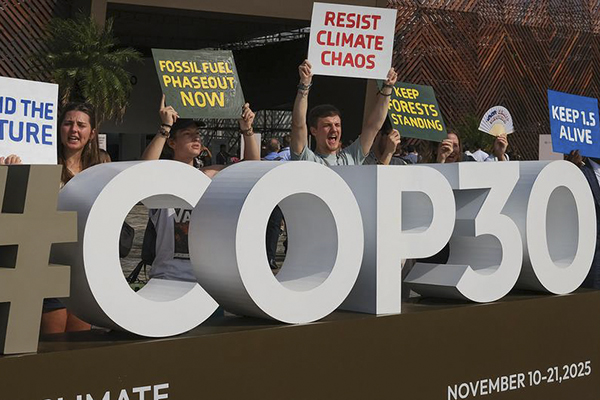
At the 30th Meeting of the Conference of the Parties (COP30) to the United Nations Framework Convention on Climate Change (UNFCCC), held in Belém, Brazil, in the heart of the Amazon, South-South and triangular cooperation emerged as essential enablers of climate ambition, with developing countries taking leadership on nature-based solutions, innovation, and climate finance. COP30 delivered a wide-ranging package to scale up climate finance and accelerate implementation of the Paris Agreement, setting new expectations for strengthened national plans, expanded support for adaptation, and faster delivery of resources to the most vulnerable. Countries agreed on ambitious financial targets and mechanisms – advancing loss-and-damage funding, operationalizing facilities for forests and resilience, and increasing investment in nature-based solutions – while stopping short of a collective commitment to transition away from fossil fuels. The outcome reflected a strong emphasis on solidarity and delivery, underscoring that progress on mitigation, adaptation, and resilience will depend on sustained cooperation, predictable finance, and the translation of science into action.   What Was at Stake in the COP30 Negotiations? UN Secretary-General António Guterres highlighted the critical role of developing countries working together to advance climate action. “We must support developing countries through stronger cooperation, investment and technology transfer, calibrated to different capacities and dependencies, so that they can pursue climate solutions, build resilience, and foster sustainable development,” he said during the opening plenary of the World Leaders Climate Action Summit. Delegates confronted a global trajectory in which the 1.5°C goal was slipping further out of reach, even as science showed that rapidly scaling ambition remained possible with coordinated action. Countries were expected to table strengthened national climate plans (NDCs), close implementation gaps identified in the Global Stocktake, and advance long-pending decisions on climate finance – particularly for adaptation and the most vulnerable nations. Critically, many leaders emphasized that progress would depend on enabling frameworks such as South-South and triangular cooperation, which had become essential for mobilizing finance, sharing technologies, and advancing just transition pathways tailored to developing-country realities. China, Brazil, and other leading Global South nations showcased their commitment to climate-focused South-South initiatives. Highlights included China’s support through South-South climate cooperation funds, Brazil’s leadership in forest conservation and energy transition initiatives, and the South-South Collective for Climate, which aims to support over 5,000 climate startups across Africa, Latin America, and South Asia by 2030. Together, these efforts demonstrate how Southern countries are building shared standards, sustainable business models, and autonomous leadership in global climate governance. A key breakthrough at COP30 was coordinated action to protect mangroves, peatlands, and saltmarshes – critical ecosystems that store carbon and enhance resilience to climate impacts. In this regard, sessions were organized and supported by UNDP, the UNFCCC Secretariat, and governments including Brazil and Indonesia. New financing facilities and science-based targets are being deployed to transform ambition into action in the real economy. By linking nature-based solutions with tangible financing and targets, COP30 demonstrated the transformative potential of South-South cooperation. Developing countries are increasingly able to translate their Nationally Determined Contributions (NDCs) into measurable outcomes, advancing climate mitigation and adaptation while promoting poverty eradication, health, and decent work.   Scaling Solutions The Climate-Proofing SMEs Campaign and the South-South Collective for Climate, organized by UNDP and the China-UN Development Partnership Fund, highlighted how small businesses and startups are rapidly deploying climate solutions. These initiatives show how knowledge-sharing, technology transfer, and capacity-building accelerate the implementation of clean energy, climate-resilient agriculture, and nature-based approaches. Innovation from the Global South – ranging from renewable energy transitions in Africa to nature-based adaptation projects in Latin America – is being scaled and replicated across regions, demonstrating that South-South cooperation can turn ambition into practical, measurable results.   Fund for Responding to Loss and Damage (FRLD) The Fund for Responding to Loss and Damage (FRLD), was established at COP 27 in Egypt in 2022 and was operationalised at COP 28 in Dubai. It is a fund to deliver money to developing countries and the communities within them to address loss and damage. On the first day of COP 30, the FRLD launched the call for funding requests for its start-up phase – the Barbados Implementation Modalities (BIM). COP30 marked a pivotal leap for the FRLD, launching its first activities and opening applications for loss and damage funding through the Barbados Implementation Modalities, advancing global climate finance policy from promise to delivery for the most at-risk communities.   Coalition for Sustainable Wood COP30 also saw the launch of a global coalition on sustainable wood, convened by FAO and the World Resources Institute, which unites governments and industry to decarbonize construction while protecting forests. This initiative exemplifies triangular cooperation, linking governments, civil society, and private sector actors. By connecting policymakers, innovators, and communities, South-South and triangular collaboration is unlocking the potential of home-grown knowledge and technologies, delivering both environmental protection and economic growth.   Agricultural Emissions A South-South platform to reduce methane and nitrous oxide emissions from agriculture was launched by ministers from Latin America, Africa, and Asia, coordinated by the Climate and Clean Air Coalition (CCAC). This platform enables countries to co-create solutions for high-emission sectors while enhancing food security and resilience. South-South peer-to-peer knowledge exchange accelerates the deployment of best practices, translating climate ambition into tangible, scalable impact across regions.   Forest Finance and Land Restoration Brazil, in partnership with UNDP, unveiled the Tropical Forests Forever Facility (TFFF), a blended-finance mechanism mobilizing over US$5.5 billion to tropical forest nations. At least 20% of funds are earmarked for Indigenous Peoples and local communities, embedding solidarity-based finance into global climate architecture. A COP30 side event organized by the African Development Bank and the 11 countries of the Pan-African Agency of the Great Green Wall highlighted efforts to restore degraded lands across the Sahel. South-South collaboration, supported by blended finance and peer-to-peer networks, is central to scaling these restoration initiatives effectively.   COP30: A Turning Point for Implementation COP30 reaffirmed that South-South and triangular cooperation are critical for delivering climate action and a just transition. Through inclusive, people-centered partnerships, countries of the Global South are driving a new era of climate solidarity – protecting ecosystems, empowering communities, and ensuring no one is left behind. South-South cooperation emerged at COP30 as a practical avenue for advancing implementation, with countries using shared knowledge, technology exchanges, and solidarity-based financing to move from commitments toward measurable progress. While significant gaps remain, these efforts are supporting more equitable pathways for mitigation and adaptation across the Global South.  
Related Post


  • All Post
  • ATCT Featured Publications POM
  • BAPA+40
  • Blog
  • Capacity Development Initiatives
  • CICETE Featured Publications POM
  • CIKD
  • Cities Clusters - Agriculture
  • Cities Clusters - COVID-19
  • Cities Clusters - COVID-19 Knowledge Products
  • Cities Clusters - DRR
  • Cities Clusters - E-commerce
  • Cities Clusters - Tourism
  • Cities Clusters - Tourism Knowledge Products
  • Cities Clusters - Transport
  • Cities Clusters - Waste
  • Cities Project
  • Cities Project COVID-19 Newsletters
  • Cities Project COVID-19 Response
  • Cities Project Knowledge Products
  • Classic (untouched)
  • Climate Action
  • COMSATS Featured Publications POM
  • COMSATS Featured Solutions POM
  • Converted from Divi
  • Converted from Mixed
  • Converted from WPBakery
  • COVID-19
  • COVID-19 Page Featured Solutions
  • DRR Knowledge Products
  • DRR News
  • Empty Post
  • Events
  • Featured Event UN-Habitat POM
  • Financing for Development
  • Financing Mechanisms
  • g7+
  • Gender Events
  • Gender News
  • Good Practices in SSTrC Series
  • Good Practices Publications
  • Good Practices Thematic Series & Special Editions
  • Good Practices Vol. 2
  • Good Practices Vol. 3
  • GSSDC
  • Highlighted
  • Highlighted Publications
  • IAEA Featured Solutions POM
  • IBRAF Featured Publications POM
  • IBSA Fund
  • IBSA Fund Annual Reports
  • IBSA Fund News and Stories
  • IBSA Fund Publication
  • IBSA Fund Story
  • ICGEB Featured Events POM
  • ICGEB Featured Publications POM
  • ICGEB Featured Solutions POM
  • ILO Featured Events POM
  • ILO Featured Publications POM
  • ILO Featured Solutions POM
  • India-UN Development Partnership Fund
  • India-UN Fund Publication
  • India-UN Fund Story
  • IsDB
  • IsDB Featured Publications POM
  • IsDB SCC
  • News
  • Norec Featured Publications POM
  • Norec Featured Solutions POM
  • Peace and Development
  • PGTF Publications
  • PGTF Story
  • PICA Featured News POM
  • PICA Featured Publications POM
  • PICA Featured Solutions POM
  • PIDF Featured Publications POM
  • Publications
  • Regional Updates
  • Research
  • ROK-UNOSSC Facility
  • SGP Featured Publication POM
  • SGP Featured Solutions POM
  • Solution
  • South South in Action
  • South-South Global Thinkers
  • South-South Ideas
  • South-South Ideas Series
  • South-South in Action Series
  • Southern Response to COVID-19
  • SSN4PSI Featured Publications POM
  • SSN4PSI Featured Solutions POM
  • Training
  • UN Day for SSC 2020
  • UN Fund for SSC
  • UN SSC Day Publications
  • UN-Habitat Featured Publications POM
  • UN-HABITAT Featured Solutions POM
  • UNCCT
  • UNEP Featured Publications POM
  • UNFPA
  • UNFSSC Publication
  • UNFSSC Story
  • UNIDO Featured Publications POM
  • UNIDO Featured Solutions POM
  • UNIDO POM Events
  • UNOCT Featured Publications POM
  • UNV
  • UNV Featured Publications POM
  • WB Featured Publications POM
  • WB Featured Solutions POM
  • Webinars
  • WFP Featured Events POM
  • WFP Featured Publication POM
  • WFP Featured Solutions POM
  • WIPO
  • Workshops and Seminars
  • Youth4South
  • z Across the Globe 1
  • z Across the Globe 2
  • z Across the Globe 4
  • z Across the Globe 5
  • z Across the Globe 6
  • z Across the Globe 7
  • z Across the Globe 8
  • z ES BAPA+40
  • z ES Eventos
  • z ES Noticias
  • z ES Noticias Destacadas
  • z ES Publicaciones
  • z ES Publicaciones Destacadas
  • z ES Serie Buenas Prácticas en la CSSyT
  • z ES Serie El Sur-Sur en Acción
  • z FR Actualités
  • z FR BAPA+40
  • z FR Événements
  • z FR Publications
  • z FR Publications en vedette
  • z FR Série Bonnes pratiques en CSST
  • z FR Série Sud-Sud en action
  • z Highlighted News
  • z Photos
  • z Videos
  • z ZH BAPA+40
  • z ZH Events
  • z ZH News

ABOUT

Terms of Service

Privacy Policy

Disclosures

RESOURCES

Terms of Service

Privacy Policy

Disclosures

ENGAGE

Terms of Service

Privacy Policy

Disclosures

Copyright © UNOSSC/UNDP

wpChatIcon
wpChatIcon

Alliance Application Form

Submit an Expression of Interest and/or Demand Signal. UNOSSC reviews submissions on a rolling basis.

1. Official name of organization / institution / government entity (exclusions to apply) *
2. Country *
3. Region *
4. SDG *
Secondary SDG *
5. Partner category *
6. Website *
7. Brief description of your institution (max. 150 words) *
Name for the Lead *
Title for the Lead *
Email address for the Lead *
Name for the co-lead
Title for the co-lead
Email address for the co-lead
Section 3. Expression of Interest in the Alliance *
Additional information on proposed areas of engagement may be requested through the platform following initial review by the Alliance Secretariat.
Section 4. Due Diligence and Integrity Declaration *

Submission Note:

  • Submission of this Expression of Interest form does not automatically confer participation in the Alliance.
  • All submissions will be reviewed by the Alliance Secretariat, including basic eligibility screening and proportionate due diligence, as appropriate.
  • Participation in Alliance activities is determined based on relevance to articulated cooperation needs, alignment with Alliance principles, and integrity considerations.
  • Engagement under the Alliance is voluntary, non-binding, and facilitative in nature, and does not constitute funding approval, contractual commitment, or institutional membership.
  • The Alliance Secretariat may contact submitting entities for additional information or clarification during the review process.

Submission of Demand Form

Description of Demand

Indicate the type of support or cooperation requested through the Alliance.
Please briefly describe the challenge, gap, or priority. (Max. 300 words)

Thematic and Geographic Focus

Please indicate the main focus areas of your demand:

A. Thematic Areas (select up to three)
B. Geographic Focus (select all that apply)

Proposed Engagement Modalities

Please indicate how you would like to engage through the Alliance (select all that apply):

Expected Outcomes

Please indicate the main results you seek to achieve through this engagement. (Max. 200 words)
Examples:
• Capacity strengthened
• Partnerships established
• Sectoral or regional strategies co-developed
• Solutions piloted
• Knowledge generated
• Policies informed

Timeline and Readiness (if applicable)

1. Expected timeframe for engagement:
2. Current stage:

Additional Information

Please provide any additional information, documents, or links relevant to this submission.
(Max. 200 words or upload link)

Submission of Offer Form

Description of Contribution

Indicate the type of contribution your institution can provide and describe the expertise, resources, or solutions you may offer.
Please briefly describe your proposed contribution. (Max. 300 words)

Thematic and Geographic Focus

Please indicate the main focus areas of your interest:

A. Thematic Areas (select up to three)
B. Geographic Focus (select all that apply)

Proposed Engagement Modalities

Please indicate how you would like to engage through the Alliance (select all that apply):

Expected Outcomes

Please indicate the main results you aim to achieve through this engagement. (Max. 200 words)
Examples:
• Capacity strengthened
• Partnerships established
• Sectoral or regional strategies co-developed
• Solutions piloted
• Knowledge generated
• Policies informed

Timeline and Readiness (if applicable)

1. Expected timeframe for engagement:
2. Current stage:

Additional Information

Please provide any additional information, documents, or links relevant to this submission.
(Max. 200 words or upload link)

Organization Registration

Authentication & Due Diligence This prototype simulates identity verification, due diligence confirmation, and an authentication step before submission. *

First Name *
Last Name *
Email address *
Password *
Confirm Password *
Name of institution / organization *
Country / Region *
Organization Type *
Organization other *
Function / role *
Organization logo *
Maximum file size: 1 GB

Login

Login / email *
Password *
Remember me

Forgot password?

Connect form

Your name *
Email *
Organization / institution *
Job title / role *
Reason for connecting:
Short message

Scroll to Top