UNOSSC Director Dima Al-Khatib participated in the
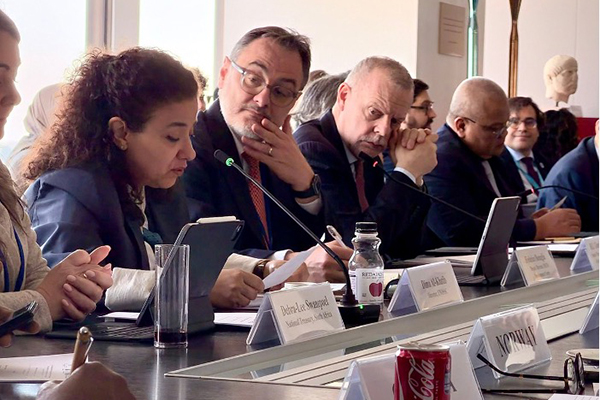
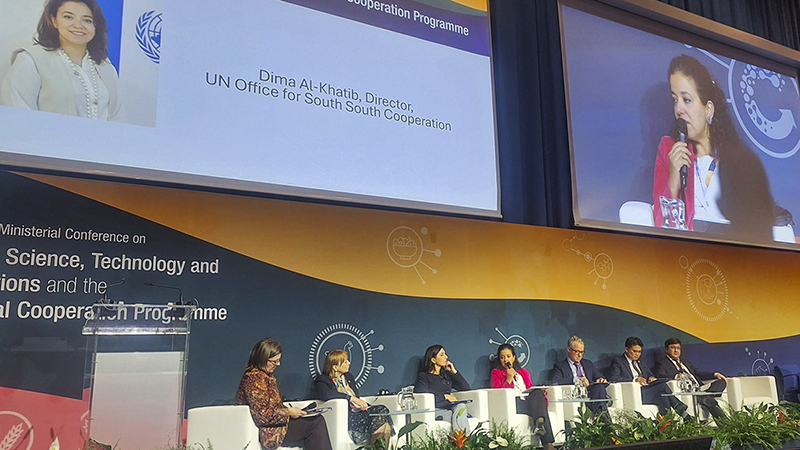
2024 International Atomic Energy Agency Ministerial Conference on Nuclear Science, Technology and Applications and the Technical Cooperation Programme, in Vienna, Austria. The Ministerial Conference, brought together ministers and senior officials from IAEA Member States to discuss the role of nuclear science and technology in addressing some of the challenges we face today, including health, food security and safety, water resource management and climate change.
Among others, the
Ministerial Declaration underscored the growing need and demand for further utilization and upscaling of nuclear applications worldwide for peaceful purposes, toward meeting needs and priorities of Member States, in particular developing countries, in areas including: health and nutrition, food and agriculture, water and the environment, industrial applications, radiation technology, safety and security, energy planning and nuclear power, nuclear knowledge development and management.
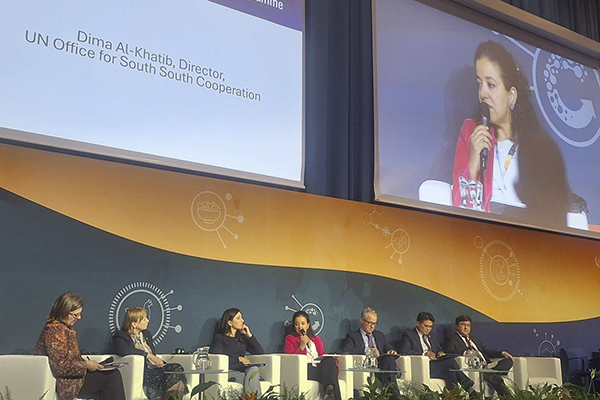
Among other engagements, UNOSSC Director Dima Al-Khatib addressed a panel focusing on ‘Strengthening Partnership and Resource Mobilization’, highlighting key successes of South-South cooperation in supporting science, technology and innovation (STI) for sustainable development.
“Over 2.6 billion people, mostly women and girls, still do not have access to the internet, highlighting that substantial work that is still needed to achieve the universal connectivity target by 2030,” said Director Al-Khatib. “Universal connectivity remains a distant prospect in LDCs and LLDCs, where only 35 and 39 per cent of the population are currently online, respectively.”
The Director highlighted that “South-South and triangular cooperation, with its wealth of knowledge, experience, expertise and other resources, plays an essential role in scaling up STI in the Global South.”
The Third South Summit Outcome document, endorsed by the G77 and China in January 2024, emphasized the importance of adopting science, technology, and innovation strategies as integral elements to help promote innovation-driven development, economic recovery, and poverty eradication. It called for more investment in these areas, as articulated in the Havana Declaration on “Current Development Challenges: The Role of Science, Technology, and Innovation,” adopted in 2023 by the Group.
At the
21st Session of the High-level Committee on South-South Cooperation, convened in 2023, the endorsed decisions urged Member States and UN entities to strengthen access to STI through South-South and triangular cooperation by creating synergies, developing expertise and boosting resources in different regions and institutions.
In January 2024, Member States endorsed the importance of STI by establishing September 16 as the annual celebration of
International Day of Science, Technology and Innovation for the South, through UN General Assembly resolution.
The United Nations Office for South-South Cooperation has been working with countries in the Global South and also the North, with the support of UN entities, to scale-up and strengthen the transfer of innovations and technologies, on mutually agreed terms to contribute to narrowing the digital divide. For example, UNOSSC hosts the
South-South Galaxy, a global digital knowledge-sharing and partnership-brokering platform – currently connecting over 600 organizations and showcasing more than 950 South-South and triangular cooperation solutions. Many of these solutions focus on science, technology, and innovation, leveraging innovative technologies and approaches to address critical issues such as climate change, sustainable urban development, energy transitions, and sustainable agricultural practices.
The Director noted that the SDG financing gap has grown to as much as $4 trillion annually for developing countries, an increase of 56 percent since 2020. “What we need is a model of solidarity, a model of development cooperation that leverages proximity of experience and geography and enables support that poses no additional burden,” she said. “This is the essence of South-South and triangular cooperation.”
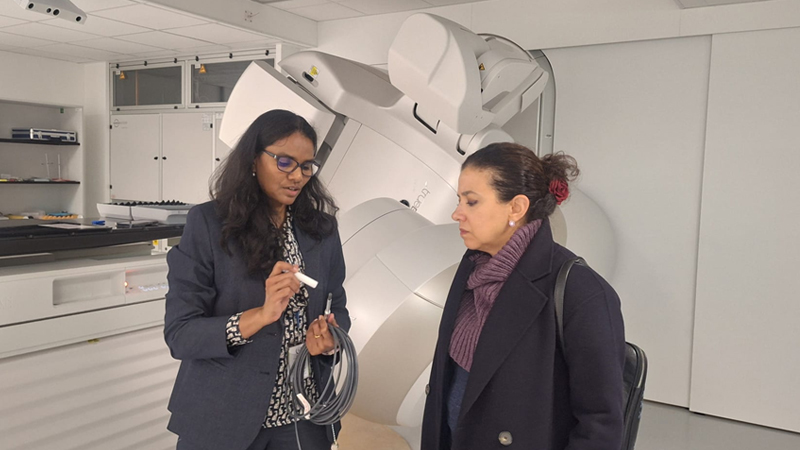
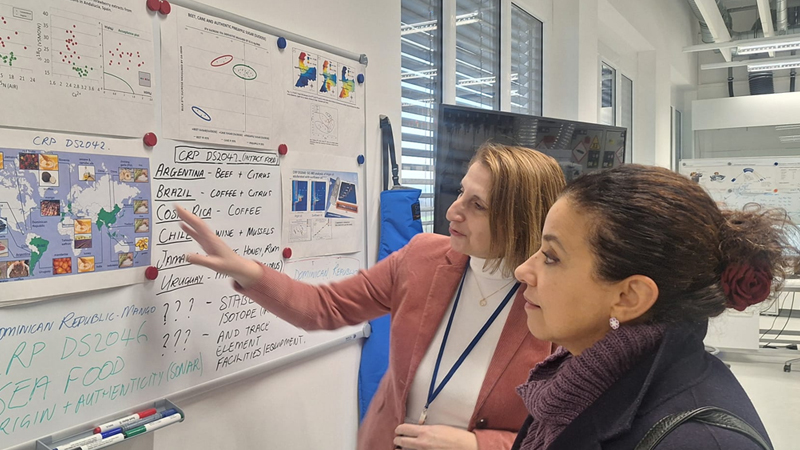
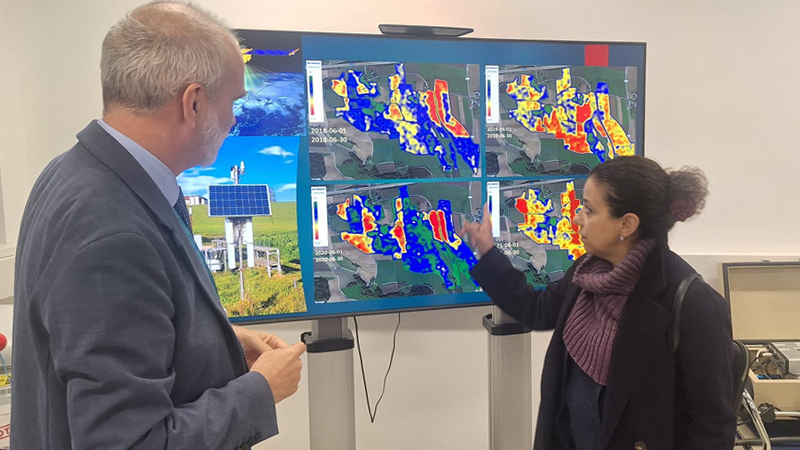
Toward potential sharing and scaling up of existing IAEA knowledge and expertise, while in Vienna, the Director had the opportunity to visit several of
IAEA’s Seibersdorf Laboratories, including those studying dosimetry, food safety, and soil and water management.