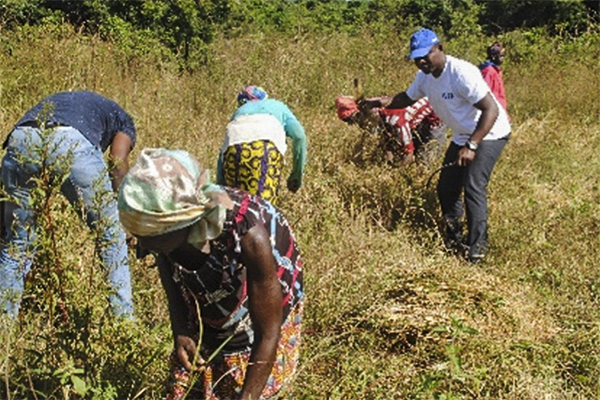
Rice plays a pivotal role in the food system, particularly in developing countries. Enhancing the rice value chain, especially in Africa, would significantly contribute to the resilience of sustainable food systems. Many African countries heavily rely on rice as a staple crop, yet they face significant deficits in production and processing technologies.
Recognizing the need for action, the United Nations Office for South-South Cooperation (UNOSSC), United Nations World Food Programme (WFP), China International Center for Economic and Technical Exchange (CICETE), Alliance for a Green Revolution in Africa, Africa Rice Center, Chinese Academy of Agricultural Sciences, and the Bill & Melinda Gates Foundation launched a joint initiative on “Strengthening South-South and Triangular Cooperation in China-Africa Rice Value Chain” in 2019. The joint initiative facilitates joint research, knowledge sharing, mutual learning, technology transfer, and expertise exchange through South-South and triangular cooperation.
Under this initiative – with seed-funding from UNOSSC’s Global South-South Development Centre (GSSDC) project – WFP China Centre of Excellence and WFP Regional Centre of Excellence against Hunger and Malnutrition (CERFAM) in Africa implemented a one-year pilot project in 2021, with an aim to improve the resilience of sustainable food systems by enhancing the rice value chain, particularly in West African countries. The Pilot project established a subregional technical demonstration network, centred in Cote d’Ivoire, to connect research and technical institutions, practitioners, smallholder farmers, SMEs, private sectors, and market actors from China and Africa, including China Hunan Hybrid Rice Research Centre, Hunan Agriculture University, Fujian Agriculture and Forestry University, Africa Rice Center (WARDA), and the Ministry of Agriculture and Rural Development and National Agency for Support to Rural Development of Côte d’Ivoire.
Demonstration site was established in a local community serving as a hub for technical demonstrations and training on rice post-harvest treatment and processing. Agro-machinery, including tillers, threshers, and hullers, had been procured and installed to provide on-site demonstrations to develop local production capacity. Moreover, the pilot project facilitated technical trainings on rice post-harvest management using the “train-the-trainers (TOT)” approach. These trainings empowered local technicians to disseminate affordable and applicable technologies to a broader scope of smallholder farmers, fostering a more effective rice value chain.
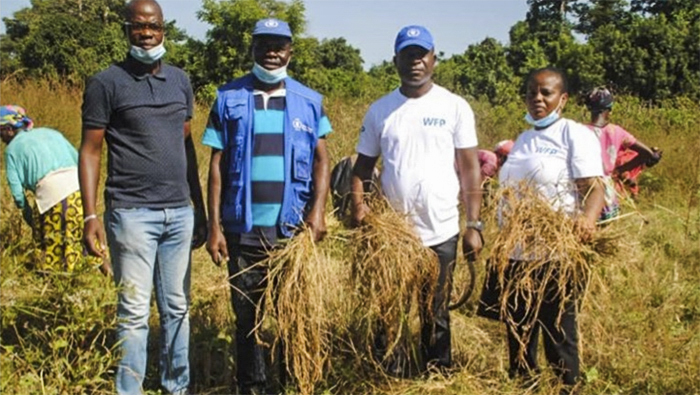 Leveraging China’s expertise in rice value chain development through South-South exchanges, this pilot project strengthened the resilience of sustainable food systems in Côte d’Ivoire, the third-largest rice-producing country in West Africa. The establishment of the demonstration site and capacity-building activities have empowered local partners to provide ongoing support beyond the project’s timeline. By the end of this pilot, 614 rice producers and their households from 4 local communities directly benefited from the on-site technical demonstrations, with enhanced farming practices and advanced machineries, covering 17.6 Hectare land area in north of Côte d’Ivoire. It has been reported that the 43 agricultural technicians from local and neighboring communities and provinces, who had participated the “train-the-trainers (TOT)” technical trainings, have been conducting technical demonstrations in other communities in the West African subregion.
A documentary was produced about the China Africa Rice Value Chain Initiative and premiered at the recent workshop under the same subject in June. Please watch the documentary here:
Recognizing the power of partnerships and SSTrC in transforming rice value chains in Western Africa, Bill & Melinda Gates Foundation has provided funding to support the scaling-up of this subregional network under this initiative.
In his recent visit to China in June 2023, Bill Gates expressed his admiration for Yuan Longping, the scientist behind the development of the world’s first hybrid rice varieties. Gates acknowledged Longping’s groundbreaking work, which not only revolutionized Chinese agriculture and the economy but also helped feed billions of people worldwide. Inspired by this success, the Gates Foundation has been supporting Chinese scientists in developing hybrid rice varieties that can withstand harsh weather conditions.
Mr. Gates mentioned, how the Gates Foundation has fostered a partnership between Chinese and West African rice scientists. Their collaboration focuses on breeding new rice varieties that are adapted to local conditions and ensuring that farmers have access to these varieties, enabling them to cope with the changing climate. He commended that such collaboration showcases the power of partnership and should serve as a model for global cooperation in addressing agricultural challenges. He further highlighted the power of collaboration and knowledge sharing between China and West African rice scientists in revolutionizing rice value chains and improving production technologies and small holder farmers in western African countries were able to improve rice value chains and production technologies and enhance food security and create sustainable agricultural systems, through the China Africa Rice Value Chain Initiative.
Sources:
• https://www.gatesfoundation.org/ideas/speeches/2023/06/bill-china-ghddi-innovation
• https://www.gatesnotes.com/Visiting-China
• https://www.scmp.com/tech/policy/article/3221971/xi-jinping-calls-global-cooperation-technology-zhongguancun-beijing-courts-top-scientists?module=perpetual_scroll_1_RM&pgtype=article&campaign=3221971
Leveraging China’s expertise in rice value chain development through South-South exchanges, this pilot project strengthened the resilience of sustainable food systems in Côte d’Ivoire, the third-largest rice-producing country in West Africa. The establishment of the demonstration site and capacity-building activities have empowered local partners to provide ongoing support beyond the project’s timeline. By the end of this pilot, 614 rice producers and their households from 4 local communities directly benefited from the on-site technical demonstrations, with enhanced farming practices and advanced machineries, covering 17.6 Hectare land area in north of Côte d’Ivoire. It has been reported that the 43 agricultural technicians from local and neighboring communities and provinces, who had participated the “train-the-trainers (TOT)” technical trainings, have been conducting technical demonstrations in other communities in the West African subregion.
A documentary was produced about the China Africa Rice Value Chain Initiative and premiered at the recent workshop under the same subject in June. Please watch the documentary here:
Recognizing the power of partnerships and SSTrC in transforming rice value chains in Western Africa, Bill & Melinda Gates Foundation has provided funding to support the scaling-up of this subregional network under this initiative.
In his recent visit to China in June 2023, Bill Gates expressed his admiration for Yuan Longping, the scientist behind the development of the world’s first hybrid rice varieties. Gates acknowledged Longping’s groundbreaking work, which not only revolutionized Chinese agriculture and the economy but also helped feed billions of people worldwide. Inspired by this success, the Gates Foundation has been supporting Chinese scientists in developing hybrid rice varieties that can withstand harsh weather conditions.
Mr. Gates mentioned, how the Gates Foundation has fostered a partnership between Chinese and West African rice scientists. Their collaboration focuses on breeding new rice varieties that are adapted to local conditions and ensuring that farmers have access to these varieties, enabling them to cope with the changing climate. He commended that such collaboration showcases the power of partnership and should serve as a model for global cooperation in addressing agricultural challenges. He further highlighted the power of collaboration and knowledge sharing between China and West African rice scientists in revolutionizing rice value chains and improving production technologies and small holder farmers in western African countries were able to improve rice value chains and production technologies and enhance food security and create sustainable agricultural systems, through the China Africa Rice Value Chain Initiative.
Sources:
• https://www.gatesfoundation.org/ideas/speeches/2023/06/bill-china-ghddi-innovation
• https://www.gatesnotes.com/Visiting-China
• https://www.scmp.com/tech/policy/article/3221971/xi-jinping-calls-global-cooperation-technology-zhongguancun-beijing-courts-top-scientists?module=perpetual_scroll_1_RM&pgtype=article&campaign=3221971
Leveraging China’s expertise in rice value chain development through South-South exchanges, this pilot project strengthened the resilience of sustainable food systems in Côte d’Ivoire, the third-largest rice-producing country in West Africa. The establishment of the demonstration site and capacity-building activities have empowered local partners to provide ongoing support beyond the project’s timeline. By the end of this pilot, 614 rice producers and their households from 4 local communities directly benefited from the on-site technical demonstrations, with enhanced farming practices and advanced machineries, covering 17.6 Hectare land area in north of Côte d’Ivoire. It has been reported that the 43 agricultural technicians from local and neighboring communities and provinces, who had participated the “train-the-trainers (TOT)” technical trainings, have been conducting technical demonstrations in other communities in the West African subregion.
A documentary was produced about the China Africa Rice Value Chain Initiative and premiered at the recent workshop under the same subject in June. Please watch the documentary here:
Recognizing the power of partnerships and SSTrC in transforming rice value chains in Western Africa, Bill & Melinda Gates Foundation has provided funding to support the scaling-up of this subregional network under this initiative.
In his recent visit to China in June 2023, Bill Gates expressed his admiration for Yuan Longping, the scientist behind the development of the world’s first hybrid rice varieties. Gates acknowledged Longping’s groundbreaking work, which not only revolutionized Chinese agriculture and the economy but also helped feed billions of people worldwide. Inspired by this success, the Gates Foundation has been supporting Chinese scientists in developing hybrid rice varieties that can withstand harsh weather conditions.
Mr. Gates mentioned, how the Gates Foundation has fostered a partnership between Chinese and West African rice scientists. Their collaboration focuses on breeding new rice varieties that are adapted to local conditions and ensuring that farmers have access to these varieties, enabling them to cope with the changing climate. He commended that such collaboration showcases the power of partnership and should serve as a model for global cooperation in addressing agricultural challenges. He further highlighted the power of collaboration and knowledge sharing between China and West African rice scientists in revolutionizing rice value chains and improving production technologies and small holder farmers in western African countries were able to improve rice value chains and production technologies and enhance food security and create sustainable agricultural systems, through the China Africa Rice Value Chain Initiative.
Sources:
• https://www.gatesfoundation.org/ideas/speeches/2023/06/bill-china-ghddi-innovation
• https://www.gatesnotes.com/Visiting-China
• https://www.scmp.com/tech/policy/article/3221971/xi-jinping-calls-global-cooperation-technology-zhongguancun-beijing-courts-top-scientists?module=perpetual_scroll_1_RM&pgtype=article&campaign=3221971