South-South and Triangular Sharing of Experiences and Innovative Approaches Essential in Multi-Dimensional Evaluation
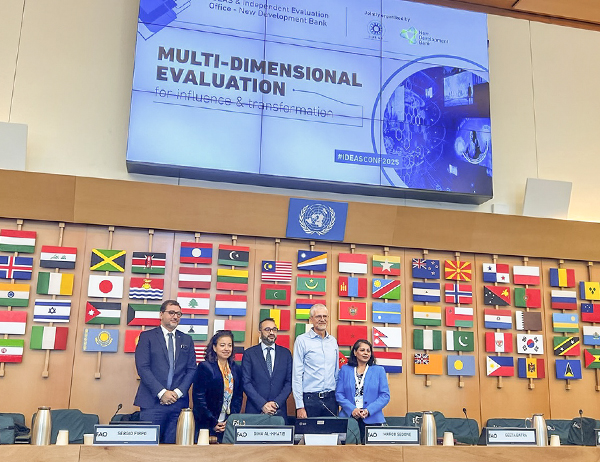
The International Development Evaluation Association (IDEAS) and the New Development Bank (NDB) jointly hosted the IDEAS NDB IEO 2025 Conference at FAO Headquarters in Rome, Italy from 4-6 March 2025. The conference titled, ‘Multi-dimensional Evaluation for Influence and Transformation’, served as a platform for a multi-stakeholder dialogue on how evaluation can play a more influential role in contributing to transformational change and development impact.
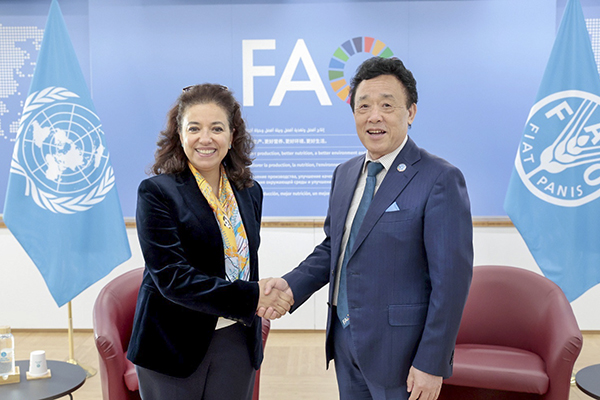
UNOSSC Director Dima Al-Khatib met with Director-General of FAO, Qu Dongyu on the sidelines of the Conference.
The Director-General of FAO, Qu Dongyu and H.E Raniya Al-Mashat, Minister of Planning, Economic Development and International Cooperation of Egypt, opened the event, and Professor Michael Kremer, winner of the 2019 Nobel Memorial Prize in Economics, delivered the keynote speech.
The Conference emphasized the need for a systems approach to evaluation – one that acknowledges the complexity and interdependencies among human, economic, and natural systems and upholds the rights and aspirations of all individuals. It brought together over 400 leading thinkers, practitioners, policymakers, academics, evaluation commissioners, Voluntary Organizations for Professional Evaluation (VOPEs), international organizations, and both seasoned and emerging evaluators.
The Conference fostered collaboration to advance more impactful and transformative evaluation practices. 36 high-level discussions and expert panels addressed key themes, including SDG progress, the climate-development nexus, the influence of context and culture, gender and equity integration, capacity building, and evaluation for sustainable development in BRICS and other EMDCs.
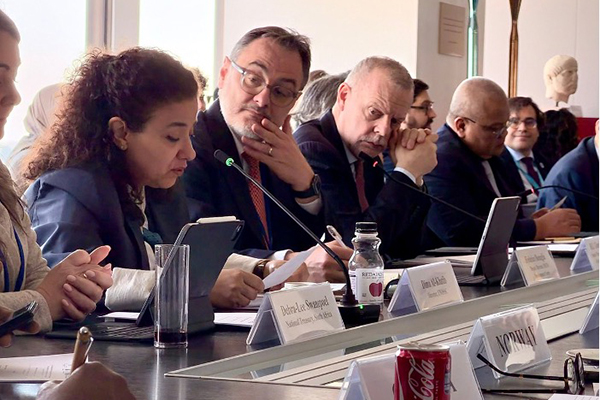
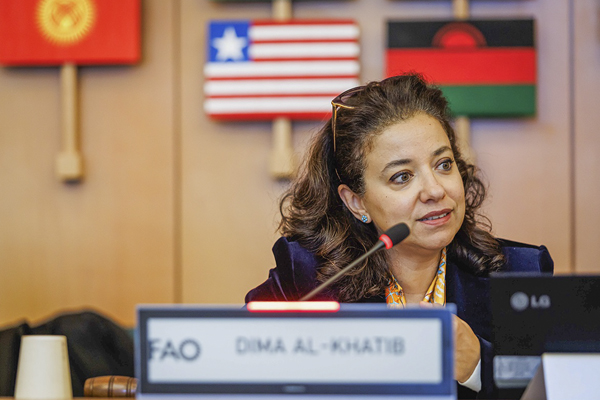
UNOSSC Director Dima Al-Khatib addressed two panel discussions organized by European Bank for Reconstruction and Development (EBRD) and NDB.
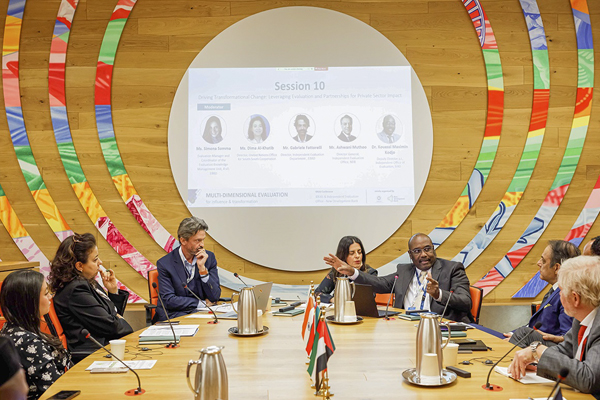
During the EBRD-organized discussion, “Driving Transformational Change: Leveraging Evaluation and Partnerships for Development Impact,” the Director emphasized the pivotal role of South-South and triangular cooperation in mobilizing private sector engagement for SDG acceleration. She highlighted how strategically leveraging South-South cooperation can catalyze SDG achievement through innovative financing, knowledge exchange, and private sector collaboration. On evaluation, she shared UNOSSC’s efforts to develop a reference handbook for integrating South-South cooperation into UN evaluations, ensuring comprehensive impact measurement.
During the NDB keynote panel titled “Collaborative Evaluation Strategies: Engaging Stakeholders for Transformational Change”, the Director discussed the importance of integrating South-South and triangular cooperation perspectives into evaluation frameworks to better reflect the unique development contexts and priorities of the Global South. She also advocated for integrating new technologies such as AI and big data analytics to make evaluation frameworks more responsive and relevant to local contexts, emphasizing that evaluation should capture how countries in the Global South innovate, adapt, and support each other’s development journeys, not just measure outcomes.
Read more about the Conference here:https://c2025.ideas-global.org/home

 During the NDB keynote panel titled “Collaborative Evaluation Strategies: Engaging Stakeholders for Transformational Change”, the Director discussed the importance of integrating South-South and triangular cooperation perspectives into evaluation frameworks to better reflect the unique development contexts and priorities of the Global South. She also advocated for integrating new technologies such as AI and big data analytics to make evaluation frameworks more responsive and relevant to local contexts, emphasizing that evaluation should capture how countries in the Global South innovate, adapt, and support each other’s development journeys, not just measure outcomes.
Read more about the Conference here: https://c2025.ideas-global.org/home
During the NDB keynote panel titled “Collaborative Evaluation Strategies: Engaging Stakeholders for Transformational Change”, the Director discussed the importance of integrating South-South and triangular cooperation perspectives into evaluation frameworks to better reflect the unique development contexts and priorities of the Global South. She also advocated for integrating new technologies such as AI and big data analytics to make evaluation frameworks more responsive and relevant to local contexts, emphasizing that evaluation should capture how countries in the Global South innovate, adapt, and support each other’s development journeys, not just measure outcomes.
Read more about the Conference here: https://c2025.ideas-global.org/home