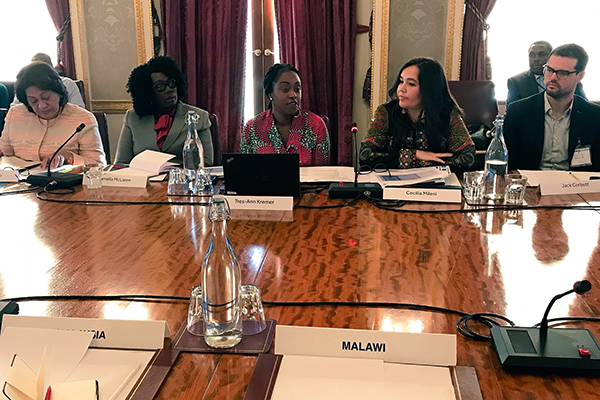
11 December, London – Representatives of Commonwealth small states have initially identified key issues such as vulnerabilities and crisis derived from climate change, high crime rate, gun violence and illicit drug trade, as key peace and development challenges which should be tackled through a South-South initiative aiming to drive sustainable peace and inclusive development.
“The principles of South-South collaboration – horizontal exchange, ownership and non-conditionality, and solidarity – have always been hallmarks of the Commonwealth,” said Katalaina Sapolu, Director of Governance and Peace Directorate at the Commonwealth, in her opening remarks. “In a time of interesting global innovations and democratic challenges, South-South cooperation is an essential tool to enable more diverse opportunities and models for development, and create spaces for innovative solutions.”
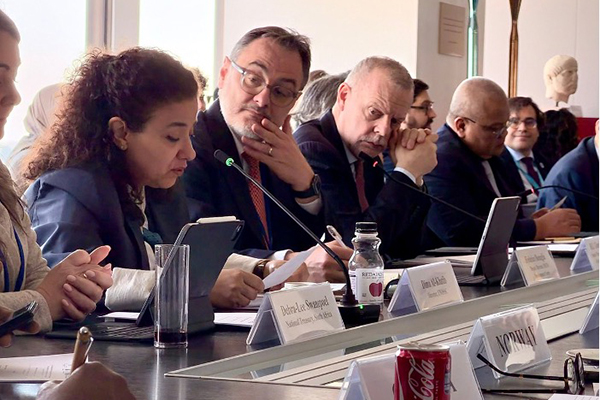
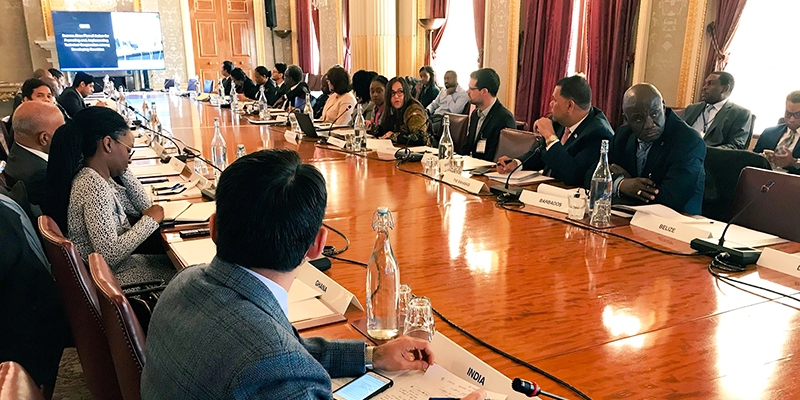 Meeting in London, delegates welcomed the initiative, Southern Solidarity for Sustainable Peace and Development in Small States, which is jointly managed by the Commonwealth Secretariat and United Nations Office for South-South Cooperation (UNOSSC).
The initiative seeks to strengthen South-South and triangular cooperation which refers to the exchange of knowledge and expertise between governments, organisations and individuals in developing countries from the Global South. It builds on the value of solidarity to promote a horizontal learning and mutual support among small states facing similar socio-political, economic and environmental challenges.
Delegates, including High Commissioners, shared their country-specific needs and challenges while also initially identifying good practices in the area of peace and development. Case studies include:
Meeting in London, delegates welcomed the initiative, Southern Solidarity for Sustainable Peace and Development in Small States, which is jointly managed by the Commonwealth Secretariat and United Nations Office for South-South Cooperation (UNOSSC).
The initiative seeks to strengthen South-South and triangular cooperation which refers to the exchange of knowledge and expertise between governments, organisations and individuals in developing countries from the Global South. It builds on the value of solidarity to promote a horizontal learning and mutual support among small states facing similar socio-political, economic and environmental challenges.
Delegates, including High Commissioners, shared their country-specific needs and challenges while also initially identifying good practices in the area of peace and development. Case studies include:
Meeting in London, delegates welcomed the initiative, Southern Solidarity for Sustainable Peace and Development in Small States, which is jointly managed by the Commonwealth Secretariat and United Nations Office for South-South Cooperation (UNOSSC).
The initiative seeks to strengthen South-South and triangular cooperation which refers to the exchange of knowledge and expertise between governments, organisations and individuals in developing countries from the Global South. It builds on the value of solidarity to promote a horizontal learning and mutual support among small states facing similar socio-political, economic and environmental challenges.
Delegates, including High Commissioners, shared their country-specific needs and challenges while also initially identifying good practices in the area of peace and development. Case studies include:
- The oversight role of the Political Ombudsman which has united the political parties on issues such as electoral irregularities and tribalism in Jamaica; and the introduction of a Political Code of Conduct which has been endorsed by both major political parties;
- The Bahamas’ online resource which provides its citizens access to national laws and policies;
- Barbados’ strategy to close the digital gap generating exclusion and increased criminality by providing technology to every student; and
- The personalised nature of politics in small states which can encourage consensus-building approaches, dialogue and enhanced citizen participation in political discourse.