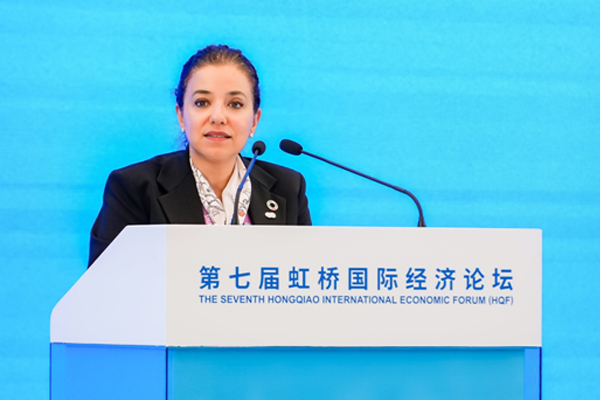
The 7th China International Import Expo (CIIE) opened at the National Exhibition and Convention Center in Shanghai, bringing together about 3,500 exhibitors from 152 countries, regions, and international organizations.
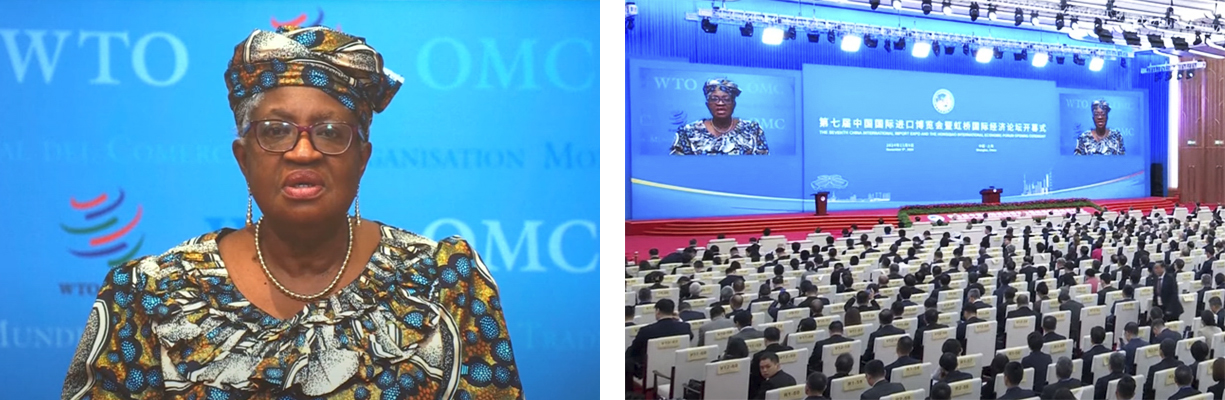 In a video message to the opening ceremony, Ngozi Okonjo-Iweala, Director-General of the World Trade Organization (WTO), commended China for its strong support and key role in building capacity for Least Developed Countries, including support for South-South dialogue within the WTO.
High-level representatives from the Governments of Malaysia, Uzbekistan, Kazakhstan, Mongolia, Serbia and Slovakia also addressed the opening ceremony.
Hongqiao International Economic Forum
Within CIIE, the 7th Hongqiao International Economic Forum also opened today.
At this parallel session focusing on “Industrial Development and Sustainable Cities: Innovative and Inclusive Synergy Strategy”, Cecilia Ugaz Estrada, Deputy to the Director General and the Managing Director of the United Nations Industrial Development Organization (UNIDO), highlighted how embracing green technologies can create jobs, advance local prosperity, and mitigate the environmental impact of industrial activities. She also highlighted that by joining forces under initiatives like the Belt and Road Initiative (BRI) and other international frameworks, we can work together towards the common goal of creating sustainable, urban industrial ecosystems.
In a video message to the opening ceremony, Ngozi Okonjo-Iweala, Director-General of the World Trade Organization (WTO), commended China for its strong support and key role in building capacity for Least Developed Countries, including support for South-South dialogue within the WTO.
High-level representatives from the Governments of Malaysia, Uzbekistan, Kazakhstan, Mongolia, Serbia and Slovakia also addressed the opening ceremony.
Hongqiao International Economic Forum
Within CIIE, the 7th Hongqiao International Economic Forum also opened today.
At this parallel session focusing on “Industrial Development and Sustainable Cities: Innovative and Inclusive Synergy Strategy”, Cecilia Ugaz Estrada, Deputy to the Director General and the Managing Director of the United Nations Industrial Development Organization (UNIDO), highlighted how embracing green technologies can create jobs, advance local prosperity, and mitigate the environmental impact of industrial activities. She also highlighted that by joining forces under initiatives like the Belt and Road Initiative (BRI) and other international frameworks, we can work together towards the common goal of creating sustainable, urban industrial ecosystems.
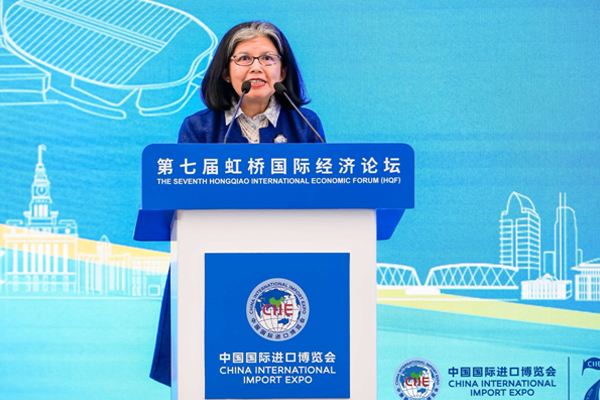 Chunfeng Zhao, Deputy Director General, Department of International Trade and Economic Affairs, Ministry of Commerce of China (MOFCOM), affirmed China’s commitment to working with UNIDO to deepen South-South and trilateral cooperation under the BRI, implementing more small but beautiful projects that benefit developing countries in the areas of renewable energy, e-commerce, and green industrial standards.
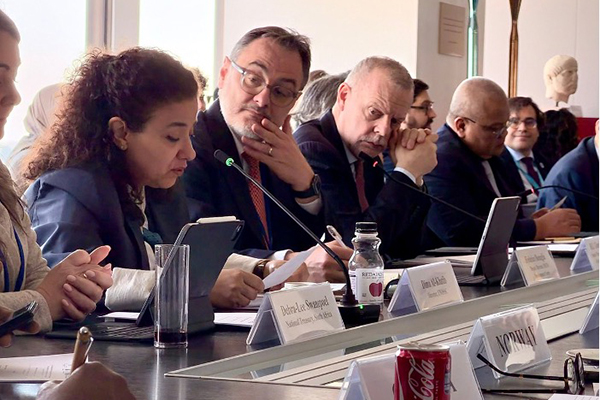
“The transfer of technologies, research, and policy exchanges among developing countries reflects the growing recognition of their ability to generate and share technological knowledge and innovation,” said Dima Al-Khatib, Director of the United Nations Office for South-South Cooperation (UNOSSC). “As a platform for brokering partnership in South-South and triangular cooperation, UNOSSC’s South-South Galaxy platform has registered over 600 institutions and features more than 950 solutions and good practices, including more than 90 cases directly contributing to SDG 9 and 11.”
Dima Al-Khatib emphasized the immense potential of South-South and triangular cooperation in building sustainable and resilient cities. Through trust funds and programmes, UNOSSC has supported diverse demonstrative pilot projects and small grants in promoting and fostering sustainable industrialization.
“For example, under the two flagship global projects funded by China’s Ministry of Commerce – namely the Global South-South Development Centre Project and the South-South Maritime-Continental Silk Road Cities Project, UNOSSC has supported 40 demonstrative pilot projects and small grants in over 50 developing countries,” said Director Al-Khatib. “These initiatives have enabled projects providing access to solid waste management services and reducing environmental pollution in Koidu, Sierra Leone; enhancing low-carbon transportation modes and integrating smart technologies to optimize mobility in Santiago, Chile.”
Chunfeng Zhao, Deputy Director General, Department of International Trade and Economic Affairs, Ministry of Commerce of China (MOFCOM), affirmed China’s commitment to working with UNIDO to deepen South-South and trilateral cooperation under the BRI, implementing more small but beautiful projects that benefit developing countries in the areas of renewable energy, e-commerce, and green industrial standards.
“The transfer of technologies, research, and policy exchanges among developing countries reflects the growing recognition of their ability to generate and share technological knowledge and innovation,” said Dima Al-Khatib, Director of the United Nations Office for South-South Cooperation (UNOSSC). “As a platform for brokering partnership in South-South and triangular cooperation, UNOSSC’s South-South Galaxy platform has registered over 600 institutions and features more than 950 solutions and good practices, including more than 90 cases directly contributing to SDG 9 and 11.”
Dima Al-Khatib emphasized the immense potential of South-South and triangular cooperation in building sustainable and resilient cities. Through trust funds and programmes, UNOSSC has supported diverse demonstrative pilot projects and small grants in promoting and fostering sustainable industrialization.
“For example, under the two flagship global projects funded by China’s Ministry of Commerce – namely the Global South-South Development Centre Project and the South-South Maritime-Continental Silk Road Cities Project, UNOSSC has supported 40 demonstrative pilot projects and small grants in over 50 developing countries,” said Director Al-Khatib. “These initiatives have enabled projects providing access to solid waste management services and reducing environmental pollution in Koidu, Sierra Leone; enhancing low-carbon transportation modes and integrating smart technologies to optimize mobility in Santiago, Chile.”
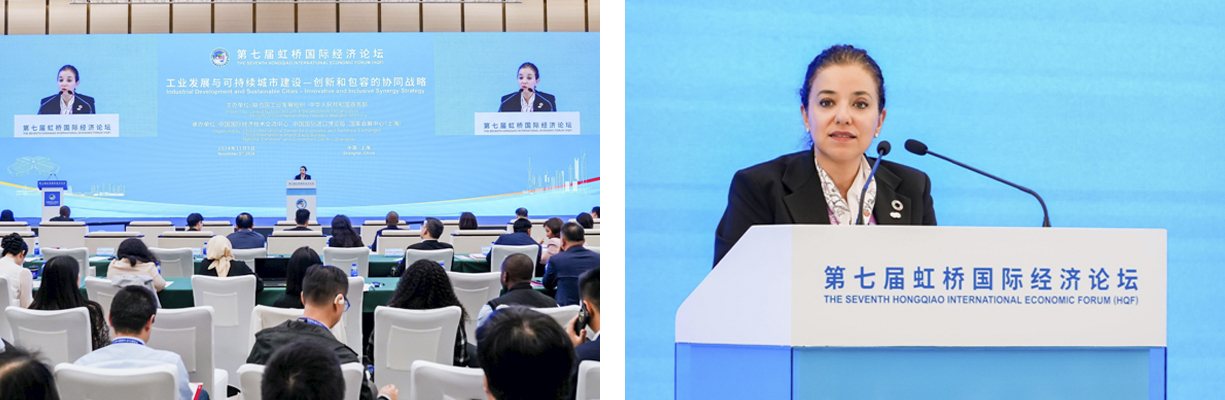 During another parallel session focusing on “Sustainable Development of the Global South and China-Africa Cooperation”, Dima Al-Khatib highlighted that the Pact for the Future reflects priorities of the developing countries for sustainable development, climate action, and global equity. The Pact recognizes South-South and triangular cooperation as a collaborative framework to enhance digital transformation and innovation, empower youth, and strengthen global partnerships.
“As we look to the future,” said the Director. “It is clear that South-South and triangular cooperation is not just a framework; it is a driving force that empowers nations to tackle shared challenges, scale innovative solutions, and shape a global community grounded in mutual respect and shared prosperity.”
During another parallel session focusing on “Sustainable Development of the Global South and China-Africa Cooperation”, Dima Al-Khatib highlighted that the Pact for the Future reflects priorities of the developing countries for sustainable development, climate action, and global equity. The Pact recognizes South-South and triangular cooperation as a collaborative framework to enhance digital transformation and innovation, empower youth, and strengthen global partnerships.
“As we look to the future,” said the Director. “It is clear that South-South and triangular cooperation is not just a framework; it is a driving force that empowers nations to tackle shared challenges, scale innovative solutions, and shape a global community grounded in mutual respect and shared prosperity.”
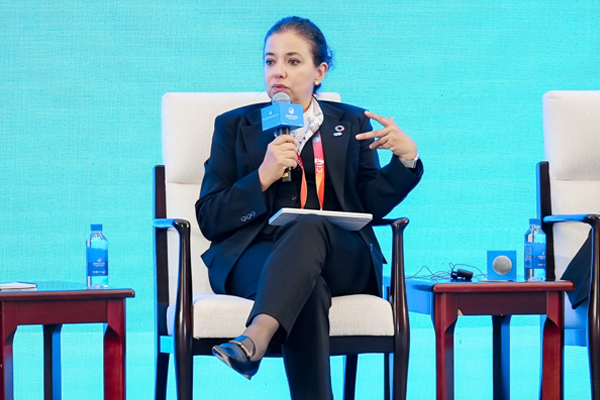 This event gathered representatives from UN Trade and Development (UNCTAD); the Governments of Cambodia, Rwanda, Zambia; as well as think tanks and academia such as the Africa Policy Institute, who engaged in dialogues and discussions on the challenges for the Global South in advancing sustainable development and policy strategies to achieve the 2030 Agenda, including through South-South cooperation.
UNOSSC and China agree to strengthen South-South cooperation
UNOSSC and MOFCOM signed a Statement of Intent (SoI) on the sidelines of the Hongqiao Forum, strengthening cooperation in the field of South-South cooperation.
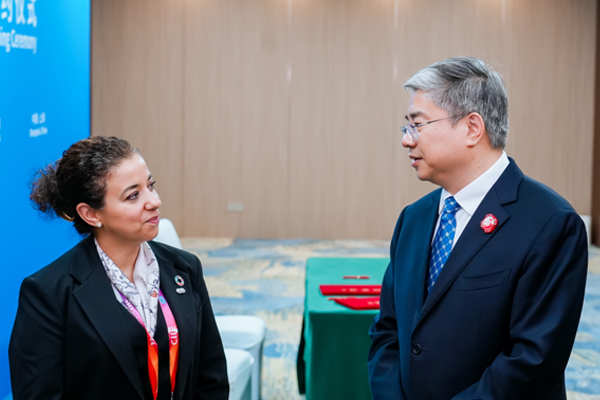
Dima Al-Khatib, UNOSSC Director, and Wenhong Tang, Assistant Minister of Commerce, signed the SoI.
This event gathered representatives from UN Trade and Development (UNCTAD); the Governments of Cambodia, Rwanda, Zambia; as well as think tanks and academia such as the Africa Policy Institute, who engaged in dialogues and discussions on the challenges for the Global South in advancing sustainable development and policy strategies to achieve the 2030 Agenda, including through South-South cooperation.
UNOSSC and China agree to strengthen South-South cooperation
UNOSSC and MOFCOM signed a Statement of Intent (SoI) on the sidelines of the Hongqiao Forum, strengthening cooperation in the field of South-South cooperation.
Dima Al-Khatib, UNOSSC Director, and Wenhong Tang, Assistant Minister of Commerce, signed the SoI.
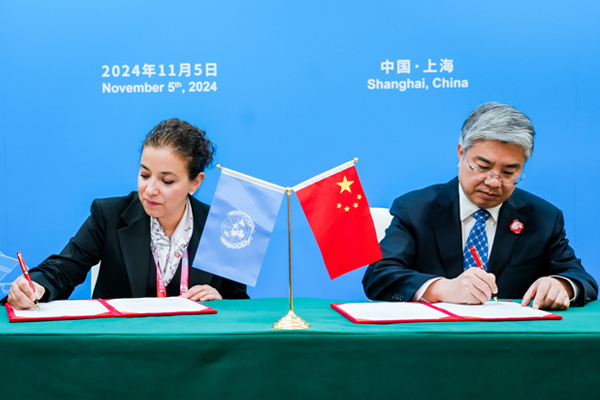 The new SoI, to support the “China-UN Global South-South Development Facility (2025-2030)”, builds on the successes of three flagship projects, including the China South-South Development Center Project (SSDC Project, 2008-2018), the South-South Maritime-Continental Silk Road Cities Project (Cities Project, 2017-2023) and the Global South-South Development Centre Project (GSSDC Project, 2019-2024). These initiatives have demonstrated remarkable results in facilitating South-South capacity development, technical cooperation, public-private partnerships, and economic collaboration between China and other developing countries.
The new programme will have a broader geographic and thematic reach, engaging more centers of excellence across the Global South.
The new SoI, to support the “China-UN Global South-South Development Facility (2025-2030)”, builds on the successes of three flagship projects, including the China South-South Development Center Project (SSDC Project, 2008-2018), the South-South Maritime-Continental Silk Road Cities Project (Cities Project, 2017-2023) and the Global South-South Development Centre Project (GSSDC Project, 2019-2024). These initiatives have demonstrated remarkable results in facilitating South-South capacity development, technical cooperation, public-private partnerships, and economic collaboration between China and other developing countries.
The new programme will have a broader geographic and thematic reach, engaging more centers of excellence across the Global South.
 Key areas of focus will include agriculture and rural transformation, green and resilient development, new industrialization, and the cultural and creative economy. Special emphasis will be placed on cross-border e-commerce, climate action, and inclusive development for youth and women.
The programme will leverage global platforms and initiatives such as the BRI, the Global Development Initiative (GDI), and Forum on China-Africa Cooperation (FOCAC), ensuring greater synergy and access to financial and technological resources. It will continue to support and expand the China South-South Cooperation Network, strengthening linkages with over 50 technical institutions under its framework.
More information: Highlights of UNOSSC Director 2024 Official Visit to China
Key areas of focus will include agriculture and rural transformation, green and resilient development, new industrialization, and the cultural and creative economy. Special emphasis will be placed on cross-border e-commerce, climate action, and inclusive development for youth and women.
The programme will leverage global platforms and initiatives such as the BRI, the Global Development Initiative (GDI), and Forum on China-Africa Cooperation (FOCAC), ensuring greater synergy and access to financial and technological resources. It will continue to support and expand the China South-South Cooperation Network, strengthening linkages with over 50 technical institutions under its framework.
More information: Highlights of UNOSSC Director 2024 Official Visit to China
In a video message to the opening ceremony, Ngozi Okonjo-Iweala, Director-General of the World Trade Organization (WTO), commended China for its strong support and key role in building capacity for Least Developed Countries, including support for South-South dialogue within the WTO.
High-level representatives from the Governments of Malaysia, Uzbekistan, Kazakhstan, Mongolia, Serbia and Slovakia also addressed the opening ceremony.
Hongqiao International Economic Forum
Within CIIE, the 7th Hongqiao International Economic Forum also opened today.
At this parallel session focusing on “Industrial Development and Sustainable Cities: Innovative and Inclusive Synergy Strategy”, Cecilia Ugaz Estrada, Deputy to the Director General and the Managing Director of the United Nations Industrial Development Organization (UNIDO), highlighted how embracing green technologies can create jobs, advance local prosperity, and mitigate the environmental impact of industrial activities. She also highlighted that by joining forces under initiatives like the Belt and Road Initiative (BRI) and other international frameworks, we can work together towards the common goal of creating sustainable, urban industrial ecosystems.
Chunfeng Zhao, Deputy Director General, Department of International Trade and Economic Affairs, Ministry of Commerce of China (MOFCOM), affirmed China’s commitment to working with UNIDO to deepen South-South and trilateral cooperation under the BRI, implementing more small but beautiful projects that benefit developing countries in the areas of renewable energy, e-commerce, and green industrial standards.
“The transfer of technologies, research, and policy exchanges among developing countries reflects the growing recognition of their ability to generate and share technological knowledge and innovation,” said Dima Al-Khatib, Director of the United Nations Office for South-South Cooperation (UNOSSC). “As a platform for brokering partnership in South-South and triangular cooperation, UNOSSC’s South-South Galaxy platform has registered over 600 institutions and features more than 950 solutions and good practices, including more than 90 cases directly contributing to SDG 9 and 11.”
Dima Al-Khatib emphasized the immense potential of South-South and triangular cooperation in building sustainable and resilient cities. Through trust funds and programmes, UNOSSC has supported diverse demonstrative pilot projects and small grants in promoting and fostering sustainable industrialization.
“For example, under the two flagship global projects funded by China’s Ministry of Commerce – namely the Global South-South Development Centre Project and the South-South Maritime-Continental Silk Road Cities Project, UNOSSC has supported 40 demonstrative pilot projects and small grants in over 50 developing countries,” said Director Al-Khatib. “These initiatives have enabled projects providing access to solid waste management services and reducing environmental pollution in Koidu, Sierra Leone; enhancing low-carbon transportation modes and integrating smart technologies to optimize mobility in Santiago, Chile.”
During another parallel session focusing on “Sustainable Development of the Global South and China-Africa Cooperation”, Dima Al-Khatib highlighted that the Pact for the Future reflects priorities of the developing countries for sustainable development, climate action, and global equity. The Pact recognizes South-South and triangular cooperation as a collaborative framework to enhance digital transformation and innovation, empower youth, and strengthen global partnerships.
“As we look to the future,” said the Director. “It is clear that South-South and triangular cooperation is not just a framework; it is a driving force that empowers nations to tackle shared challenges, scale innovative solutions, and shape a global community grounded in mutual respect and shared prosperity.”
This event gathered representatives from UN Trade and Development (UNCTAD); the Governments of Cambodia, Rwanda, Zambia; as well as think tanks and academia such as the Africa Policy Institute, who engaged in dialogues and discussions on the challenges for the Global South in advancing sustainable development and policy strategies to achieve the 2030 Agenda, including through South-South cooperation.
UNOSSC and China agree to strengthen South-South cooperation
UNOSSC and MOFCOM signed a Statement of Intent (SoI) on the sidelines of the Hongqiao Forum, strengthening cooperation in the field of South-South cooperation.
Dima Al-Khatib, UNOSSC Director, and Wenhong Tang, Assistant Minister of Commerce, signed the SoI.
The new SoI, to support the “China-UN Global South-South Development Facility (2025-2030)”, builds on the successes of three flagship projects, including the China South-South Development Center Project (SSDC Project, 2008-2018), the South-South Maritime-Continental Silk Road Cities Project (Cities Project, 2017-2023) and the Global South-South Development Centre Project (GSSDC Project, 2019-2024). These initiatives have demonstrated remarkable results in facilitating South-South capacity development, technical cooperation, public-private partnerships, and economic collaboration between China and other developing countries.
The new programme will have a broader geographic and thematic reach, engaging more centers of excellence across the Global South.
Key areas of focus will include agriculture and rural transformation, green and resilient development, new industrialization, and the cultural and creative economy. Special emphasis will be placed on cross-border e-commerce, climate action, and inclusive development for youth and women.
The programme will leverage global platforms and initiatives such as the BRI, the Global Development Initiative (GDI), and Forum on China-Africa Cooperation (FOCAC), ensuring greater synergy and access to financial and technological resources. It will continue to support and expand the China South-South Cooperation Network, strengthening linkages with over 50 technical institutions under its framework.
More information: Highlights of UNOSSC Director 2024 Official Visit to China