Third South Summit: Leaving No One Behind – Kampala, Uganda, January 2024
G-77 calls for boosting South-South cooperation on trade, investment, sustainable development, climate change, poverty eradication, and digital economy, among other areas.
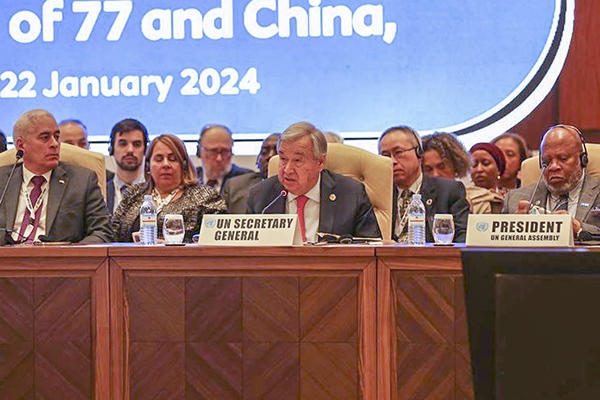
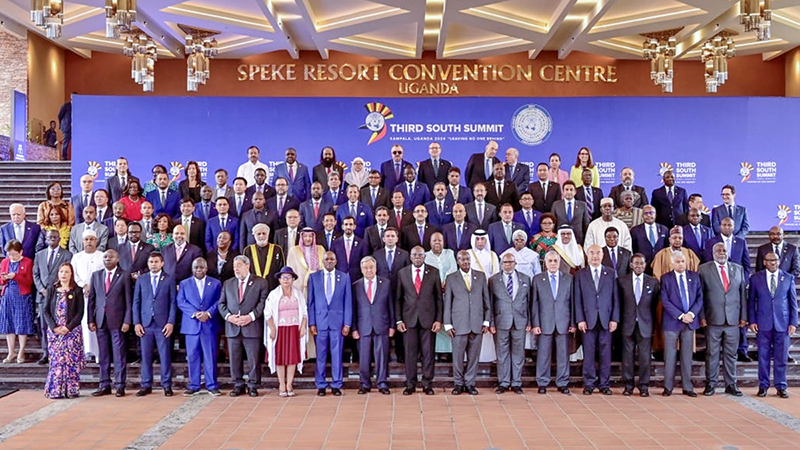
The Group of 77 and China – the largest grouping of the Global South, representing 80% of the planet’s population – convened in Kampala, Uganda, from 21-22 January 2024 to articulate and promote its collective interests and to enhance its joint negotiating capacity in the UN system. The Third South Summit was held on the theme, ‘Leaving No One Behind.’
“Over the decades, you have been an engine for South-South cooperation and development; lifted millions of people out of poverty; and provided a powerful voice for developing countries on the global stage,” said Secretary-General Antonio Guterres in his remarks to the Summit. “The 21st century cannot replicate the vast inequalities of the twentieth.”
“We must harness the full power and opportunities South-South and Triangular cooperation,” said UNGA President Dennis Francis, calling for multilateral organizations, including the UN and international financial institutions, to “undergo urgent reforms to better recognize and leverage the significance of the Global South.”
“The theme of the Third South Summit – Leaving No One Behind – underscores our collective commitment to inclusivity,” said UNOSSC Director Dima Al-Khatib. “It is a call to action. It is also a call to boost South-South cooperation.”
The South Summit brought together G-77 Member States to boost South-South cooperation on trade, investment, sustainable development, climate change, poverty eradication and digital economy.
Boosting South-South cooperation, trade and investment, and tackling the impacts of climate change are some of the pathways to addressing global socio-economic disparities, said Ahunna Eziakonwa, Assistant Secretary-General and Director of the UNDP Regional Bureau for Africa.
The outcome document of the Third South Summit highlights the importance and unique characteristics of South-South cooperation, emphasizing it as a form of solidarity among Southern countries that aids in achieving development goals and maintaining national sovereignty and mutual benefit.
Member States emphasized that reforms of the international architecture should better reflect the needs and priorities of developing countries, especially for LDCs, LLDCs, SIDS and MICs; and include a lasting and fair solution to the debt crisis which many of them are grappling with. They also articulated the need to promote the Group’s collective interest and to enhance its joint negotiating capacity at the UN.
Member States reiterated that the 2030 Agenda for Sustainable Development, the Addis Ababa Action Agenda (AAAA), the Paris Agreement on climate change, the New Urban Agenda (NUA), and the Sendai Framework for Disaster Risk Reduction (DRR) shall be implemented in their entirety in line with the principles of multilateralism and international cooperation.
Member States also stressed the need to strengthen the role of the UN General Assembly (UNGA) and the Economic and Social Council (ECOSOC) in dealing with the international financial architecture reform and urged multilateral development banks (MDBs) to meet the financing needs of all developing countries, including low- and middle-income countries through concessional finance and grants. Among other solutions, they call for scaling up debt swaps for the SDGs, including debt swaps for climate and nature.
The text reaffirms commitments to various high-level agreements on South-South cooperation include the High-level Committee decisions, and calls for increased support from the international community for their implementation. The document commits to supporting the UN development system and the RC system to deliver better in support to programme countries in their efforts to implement the 2030 Agenda. The document also recognizes the role of UNOSSC as the articulator of South-South cooperation in the UN system. It calls for the increase of South-South cooperation initiatives by UNOSSC, the United Nations Regional Commissions, Specialized Agencies, Funds and Programmes, within their respective mandates, in support of developing countries. Furthermore, it highlights the importance of triangular cooperation, which supports South-South initiatives through various means, including capacity-building and technology transfer.
The potential of South-South and triangular cooperation in achieving SDGs is immense, said UNOSSC Director Dima Al-Khatib in her remarks to the Summit plenary. “Despite this, the Global South is grappling with myriad interwoven crises that threaten sustainable development.”
“UNOSSC’s commitment to promoting, coordinating, and supporting South-South cooperation globally and within the UN system aligns seamlessly with the objectives of the Third South Summit,” said Director Al-Khatib. “Leaving no one behind requires collective efforts, and South-South cooperation is an essential tool to achieve this goal and to bridge the SDG gap.”
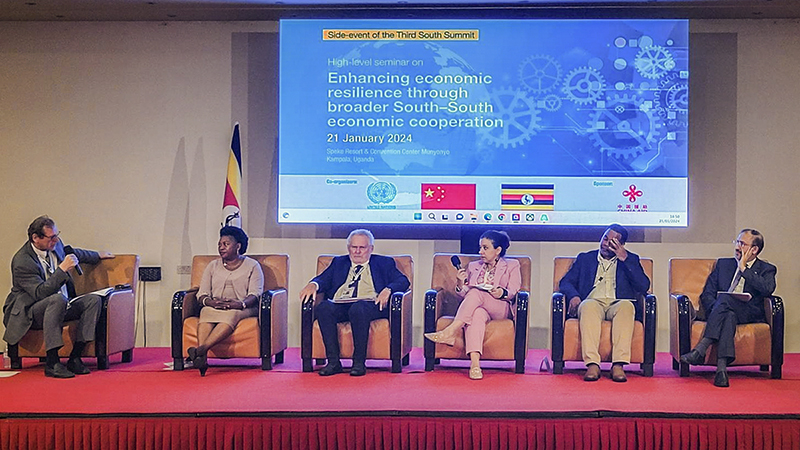
UNOSSC Director Dima Al-Khatib contributed to a panel discussion during an UNCTAD side event on the topic ‘Enhancing Economic Resilience through Broader South-South Economic Cooperation’.
The UNOSSC Director also addressed an United Nations Conference on Trade and Development (UNCTAD) side event during the Summit, focusing on Enhancing Economic Resilience through Broader South-South Economic Cooperation. “We have seen historic changes in trade, with South-South trade rising significantly and with it the role, relevance and prospects of the Global South in global economic growth and development, she said. “The Global South share of global GDP rose to about 40% in 2022 from only 18% in 1993; the value of South-South trade rose from US$600 billion in 1995 to US$5.3 trillion in 2021, and its volume is now higher than that of North-South trade, growing faster than the world average.”
The Director also addressed a side event to the 19th NAM Summit and the Third South Summit, on the theme ‘Leveraging the Potential of South-South and Triangular Cooperation for the Decade of Action’. This event was organized by the Islamic Development Bank (IsDB), the South Centre, UNCTAD, and UNOSSC. She highlighted the South-South Galaxy global digital knowledge sharing platform that is home to more than 900 good practices and has 500 members.
On the sidelines of the Summit Director Al-Khatib met with H.E. Hon. John Mulimba, Minister of State for Foreign Affairs (Regional Cooperation) of Uganda. She congratulated Uganda for its hosting of the Third South Summit and the Non-Aligned Movement Summit, and discussed concrete actions for potential collaboration including UNOSSC-managed South-South trust funds, as well as technical support that UNOSSC could provide to the G-77 Executive Secretariat. She also met with H.E. Mr. Phoxay Khaykhamphithoune, Deputy Minister of Foreign Affairs of Lao PDR; Ambassador Diar Nurbintoro, Director of the Non-Aligned Movement Centre for South-South Technical Cooperation, to discuss exchange of good practices and potential areas to enhance South-South partnership.
With the Third UN Conference on Landlocked Developing Countries approaching in June, the Director discussed preparations for LLDC3’s Ministerial Meeting on South-South cooperation with H.E. Mr. Samuel Isa Chala, Deputy Permanent Representative of Ethiopia in NY.
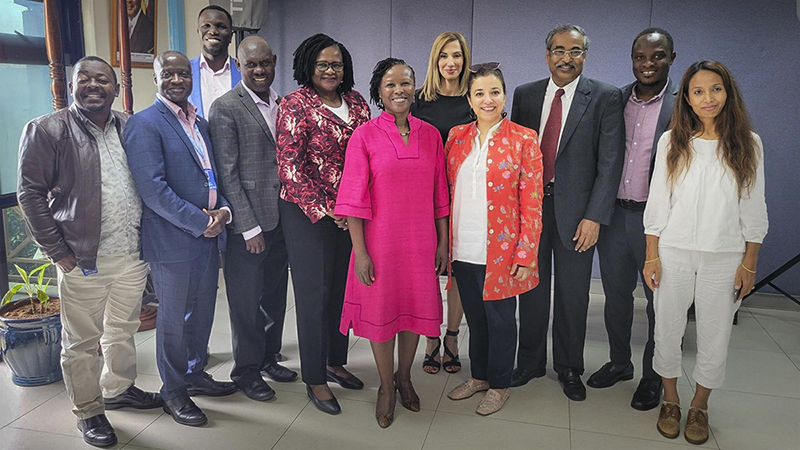
UNOSSC Director Dima Al-Khatib and Shams Banihani, UNOSSC Intergovernmental Policy Specialist, met with UN Resident Coordinator Susan Namondo, and the Uganda UN Country Team.
Importantly, the Director met with UN Resident Coordinator Susan Namondo, and the Uganda UN Country Team to explore synergies and priorities for joint efforts and capacity development. The Director presented UNOSSC’s service offers, including new Guidelines to support country teams in integrating South-South and triangular cooperation at the country and regional level.
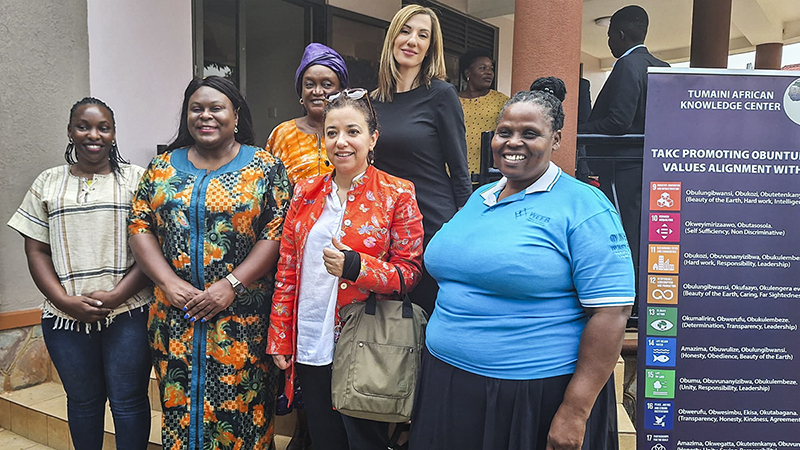
The Tumaini Africa Knowledge Center shared its South-South knowledge sharing work.
While in Uganda, the Director took the opportunity to visit the Tumaini Africa Knowledge Center. This women-led business is committed to pan African South-South sharing of innovations for economic, peace and social challenges.
The Third South Summit is reviving the common agenda and the collective call for action and solidarity across different challenging topics, said UNOSSC Director Dima Al-Khatib during an Al Jazeera English Inside Story panel discussion. “Given complex global challenges and crises, UNOSSC is sharing its services in support of intergovernmental processes, knowledge management, and also support to Member States in undertaking South-South cooperation projects via the UN system.”
Click below to listen:
Read more: https://news.un.org/en/story/2024/01/1145737

 Boosting South-South cooperation, trade and investment, and tackling the impacts of climate change are some of the pathways to addressing global socio-economic disparities, said Ahunna Eziakonwa, Assistant Secretary-General and Director of the UNDP Regional Bureau for Africa.
The outcome document of the Third South Summit highlights the importance and unique characteristics of South-South cooperation, emphasizing it as a form of solidarity among Southern countries that aids in achieving development goals and maintaining national sovereignty and mutual benefit.
Member States emphasized that reforms of the international architecture should better reflect the needs and priorities of developing countries, especially for LDCs, LLDCs, SIDS and MICs; and include a lasting and fair solution to the debt crisis which many of them are grappling with. They also articulated the need to promote the Group’s collective interest and to enhance its joint negotiating capacity at the UN.
Member States reiterated that the 2030 Agenda for Sustainable Development, the Addis Ababa Action Agenda (AAAA), the Paris Agreement on climate change, the New Urban Agenda (NUA), and the Sendai Framework for Disaster Risk Reduction (DRR) shall be implemented in their entirety in line with the principles of multilateralism and international cooperation.
Member States also stressed the need to strengthen the role of the UN General Assembly (UNGA) and the Economic and Social Council (ECOSOC) in dealing with the international financial architecture reform and urged multilateral development banks (MDBs) to meet the financing needs of all developing countries, including low- and middle-income countries through concessional finance and grants. Among other solutions, they call for scaling up debt swaps for the SDGs, including debt swaps for climate and nature.
The text reaffirms commitments to various high-level agreements on South-South cooperation include the High-level Committee decisions, and calls for increased support from the international community for their implementation. The document commits to supporting the UN development system and the RC system to deliver better in support to programme countries in their efforts to implement the 2030 Agenda. The document also recognizes the role of UNOSSC as the articulator of South-South cooperation in the UN system. It calls for the increase of South-South cooperation initiatives by UNOSSC, the United Nations Regional Commissions, Specialized Agencies, Funds and Programmes, within their respective mandates, in support of developing countries. Furthermore, it highlights the importance of triangular cooperation, which supports South-South initiatives through various means, including capacity-building and technology transfer.
The potential of South-South and triangular cooperation in achieving SDGs is immense, said UNOSSC Director Dima Al-Khatib in her remarks to the Summit plenary. “Despite this, the Global South is grappling with myriad interwoven crises that threaten sustainable development.”
“UNOSSC’s commitment to promoting, coordinating, and supporting South-South cooperation globally and within the UN system aligns seamlessly with the objectives of the Third South Summit,” said Director Al-Khatib. “Leaving no one behind requires collective efforts, and South-South cooperation is an essential tool to achieve this goal and to bridge the SDG gap.”
Boosting South-South cooperation, trade and investment, and tackling the impacts of climate change are some of the pathways to addressing global socio-economic disparities, said Ahunna Eziakonwa, Assistant Secretary-General and Director of the UNDP Regional Bureau for Africa.
The outcome document of the Third South Summit highlights the importance and unique characteristics of South-South cooperation, emphasizing it as a form of solidarity among Southern countries that aids in achieving development goals and maintaining national sovereignty and mutual benefit.
Member States emphasized that reforms of the international architecture should better reflect the needs and priorities of developing countries, especially for LDCs, LLDCs, SIDS and MICs; and include a lasting and fair solution to the debt crisis which many of them are grappling with. They also articulated the need to promote the Group’s collective interest and to enhance its joint negotiating capacity at the UN.
Member States reiterated that the 2030 Agenda for Sustainable Development, the Addis Ababa Action Agenda (AAAA), the Paris Agreement on climate change, the New Urban Agenda (NUA), and the Sendai Framework for Disaster Risk Reduction (DRR) shall be implemented in their entirety in line with the principles of multilateralism and international cooperation.
Member States also stressed the need to strengthen the role of the UN General Assembly (UNGA) and the Economic and Social Council (ECOSOC) in dealing with the international financial architecture reform and urged multilateral development banks (MDBs) to meet the financing needs of all developing countries, including low- and middle-income countries through concessional finance and grants. Among other solutions, they call for scaling up debt swaps for the SDGs, including debt swaps for climate and nature.
The text reaffirms commitments to various high-level agreements on South-South cooperation include the High-level Committee decisions, and calls for increased support from the international community for their implementation. The document commits to supporting the UN development system and the RC system to deliver better in support to programme countries in their efforts to implement the 2030 Agenda. The document also recognizes the role of UNOSSC as the articulator of South-South cooperation in the UN system. It calls for the increase of South-South cooperation initiatives by UNOSSC, the United Nations Regional Commissions, Specialized Agencies, Funds and Programmes, within their respective mandates, in support of developing countries. Furthermore, it highlights the importance of triangular cooperation, which supports South-South initiatives through various means, including capacity-building and technology transfer.
The potential of South-South and triangular cooperation in achieving SDGs is immense, said UNOSSC Director Dima Al-Khatib in her remarks to the Summit plenary. “Despite this, the Global South is grappling with myriad interwoven crises that threaten sustainable development.”
“UNOSSC’s commitment to promoting, coordinating, and supporting South-South cooperation globally and within the UN system aligns seamlessly with the objectives of the Third South Summit,” said Director Al-Khatib. “Leaving no one behind requires collective efforts, and South-South cooperation is an essential tool to achieve this goal and to bridge the SDG gap.”