• Home
  • /
  • News
  • /
  • UNCTAD helps countries measure South-South cooperation

UNCTAD helps countries measure South-South cooperation


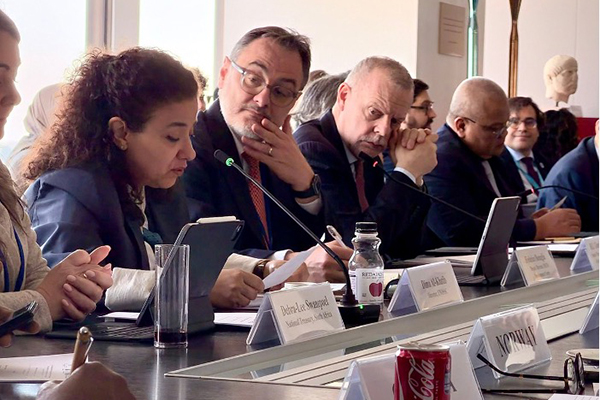
  A new project and framework to collect data will build a clearer picture of global development support.   UNCTAD and its partners have kicked off a three-year global project to help developing countries use a common framework to measure and give more visibility to South-South cooperation. The project’s first event, organized with Brazil from 11 to 13 July, brought together representatives from 16 countries across Africa, Asia and Latin America. Participants also included economists, statisticians and development experts from over 10 international organizations, including four UN Regional Commissions. South-South cooperation – when developing countries pool resources or share knowledge, skills and expertise – is a powerful tool that can take many forms. For instance, Mexico allocated $62 million from 2020 to 2022 for programmes in Honduras and El Salvador that helped improve food security and create jobs for young people, benefitting more than 40,000 people. Other examples include Brazil and India’s collaboration on satellite technology to monitor deforestation and boost agricultural production, and Colombia and the African Union’s joint projects to empower women through aquaculture in Nigeria, Tanzania and South Africa. “South-South cooperation is key to achieving the 2030 Agenda and became particularly pronounced during the pandemic when countries came together in solidarity,” said Sumeeta Banerji, a policy specialist at the UN’s Office for South-South Cooperation, who participated in the July event, held in Brasilia and online.  

An incomplete picture

But historically global development discussions have leaned exclusively on data from cooperation that also involves developed countries or multilateral organizations – or both. Without reliable data on South-South cooperation, the picture of international development cooperation remains incomplete. In March 2022, the UN Statistical Commission introduced a new SDG indicator (17.3.1) to measure “additional financial resources mobilized for developing countries from multiple sources.” It also welcomed a voluntary common framework designed by developing countries to measure South-South cooperation and provide data for the new indicator. “Now we have a framework that is made by the South for the South,” Brazilian Ambassador Luiza Lopes of the Brazilian Cooperation Agency said. “This truly is a historic milestone for South-South cooperation,” added Luciana Mendes Santos Servo, president of Brazil’s Institute of Applied Economic Research. The UN Statistical Commission asked UNCTAD, as a co-custodian of the new SDG indicator, to coordinate with developing countries further work on the framework, including on reporting and capacity-building.  

More than a tool

The framework was developed through a sub-group under the UN’s Inter-agency and Expert Group on SDG Indicators. The process was inclusive and interactive, and the result reflects the actual practices of the global South – not in the traditional set-up of donor and recipient countries but as equal partners. “It’s more than just a tool for measurement,” said Ms. Anu Peltola who leads UNCTAD Statistics. “It gives voice for the hope and solidarity of developing countries.” Mr. Sukhbir Singh, chair of the sub-group that developed the framework, agreed: “For the first time, this framework enables developing countries to tell the story of their development cooperation in numbers and inform South-South cooperation policies with solid data.”  

A shared responsibility

Moving ahead, it will be important for participating countries to secure political will and ensure efficient collaboration between government agencies, as data on South-South collaboration will come from many areas, such as health, energy, food security, education and environment. Also, the scarce resources in many developing countries mean international and regional support will be crucial. Acquiring the national capabilities to consistently collect accurate data is a big task, requiring support from specialized, regional and international organizations. “The journey ahead may be filled with challenges,” Ms. Peltola said, “but when countries come together with a shared vision, important results can be achieved.” “It is now the shared responsibility of the UN and the developing countries to make this framework work and tell the story of the global South.” The UN celebrates South-South cooperation every year on 13 September. This year, the day falls just a week before the highly anticipated SDG Summit, offering an opportunity to highlight South-South cooperation’s role in tackling global challenges – and the need to collect more and better data.   Source: https://unctad.org/news/unctad-helps-countries-measure-south-south-cooperation  

Related Post


  • All Post
  • ATCT Featured Publications POM
  • BAPA+40
  • Blog
  • Capacity Development Initiatives
  • CICETE Featured Publications POM
  • CIKD
  • Cities Clusters - Agriculture
  • Cities Clusters - COVID-19
  • Cities Clusters - COVID-19 Knowledge Products
  • Cities Clusters - DRR
  • Cities Clusters - E-commerce
  • Cities Clusters - Tourism
  • Cities Clusters - Tourism Knowledge Products
  • Cities Clusters - Transport
  • Cities Clusters - Waste
  • Cities Project
  • Cities Project COVID-19 Newsletters
  • Cities Project COVID-19 Response
  • Cities Project Knowledge Products
  • Classic (untouched)
  • Climate Action
  • COMSATS Featured Publications POM
  • COMSATS Featured Solutions POM
  • Converted from Divi
  • Converted from Mixed
  • Converted from WPBakery
  • COVID-19
  • COVID-19 Page Featured Solutions
  • DRR Knowledge Products
  • DRR News
  • Empty Post
  • Events
  • Featured Event UN-Habitat POM
  • Financing for Development
  • Financing Mechanisms
  • g7+
  • Gender Events
  • Gender News
  • Good Practices in SSTrC Series
  • Good Practices Publications
  • Good Practices Thematic Series & Special Editions
  • Good Practices Vol. 2
  • Good Practices Vol. 3
  • GSSDC
  • Highlighted
  • Highlighted Publications
  • IAEA Featured Solutions POM
  • IBRAF Featured Publications POM
  • IBSA Fund
  • IBSA Fund Annual Reports
  • IBSA Fund News and Stories
  • IBSA Fund Publication
  • IBSA Fund Story
  • ICGEB Featured Events POM
  • ICGEB Featured Publications POM
  • ICGEB Featured Solutions POM
  • ILO Featured Events POM
  • ILO Featured Publications POM
  • ILO Featured Solutions POM
  • India-UN Development Partnership Fund
  • India-UN Fund Publication
  • India-UN Fund Story
  • IsDB
  • IsDB Featured Publications POM
  • IsDB SCC
  • News
  • Norec Featured Publications POM
  • Norec Featured Solutions POM
  • Peace and Development
  • PGTF Publications
  • PGTF Story
  • PICA Featured News POM
  • PICA Featured Publications POM
  • PICA Featured Solutions POM
  • PIDF Featured Publications POM
  • Publications
  • Regional Updates
  • Research
  • ROK-UNOSSC Facility
  • SGP Featured Publication POM
  • SGP Featured Solutions POM
  • Solution
  • South South in Action
  • South-South Global Thinkers
  • South-South Ideas
  • South-South Ideas Series
  • South-South in Action Series
  • Southern Response to COVID-19
  • SSN4PSI Featured Publications POM
  • SSN4PSI Featured Solutions POM
  • Training
  • UN Day for SSC 2020
  • UN Fund for SSC
  • UN SSC Day Publications
  • UN-Habitat Featured Publications POM
  • UN-HABITAT Featured Solutions POM
  • UNCCT
  • UNEP Featured Publications POM
  • UNFPA
  • UNFSSC Publication
  • UNFSSC Story
  • UNIDO Featured Publications POM
  • UNIDO Featured Solutions POM
  • UNIDO POM Events
  • UNOCT Featured Publications POM
  • UNV
  • UNV Featured Publications POM
  • WB Featured Publications POM
  • WB Featured Solutions POM
  • Webinars
  • WFP Featured Events POM
  • WFP Featured Publication POM
  • WFP Featured Solutions POM
  • WIPO
  • Workshops and Seminars
  • Youth4South
  • z Across the Globe 1
  • z Across the Globe 2
  • z Across the Globe 4
  • z Across the Globe 5
  • z Across the Globe 6
  • z Across the Globe 7
  • z Across the Globe 8
  • z ES BAPA+40
  • z ES Eventos
  • z ES Noticias
  • z ES Noticias Destacadas
  • z ES Publicaciones
  • z ES Publicaciones Destacadas
  • z ES Serie Buenas Prácticas en la CSSyT
  • z ES Serie El Sur-Sur en Acción
  • z FR Actualités
  • z FR BAPA+40
  • z FR Événements
  • z FR Publications
  • z FR Publications en vedette
  • z FR Série Bonnes pratiques en CSST
  • z FR Série Sud-Sud en action
  • z Highlighted News
  • z Photos
  • z Videos
  • z ZH BAPA+40
  • z ZH Events
  • z ZH News

ABOUT

Terms of Service

Privacy Policy

Disclosures

RESOURCES

Terms of Service

Privacy Policy

Disclosures

ENGAGE

Terms of Service

Privacy Policy

Disclosures

Copyright © UNOSSC/UNDP

wpChatIcon
wpChatIcon

Alliance Application Form

Submit an Expression of Interest and/or Demand Signal. UNOSSC reviews submissions on a rolling basis.

1. Official name of organization / institution / government entity (exclusions to apply) *
2. Country *
3. Region *
4. SDG *
Secondary SDG *
5. Partner category *
6. Website *
7. Brief description of your institution (max. 150 words) *
Name for the Lead *
Title for the Lead *
Email address for the Lead *
Name for the co-lead
Title for the co-lead
Email address for the co-lead
Section 3. Expression of Interest in the Alliance *
Additional information on proposed areas of engagement may be requested through the platform following initial review by the Alliance Secretariat.
Section 4. Due Diligence and Integrity Declaration *

Submission Note:

  • Submission of this Expression of Interest form does not automatically confer participation in the Alliance.
  • All submissions will be reviewed by the Alliance Secretariat, including basic eligibility screening and proportionate due diligence, as appropriate.
  • Participation in Alliance activities is determined based on relevance to articulated cooperation needs, alignment with Alliance principles, and integrity considerations.
  • Engagement under the Alliance is voluntary, non-binding, and facilitative in nature, and does not constitute funding approval, contractual commitment, or institutional membership.
  • The Alliance Secretariat may contact submitting entities for additional information or clarification during the review process.

Submission of Demand Form

Description of Demand

Indicate the type of support or cooperation requested through the Alliance.
Please briefly describe the challenge, gap, or priority. (Max. 300 words)

Thematic and Geographic Focus

Please indicate the main focus areas of your demand:

A. Thematic Areas (select up to three)
B. Geographic Focus (select all that apply)

Proposed Engagement Modalities

Please indicate how you would like to engage through the Alliance (select all that apply):

Expected Outcomes

Please indicate the main results you seek to achieve through this engagement. (Max. 200 words)
Examples:
• Capacity strengthened
• Partnerships established
• Sectoral or regional strategies co-developed
• Solutions piloted
• Knowledge generated
• Policies informed

Timeline and Readiness (if applicable)

1. Expected timeframe for engagement:
2. Current stage:

Additional Information

Please provide any additional information, documents, or links relevant to this submission.
(Max. 200 words or upload link)

Submission of Offer Form

Description of Contribution

Indicate the type of contribution your institution can provide and describe the expertise, resources, or solutions you may offer.
Please briefly describe your proposed contribution. (Max. 300 words)

Thematic and Geographic Focus

Please indicate the main focus areas of your interest:

A. Thematic Areas (select up to three)
B. Geographic Focus (select all that apply)

Proposed Engagement Modalities

Please indicate how you would like to engage through the Alliance (select all that apply):

Expected Outcomes

Please indicate the main results you aim to achieve through this engagement. (Max. 200 words)
Examples:
• Capacity strengthened
• Partnerships established
• Sectoral or regional strategies co-developed
• Solutions piloted
• Knowledge generated
• Policies informed

Timeline and Readiness (if applicable)

1. Expected timeframe for engagement:
2. Current stage:

Additional Information

Please provide any additional information, documents, or links relevant to this submission.
(Max. 200 words or upload link)

Organization Registration

Authentication & Due Diligence This prototype simulates identity verification, due diligence confirmation, and an authentication step before submission. *

First Name *
Last Name *
Email address *
Password *
Confirm Password *
Name of institution / organization *
Country / Region *
Organization Type *
Organization other *
Function / role *
Organization logo *
Maximum file size: 1 GB

Login

Login / email *
Password *
Remember me

Forgot password?

Connect form

Your name *
Email *
Organization / institution *
Job title / role *
Reason for connecting:
Short message

Scroll to Top