• Home
  • /
  • BAPA+40
  • /
  • UNESCO Thematic Forum: “The Role of Private Sector Partnerships, South-South and Triangular Cooperation and Domestic Finance in Achieving Sustainable Development”

UNESCO Thematic Forum: “The Role of Private Sector Partnerships, South-South and Triangular Cooperation and Domestic Finance in Achieving Sustainable Development”


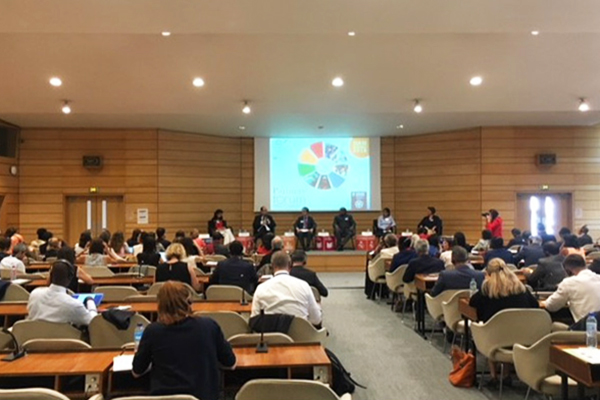
As part of the first UNESCO Partners’ Forum held on 11 and 12 September 2018 at its Paris Headquarters, UNESCO organized a Thematic Forum on “The role of Private Sector partnerships, South-South and Triangular cooperation, and domestic finance in achieving sustainable development” on 11 September. Ms. Hana Mitri SHAHIN, Executive Director, King Hussein Foundation (Jordan), moderated the panel and described how the international landscape is changing with developing countries increasingly taking strong leadership in promoting development cooperation in UNESCO’s areas of competence. She noted that the objective of the panel was to showcase UNESCO’s South-South and Triangular Cooperation initiatives with its partners, and identify opportunities for scaling up our work in this area, including through increasing engagement with the private sector and by mobilizing domestic resources.  The Minister of Education of Brazil, Mr Rossieli SOARES DA SILVA, noted the excellent cooperation with UNESCO on the Criança Esperança programme, which also utilizes TV Globo, a major media company in Brazil, to communicate about the programme. Brazil is extending its support to other countries from the South, particularly Portuguese speaking countries, to share with them their experience and to support the development of similar programmes. Brazil has mobilized domestic resources to implement projects with UNESCO – an important financing modality which can be used by other countries to mobilize funding for projects with UNESCO. The Ambassador of Malaysia to UNESCO, Mr Anesee BIN IBRAHIM, explained how the Malaysia Cooperation Programme is a model of South-South Cooperation. Through the Malaysia Funds in Trust modality, 9 million USD has been mobilized to support 29 projects in more than 70 countries, with an emphasis on LDCs and SIDS in Africa and the Asia Pacific region.  Projects have focused on TVET, education for sustainable development, engineering, and integrated sustainable water management, among others, contributing to 13 SDGs. The Director-General of Artiel Gabon, Mr Alain KAHASHA NTUNWA, highlighted the partnership with UNESCO on “Training my Generation-Gabon 5000”,  which provides scientific and entrepreneurial training through ICT to thousands of young people in Gabon, and delivers new skills to secondary school teachers. He noted that there was keen interest from other countries in the region, particularly Equatorial Guinea and Cameroon to adopt a similar programme to educate and train young people. Dr Charmaine VILLET, Dean, Faculty of Education at the University of Namibia, explained how Namibia was benefitting from the Enhancing Teacher Quality in Africa project, which is financed through the Chinese Funds in Trust modality. She emphasized that the project helped to build a sustainable teacher education programme in Namibia with strong buy-in from the government. The positive results of the programme have led to increased funding from the Government for teacher training. Ms Carole Guertler, Head of Department Levant, Drosos foundation (Zurich), described how UNESCO helped the Drosos Foundation access Jordan, providing it with its networks and increasing the visibility of the project, which provides vocational training and business skills to help empower women through handicrafts. The Secretary General’s Special Envoy for South-South Cooperation and Director of United Nations Office for South-South Cooperation, Jorge Chediek, provided a video message, through which  he recognized UNESCO’s work to promote South-South and Triangular Cooperation, and spoke about opportunities for further expanding South-South Cooperation in the context of BAPA +40.  
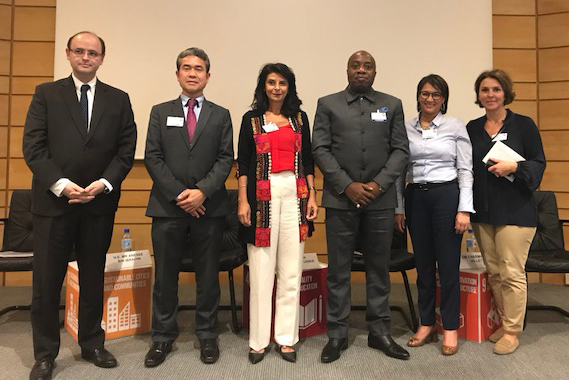
©c.stark, from left to right – Rossieli SOARES DA SILVA; Anesee BIN IBRAHIM; Hana Mitri SHAHIN; Alain KAHASHA NTUNWA; Dr Charmaine VILLET; Carole Guertler

  Conclusions and next steps:
  • Identify opportunities for scaling up South-South Cooperation initiatives with Brazil for Portuguese-speaking countries, Malaysia, China and other countries from the South;
  • Increase the visibility of UNESCO’s donors and partners to implementing the Organization’s programmes and ensure joint ownership of results;
  • Identify how to scale up the “Train my Generation– Gabon 5000” project with Artiel Gabon to other countries in Africa;
  • Encourage countries to mobilize domestic resources to implement projects with UNESCO, following the model of Brazil and Malaysia;
  • Ensure buy-in from beneficiary countries for projects, which should include the principle of co-creation, and build on ongoing initiatives. Capacity building should be conducted at the early stages of the project and utilize local expertise where available;
  • Develop tools and frameworks on how to work with the private sector and universities and build capacity on improving monitoring and evaluation of projects using a solid evidence base;
  • Identify how to scale up multi-stakeholder partnerships to achieve the SDGs through the use of multi-donor trust funds.
   

Related Post


  • All Post
  • ATCT Featured Publications POM
  • BAPA+40
  • Blog
  • Capacity Development Initiatives
  • CICETE Featured Publications POM
  • CIKD
  • Cities Clusters - Agriculture
  • Cities Clusters - COVID-19
  • Cities Clusters - COVID-19 Knowledge Products
  • Cities Clusters - DRR
  • Cities Clusters - E-commerce
  • Cities Clusters - Tourism
  • Cities Clusters - Tourism Knowledge Products
  • Cities Clusters - Transport
  • Cities Clusters - Waste
  • Cities Project
  • Cities Project COVID-19 Newsletters
  • Cities Project COVID-19 Response
  • Cities Project Knowledge Products
  • Classic (untouched)
  • Climate Action
  • COMSATS Featured Publications POM
  • COMSATS Featured Solutions POM
  • Converted from Divi
  • Converted from Mixed
  • Converted from WPBakery
  • COVID-19
  • COVID-19 Page Featured Solutions
  • DRR Knowledge Products
  • DRR News
  • Empty Post
  • Events
  • Featured Event UN-Habitat POM
  • Financing for Development
  • Financing Mechanisms
  • g7+
  • Gender Events
  • Gender News
  • Good Practices in SSTrC Series
  • Good Practices Publications
  • Good Practices Thematic Series & Special Editions
  • Good Practices Vol. 2
  • Good Practices Vol. 3
  • GSSDC
  • Highlighted
  • Highlighted Publications
  • IAEA Featured Solutions POM
  • IBRAF Featured Publications POM
  • IBSA Fund
  • IBSA Fund Annual Reports
  • IBSA Fund News and Stories
  • IBSA Fund Publication
  • IBSA Fund Story
  • ICGEB Featured Events POM
  • ICGEB Featured Publications POM
  • ICGEB Featured Solutions POM
  • ILO Featured Events POM
  • ILO Featured Publications POM
  • ILO Featured Solutions POM
  • India-UN Development Partnership Fund
  • India-UN Fund Publication
  • India-UN Fund Story
  • IsDB
  • IsDB Featured Publications POM
  • IsDB SCC
  • News
  • Norec Featured Publications POM
  • Norec Featured Solutions POM
  • Peace and Development
  • PGTF Publications
  • PGTF Story
  • PICA Featured News POM
  • PICA Featured Publications POM
  • PICA Featured Solutions POM
  • PIDF Featured Publications POM
  • Publications
  • Regional Updates
  • Research
  • ROK-UNOSSC Facility
  • SGP Featured Publication POM
  • SGP Featured Solutions POM
  • Solution
  • South South in Action
  • South-South Global Thinkers
  • South-South Ideas
  • South-South Ideas Series
  • South-South in Action Series
  • Southern Response to COVID-19
  • SSN4PSI Featured Publications POM
  • SSN4PSI Featured Solutions POM
  • Training
  • UN Day for SSC 2020
  • UN Fund for SSC
  • UN SSC Day Publications
  • UN-Habitat Featured Publications POM
  • UN-HABITAT Featured Solutions POM
  • UNCCT
  • UNEP Featured Publications POM
  • UNFPA
  • UNFSSC Publication
  • UNFSSC Story
  • UNIDO Featured Publications POM
  • UNIDO Featured Solutions POM
  • UNIDO POM Events
  • UNOCT Featured Publications POM
  • UNV
  • UNV Featured Publications POM
  • WB Featured Publications POM
  • WB Featured Solutions POM
  • Webinars
  • WFP Featured Events POM
  • WFP Featured Publication POM
  • WFP Featured Solutions POM
  • WIPO
  • Workshops and Seminars
  • Youth4South
  • z Across the Globe 1
  • z Across the Globe 2
  • z Across the Globe 4
  • z Across the Globe 5
  • z Across the Globe 6
  • z Across the Globe 7
  • z Across the Globe 8
  • z ES BAPA+40
  • z ES Eventos
  • z ES Noticias
  • z ES Noticias Destacadas
  • z ES Publicaciones
  • z ES Publicaciones Destacadas
  • z ES Serie Buenas Prácticas en la CSSyT
  • z ES Serie El Sur-Sur en Acción
  • z FR Actualités
  • z FR BAPA+40
  • z FR Événements
  • z FR Publications
  • z FR Publications en vedette
  • z FR Série Bonnes pratiques en CSST
  • z FR Série Sud-Sud en action
  • z Highlighted News
  • z Photos
  • z Videos
  • z ZH BAPA+40
  • z ZH Events
  • z ZH News

ABOUT

Terms of Service

Privacy Policy

Disclosures

RESOURCES

Terms of Service

Privacy Policy

Disclosures

ENGAGE

Terms of Service

Privacy Policy

Disclosures

Copyright © UNOSSC/UNDP

wpChatIcon
wpChatIcon

Alliance Application Form

Submit an Expression of Interest and/or Demand Signal. UNOSSC reviews submissions on a rolling basis.

1. Official name of organization / institution / government entity (exclusions to apply) *
2. Country *
3. Region *
4. SDG *
Secondary SDG *
5. Partner category *
6. Website *
7. Brief description of your institution (max. 150 words) *
Name for the Lead *
Title for the Lead *
Email address for the Lead *
Name for the co-lead
Title for the co-lead
Email address for the co-lead
Section 3. Expression of Interest in the Alliance *
Additional information on proposed areas of engagement may be requested through the platform following initial review by the Alliance Secretariat.
Section 4. Due Diligence and Integrity Declaration *

Submission Note:

  • Submission of this Expression of Interest form does not automatically confer participation in the Alliance.
  • All submissions will be reviewed by the Alliance Secretariat, including basic eligibility screening and proportionate due diligence, as appropriate.
  • Participation in Alliance activities is determined based on relevance to articulated cooperation needs, alignment with Alliance principles, and integrity considerations.
  • Engagement under the Alliance is voluntary, non-binding, and facilitative in nature, and does not constitute funding approval, contractual commitment, or institutional membership.
  • The Alliance Secretariat may contact submitting entities for additional information or clarification during the review process.

Submission of Demand Form

Description of Demand

Indicate the type of support or cooperation requested through the Alliance.
Please briefly describe the challenge, gap, or priority. (Max. 300 words)

Thematic and Geographic Focus

Please indicate the main focus areas of your demand:

A. Thematic Areas (select up to three)
B. Geographic Focus (select all that apply)

Proposed Engagement Modalities

Please indicate how you would like to engage through the Alliance (select all that apply):

Expected Outcomes

Please indicate the main results you seek to achieve through this engagement. (Max. 200 words)
Examples:
• Capacity strengthened
• Partnerships established
• Sectoral or regional strategies co-developed
• Solutions piloted
• Knowledge generated
• Policies informed

Timeline and Readiness (if applicable)

1. Expected timeframe for engagement:
2. Current stage:

Additional Information

Please provide any additional information, documents, or links relevant to this submission.
(Max. 200 words or upload link)

Submission of Offer Form

Description of Contribution

Indicate the type of contribution your institution can provide and describe the expertise, resources, or solutions you may offer.
Please briefly describe your proposed contribution. (Max. 300 words)

Thematic and Geographic Focus

Please indicate the main focus areas of your interest:

A. Thematic Areas (select up to three)
B. Geographic Focus (select all that apply)

Proposed Engagement Modalities

Please indicate how you would like to engage through the Alliance (select all that apply):

Expected Outcomes

Please indicate the main results you aim to achieve through this engagement. (Max. 200 words)
Examples:
• Capacity strengthened
• Partnerships established
• Sectoral or regional strategies co-developed
• Solutions piloted
• Knowledge generated
• Policies informed

Timeline and Readiness (if applicable)

1. Expected timeframe for engagement:
2. Current stage:

Additional Information

Please provide any additional information, documents, or links relevant to this submission.
(Max. 200 words or upload link)

Organization Registration

Authentication & Due Diligence This prototype simulates identity verification, due diligence confirmation, and an authentication step before submission. *

First Name *
Last Name *
Email address *
Password *
Confirm Password *
Name of institution / organization *
Country / Region *
Organization Type *
Organization other *
Function / role *
Organization logo *
Maximum file size: 1 GB

Login

Login / email *
Password *
Remember me

Forgot password?

Connect form

Your name *
Email *
Organization / institution *
Job title / role *
Reason for connecting:
Short message

Scroll to Top