As climate change intensifies water scarcity, floods, and transboundary pressures, countries of the Global South are increasingly turning to one another for practical, context-driven solutions. On 4 December 2025, a South-South exchange convened by the United Nations Office for South-South Cooperation (UNOSSC) and the ASEM Water Resources Research and Development Center (ASEMWater) spotlighted how collective action, shared expertise, and innovative technologies can strengthen water resources safety and sustainable management, under the framework of the Global South-South Development Center project Phase II.
Bringing together experts and practitioners from China, Hungary, Thailand, Cambodia, and the African Water Association, the exchange provided a platform to share real-world experiences – from early-warning systems and smart monitoring technologies to financing models and institutional reform. The dialogue underscored South-South and triangular cooperation as a powerful catalyst for enhancing water security, building climate resilience, and accelerating progress toward the Sustainable Development Goals.
In her opening remarks, Ms. Xiaojun Grace Wang, UNOSSC Trust Fund Director, emphasized that water security lies at the core of sustainable development. “In a world facing mounting climate stress, water scarcity, and rising transboundary tensions, the best solutions – like water – do not compete; they connect,” she stated. “They do not impose; they empower. Sustainable water management is the foundation of human dignity, climate resilience, food and energy security, and social stability.”
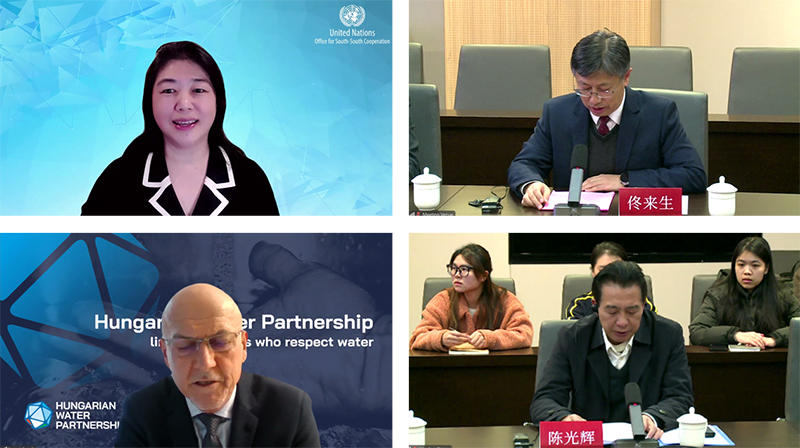 Representatives from China presented a series of technological and scientific approaches to sustainable water management, including smart hydrological monitoring stations, agricultural water-saving techniques, and assessments of ecological changes in lakes across the middle and lower Yangtze River Basin. They also highlighted China’s efforts in meteorological disaster prevention, featuring the use of AI-based weather forecasting models and national early-warning systems.
From Hungary, the Hungarian Water Partnership shared insights on water infrastructure investment, focusing on regulatory frameworks and lifecycle cost analysis widely applied across Europe. Using a case study on Arsenic removal technology, the Hungarian representative demonstrated how lifecycle assessment can inform more sustainable and cost-effective decision-making.
Representatives from China presented a series of technological and scientific approaches to sustainable water management, including smart hydrological monitoring stations, agricultural water-saving techniques, and assessments of ecological changes in lakes across the middle and lower Yangtze River Basin. They also highlighted China’s efforts in meteorological disaster prevention, featuring the use of AI-based weather forecasting models and national early-warning systems.
From Hungary, the Hungarian Water Partnership shared insights on water infrastructure investment, focusing on regulatory frameworks and lifecycle cost analysis widely applied across Europe. Using a case study on Arsenic removal technology, the Hungarian representative demonstrated how lifecycle assessment can inform more sustainable and cost-effective decision-making.
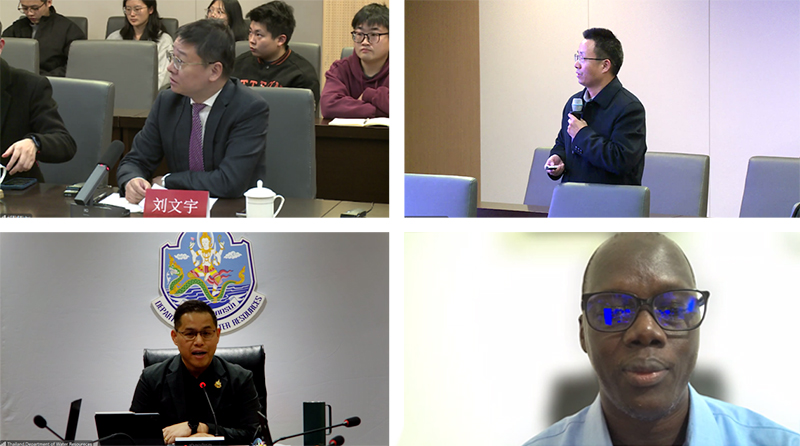 The Department of Water Resources of Thailand presented the country’s progress on flash flood early-warning systems. Participants learned how Thailand integrates real-time monitoring stations and the Flash Flood Advisory and Forecasting System (FAFSA) guideline system to predict and alert communities to sudden flood risks, as well as lessons learned from recent emergency responses.
The Cambodian Water Supply Association outlined its development strategy and core values, and described the challenges facing water utilities in Cambodia, including resource constraints, operational gaps, and investment needs. The representative also identified areas where enhanced cooperation could accelerate national water service delivery.
Representatives from the African Water Association highlighted persistent challenges across the continent – from extreme climate disasters, limited digitalization, to insufficient investment, weak infrastructure, and low levels of technology application. The African representative reiterated Africa’s strong interest in deepening South-South cooperation to advance water resource management.
Across all presentations, participants underscored the importance of continued collaboration. Representatives reaffirmed their commitment to advancing South-South cooperation in fields such as water-saving technologies, early warning systems for floods and droughts, and integrated water environment management. They also called for more online and in-person knowledge exchanges, deepening partnerships, and experience-sharing on water treatment technologies, financing mechanisms, and capacity development to support developing countries. The exchange highlighted South-South and triangular cooperation as a vital platform for strengthening collective resilience, enhancing water security, and accelerating progress toward the Sustainable Development Goals.
_______________________
About GSSDC Phase II:
The Global South-South Development Center (GSSDC) is a flagship initiative of the United Nations Office for South-South Cooperation, funded by the Government of China, under the framework of the United Nations Fund for South-South Cooperation (UNFSSC). Jointly implemented with the China International Center for Economic and Technical Exchanges (CICETE), GSSDC Phase II (2025–2030) will expand both thematically and geographically, prioritizing: agriculture and rural transformation, green and resilient development, new industrialization, cultural and creative economy. Phase II seeks to leverage the technical expertise and resources of the China South-South Cooperation Network (CSSCN) to advance practical and technological cooperation, capacity development, knowledge exchange and network-building, while promoting South-South and triangular cooperation among cities and sub-national entities globally.
The Department of Water Resources of Thailand presented the country’s progress on flash flood early-warning systems. Participants learned how Thailand integrates real-time monitoring stations and the Flash Flood Advisory and Forecasting System (FAFSA) guideline system to predict and alert communities to sudden flood risks, as well as lessons learned from recent emergency responses.
The Cambodian Water Supply Association outlined its development strategy and core values, and described the challenges facing water utilities in Cambodia, including resource constraints, operational gaps, and investment needs. The representative also identified areas where enhanced cooperation could accelerate national water service delivery.
Representatives from the African Water Association highlighted persistent challenges across the continent – from extreme climate disasters, limited digitalization, to insufficient investment, weak infrastructure, and low levels of technology application. The African representative reiterated Africa’s strong interest in deepening South-South cooperation to advance water resource management.
Across all presentations, participants underscored the importance of continued collaboration. Representatives reaffirmed their commitment to advancing South-South cooperation in fields such as water-saving technologies, early warning systems for floods and droughts, and integrated water environment management. They also called for more online and in-person knowledge exchanges, deepening partnerships, and experience-sharing on water treatment technologies, financing mechanisms, and capacity development to support developing countries. The exchange highlighted South-South and triangular cooperation as a vital platform for strengthening collective resilience, enhancing water security, and accelerating progress toward the Sustainable Development Goals.
_______________________
About GSSDC Phase II:
The Global South-South Development Center (GSSDC) is a flagship initiative of the United Nations Office for South-South Cooperation, funded by the Government of China, under the framework of the United Nations Fund for South-South Cooperation (UNFSSC). Jointly implemented with the China International Center for Economic and Technical Exchanges (CICETE), GSSDC Phase II (2025–2030) will expand both thematically and geographically, prioritizing: agriculture and rural transformation, green and resilient development, new industrialization, cultural and creative economy. Phase II seeks to leverage the technical expertise and resources of the China South-South Cooperation Network (CSSCN) to advance practical and technological cooperation, capacity development, knowledge exchange and network-building, while promoting South-South and triangular cooperation among cities and sub-national entities globally.
Representatives from China presented a series of technological and scientific approaches to sustainable water management, including smart hydrological monitoring stations, agricultural water-saving techniques, and assessments of ecological changes in lakes across the middle and lower Yangtze River Basin. They also highlighted China’s efforts in meteorological disaster prevention, featuring the use of AI-based weather forecasting models and national early-warning systems.
From Hungary, the Hungarian Water Partnership shared insights on water infrastructure investment, focusing on regulatory frameworks and lifecycle cost analysis widely applied across Europe. Using a case study on Arsenic removal technology, the Hungarian representative demonstrated how lifecycle assessment can inform more sustainable and cost-effective decision-making.
The Department of Water Resources of Thailand presented the country’s progress on flash flood early-warning systems. Participants learned how Thailand integrates real-time monitoring stations and the Flash Flood Advisory and Forecasting System (FAFSA) guideline system to predict and alert communities to sudden flood risks, as well as lessons learned from recent emergency responses.
The Cambodian Water Supply Association outlined its development strategy and core values, and described the challenges facing water utilities in Cambodia, including resource constraints, operational gaps, and investment needs. The representative also identified areas where enhanced cooperation could accelerate national water service delivery.
Representatives from the African Water Association highlighted persistent challenges across the continent – from extreme climate disasters, limited digitalization, to insufficient investment, weak infrastructure, and low levels of technology application. The African representative reiterated Africa’s strong interest in deepening South-South cooperation to advance water resource management.
Across all presentations, participants underscored the importance of continued collaboration. Representatives reaffirmed their commitment to advancing South-South cooperation in fields such as water-saving technologies, early warning systems for floods and droughts, and integrated water environment management. They also called for more online and in-person knowledge exchanges, deepening partnerships, and experience-sharing on water treatment technologies, financing mechanisms, and capacity development to support developing countries. The exchange highlighted South-South and triangular cooperation as a vital platform for strengthening collective resilience, enhancing water security, and accelerating progress toward the Sustainable Development Goals.
_______________________
About GSSDC Phase II:
The Global South-South Development Center (GSSDC) is a flagship initiative of the United Nations Office for South-South Cooperation, funded by the Government of China, under the framework of the United Nations Fund for South-South Cooperation (UNFSSC). Jointly implemented with the China International Center for Economic and Technical Exchanges (CICETE), GSSDC Phase II (2025–2030) will expand both thematically and geographically, prioritizing: agriculture and rural transformation, green and resilient development, new industrialization, cultural and creative economy. Phase II seeks to leverage the technical expertise and resources of the China South-South Cooperation Network (CSSCN) to advance practical and technological cooperation, capacity development, knowledge exchange and network-building, while promoting South-South and triangular cooperation among cities and sub-national entities globally.