• Home
  • /
  • Events
  • /
  • UNGA80 Ministerial Roundtable on African Connectivity, Co-Hosted by Morocco, UNECA & UNOSSC, Calls for Stronger Partnerships 

UNGA80 Ministerial Roundtable on African Connectivity, Co-Hosted by Morocco, UNECA & UNOSSC, Calls for Stronger Partnerships 


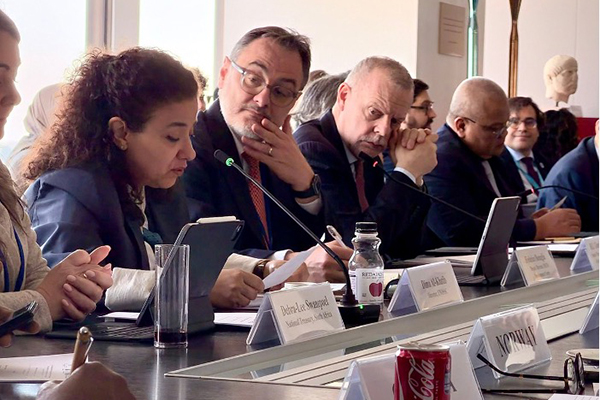
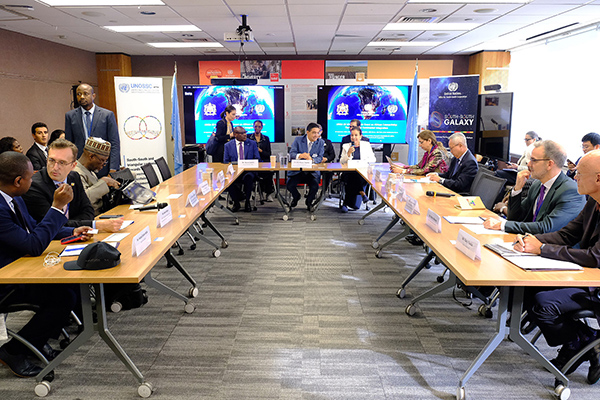
At a high-level side event during the 80th United Nations General Assembly, delegations, UN leaders and experts convened to address Africa’s connectivity challenges and their implications for continental integration. The session, titled “African Connectivity: The Path to Continental Integration,” was organized by the Kingdom of Morocco in collaboration with the United Nations Economic Commission for Africa (UNECA), and the United Nations Office for South-South Cooperation (UNOSSC).     Connectivity as a Catalyst for Integration    This meeting was an opportunity to bring the theme of African connectivity to the center of multilateral discussions and contribute toward international advocacy for a resilient and prosperous Africa.   Participants noted that Africa’s transformation dynamic, particularly through the African Continental Free Trade Area (AfCFTA), is hindered by a connectivity deficit and high transport costs, which limit the potential for integration and growth. They also highlighted that more than 600 million Africans remain without access to electricity, a major obstacle to trade fluidity, especially given that less than 17% of trade in Africa occurs between African countries.  According to the International Telecommunication Union, Africa remains the least connected continent in the world. Only 38% of its population will be online in 2024, far below the global average of 68%. This digital divide hinders digital transformation, deprives youth of opportunities in education, innovation, and jobs, and deepens inequalities and disparities between urban and rural areas within countries and across the continent.    Strategic Importance of Connectivity  Speaking at the opening of the event, H.E. Mr. Nasser Bourita, Minister of Foreign Affairs, African Cooperation, and Moroccan Expatriates, pointed out that connectivity is not only an essential driver of African market transformation and integration but also an instrument of sovereignty, peace, and unity for Africa. He noted that despite collective awareness, the current state of African connectivity falls far short of continental ambitions and objectives, underlining the urgent need to strengthen regional integration through road, electricity, port, and fiber optic infrastructure. He noted that, Morocco has invested in strategic infrastructure projects, from high-speed rail and ports to regional energy and digital links, and stressed the importance of equitable partnerships to unlock Africa’s potential.  “Connectivity, whether physical, digital, or human, is increasingly recognized as the essential driver of competitiveness, resilience, and shared prosperity,” said Claver Gatete, Executive Secretary of UNECA. “Connectivity is a bridge between what Africa used to be and what it can become. It is the link between potential and prosperity, between fragmentation and unity… If we act together, decisively and without delay, the future of Africa’s infrastructure will not just be imagined, it will be achieved.” UNECA is supporting initiatives such as regional transport corridor management systems, the Single African Air Transport Market, and private investment mobilization to turn opportunities into concrete results. Key priorities include accelerating strategic infrastructure investments, harmonizing trade regulations for seamless movement of goods and people, and placing digital and green connectivity at the heart of Africa’s development strategy. Connectivity, Mr. Gatete noted, is the bridge between the continent’s potential and its prosperity, requiring decisive collective action. Africa requires equitable and ambitious partnerships, grounded in national ownership, mutual accountability, and alignment with African strategies, to unlock its considerable potential,” said Dima Al-Khatib, Director of the United Nations Office for South-South Cooperation. “As the UN system’s focal point for promoting South-South and triangular cooperation, UNOSSC is committed to showcasing best practices on regional connectivity and integration, facilitating peer learning, and helping broker strategic partnerships to help address some of the challenges related to connectivity.”     Driving Connectivity: Partnerships and Initiatives   The session featured a distinguished group of speakers. ESCWA Executive Secretary Rola Dashti highlighted that connectivity underpins trade, competitiveness, and resilience, noting that Africa and the Arab region remain more connected to distant partners than to each other. Reducing trade costs, developing cross-border infrastructure, and harmonizing regulations are critical to realizing the full potential of the African Continental Free Trade Area, she said.  Ms. Dashti also emphasized the importance of digital and green connectivity. Strengthening digital networks, establishing interoperable systems, and creating energy corridors can enhance Africa’s participation in the global economy. Aligning carbon standards and investing in green infrastructure will help the continent leverage emerging technologies, support sustainable growth, and increase its influence in global negotiations.  UN-DESA’s Li Junhua highlighted that bridging gaps in infrastructure, energy, and digital access is essential to unlocking Africa’s potential and advancing Agenda 2063. Connectivity requires not only physical networks but also investments in human capital, skills development, and inclusive policies to ensure broad-based benefits. UN-DESA is supporting integrated strategies through multi-stakeholder partnerships, knowledge sharing, and policy advice, helping countries translate global frameworks into actionable national and regional plans. This holistic approach positions connectivity as a prerequisite for sustainable development, resilience, and shared prosperity across Africa.  Babacar Ba, Director of the African Integration and Pan-Africanism at the Ministry of Foreign Affairs of Senegal, highlighted strong commitment to advancing regional integration and connectivity. He reaffirmed willingness to work with partners to translate continental ambitions into concrete outcomes, emphasizing that collaboration is essential for reinforcing unity, cooperation, and sustainable development across Africa. By prioritizing infrastructure, digital networks, and institutional partnerships, Senegal aims to ensure that connectivity translates into tangible benefits for trade, economic growth, and regional integration. The country’s proactive approach reflects its dedication to Pan-Africanism and collective continental progress.  H.E. Mr. Bakary Yaou Sangaré, Minister of Foreign Affairs, Cooperation, African Integration and Nigeriens Abroad of Niger, stressed that connectivity is central to the country’s development and integration into regional and global markets. Limited access to electricity, transport infrastructure, and digital networks continues to constrain productivity, industrialization, and trade opportunities, including in sectors such as agriculture and pharmaceuticals where the country holds untapped potential. To overcome these challenges, Niger is focusing on strengthening transport corridors, expanding digital networks, and enhancing electricity access, while engaging in partnerships with coastal countries and regional frameworks. Improved connectivity is viewed as a foundation for trade facilitation, economic diversification, and sustainable development across the country.  Amb. Mariam Fofana, Director of Multilateral Affairs at the Ministry of Foreign Affairs of Burkina Faso, emphasized that Africa cannot remain at the margins of global developments and that both physical and digital connectivity are now indispensable for trade, integration, and growth. Technological innovation is shaping economies, and equitable access to infrastructure, energy, and technology is essential for inclusive development. The country has invested in renewable energy, particularly solar power, and cross-border cooperation agreements to address energy and connectivity gaps. Burkina Faso’s approach highlights the importance of combining national efforts with support from international financial institutions, private sector partners, and local communities to overcome structural vulnerabilities.  Pedro Moreno, Deputy Secretary-General, UNCTAD, underscored that limited connectivity remains one of Africa’s most significant vulnerabilities, increasing trade costs and constraining the African Continental Free Trade Area’s potential. Infrastructure gaps in transport, energy, and ICT make intra-African trade up to 50 percent more expensive than the global average, limiting the continent’s $3.4 trillion market potential.  To address these challenges, UNCTAD is supporting digital trade solutions, including customs automation, electronic single windows, e-payment systems, transit monitoring, and trade information portals. These tools have already improved efficiency and revenues in several countries, particularly benefiting SMEs, women traders, and landlocked nations.  Jason Slater, Chief AI, Innovation and Digital Officer, UNIDO, emphasized that connectivity in its broadest sense – including transport, energy, digital platforms, artificial intelligence, and human capital – is critical to Africa’s industrial transformation. Integrated industrial ecosystems strengthen value chains, promote competitiveness, and create jobs across national, regional, and continental levels. Through initiatives such as agro-industrial parks, industrial zones, and cross-border economic corridors, UNIDO is helping integrate landlocked economies into regional markets and promote sustainable growth. The organization works with the African Union to translate frameworks such as Agenda 2063 and the AfCFTA into actionable, bankable industrial projects that advance inclusive growth.  Gary Fowlie, Senior Advisor, International Telecommunication Union (ITU), highlighted the ongoing challenges of electrification and digital skills development, which remain essential for Africa’s digital transformation. Investment in infrastructure, human capacity, and enabling regulations is needed to attract private sector participation and close the digital divide, he said. The innovative role of African youth in overcoming connectivity barriers, was noted. The continent’s young population will be key to driving growth in digital innovation.  Abdoul Salam Bello, Chief, UNOHRLLS, highlighted the unique connectivity challenges facing Africa’s landlocked and geographically disadvantaged countries. Geographic constraints affect trade, mobility, and development prospects, requiring targeted investments, policy coherence, and innovative financing mechanisms. Knowledge sharing, peer learning, and replication of successful programs in renewable energy and electrification are crucial to overcoming connectivity gaps and supporting long-term development and integration, he said.  The event concluded with a call to action for all stakeholders to prioritize connectivity as a fundamental pillar of Africa’s development agenda. By addressing connectivity challenges and leveraging collaborative partnerships, Africa can pave the way for a more integrated, resilient, and prosperous future.
Related Post


  • All Post
  • Agriculture and Food Security Publications
  • ATCT Featured Publications POM
  • BAPA+40
  • Blog
  • Capacity Development Initiatives
  • CASS Featured Publications POM
  • CICETE Featured Publications POM
  • CIKD
  • Cities Clusters - Agriculture
  • Cities Clusters - COVID-19
  • Cities Clusters - COVID-19 Knowledge Products
  • Cities Clusters - DRR
  • Cities Clusters - DRR Knowledge Products
  • Cities Clusters - E-commerce
  • Cities Clusters - E-commerce Knowledge Products
  • Cities Clusters - Tourism
  • Cities Clusters - Tourism Knowledge Products
  • Cities Clusters - Transport
  • Cities Clusters - Waste
  • Cities Project
  • Cities Project COVID-19 Newsletters
  • Cities Project COVID-19 Response
  • Cities Project Knowledge Products
  • Classic (untouched)
  • Climate Action
  • Climate Publications
  • COMSATS Featured Publications POM
  • COMSATS Featured Solutions POM
  • Converted from Divi
  • Converted from Mixed
  • Converted from WPBakery
  • COVID-19
  • COVID-19 Page Featured Solutions
  • DRR Knowledge Products
  • DRR News
  • Empty Post
  • ESCWA Featured Publications POM
  • Events
  • FAO Featured Publications POM
  • Featured Event UN-Habitat POM
  • Featured Partner Publications Panama
  • Financing for Development
  • Financing Mechanisms
  • g7+
  • Gender Events
  • Gender News
  • Gender Publications
  • Good Practices in SSTrC Series
  • Good Practices Publications
  • Good Practices Thematic Series & Special Editions
  • Good Practices Vol. 2
  • Good Practices Vol. 3
  • GSSDC
  • Handbook
  • Highlighted
  • Highlighted Publications
  • IAEA Featured Solutions POM
  • IBRAF Featured Publications POM
  • IBSA Fund
  • IBSA Fund Annual Reports
  • IBSA Fund News and Stories
  • IBSA Fund Publication
  • IBSA Fund Story
  • ICGEB Featured Events POM
  • ICGEB Featured Publications POM
  • ICGEB Featured Solutions POM
  • IFAD Featured Publications POM
  • ILO Featured Events POM
  • ILO Featured Publications POM
  • ILO Featured Solutions POM
  • India-UN Development Partnership Fund
  • India-UN Fund Publication
  • India-UN Fund Story
  • IsDB
  • IsDB Featured Publications POM
  • IsDB SCC
  • News
  • Norec Featured Publications POM
  • Norec Featured Solutions POM
  • PAHO Featured Publications POM
  • Peace and Development
  • PGTF Publications
  • PGTF Story
  • PICA Featured News POM
  • PICA Featured Publications POM
  • PICA Featured Solutions POM
  • PIDF Featured Publications POM
  • Policy Brief
  • PPD Featured Publications POM
  • Publications
  • Regional Updates
  • Report
  • Research
  • ROK-UNOSSC Facility
  • SCP Featured Publications POM
  • SGP Featured Publication POM
  • SGP Featured Solutions POM
  • Solution
  • South South in Action
  • South-South Global Thinkers
  • South-South Ideas
  • South-South Ideas Series
  • South-South in Action Series
  • Southern Response to COVID-19
  • SSN4PSI Featured Publications POM
  • SSN4PSI Featured Solutions POM
  • Survey
  • TIKA Featured Publications pom
  • Training
  • UN Day for SSC 2020
  • UN Fund for SSC
  • UN SSC Day Publications
  • UN-Habitat Featured Publications POM
  • UN-HABITAT Featured Solutions POM
  • UNCCT
  • UNCDF Featured Publications POM
  • UNEP Featured Publications POM
  • UNESCAP Featured Publications POM
  • UNESCO Featured Publications POM
  • UNFPA
  • UNFSSC Publication
  • UNFSSC Story
  • UNIDO Featured Publications POM
  • UNIDO Featured Solutions POM
  • UNIDO POM Events
  • UNOCT Featured Publications POM
  • UNOHRLLS Featured Publications POM
  • UNV
  • UNV Featured Publications POM
  • WB Featured Publications POM
  • WB Featured Solutions POM
  • Webinars
  • WFP Featured Events POM
  • WFP Featured Publication POM
  • WFP Featured Solutions POM
  • WIPO
  • Workshops and Seminars
  • Youth4South
  • z Across the Globe 1
  • z Across the Globe 2
  • z Across the Globe 4
  • z Across the Globe 5
  • z Across the Globe 6
  • z Across the Globe 7
  • z Across the Globe 8
  • z ES BAPA+40
  • z ES Eventos
  • z ES Noticias
  • z ES Noticias Destacadas
  • z ES Publicaciones
  • z ES Publicaciones Destacadas
  • z ES Serie Buenas Prácticas en la CSSyT
  • z ES Serie El Sur-Sur en Acción
  • z FR Actualités
  • z FR BAPA+40
  • z FR Événements
  • z FR Publications
  • z FR Publications en vedette
  • z FR Série Bonnes pratiques en CSST
  • z FR Série Sud-Sud en action
  • z Highlighted News
  • z Photos
  • z Videos
  • z ZH BAPA+40
  • z ZH Events
  • z ZH News

Connect with UNOSSC

Stay updated with the latest trends in South-South cooperation and access our vast repository of knowledge.

Copyright © UNOSSC/UNDP

Register

Registration Form (INDIVIDUAL EXPERT)

Use this form to register as an individual expert and become discoverable for knowledge exchange, advisory services, technical support, mentorship, and South-South and triangular cooperation initiatives.

SECTION A. PERSONAL INFORMATION

First name *
Last Name *
Image
Maximum file size: 1 GB
Country of Residence: *
Current Organization/Institution (if applicable):
Position/Title:
Email *
LinkedIn/Professional Profile (optional):
Short professional biography *
CV
Maximum file size: 1 GB

SECTION B. EXPERTISE PROFILE

SDGs
Specific Expertise / Keywords (max. 10 keywords, separate with , ):
Experience in Regions
Experience in Countries

SECTION C. TYPE OF SUPPORT YOU CAN PROVIDE

I am available to provide: (Select all that apply)

SECTION D. PRO-BONO EXPERT SUPPORT

Would you be willing to provide pro bono support to governments, development organizations, UN entities, academia, civil society organizations, or other stakeholders through the platform?

SECTION E. MODALITIES & AVAILABILITY

Mode of support:
Estimated availability:
Indicative level of effort (optional):
SECTION F. SHORT DESCRIPTION OF SUPPORT OFFER (Max. 500 characters)

SECTION G. CONSENT & CONDITIONS

I would like my profile to be: *
Consent: *

1. Official name of organization / institution / government entity (exclusions to apply) *
Organizational Logo *
Maximum file size: 2 MB
2. Country *
3. Region *
4. SDGs *
5. Partner category *
6. Website *
7. Which is your Parent organization?
8. Indicate which unit/project/department you work in at your organization. *
9.Industry / sector of your organization *
10. Brief description of your institution (max. 150 words) *
11. Name for the Lead *
12. Title for the Lead *
13. Email address for the Lead *
14. Name for the co-lead
15. Title for the co-lead
16. Email address for the co-lead
17. Due Diligence and Integrity Declaration *

Registration Form (INDIVIDUAL EXPERT)

Use this form to register as an individual expert and become discoverable for knowledge exchange, advisory services, technical support, mentorship, and South-South and triangular cooperation initiatives.

SECTION A. PERSONAL INFORMATION

First name *
Last Name *
Image
Maximum file size: 1 GB
Nationality:
Country of Residence: *
Current Organization/Institution (if applicable):
Position/Title:
Email *
LinkedIn/Professional Profile (optional):
Short professional biography *
CV
Maximum file size: 1 GB

SECTION B. EXPERTISE PROFILE

SDGs
Specific Expertise / Keywords (max. 10 keywords, separate with , ):
Experience in Regions
Experience in Countries

SECTION C. TYPE OF SUPPORT YOU CAN PROVIDE

I am available to provide: (Select all that apply)

SECTION E. MODALITIES & AVAILABILITY

Mode of support:
Estimated availability:
Indicative level of effort (optional):
SECTION F. SHORT DESCRIPTION OF SUPPORT OFFER (Max. 500 characters)

SECTION G. CONSENT & CONDITIONS

I would like my profile to be: *
Consent: *

1. Official name of organization / institution / government entity (exclusions to apply) *
Organization logo
Maximum file size: 20 MB
2. Country *
3. Region *
4. SDG *
5. Partner category *
6. Website *
7. Brief description of your institution (max. 150 words) *
8. Name for the Lead *
9. Title for the Lead *
10. Email address for the Lead *
11. Name for the co-lead
12. Title for the co-lead
13. Email address for the co-lead
14. Expression of Interest in the Alliance *
Additional information on proposed areas of engagement may be requested through the platform following initial review by the Alliance Secretariat.
15. Due Diligence and Integrity Declaration *

Submission Note:

  • Submission of this Expression of Interest form does not automatically confer participation in the Alliance.
  • All submissions will be reviewed by the Alliance Secretariat, including basic eligibility screening and proportionate due diligence, as appropriate.
  • Participation in Alliance activities is determined based on relevance to articulated cooperation needs, alignment with Alliance principles, and integrity considerations.
  • Engagement under the Alliance is voluntary, non-binding, and facilitative in nature, and does not constitute funding approval, contractual commitment, or institutional membership.
  • The Alliance Secretariat may contact submitting entities for additional information or clarification during the review process.

Submission of Demand Form

Description of Demand

Indicate the type of support or cooperation requested through the Alliance.
Please briefly describe the challenge, gap, or priority. (Max. 300 words)

Thematic and Geographic Focus

Please indicate the main focus areas of your demand:

A. Thematic Areas (select up to three)
B. Geographic Focus (select all that apply)

Proposed Engagement Modalities

Please indicate how you would like to engage through the Alliance (select all that apply):

Expected Outcomes

Please indicate the main results you seek to achieve through this engagement. (Max. 200 words)
Examples:
• Capacity strengthened
• Partnerships established
• Sectoral or regional strategies co-developed
• Solutions piloted
• Knowledge generated
• Policies informed

Timeline and Readiness (if applicable)

1. Expected timeframe for engagement:
2. Current stage:

Additional Information

Please provide any additional information, documents, or links relevant to this submission.
(Max. 200 words or upload link)

Submission of Offer Form

Description of Contribution

Indicate the type of contribution your institution can provide and describe the expertise, resources, or solutions you may offer.
Please briefly describe your proposed contribution. (Max. 300 words)

Thematic and Geographic Focus

Please indicate the main focus areas of your interest:

A. Thematic Areas (select up to three)
B. Geographic Focus (select all that apply)

Proposed Engagement Modalities

Please indicate how you would like to engage through the Alliance (select all that apply):

Expected Outcomes

Please indicate the main results you aim to achieve through this engagement. (Max. 200 words)
Examples:
• Capacity strengthened
• Partnerships established
• Sectoral or regional strategies co-developed
• Solutions piloted
• Knowledge generated
• Policies informed

Timeline and Readiness (if applicable)

1. Expected timeframe for engagement:
2. Current stage:

Additional Information

Please provide any additional information, documents, or links relevant to this submission.
(Max. 200 words or upload link)

Organization Registration

Authentication & Due Diligence This prototype simulates identity verification, due diligence confirmation, and an authentication step before submission. *

First Name *
Last Name *
Email address *
Password *
Confirm Password *
Name of institution / organization *
Country / Region *
Organization Type *
Organization other *
Function / role *
Organization logo *
Maximum file size: 1 GB

Login

Login / email *
Password *
Remember me

Forgot password?

Connect form

Your name *
Email *
Organization / institution *
Job title / role *
Reason for connecting:
Short message

Add Knowledge Product

A. Publication Basics (Mandatory)

Exact Title of the Publication *
Featured image *
Maximum file size: 2 MB
Executive Summary *
Publication Available Online *
Direct Link to Publication

B. Publication Details

Subtitle
Publication Type *
Year of Publication *
Authors / Editors
Key Messages

C. Organizations

Partner Organizations

D. Discoverability (Optional)

Keywords *
SDGs *
Geographic Coverage *
Countries *

Add Good Practice

My form is: *

SECTION 1. BASIC INFORMATION

Title of the Good Practice *
A South-South cooperation good practice is a documented experience, approach, methodology or initiative that has produced positive results, generated useful lessons, and demonstrated relevance for other countries or institutions facing similar development challenges. A good practice should be credible, evidence-based, contextually explained, and useful for learning, policy dialogue, adaptation or scaling.
Name of the Solution(s) *
A South-South cooperation solution is a concrete, tested or implementable policy, programme, technology, institutional model, service, financing mechanism, methodology or partnership approach developed or applied by countries and institutions of the Global South, which responds to a clearly identified development challenge and has potential to be adapted, replicated or scaled in other contexts through South-South or triangular cooperation.
Short Summary *
max. 60 words
Lead Implementing Institution *
Partner Institutions *
Countries / Territories Involved *
Regions Involved *
Type of Cooperation *

SECTION 2. DEVELOPMENT CONTEXT & SDG ALIGNMENT

Primary SDG(s) Addressed *
SDG Target(s) *
Secondary SDGs (if applicable)
Development Challenge Addressed *
100–150 words

SECTION 3. DESCRIPTION OF THE GOOD PRACTICE & SOLUTION

Objectives of the Good Practice / Solution *
max. 100 words
Description of the Solution(s) *
max. 300 words
Innovation Dimension *
max. 150 words

SECTION 4. SOUTH-SOUTH & TRIANGULAR COOPERATION VALUE

South-South Knowledge Exchange *
max. 200 words
Role of Triangular Partners (if applicable)

SECTION 5. PARTICIPATION & GOVERNANCE

Were participatory approaches used in the design and implementation of the solution? If yes, describe the stakeholders involved (e.g., beneficiaries, communities, civil society, private sector, government agencies) *
max. 150 words
What governance and institutional arrangements supported the implementation of this solution? Please describe the roles and responsibilities of key institutions and any collaboration with government entities, development partners, civil society, academia, or the private sector *

SECTION 6. PRODUCED IMPACT (Partner-Validated)

Description of Produced Impact *
max. 250 words
Quantitative Results *
Please provide measurable results achieved through the solution.
Quantitative Results
Please provide measurable results achieved through the solution.
Qualitative Results *
Please describe the most significant qualitative changes resulting from the solution.
Qualitative Results
Please describe the most significant qualitative changes resulting from the solution.

Timeframe of Impact

Timeframe of Impact of the solution: *

SECTION 7. SUSTAINABILITY & SCALABILITY

7.1 What measures have been taken to ensure the sustainability of the good practice beyond the project or intervention period? *
Please describe institutional, financial, policy, technical, community ownership, or capacity-building measures that support long-term sustainability. (max. 150 words)
7.2 Is the solution replicable and adaptable in other contexts? *
Please explain whether the solution can be adapted or replicated in different countries, regions, sectors, communities, or development settings. Highlight any enabling conditions or prerequisites. (max. 150 words)

SECTION 8. RISKS & LESSONS LEARNED

Key Risks and Mitigation Measures
max. 100 words
Lessons Learned *
max. 150 words

SECTION 9. RESOURCES & EVIDENCE

Supporting Materials *
Maximum file size: 1 GB
manuals, toolkits, evaluations, media
URL of the Good Practice / Solution *
Please provide URLs to publicly available resources that demonstrate, validate, or document the good practice. Examples include: Project or programme website/microsite, published evaluation report, case study, knowledge product, policy document, news article or media coverage, technical report, blog or publication etc.
URL of the Solution *
Please provide URLs to publicly available resources that demonstrate, validate, or document the solution. Examples include: Project or programme website/microsite, published evaluation report, case study, knowledge product, policy document, news article or media coverage, technical report, blog or publication etc.
Additional URLs (optional)

SECTION 10. CONTACT INFORMATION & VALIDATION

Focal Point – Partner Institution (Impact Validation)

Name *
Title *
Organization *
Email *
Declaration *

Scroll to Top