• Home
  • /
  • News
  • /
  • UNOSSC and FAO Conclude Capacity Building Series on Agricultural Mechanization for Inclusive Development

UNOSSC and FAO Conclude Capacity Building Series on Agricultural Mechanization for Inclusive Development


From precision farming tools to climate-smart machinery, agricultural mechanization is rapidly transforming how food is grown across the Global South. But for millions of smallholder farmers, access to these innovations remains uneven. Bridging this gap was at the heart of a four-part capacity-building and South-South exchange series led by the United Nations Office for South-South Cooperation (UNOSSC) and the Food and Agriculture Organization of the United Nations (FAO).

Delivered under the Global South-South Development Center Phase II (GSSDC II)—a flagship initiative of the China-UN Global South-South Development Facility supported by the Government of China—the series brought together 2,494 cumulative participations from 52 countries and territories between March and April 2026. With 690 unique participants and 588 peak concurrent viewers across sessions, the programme created a dynamic platform for policymakers, practitioners and experts to exchange actionable insights, innovative models and policy approaches to scale sustainable agricultural mechanization, particularly across Africa and other developing regions.

Financing and Investment: Unlocking Capital for Mechanization

The first session, held on 11 March 2026, explored sustainable financing and investment as the foundation for scaling agricultural mechanization. The FAO representative emphasized that mechanization is indispensable to raising smallholder productivity and strengthening food security across the continent.
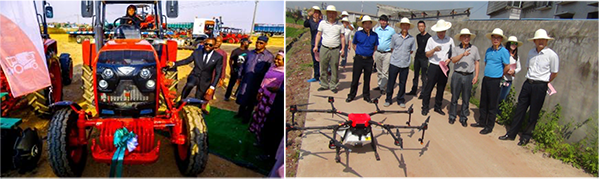
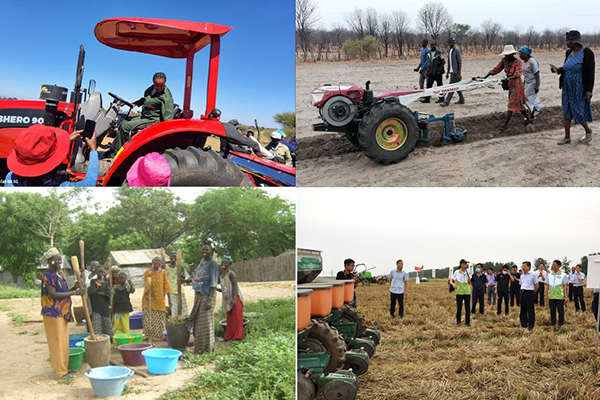
An expert from Nanjing Institute of Agricultural Mechanization shared a holistic approach, combining government subsidies, industrial investment, and targeted overseas cooperation, and noted that China’s agricultural machinery exports to Africa have reached nearly $700 million, supporting local production and service capacity.

Zhengzhou, a major agricultural hub, showcased a multi-channel financing system integrating subsidies, credit, insurance, and social capital, which has attracted 7.4 billion yuan in investment and boosted mechanization across the value chain.

African countries presented homegrown solutions. Zambia reported the establishment of 85 government-run mechanization service centers—with 40 more planned with African Development Bank support—paired with digital tractor tracking to improve efficiency. Nigeria shifted from individual ownership to service-based models, distributing 2,000 tractors and deploying IoT monitoring to enhance maintenance and accountability. Participants also discussed electric tractors, drone regulation, and affordable financing for cash-constrained smallholders.

Service Supply Models: Building Inclusive, Efficient Mechanization Ecosystems


On 25 March 2026, the series focused on scalable mechanization service supply models, a key to overcoming low machinery utilization and unequal access.

A professor from Hunan Agricultural University outlined seven proven models, including individual ownership, joint-sharing cooperatives, market leasing, digital platforms, and public-private partnerships (PPPs), noting that no single model fits all contexts. China’s provincial and municipal practices offered replicable blueprints. Hunan Hengyang demonstrated machinery sharing for mountainous areas, boosting human-machine collaboration coverage to over 80%. Nanjing Liuhe district’s digital service platform connected farmers and operators, achieving a 96.65% mechanization rate and cutting planting costs.

African partners highlighted progress in institutionalizing services. Zimbabwe launched a Mechanization Development Alliance with flexible financing facilities. Ghana rolled out Agricultural Mechanization Service Enterprise Centers, and plans 50 one-stop farm service hubs under its Feed Ghana program, integrating seeds, fertilizers, and mechanization via PPPs. These models reduced barriers for smallholders while creating local jobs and sustainable enterprises.

Climate-Smart Intelligent Mechanization: Technology for Resilience


The 8 April 2026 session spotlighted climate-smart and intelligent mechanization—a game-changer for regions facing erratic rainfall, soil degradation, and limited energy access.

In his lecture, an expert from Chongqing Academy of Agricultural Sciences presented breakthroughs in electric and hybrid tractors, autonomous driving systems, agricultural robots, and precision irrigation powered by solar energy. He introduced compact, electric, and photovoltaic-compatible machinery tailored for Africa’s farmlands and infrastructure.

Shandong’s Pingdu city deployed Beidou navigation-assisted driving, agricultural drones, and satellite land leveling to boost efficiency and cut resource waste.

According to a panelist from Northwest Agriculture and Forestry University, China’s precision irrigation projects in Central Asia achieved 30% water savings and over 20% yield increases, offering a model for water-scarce African regions.

Botswana and Senegal shared on-the-ground realities. Botswana, with some 6,744 tractors nationwide, faces gaps in local repair capacity and equipment quality assurance. Senegal, with only about five tractors per 1,000 farmers, is advancing service-oriented mechanization through digital platforms and PPPs to build climate resilience and raise smallholder incomes.

Policy and Regulatory Frameworks: Enabling Sustainable Growth


The series concluded on 22 April 2026 with a deep dive into policy and regulatory frameworks—the institutional backbone of long-term mechanization success.

A professor from Nanjing Institute of Agricultural Mechanization traced China’s four-decade policy evolution, from state-led construction to market-driven modernization.
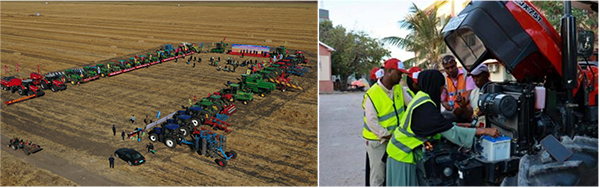
China’s toolkit includes purchase subsidies, operational subsidies, scrap-and-update incentives, tax breaks, export tax rebates, and strict safety regulations under the Agricultural Machinery Safety Supervision Regulation. By 2025, China’s comprehensive mechanization rate for crop planting, harvesting, and processing reached 75.5%.

African countries outlined their policy pathways. Somalia aims to build a climate-resilient, market-led mechanization system led by the private sector. Kenya targets raising mechanization from 30% to 50% by 2030 through mechanization hubs and public-private collaboration. Cameroon focuses on institutional support, technology transfer, and policy incentives to expand equitable access.

Jiangsu and Hebei provinces of China shared subnational regulatory and support systems, emphasizing integrated R&D, extension, and service networks. Regional representatives from ESCAP-CASM and FAO underscored that mechanization is a systemic endeavor requiring coherent policy, strong institutions, and sustained South-South collaboration.

The series reaffirmed that South-South cooperation is a powerful vehicle for transferring context-appropriate knowledge, technology, and investment. By combining large-scale mechanization experience with grassroots innovation, participants built a shared roadmap to transform smallholder agriculture, create decent jobs, and advance the 2030 Agenda for Sustainable Development.

About GSSDC Phase II:

The Global South-South Development Center (GSSDC) is a flagship initiative of the UNOSSC, funded by the Government of China, under the framework of the UN Fund for South-South Cooperation (UNFSSC). It was launched in 2009 in partnership with the China International Center for Economic and Technical Exchanges (CICETE).

GSSDC Phase I was co-initiated in 2019 by UNOSSC and the China International Center for Economic and Technical Exchanges (CICETE), and funded by the Government of China, the GSSDC has delivered capacity-building, policy advocacy, and knowledge exchange for developing countries.

GSSDC Phase II (2024–2030) will expand both thematically and geographically, prioritizing: agriculture and rural transformation, green and resilient development, new industrialization, cultural and creative economy. Phase II seeks to leverage the technical expertise and resources of the China South-South Cooperation Network (CSSCN) to advance practical and technological cooperation, capacity development, knowledge exchange and network-building, while promoting South-South and triangular cooperation among cities and sub-national entities globally.


Related Post


  • All Post
  • ATCT Featured Publications POM
  • BAPA+40
  • Blog
  • Capacity Development Initiatives
  • CICETE Featured Publications POM
  • CIKD
  • Cities Clusters - Agriculture
  • Cities Clusters - COVID-19
  • Cities Clusters - COVID-19 Knowledge Products
  • Cities Clusters - DRR
  • Cities Clusters - E-commerce
  • Cities Clusters - Tourism
  • Cities Clusters - Tourism Knowledge Products
  • Cities Clusters - Transport
  • Cities Clusters - Waste
  • Cities Project
  • Cities Project COVID-19 Newsletters
  • Cities Project COVID-19 Response
  • Cities Project Knowledge Products
  • Classic (untouched)
  • Climate Action
  • COMSATS Featured Publications POM
  • COMSATS Featured Solutions POM
  • Converted from Divi
  • Converted from Mixed
  • Converted from WPBakery
  • COVID-19
  • COVID-19 Page Featured Solutions
  • DRR Knowledge Products
  • DRR News
  • Empty Post
  • Events
  • Featured Event UN-Habitat POM
  • Financing for Development
  • Financing Mechanisms
  • g7+
  • Gender Events
  • Gender News
  • Good Practices in SSTrC Series
  • Good Practices Publications
  • Good Practices Thematic Series & Special Editions
  • Good Practices Vol. 2
  • Good Practices Vol. 3
  • GSSDC
  • Highlighted
  • Highlighted Publications
  • IAEA Featured Solutions POM
  • IBRAF Featured Publications POM
  • IBSA Fund
  • IBSA Fund Annual Reports
  • IBSA Fund News and Stories
  • IBSA Fund Publication
  • IBSA Fund Story
  • ICGEB Featured Events POM
  • ICGEB Featured Publications POM
  • ICGEB Featured Solutions POM
  • ILO Featured Events POM
  • ILO Featured Publications POM
  • ILO Featured Solutions POM
  • India-UN Development Partnership Fund
  • India-UN Fund Publication
  • India-UN Fund Story
  • IsDB
  • IsDB Featured Publications POM
  • IsDB SCC
  • News
  • Norec Featured Publications POM
  • Norec Featured Solutions POM
  • Peace and Development
  • PGTF Publications
  • PGTF Story
  • PICA Featured News POM
  • PICA Featured Publications POM
  • PICA Featured Solutions POM
  • PIDF Featured Publications POM
  • Publications
  • Regional Updates
  • Research
  • ROK-UNOSSC Facility
  • SGP Featured Publication POM
  • SGP Featured Solutions POM
  • Solution
  • South South in Action
  • South-South Global Thinkers
  • South-South Ideas
  • South-South Ideas Series
  • South-South in Action Series
  • Southern Response to COVID-19
  • SSN4PSI Featured Publications POM
  • SSN4PSI Featured Solutions POM
  • Training
  • UN Day for SSC 2020
  • UN Fund for SSC
  • UN SSC Day Publications
  • UN-Habitat Featured Publications POM
  • UN-HABITAT Featured Solutions POM
  • UNCCT
  • UNEP Featured Publications POM
  • UNFPA
  • UNFSSC Publication
  • UNFSSC Story
  • UNIDO Featured Publications POM
  • UNIDO Featured Solutions POM
  • UNIDO POM Events
  • UNOCT Featured Publications POM
  • UNV
  • UNV Featured Publications POM
  • WB Featured Publications POM
  • WB Featured Solutions POM
  • Webinars
  • WFP Featured Events POM
  • WFP Featured Publication POM
  • WFP Featured Solutions POM
  • WIPO
  • Workshops and Seminars
  • Youth4South
  • z Across the Globe 1
  • z Across the Globe 2
  • z Across the Globe 4
  • z Across the Globe 5
  • z Across the Globe 6
  • z Across the Globe 7
  • z Across the Globe 8
  • z ES BAPA+40
  • z ES Eventos
  • z ES Noticias
  • z ES Noticias Destacadas
  • z ES Publicaciones
  • z ES Publicaciones Destacadas
  • z ES Serie Buenas Prácticas en la CSSyT
  • z ES Serie El Sur-Sur en Acción
  • z FR Actualités
  • z FR BAPA+40
  • z FR Événements
  • z FR Publications
  • z FR Publications en vedette
  • z FR Série Bonnes pratiques en CSST
  • z FR Série Sud-Sud en action
  • z Highlighted News
  • z Photos
  • z Videos
  • z ZH BAPA+40
  • z ZH Events
  • z ZH News

ABOUT

Terms of Service

Privacy Policy

Disclosures

RESOURCES

Terms of Service

Privacy Policy

Disclosures

ENGAGE

Terms of Service

Privacy Policy

Disclosures

Copyright © UNOSSC/UNDP

wpChatIcon
wpChatIcon

Alliance Application Form

Submit an Expression of Interest and/or Demand Signal. UNOSSC reviews submissions on a rolling basis.

1. Official name of organization / institution / government entity (exclusions to apply) *
2. Country *
3. Region *
4. SDG *
Secondary SDG *
5. Partner category *
6. Website *
7. Brief description of your institution (max. 150 words) *
Name for the Lead *
Title for the Lead *
Email address for the Lead *
Name for the co-lead
Title for the co-lead
Email address for the co-lead
Section 3. Expression of Interest in the Alliance *
Additional information on proposed areas of engagement may be requested through the platform following initial review by the Alliance Secretariat.
Section 4. Due Diligence and Integrity Declaration *

Submission Note:

  • Submission of this Expression of Interest form does not automatically confer participation in the Alliance.
  • All submissions will be reviewed by the Alliance Secretariat, including basic eligibility screening and proportionate due diligence, as appropriate.
  • Participation in Alliance activities is determined based on relevance to articulated cooperation needs, alignment with Alliance principles, and integrity considerations.
  • Engagement under the Alliance is voluntary, non-binding, and facilitative in nature, and does not constitute funding approval, contractual commitment, or institutional membership.
  • The Alliance Secretariat may contact submitting entities for additional information or clarification during the review process.

Submission of Demand Form

Description of Demand

Indicate the type of support or cooperation requested through the Alliance.
Please briefly describe the challenge, gap, or priority. (Max. 300 words)

Thematic and Geographic Focus

Please indicate the main focus areas of your demand:

A. Thematic Areas (select up to three)
B. Geographic Focus (select all that apply)

Proposed Engagement Modalities

Please indicate how you would like to engage through the Alliance (select all that apply):

Expected Outcomes

Please indicate the main results you seek to achieve through this engagement. (Max. 200 words)
Examples:
• Capacity strengthened
• Partnerships established
• Sectoral or regional strategies co-developed
• Solutions piloted
• Knowledge generated
• Policies informed

Timeline and Readiness (if applicable)

1. Expected timeframe for engagement:
2. Current stage:

Additional Information

Please provide any additional information, documents, or links relevant to this submission.
(Max. 200 words or upload link)

Submission of Offer Form

Description of Contribution

Indicate the type of contribution your institution can provide and describe the expertise, resources, or solutions you may offer.
Please briefly describe your proposed contribution. (Max. 300 words)

Thematic and Geographic Focus

Please indicate the main focus areas of your interest:

A. Thematic Areas (select up to three)
B. Geographic Focus (select all that apply)

Proposed Engagement Modalities

Please indicate how you would like to engage through the Alliance (select all that apply):

Expected Outcomes

Please indicate the main results you aim to achieve through this engagement. (Max. 200 words)
Examples:
• Capacity strengthened
• Partnerships established
• Sectoral or regional strategies co-developed
• Solutions piloted
• Knowledge generated
• Policies informed

Timeline and Readiness (if applicable)

1. Expected timeframe for engagement:
2. Current stage:

Additional Information

Please provide any additional information, documents, or links relevant to this submission.
(Max. 200 words or upload link)

Organization Registration

Authentication & Due Diligence This prototype simulates identity verification, due diligence confirmation, and an authentication step before submission. *

First Name *
Last Name *
Email address *
Password *
Confirm Password *
Name of institution / organization *
Country / Region *
Organization Type *
Organization other *
Function / role *
Organization logo *
Maximum file size: 1 GB

Login

Login / email *
Password *
Remember me

Forgot password?

Connect form

Your name *
Email *
Organization / institution *
Job title / role *
Reason for connecting:
Short message

Scroll to Top