• Home
  • /
  • z ZH News
  • /
  • 联合国气候大会关注“一带一路”绿色低碳发展

联合国气候大会关注“一带一路”绿色低碳发展


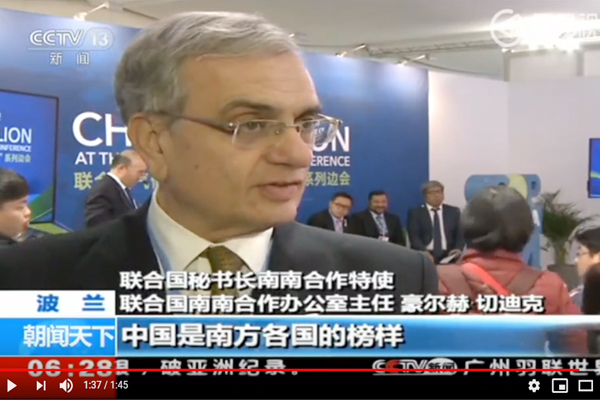
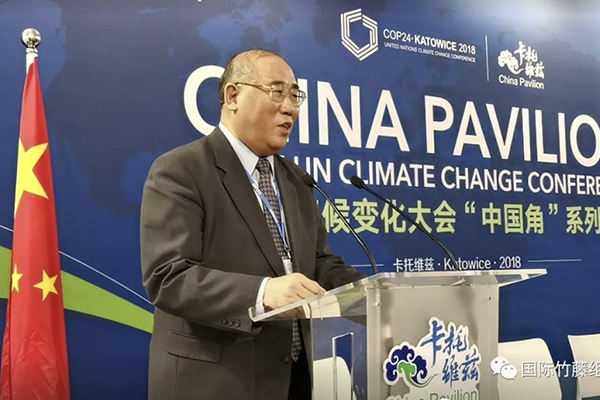
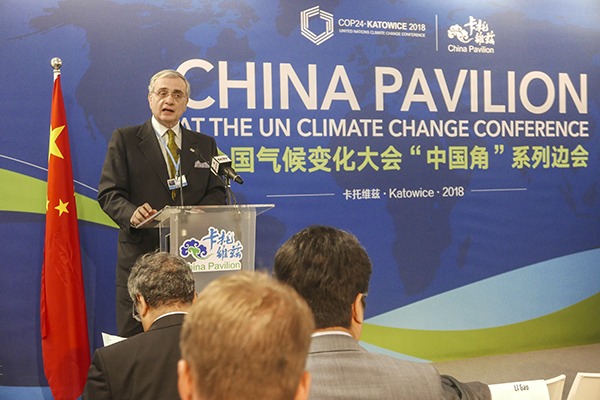
中新社波兰卡托维兹12月13日电 (记者 陈溯 彭大伟)“一带一路”沿线国家和地区是全球经济增长最快的区域之一,这一区域的绿色可持续发展关乎全球应对气候变化成效。中新社记者在联合国卡托维兹气候大会期间注意到,“一带一路”绿色低碳发展已成为本届气候大会与会者关注的焦点之一。 联合国政府间气候变化专门委员会(IPCC)10月发布的《1.5°C特别报告》提出,人类活动带来的二氧化碳排放需要在2050年左右达到净零,全球才有较大可能实现1.5°C长期气温目标。此外,全球碳排放量在经历了三年的停滞后,2018年再创历史新高。全球应对气候变化挑战再度升级。 “在当今气候变化影响日趋加剧的时代,所有大规模建设项目都必须以环境维度、可持续角度为前提进行考量,‘一带一路’沿线减缓和适应气候变化势在必行。”联合国秘书长南南合作特使兼联合国南南合作办公室主任豪尔赫·切迪克(Jorge Chediek)在采访中向中新社记者表示。 记者注意到,在政府层面,绿色发展已成为“一带一路”倡议实施的共识。很多国家正身体力行走绿色低碳之路。谢迪克表示,目前一些海湾国家正成为清洁技术的领导者,中亚一些国家正着力提高能源效率。 创绿研究院主任白韫雯表示,绿色、低碳的“一带一路”不但可以促进沿线国家自主贡献目标实现,还为2020年提升各国气候雄心带来可能。她建议,“一带一路”投资者必须将国家自主贡献作为基准线,为投资决策提供指导。 自中国提出“一带一路”倡议以来,基础设施建设对沿线地区的经济社会发展起着重要作用。但外界也有声音认为,中国在沿线的投资为该区域应对气候变化“带来挑战”。 对此,多位与会代表和专家指出,为促进“一带一路”沿线的绿色低碳发展和共同应对全球气候变化,中国正努力探索与沿线国家携手实现可持续发展。 具体到今年,中国生态环境部已联合相关部委发布了《关于推进绿色“一带一路”建设的指导意见》,为绿色“一带一路”建设绘制明确的路线图。此外,中国还通过国内国际交流平台和合作机制努力探索与沿线国家“携手打造绿色丝绸之路”的实施方案,主动探索沿线地区基础设施项目的能源转型。数据显示,截至2017年,中国在清洁能源的海外投资规模超过440亿美元。 “希望中国进一步加强和提升在斐济清洁能源领域的建设,尤其在太阳能方面,中国拥有非常先进的技术。”斐济总理弗兰克·姆拜尼马拉马在气候大会期间表示,近年来,中国一直帮助斐济进行清洁能源的输送和建设,促使斐济的煤炭消费逐步下降,帮助斐济人民能够更好地应对处理气候变化问题。 谢迪克表示,中国在过去几年的减排成效和经济转型经验令人叹服,应该将这些经验和技术借助“一带一路”倡议进一步在沿线国家分享,帮助其他发展中国家完成自己减排贡献。此外,企业、民间、金融机构等民间力量也广泛深入地参与,在对当地现状、需求和发展趋势进行调研的基础上,推动“一带一路”绿色发展。 巴基斯坦气候变化部环境与气候变化主任IRFANTARIQ Muhammad向记者表示,中国的资金和发展经验对其他发展中国家有重要的意义。 记者亦注意到,围绕绿色金融、可再生能源合作、南南合作框架等途径促进“一带一路”绿色发展的相关议题,本届气候大会上举办了多场边会,吸引各国人士参与对话讨论。 “今后,我们将进一步推动气候变化南南合作和‘一带一路’绿色发展,为应对全球气候变化、构建人类命运共同体作出更大贡献。”中国生态环境部部长李干杰在本届气候大会期间表示。   Source: http://www.chinanews.com/cj/2018/12-13/8701307.shtml    
Related Post


  • All Post
  • Agriculture and Food Security Publications
  • ATCT Featured Publications POM
  • BAPA+40
  • Blog
  • Capacity Development Initiatives
  • CASS Featured Publications POM
  • CICETE Featured Publications POM
  • CIKD
  • Cities Clusters - Agriculture
  • Cities Clusters - COVID-19
  • Cities Clusters - COVID-19 Knowledge Products
  • Cities Clusters - DRR
  • Cities Clusters - DRR Knowledge Products
  • Cities Clusters - E-commerce
  • Cities Clusters - E-commerce Knowledge Products
  • Cities Clusters - Tourism
  • Cities Clusters - Tourism Knowledge Products
  • Cities Clusters - Transport
  • Cities Clusters - Waste
  • Cities Project
  • Cities Project COVID-19 Newsletters
  • Cities Project COVID-19 Response
  • Cities Project Knowledge Products
  • Classic (untouched)
  • Climate Action
  • Climate Publications
  • COMSATS Featured Publications POM
  • COMSATS Featured Solutions POM
  • Converted from Divi
  • Converted from Mixed
  • Converted from WPBakery
  • COVID-19
  • COVID-19 Page Featured Solutions
  • DRR Knowledge Products
  • DRR News
  • Empty Post
  • ESCWA Featured Publications POM
  • Events
  • FAO Featured Publications POM
  • Featured Event UN-Habitat POM
  • Featured Partner Publications Panama
  • Financing for Development
  • Financing Mechanisms
  • g7+
  • Gender Events
  • Gender News
  • Gender Publications
  • Good Practices in SSTrC Series
  • Good Practices Publications
  • Good Practices Thematic Series & Special Editions
  • Good Practices Vol. 2
  • Good Practices Vol. 3
  • GSSDC
  • Handbook
  • Highlighted
  • Highlighted Publications
  • IAEA Featured Solutions POM
  • IBRAF Featured Publications POM
  • IBSA Fund
  • IBSA Fund Annual Reports
  • IBSA Fund News and Stories
  • IBSA Fund Publication
  • IBSA Fund Story
  • ICGEB Featured Events POM
  • ICGEB Featured Publications POM
  • ICGEB Featured Solutions POM
  • IFAD Featured Publications POM
  • ILO Featured Events POM
  • ILO Featured Publications POM
  • ILO Featured Solutions POM
  • India-UN Development Partnership Fund
  • India-UN Fund Publication
  • India-UN Fund Story
  • IsDB
  • IsDB Featured Publications POM
  • IsDB SCC
  • News
  • Norec Featured Publications POM
  • Norec Featured Solutions POM
  • PAHO Featured Publications POM
  • Peace and Development
  • PGTF Publications
  • PGTF Story
  • PICA Featured News POM
  • PICA Featured Publications POM
  • PICA Featured Solutions POM
  • PIDF Featured Publications POM
  • Policy Brief
  • PPD Featured Publications POM
  • Publications
  • Regional Updates
  • Report
  • Research
  • ROK-UNOSSC Facility
  • SCP Featured Publications POM
  • SGP Featured Publication POM
  • SGP Featured Solutions POM
  • Solution
  • South South in Action
  • South-South Global Thinkers
  • South-South Ideas
  • South-South Ideas Series
  • South-South in Action Series
  • Southern Response to COVID-19
  • SSN4PSI Featured Publications POM
  • SSN4PSI Featured Solutions POM
  • Survey
  • TIKA Featured Publications pom
  • Training
  • UN Day for SSC 2020
  • UN Fund for SSC
  • UN SSC Day Publications
  • UN-Habitat Featured Publications POM
  • UN-HABITAT Featured Solutions POM
  • UNCCT
  • UNCDF Featured Publications POM
  • UNEP Featured Publications POM
  • UNESCAP Featured Publications POM
  • UNESCO Featured Publications POM
  • UNFPA
  • UNFSSC Publication
  • UNFSSC Story
  • UNIDO Featured Publications POM
  • UNIDO Featured Solutions POM
  • UNIDO POM Events
  • UNOCT Featured Publications POM
  • UNOHRLLS Featured Publications POM
  • UNV
  • UNV Featured Publications POM
  • WB Featured Publications POM
  • WB Featured Solutions POM
  • Webinars
  • WFP Featured Events POM
  • WFP Featured Publication POM
  • WFP Featured Solutions POM
  • WIPO
  • Workshops and Seminars
  • Youth4South
  • z Across the Globe 1
  • z Across the Globe 2
  • z Across the Globe 4
  • z Across the Globe 5
  • z Across the Globe 6
  • z Across the Globe 7
  • z Across the Globe 8
  • z ES BAPA+40
  • z ES Eventos
  • z ES Noticias
  • z ES Noticias Destacadas
  • z ES Publicaciones
  • z ES Publicaciones Destacadas
  • z ES Serie Buenas Prácticas en la CSSyT
  • z ES Serie El Sur-Sur en Acción
  • z FR Actualités
  • z FR BAPA+40
  • z FR Événements
  • z FR Publications
  • z FR Publications en vedette
  • z FR Série Bonnes pratiques en CSST
  • z FR Série Sud-Sud en action
  • z Highlighted News
  • z Photos
  • z Videos
  • z ZH BAPA+40
  • z ZH Events
  • z ZH News

Connect with UNOSSC

Stay updated with the latest trends in South-South cooperation and access our vast repository of knowledge.

Copyright © UNOSSC/UNDP

Register

Registration Form (INDIVIDUAL EXPERT)

Use this form to register as an individual expert and become discoverable for knowledge exchange, advisory services, technical support, mentorship, and South-South and triangular cooperation initiatives.

SECTION A. PERSONAL INFORMATION

First name *
Last Name *
Image
Maximum file size: 1 GB
Country of Residence: *
Current Organization/Institution (if applicable):
Position/Title:
Email *
LinkedIn/Professional Profile (optional):
Short professional biography *
CV
Maximum file size: 1 GB

SECTION B. EXPERTISE PROFILE

SDGs
Specific Expertise / Keywords (max. 10 keywords, separate with , ):
Experience in Regions
Experience in Countries

SECTION C. TYPE OF SUPPORT YOU CAN PROVIDE

I am available to provide: (Select all that apply)

SECTION D. PRO-BONO EXPERT SUPPORT

Would you be willing to provide pro bono support to governments, development organizations, UN entities, academia, civil society organizations, or other stakeholders through the platform?

SECTION E. MODALITIES & AVAILABILITY

Mode of support:
Estimated availability:
Indicative level of effort (optional):
SECTION F. SHORT DESCRIPTION OF SUPPORT OFFER (Max. 500 characters)

SECTION G. CONSENT & CONDITIONS

I would like my profile to be: *
Consent: *

1. Official name of organization / institution / government entity (exclusions to apply) *
Organizational Logo *
Maximum file size: 2 MB
2. Country *
3. Region *
4. SDGs *
5. Partner category *
6. Website *
7. Which is your Parent organization?
8. Indicate which unit/project/department you work in at your organization. *
9.Industry / sector of your organization *
10. Brief description of your institution (max. 150 words) *
11. Name for the Lead *
12. Title for the Lead *
13. Email address for the Lead *
14. Name for the co-lead
15. Title for the co-lead
16. Email address for the co-lead
17. Due Diligence and Integrity Declaration *

Registration Form (INDIVIDUAL EXPERT)

Use this form to register as an individual expert and become discoverable for knowledge exchange, advisory services, technical support, mentorship, and South-South and triangular cooperation initiatives.

SECTION A. PERSONAL INFORMATION

First name *
Last Name *
Image
Maximum file size: 1 GB
Nationality:
Country of Residence: *
Current Organization/Institution (if applicable):
Position/Title:
Email *
LinkedIn/Professional Profile (optional):
Short professional biography *
CV
Maximum file size: 1 GB

SECTION B. EXPERTISE PROFILE

SDGs
Specific Expertise / Keywords (max. 10 keywords, separate with , ):
Experience in Regions
Experience in Countries

SECTION C. TYPE OF SUPPORT YOU CAN PROVIDE

I am available to provide: (Select all that apply)

SECTION E. MODALITIES & AVAILABILITY

Mode of support:
Estimated availability:
Indicative level of effort (optional):
SECTION F. SHORT DESCRIPTION OF SUPPORT OFFER (Max. 500 characters)

SECTION G. CONSENT & CONDITIONS

I would like my profile to be: *
Consent: *

1. Official name of organization / institution / government entity (exclusions to apply) *
Organization logo
Maximum file size: 20 MB
2. Country *
3. Region *
4. SDG *
5. Partner category *
6. Website *
7. Brief description of your institution (max. 150 words) *
8. Name for the Lead *
9. Title for the Lead *
10. Email address for the Lead *
11. Name for the co-lead
12. Title for the co-lead
13. Email address for the co-lead
14. Expression of Interest in the Alliance *
Additional information on proposed areas of engagement may be requested through the platform following initial review by the Alliance Secretariat.
15. Due Diligence and Integrity Declaration *

Submission Note:

  • Submission of this Expression of Interest form does not automatically confer participation in the Alliance.
  • All submissions will be reviewed by the Alliance Secretariat, including basic eligibility screening and proportionate due diligence, as appropriate.
  • Participation in Alliance activities is determined based on relevance to articulated cooperation needs, alignment with Alliance principles, and integrity considerations.
  • Engagement under the Alliance is voluntary, non-binding, and facilitative in nature, and does not constitute funding approval, contractual commitment, or institutional membership.
  • The Alliance Secretariat may contact submitting entities for additional information or clarification during the review process.

Submission of Demand Form

Description of Demand

Indicate the type of support or cooperation requested through the Alliance.
Please briefly describe the challenge, gap, or priority. (Max. 300 words)

Thematic and Geographic Focus

Please indicate the main focus areas of your demand:

A. Thematic Areas (select up to three)
B. Geographic Focus (select all that apply)

Proposed Engagement Modalities

Please indicate how you would like to engage through the Alliance (select all that apply):

Expected Outcomes

Please indicate the main results you seek to achieve through this engagement. (Max. 200 words)
Examples:
• Capacity strengthened
• Partnerships established
• Sectoral or regional strategies co-developed
• Solutions piloted
• Knowledge generated
• Policies informed

Timeline and Readiness (if applicable)

1. Expected timeframe for engagement:
2. Current stage:

Additional Information

Please provide any additional information, documents, or links relevant to this submission.
(Max. 200 words or upload link)

Submission of Offer Form

Description of Contribution

Indicate the type of contribution your institution can provide and describe the expertise, resources, or solutions you may offer.
Please briefly describe your proposed contribution. (Max. 300 words)

Thematic and Geographic Focus

Please indicate the main focus areas of your interest:

A. Thematic Areas (select up to three)
B. Geographic Focus (select all that apply)

Proposed Engagement Modalities

Please indicate how you would like to engage through the Alliance (select all that apply):

Expected Outcomes

Please indicate the main results you aim to achieve through this engagement. (Max. 200 words)
Examples:
• Capacity strengthened
• Partnerships established
• Sectoral or regional strategies co-developed
• Solutions piloted
• Knowledge generated
• Policies informed

Timeline and Readiness (if applicable)

1. Expected timeframe for engagement:
2. Current stage:

Additional Information

Please provide any additional information, documents, or links relevant to this submission.
(Max. 200 words or upload link)

Organization Registration

Authentication & Due Diligence This prototype simulates identity verification, due diligence confirmation, and an authentication step before submission. *

First Name *
Last Name *
Email address *
Password *
Confirm Password *
Name of institution / organization *
Country / Region *
Organization Type *
Organization other *
Function / role *
Organization logo *
Maximum file size: 1 GB

Login

Login / email *
Password *
Remember me

Forgot password?

Connect form

Your name *
Email *
Organization / institution *
Job title / role *
Reason for connecting:
Short message

Add Knowledge Product

A. Publication Basics (Mandatory)

Exact Title of the Publication *
Featured image *
Maximum file size: 2 MB
Executive Summary *
Publication Available Online *
Direct Link to Publication

B. Publication Details

Subtitle
Publication Type *
Year of Publication *
Authors / Editors
Key Messages

C. Organizations

Partner Organizations

D. Discoverability (Optional)

Keywords *
SDGs *
Geographic Coverage *
Countries *

Add Good Practice

My form is: *

SECTION 1. BASIC INFORMATION

Title of the Good Practice *
A South-South cooperation good practice is a documented experience, approach, methodology or initiative that has produced positive results, generated useful lessons, and demonstrated relevance for other countries or institutions facing similar development challenges. A good practice should be credible, evidence-based, contextually explained, and useful for learning, policy dialogue, adaptation or scaling.
Name of the Solution(s) *
A South-South cooperation solution is a concrete, tested or implementable policy, programme, technology, institutional model, service, financing mechanism, methodology or partnership approach developed or applied by countries and institutions of the Global South, which responds to a clearly identified development challenge and has potential to be adapted, replicated or scaled in other contexts through South-South or triangular cooperation.
Short Summary *
max. 60 words
Lead Implementing Institution *
Partner Institutions *
Countries / Territories Involved *
Regions Involved *
Type of Cooperation *

SECTION 2. DEVELOPMENT CONTEXT & SDG ALIGNMENT

Primary SDG(s) Addressed *
SDG Target(s) *
Secondary SDGs (if applicable)
Development Challenge Addressed *
100–150 words

SECTION 3. DESCRIPTION OF THE GOOD PRACTICE & SOLUTION

Objectives of the Good Practice / Solution *
max. 100 words
Description of the Solution(s) *
max. 300 words
Innovation Dimension *
max. 150 words

SECTION 4. SOUTH-SOUTH & TRIANGULAR COOPERATION VALUE

South-South Knowledge Exchange *
max. 200 words
Role of Triangular Partners (if applicable)

SECTION 5. PARTICIPATION & GOVERNANCE

Were participatory approaches used in the design and implementation of the solution? If yes, describe the stakeholders involved (e.g., beneficiaries, communities, civil society, private sector, government agencies) *
max. 150 words
What governance and institutional arrangements supported the implementation of this solution? Please describe the roles and responsibilities of key institutions and any collaboration with government entities, development partners, civil society, academia, or the private sector *

SECTION 6. PRODUCED IMPACT (Partner-Validated)

Description of Produced Impact *
max. 250 words
Quantitative Results *
Please provide measurable results achieved through the solution.
Quantitative Results
Please provide measurable results achieved through the solution.
Qualitative Results *
Please describe the most significant qualitative changes resulting from the solution.
Qualitative Results
Please describe the most significant qualitative changes resulting from the solution.

Timeframe of Impact

Timeframe of Impact of the solution: *

SECTION 7. SUSTAINABILITY & SCALABILITY

7.1 What measures have been taken to ensure the sustainability of the good practice beyond the project or intervention period? *
Please describe institutional, financial, policy, technical, community ownership, or capacity-building measures that support long-term sustainability. (max. 150 words)
7.2 Is the solution replicable and adaptable in other contexts? *
Please explain whether the solution can be adapted or replicated in different countries, regions, sectors, communities, or development settings. Highlight any enabling conditions or prerequisites. (max. 150 words)

SECTION 8. RISKS & LESSONS LEARNED

Key Risks and Mitigation Measures
max. 100 words
Lessons Learned *
max. 150 words

SECTION 9. RESOURCES & EVIDENCE

Supporting Materials *
Maximum file size: 1 GB
manuals, toolkits, evaluations, media
URL of the Good Practice / Solution *
Please provide URLs to publicly available resources that demonstrate, validate, or document the good practice. Examples include: Project or programme website/microsite, published evaluation report, case study, knowledge product, policy document, news article or media coverage, technical report, blog or publication etc.
URL of the Solution *
Please provide URLs to publicly available resources that demonstrate, validate, or document the solution. Examples include: Project or programme website/microsite, published evaluation report, case study, knowledge product, policy document, news article or media coverage, technical report, blog or publication etc.
Additional URLs (optional)

SECTION 10. CONTACT INFORMATION & VALIDATION

Focal Point – Partner Institution (Impact Validation)

Name *
Title *
Organization *
Email *
Declaration *

Scroll to Top