• Home
  • /
  • Publications
  • /
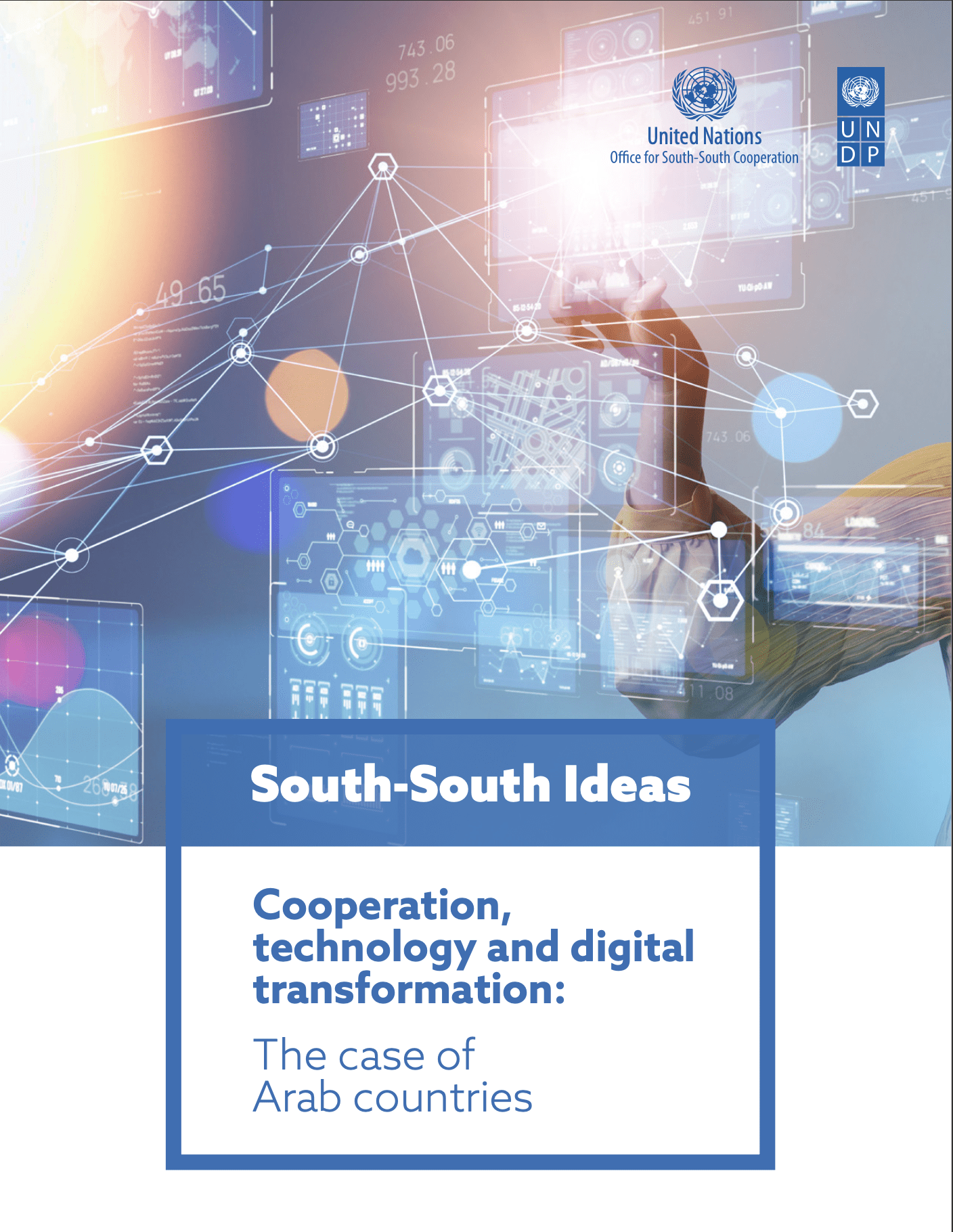
  • South-South Ideas: Cooperation, Technology and Digital Transformation – The Case of Arab Countries

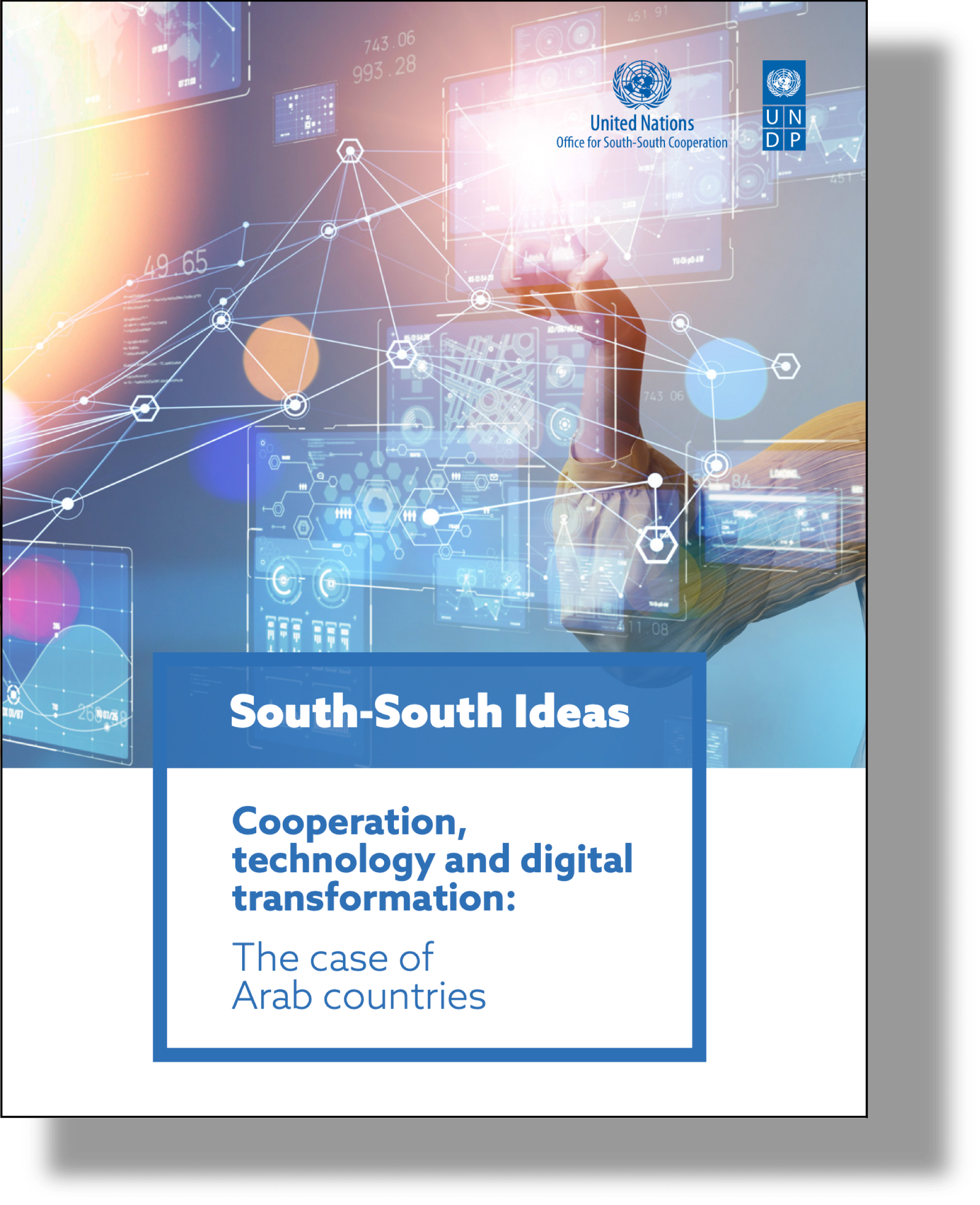
South-South Ideas: Cooperation, Technology and Digital Transformation – The Case of Arab Countries


This research work was carried out with financial and scientific support from the UNOSSC and UNDP under the South-South Global Thinkers initiative. The paper is authored by Professor Dr. Samia Satti Osman Mohamed Nour, Economic Research Forum (ERF) Research Fellow and Full Professor of Economics and Head of the Department of Economics at the University of Khartoum, Sudan.


This South-South Ideas paper offers a case study which discusses the use of information and communication technologies (ICT) and digital transformation in the Arab region. In particular, the paper explains potential opportunities and challenges and the positive and negative impacts of ICT and digital transformation in Arab countries and offers recommendations for South-South cooperation.

The paper uses descriptive and comparative approaches and employs the most recent secondary data obtained from the International Telecommunication Union (ITU) ICT Indicators database and other relevant sources. Trends in global ICT use and digital divides among world regions and the Arab region during the period 2005-2021 are shown.
Download PDF

Specifically, the paper’s results are drawn from information based on five observations: 1) increasing trends and the rapid diffusion of ICT indicators in the Arab region and world regions during the period 2015-2021; 2) the incidence of the global digital divide in ICT indicators between the Arab region and other world regions during the period 2005-2019; 3) increasing trends and widening digital divides in ICT indicators between the Arab region and other world regions during the period 2015-2021; 4) differences in the growth rate and diffusion of different modes of ICT indicators in the Arab region during the period 2005-2021; 5) incidence and trend of digital divides within the Arab region (defined by urban/ rural area 2015-2019.

ICT provides several opportunities for supporting economic development and sustainable development. In particular, ICT has the potential to support digitalization, digital transformation and digital economies in Arab countries, for instance, by supporting government and social services. This is demonstrated by several indices, including the Digital Index (DiGiX), the Digital Adoption Index (DAI) and the Euler Hermes Enabling Digitalization Index (EDI). On the other hand, ICT creates challenges for economic development and sustainable development when there is a digital divide. Substantial discrepancies were observed in digital indices, digitalization and digital transformation within the Arab region, with high performance reported in Arab Gulf high-income countries compared to Arab middle-income and low-income countries. This discrepancy is not surprising and can be explained in relation to corresponding substantial discrepancies in economic development, income levels and human development among Arab countries. The concentration of ICT diffusion is found in the Arab Gulf countries and there are wide disparities between these and other Arab countries with regard to the use of ICT (percentage of population accessing the internet, internet subscribers and users). The richest Arab Gulf countries, with the highest gross domestic product (GDP) per capita and better average years of schooling, have higher percentages of people accessing the internet and better opportunities for digitalization and digital transformation, while poorer Arab countries with a lower GDP per capita and less schooling have a correspondingly smaller percentage of inhabitants accessing the internet and poor opportunities for digitalization and digital transformation.

South-South cooperation in the use of ICTs has the potential to accelerate sustainable economic development. Examples already exist of Arab-Arab, China-Arab and Indian-Arab South-South cooperation in ICT. Existing regional initiatives in ICT and digitalization are contributing towards closing gaps in digital divides. Recommendations are provided at the end of the paper to further strengthen Arab- Arab and other South-South cooperation in ICT to address digital divides within and among Arab countries.
Connect with UNOSSC

Stay updated with the latest trends in South-South cooperation and access our vast repository of knowledge.

Copyright © UNOSSC/UNDP

Alliance Application Form

Submit an Expression of Interest and/or Demand Signal. UNOSSC reviews submissions on a rolling basis.

1. Official name of organization / institution / government entity (exclusions to apply) *
Organization logo
Maximum file size: 20 MB
2. Country *
3. Region *
4. SDG *
5. Partner category *
6. Website *
7. Brief description of your institution (max. 150 words) *
Name for the Lead *
Title for the Lead *
Email address for the Lead *
Name for the co-lead
Title for the co-lead
Email address for the co-lead
Section 3. Expression of Interest in the Alliance *
Additional information on proposed areas of engagement may be requested through the platform following initial review by the Alliance Secretariat.
Section 4. Due Diligence and Integrity Declaration *

Submission Note:

  • Submission of this Expression of Interest form does not automatically confer participation in the Alliance.
  • All submissions will be reviewed by the Alliance Secretariat, including basic eligibility screening and proportionate due diligence, as appropriate.
  • Participation in Alliance activities is determined based on relevance to articulated cooperation needs, alignment with Alliance principles, and integrity considerations.
  • Engagement under the Alliance is voluntary, non-binding, and facilitative in nature, and does not constitute funding approval, contractual commitment, or institutional membership.
  • The Alliance Secretariat may contact submitting entities for additional information or clarification during the review process.

Submission of Demand Form

Description of Demand

Indicate the type of support or cooperation requested through the Alliance.
Please briefly describe the challenge, gap, or priority. (Max. 300 words)

Thematic and Geographic Focus

Please indicate the main focus areas of your demand:

A. Thematic Areas (select up to three)
B. Geographic Focus (select all that apply)

Proposed Engagement Modalities

Please indicate how you would like to engage through the Alliance (select all that apply):

Expected Outcomes

Please indicate the main results you seek to achieve through this engagement. (Max. 200 words)
Examples:
• Capacity strengthened
• Partnerships established
• Sectoral or regional strategies co-developed
• Solutions piloted
• Knowledge generated
• Policies informed

Timeline and Readiness (if applicable)

1. Expected timeframe for engagement:
2. Current stage:

Additional Information

Please provide any additional information, documents, or links relevant to this submission.
(Max. 200 words or upload link)

Submission of Offer Form

Description of Contribution

Indicate the type of contribution your institution can provide and describe the expertise, resources, or solutions you may offer.
Please briefly describe your proposed contribution. (Max. 300 words)

Thematic and Geographic Focus

Please indicate the main focus areas of your interest:

A. Thematic Areas (select up to three)
B. Geographic Focus (select all that apply)

Proposed Engagement Modalities

Please indicate how you would like to engage through the Alliance (select all that apply):

Expected Outcomes

Please indicate the main results you aim to achieve through this engagement. (Max. 200 words)
Examples:
• Capacity strengthened
• Partnerships established
• Sectoral or regional strategies co-developed
• Solutions piloted
• Knowledge generated
• Policies informed

Timeline and Readiness (if applicable)

1. Expected timeframe for engagement:
2. Current stage:

Additional Information

Please provide any additional information, documents, or links relevant to this submission.
(Max. 200 words or upload link)

Organization Registration

Authentication & Due Diligence This prototype simulates identity verification, due diligence confirmation, and an authentication step before submission. *

First Name *
Last Name *
Email address *
Password *
Confirm Password *
Name of institution / organization *
Country / Region *
Organization Type *
Organization other *
Function / role *
Organization logo *
Maximum file size: 1 GB

Login

Login / email *
Password *
Remember me

Forgot password?

Connect form

Your name *
Email *
Organization / institution *
Job title / role *
Reason for connecting:
Short message

Scroll to Top