• Home
  • /
  • Publications
  • /
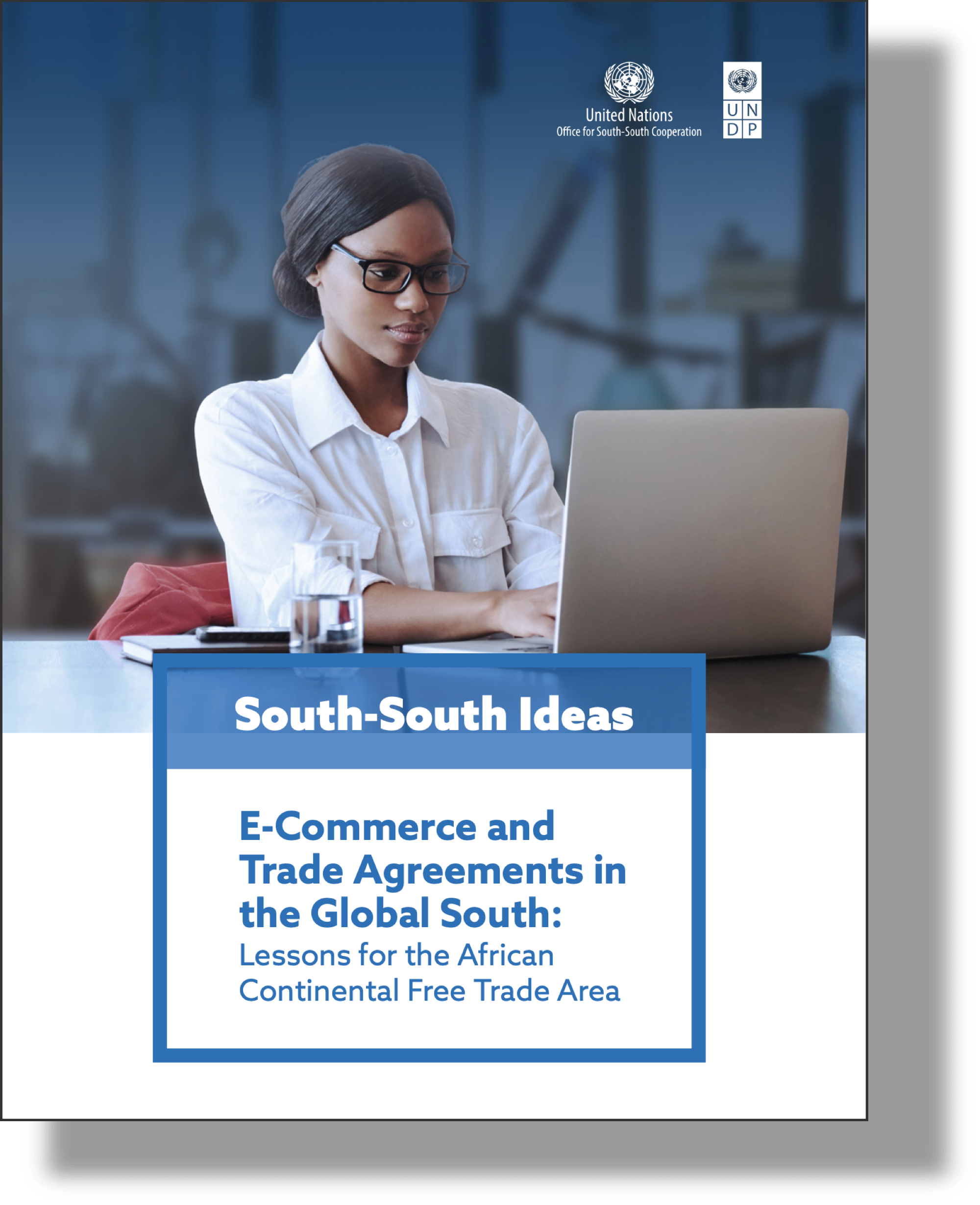
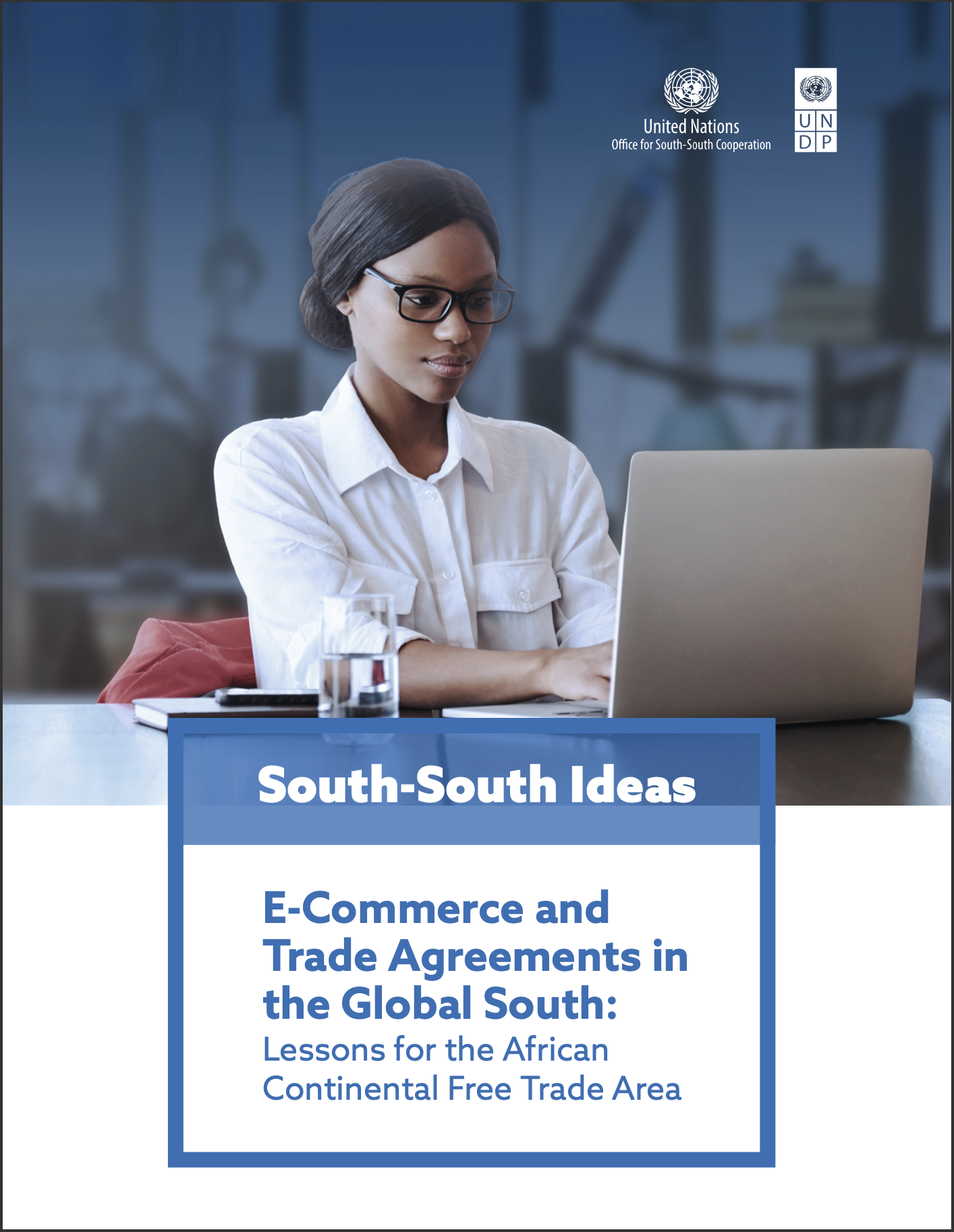
  • South-South Ideas: E-Commerce and Trade Agreements in the Global South – Lessons from the African Continental Free Trade Agreement

South-South Ideas: E-Commerce and Trade Agreements in the Global South – Lessons from the African Continental Free Trade Agreement


While digitalization has triggered the so-called “Fourth Industrial Revolution,” it has also exacerbated discrepancies in technological advancements between developed and developing nations, as well as urban and rural communities. Digital transformation has contributed to nation’s overall economic development with digital economies becoming a great contributor to growth in national Gross Domestic Product (GDP) and an upsurge in the importance of new business models, such as e-commerce and cross-border e-commerce.

At the global level, the World Trade Organization has taken steps to regulate cross-border e-commerce, establishing a dedicated ‘Joint Initiative on E-Commerce’ with over 80 members. Similarly, the United Nations has provided support, particularly to developing nations, through training and capacitation building, funding and other digitalization initiatives. eTrade Readiness Assessments led by the United Nations Conference on Trade and Development (UNCTAD) have identified challenges and opportunities to enhance e-commerce and provided policy recommendations to several governments, which will help understanding the current scenario in Africa.
Download PDF

Advances in infrastructure, logistics, online payment systems and favourable legislation suggest that further alignment could improve cooperation in cross-border e-commerce. Regionally, economic blocs have incorporated e-commerce related provisions aiming to create propitious environments that facilitate online business among and between their members. The Association of Southeast Asian Nations (ASEAN) has contributed greatly to the harmonization of laws to foster cross-border e-commerce and is regarded as the best practice on this topic as compared to other blocs in the global South. However, even within ASEAN, much can still be done, as was identified throughout the development of this paper.

Nationally, nations started incorporating e-commerce and cross-border e-commerce into their development agenda. Support from international organizations has provided them with additional guidance on the next steps to be taken. Tunisia, for instance, is one of the latest nations to have engaged with UNCTAD to further develop its digital economy through a series of programmes, which include the Easy Export initiative, Innovative Startups and Small and Medium Enterprises Project and amendments to its foreign exchange laws to enable e-trade.

This paper focuses on the African region because informal trade has grown in recent years despite constraints that have been identified. For example, in many African countries most online transaction payments are done through cash on delivery, and the delivery infrastructure particularly for cross-border e-commerce is not yet developed.

The African Continental Free Trade Area (AfCFTA), one of the latest agreements in the global South, promises to build economic strength in a market of over 1.3 billion people across over fifty nations. Efforts to advance trade relations among its members through e-commerce have the Digital Trade Protocol as its main pillar. However, unlike cross-border e-commerce provisions in other economic blocs, the Protocol does not have binding elements that offer a concrete roadmap for actionable results for market access.

The recommendations herein have as their main objective to suggest a progressive agenda to bolster cross-border e-commerce based on supra-national and national-level approaches. Proposed approaches include legal revisions to those policies that currently pose a barrier to cooperation, a simplified taxation scheme to be implemented by national customs bodies, implementation of a shared database containing country member e-commerce-related laws for easy access and knowledge sharing, and the future creation of an intra-bloc, online, cross-border marketplace that provides the necessary logistic services and digital payments for AfCFTA members.
Connect with UNOSSC

Stay updated with the latest trends in South-South cooperation and access our vast repository of knowledge.

Copyright © UNOSSC/UNDP

Alliance Application Form

Submit an Expression of Interest and/or Demand Signal. UNOSSC reviews submissions on a rolling basis.

1. Official name of organization / institution / government entity (exclusions to apply) *
Organization logo
Maximum file size: 20 MB
2. Country *
3. Region *
4. SDG *
5. Partner category *
6. Website *
7. Brief description of your institution (max. 150 words) *
Name for the Lead *
Title for the Lead *
Email address for the Lead *
Name for the co-lead
Title for the co-lead
Email address for the co-lead
Section 3. Expression of Interest in the Alliance *
Additional information on proposed areas of engagement may be requested through the platform following initial review by the Alliance Secretariat.
Section 4. Due Diligence and Integrity Declaration *

Submission Note:

  • Submission of this Expression of Interest form does not automatically confer participation in the Alliance.
  • All submissions will be reviewed by the Alliance Secretariat, including basic eligibility screening and proportionate due diligence, as appropriate.
  • Participation in Alliance activities is determined based on relevance to articulated cooperation needs, alignment with Alliance principles, and integrity considerations.
  • Engagement under the Alliance is voluntary, non-binding, and facilitative in nature, and does not constitute funding approval, contractual commitment, or institutional membership.
  • The Alliance Secretariat may contact submitting entities for additional information or clarification during the review process.

Submission of Demand Form

Description of Demand

Indicate the type of support or cooperation requested through the Alliance.
Please briefly describe the challenge, gap, or priority. (Max. 300 words)

Thematic and Geographic Focus

Please indicate the main focus areas of your demand:

A. Thematic Areas (select up to three)
B. Geographic Focus (select all that apply)

Proposed Engagement Modalities

Please indicate how you would like to engage through the Alliance (select all that apply):

Expected Outcomes

Please indicate the main results you seek to achieve through this engagement. (Max. 200 words)
Examples:
• Capacity strengthened
• Partnerships established
• Sectoral or regional strategies co-developed
• Solutions piloted
• Knowledge generated
• Policies informed

Timeline and Readiness (if applicable)

1. Expected timeframe for engagement:
2. Current stage:

Additional Information

Please provide any additional information, documents, or links relevant to this submission.
(Max. 200 words or upload link)

Submission of Offer Form

Description of Contribution

Indicate the type of contribution your institution can provide and describe the expertise, resources, or solutions you may offer.
Please briefly describe your proposed contribution. (Max. 300 words)

Thematic and Geographic Focus

Please indicate the main focus areas of your interest:

A. Thematic Areas (select up to three)
B. Geographic Focus (select all that apply)

Proposed Engagement Modalities

Please indicate how you would like to engage through the Alliance (select all that apply):

Expected Outcomes

Please indicate the main results you aim to achieve through this engagement. (Max. 200 words)
Examples:
• Capacity strengthened
• Partnerships established
• Sectoral or regional strategies co-developed
• Solutions piloted
• Knowledge generated
• Policies informed

Timeline and Readiness (if applicable)

1. Expected timeframe for engagement:
2. Current stage:

Additional Information

Please provide any additional information, documents, or links relevant to this submission.
(Max. 200 words or upload link)

Organization Registration

Authentication & Due Diligence This prototype simulates identity verification, due diligence confirmation, and an authentication step before submission. *

First Name *
Last Name *
Email address *
Password *
Confirm Password *
Name of institution / organization *
Country / Region *
Organization Type *
Organization other *
Function / role *
Organization logo *
Maximum file size: 1 GB

Login

Login / email *
Password *
Remember me

Forgot password?

Connect form

Your name *
Email *
Organization / institution *
Job title / role *
Reason for connecting:
Short message

Scroll to Top