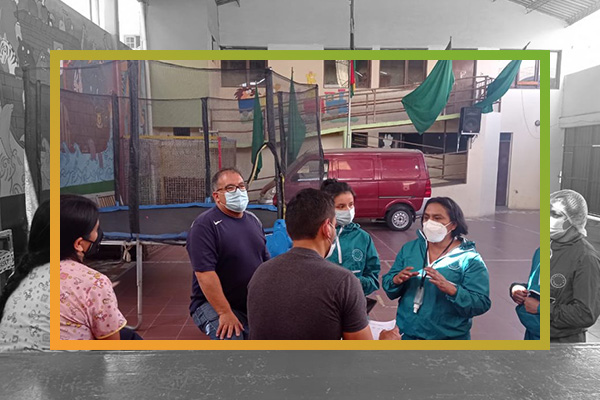
“In the Plurinational State of Bolivia, a woman’s work is never done until the family becomes a team.“
From the video produced by the project
The country is aware that it has a patriarchy problem. Unpaid domestic work is both undervalued and falls disproportionately on women (who on average complete 40 hours a week
versus 15 for men). Unemployment among women is higher than among men, and the barriers to both accessing and maintaining decent employment among low-income women can be insurmountable. Through various efforts, including the establishment of the Ministry of Cultures, Decolonization and Depatriarchalization, the Government of the Plurinational State of Bolivia has set out to reverse this inequality.
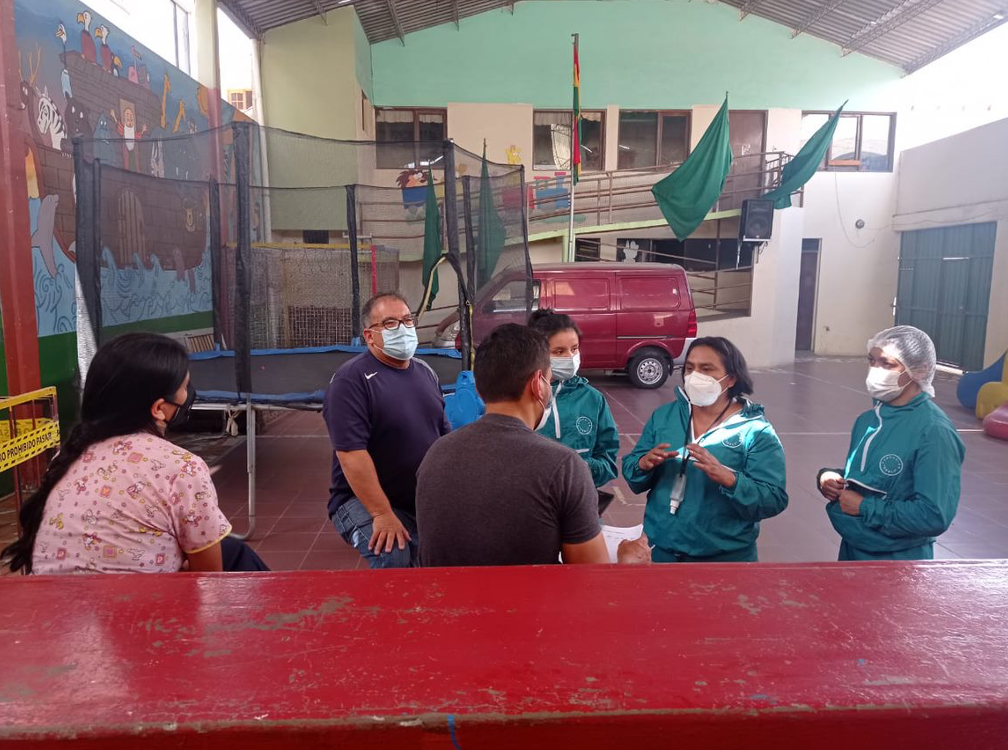
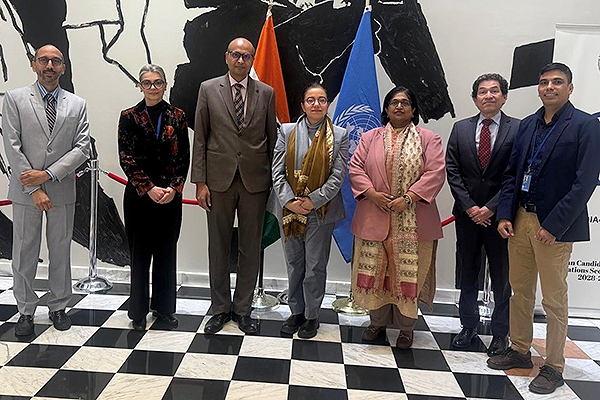
Project team members discuss the initiative with partners
A partnership between the Ministry of Development Planning and UNDP is taking a cradle-to-adulthood approach to improving women’s access to decent work, especially among low-income women. Supported by the India-UN Development Partnership Fund (India-UN Fund), the project focuses on four key areas. At the policy level is the Plurinational Care Law, which seeks to improve tools for early childhood development for those up to eight months old and living in the most vulnerable urban and peri-urban areas. Innovations in both early-childhood care and the training to promote gender equity are being incubated. Finally, the project is supporting the development of a model for childcare facility management.
While the project policy and development efforts will continue through the end of 2022, a social media campaign is already up and running. Under the slogan “The family as a team makes everything easier”, the campaign depicts humorous yet true-to-life examples to raise awareness and change expectations of the roles of women in family life.
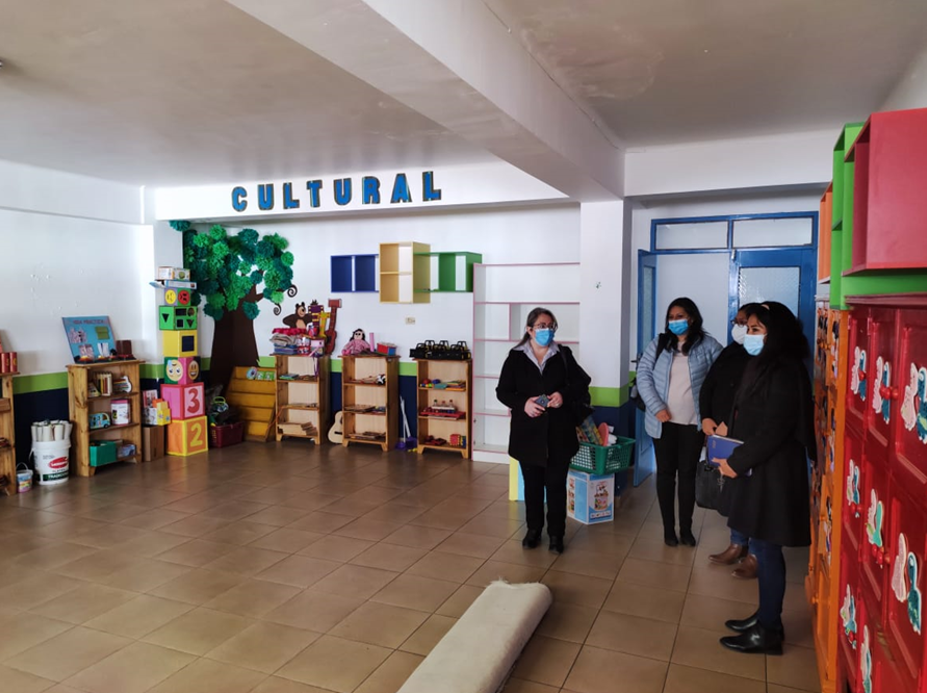
“This project will support a lot because it will improve the quality of life of our women. These women will have the opportunity to work knowing that their children will be well cared for.”
Ms. Miriam Gallardo, who supports the Tarija Municipal Government implementation of the programme.