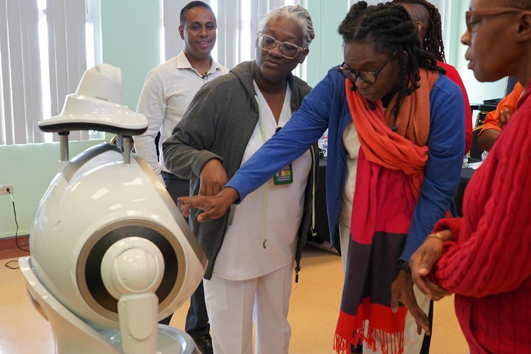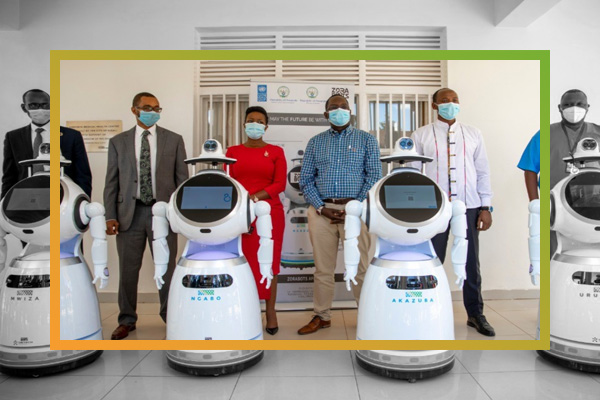
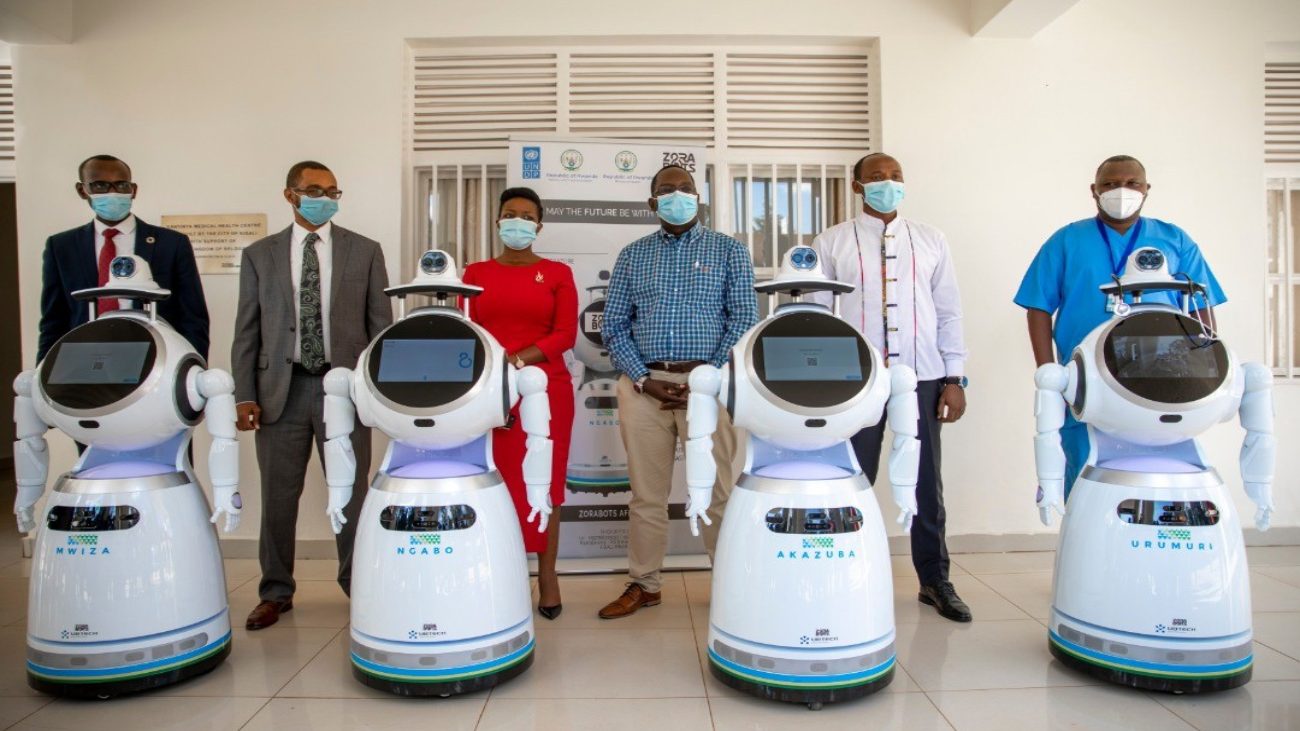
Thanks to this India-UN Fund project, robotics and telemedicine will enable doctors and nurses in Trinidad and Tobago to expand health care to the national population. This initiative brings opportunities for digital technology to have a transformational impact on the country’s public health system. Supported by the Ministry of Health and the Pan American Health Organization (PAHO), it is providing eight mobile health-care robots to public hospitals and facilitating the deployment of telemedicine services.
Mobile health-care robots will perform various tasks from simple medical procedures such as preliminary patient registration and evaluation of vital signs, to communication with patients, including persons with disabilities, migrants and refugees who speak a foreign language, through software with translation and accessible capabilities.
The introduction of the telemedicine services, which will benefit from the broad Internet and mobile network coverage in the country, will remotely and securely provide medical services to community members not wishing to expose themselves to face-to-face interactions during the pandemic.
These new technologies in the health-care system create the opportunity for access to new medical capabilities, notably where specialized providers are not available within communities, while also supporting the development of the capacities of health-care providers. For that reason, the project began by mapping the existing health-care capacities and making proposals for the creation of new ones.
The project has developed various tools for assessing the regulatory challenges to the roll-out of these outcomes, defining the digital environment needed for these technologies, and helping health institutions to assess their organizational and technical maturity in offering telemedicine services.
It is being undertaken in partnership with the University of Trinidad and
Tobago, which will propose the specifications for the health service robots and the infrastructure, technology and human resource requirements for their effective deployment.
The Ministry of Health fully endorses the project that will deliver a pilot telemedicine system; eight health-care robots that can register and screen health-centre patients, enabling personnel to devote more time to the neediest cases; 55,000 washable masks; and 50 hand hygiene stations. “The Ministry of Health looks forward to working with all stakeholders involved in taking this project forward,” Mr. Asif Ali, Permanent Secretary of the Ministry of Health, stated.
The project has had a promising beginning, with support from a range of stakeholders who are confident that the successful introduction of these new technologies will support the medical community and population of Trinidad and Tobago not only through the pandemic but also in years to come.