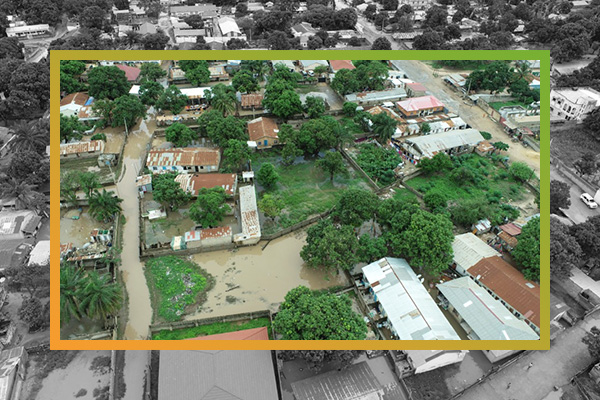
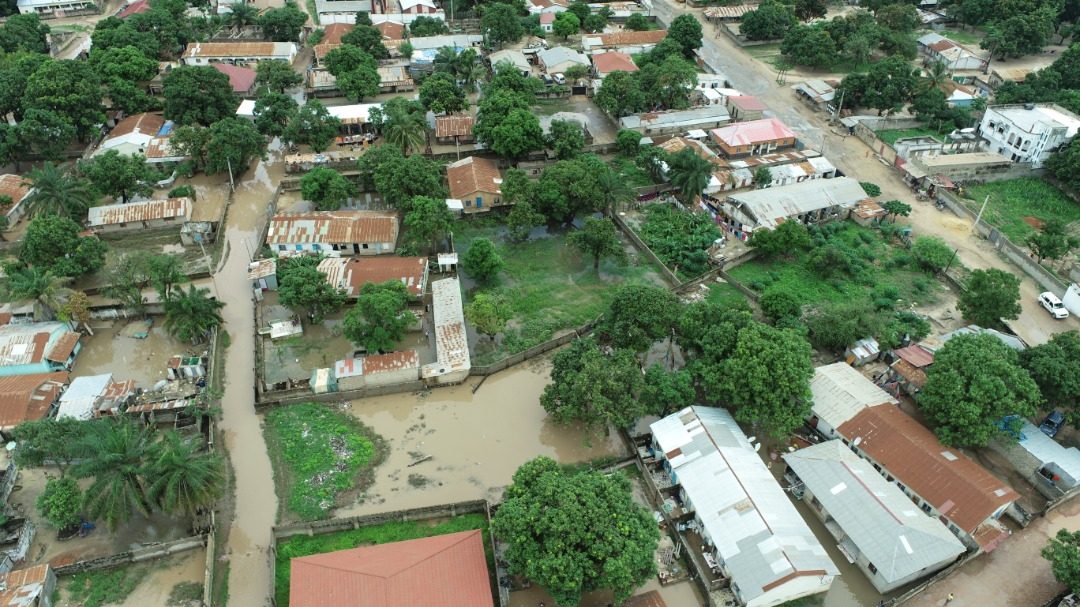
Flash floods have long posed challenges for the Gambia. They destroy crops, wash away homes and, if someone is unfortunate enough to live among the poorer communities or along its canals, they can bring up sewage and even crocodiles.
Flanked on three sides by Senegal and split seemingly in two by its namesake, the Gambia River as it pushes its way towards the Atlantic Ocean, the Gambia is the smallest country of mainland Africa and one of the poorest. With the climate crisis, flooding is no longer relegated to just the June-October rainy season but the kinds of technology needed to predict and therefore prepare for the deluges that regularly wreak havoc on its key agricultural and tourism industries have long been a financial impossibility.
Now, a unique South-South initiative that combines technical experience, professional training and community engagement is changing the dynamic. Through this initiative funded by the India-UN Fund and implemented by UNESCO in partnership with the National Disaster Management Agency, the Gambia has received the kind of state-of-the-art equipment and training that can change and save lives.
Increasing flood resilience through an early warning system is at the heart of the project. Beginning in 2019, the project started to develop a flood early warning system, designed as an open data-handling platform to provide forecasting and warning capabilities. Those efforts included the use of specialized meteorological data collection stations, professional development for effective analysis and response, and the installation of automatic weather stations and the training of Gambian hydrologists and meteorologists to gather and assess real-time data. Among the activities to ensure student and community engagement were a mobile app development competition with students and youth, and the development of a school curriculum and complementary workshop to integrate the curriculum into the early-childhood, lower and upper basic school curricula.
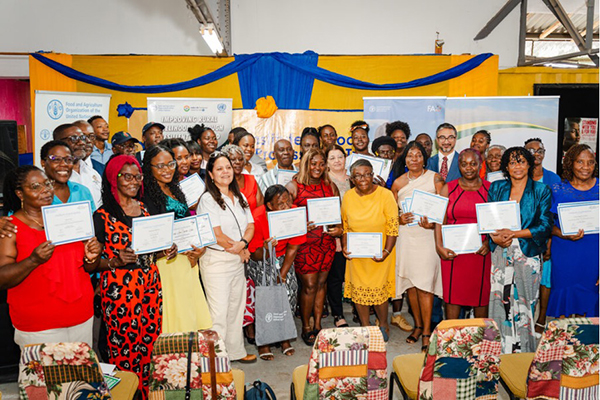
State-of-the-art technology is only as good as the people who manage and interpret the data that it produces, however, and it is here that the Gambia’s African neighbours have made the difference. The project supported the attendance of 15 technical staff working in disaster risk for a week-long training programme led by two experts from Kwame Nkrumah University of Science and Technology, ranked as the top university of Ghana and West Africa. During the programme, the technicians learned the key skills needed to feed information on terrain topologies into the flood early warning system to ensure up-to-date information for accurate flood forecasting.
The India-UN Fund also provided the National Disaster Management Agency with five drones, an increasingly vital tool in disaster-risk prevention and mitigation. The Agency engaged Senegal Flying Labs, a leading robotics and artificial intelligence technologies centre, to train and certify Gambian drone operators, and in one of the truest expressions of South-South cooperation, the centre continued its support outside its formal commitment.
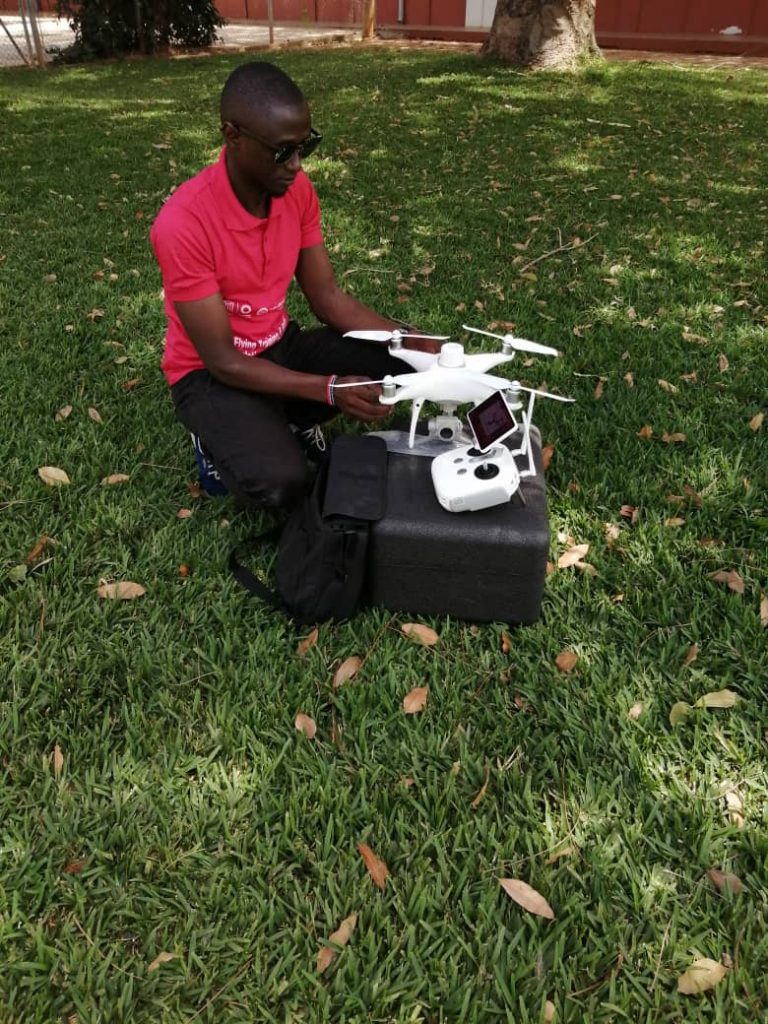
“The Senegal Flying Labs trained the drone operators and certified them as drone pilots. But we have gone beyond this by continuing to support the NDMA with advice on technical activities and even in drone maintenance, all without direct intervention from UNESCO but through the trust and friendship that developed during the training activity. This shows that we can strengthen weaker member States through regional organizations that can be encouraged to build friendship and trust to continue to build friendship and trust to continue to support weaker members in subject areas where they have comparative advantages in or are more advanced in terms of technical knowledge and skills,”
? Stated Mr. Anthony Maduekwe, UNESCO Programme Specialist for Natural Science in West Africa.