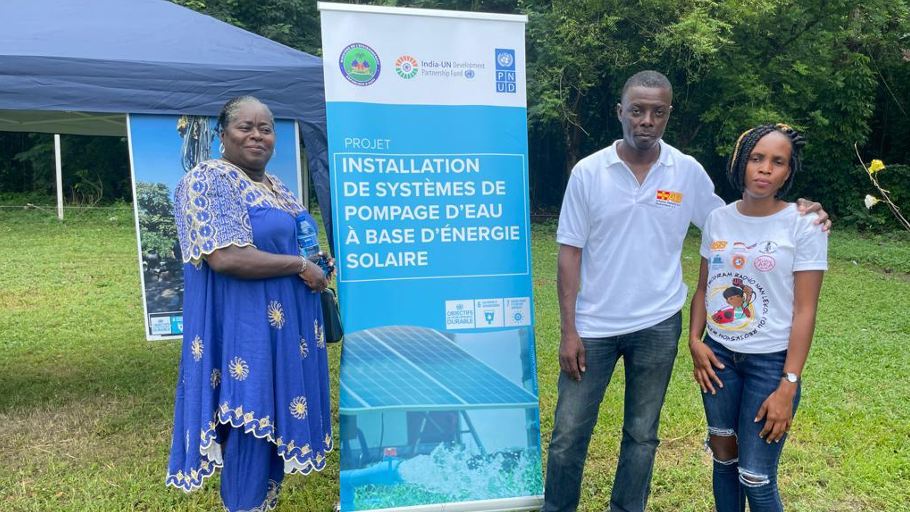
Access to water remains one of the main development challenges in Haiti where only 12 percent of the population of 11 million have access to drinking water in their homes, particularly in rural areas and poor neighbourhoods where vulnerable groups such as women, children, and the elderly are most affected.
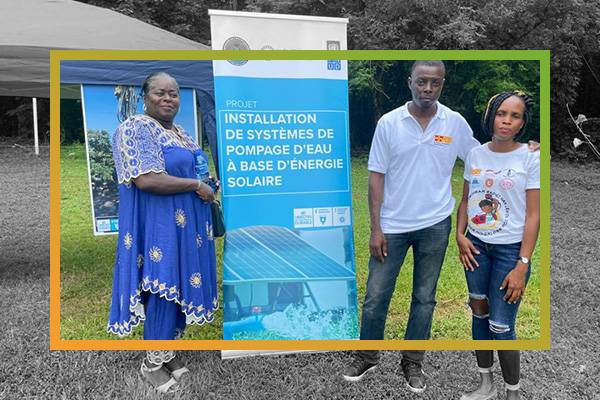
In response to these challenges, the South-South cooperation project “Improving access to water through the installation of solar pumping systems” was launched in July 2020, and financed by the India-UN Development Partnership Fund, which is managed by the United Nations Office for South-South Cooperation (UNOSSC). The project is being jointly implemented by the United Nations Development Programme (UNDP) and Haiti’s Ministry of the Environment.
After a 7.2 magnitude earthquake rattled Haiti in August 2021, the initiative became even more critical as over 80 aqueducts and water systems in the southern region of the island alone were destroyed. This meant that 60 percent of families in the area no longer had access to drinking water.
The India-UN Fund-supported project seeks to provide access to safe drinking water for 40,000 people, over half of whom are women and girls in the rural areas of Aquin and Baconnois, through the installation of 8 solar photovoltaic-based water pumping systems aimed to reduce greenhouse gas emissions. More than 20 women and men in these communities will receive vocational training on the operation and maintenance of the systems.
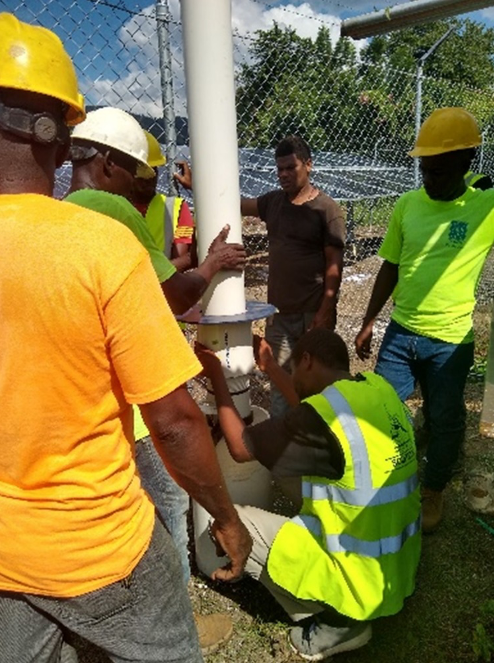
Despite the challenges caused by the earthquake and the COVID-19 pandemic, the project made important progress. The drilling of eight wells and the transportation of materials to the sites have been successfully completed. Three solar pumping stations are now set up and ready for commissioning. The new pumps will provide access to water and irrigation capacity to agricultural lands. Attention is being paid to the engagement of women, youth, and people with disabilities in the social management of water, particularly in the project areas that currently have no basic access to clean water and clean sanitation facilities.
Inclusive access to water
Odny Pierre-Louis, a beneficiary deeply involved in the implementation of the project and a member of the managing committee of the solar pumping systems, says that the project will have a big impact on the community. “Since Aquin is an arid area, the solar pumping systems will improve the lives of the entire population through food production. Don’t forget that water is life, that’s the reason for saying that.”
So far, over 40 women heads of household have been identified, consulted, and involved in the implementation of project activities. Some of these women are to be trained in the use of the solar pumping system.
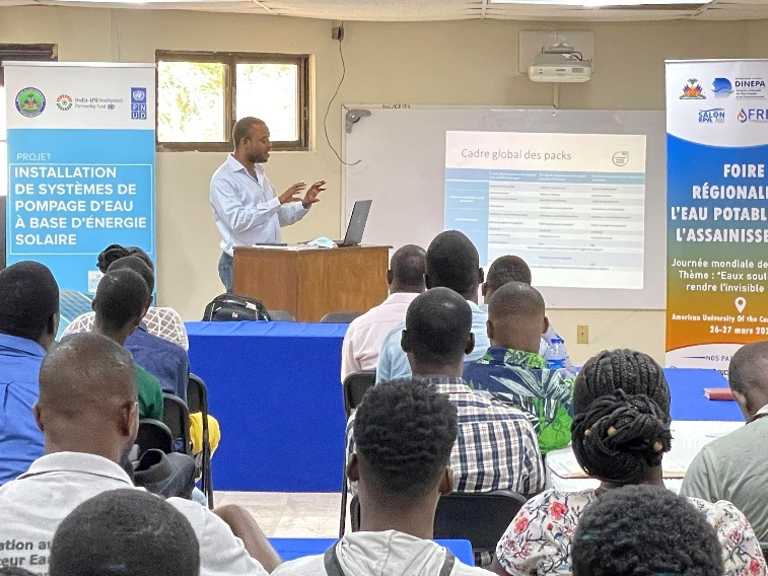
The project has facilitated trainings on water management in times of disaster and emergency response for 18 people, and has reached about 100 people through presentations and public awareness campaigns and participation in a regional fair on water and sanitation held in Les Cayes in March 2022.
To ensure its sustainability, the India-UN Fund-supported project has adopted two key approaches.
First, from the beginning, the project ensured the involvement and engagement of all stakeholders, especially people who would be operating the technology and were involved in planning and implementation. This swiftly led to the ownership of the project by local communities, particularly, the women selected for training and their families and friends.
Second, training women in the installation and maintenance of solar-powered pumping systems ensures that their knowledge and empowerment will be sustained over years and generations, with women training other women and sharing their expertise and achievements.
Key knowledge-sharing activities
Lessons from the project are being shared on an ongoing basis. In March 2022 an exchange forum offered local and national actors the opportunity to discuss the importance of groundwater management and use, and the challenges they are facing. It has been recognized as a good practice by the scientific and social participants at the workshops.
In addition, in June 2022 discussions on the challenges and opportunities of green energy for Haiti and the expected outputs of the project for rural communities in the country have been held during a symposium bringing together the private sector, public sector, and contributing partners. The project has been mentioned as an excellent and concrete example of how to put into action the Water-Energy-Food security nexus.
The project is also facilitating a South-South partnership between the Indian firm, Shakti Pumps, and Haitian technicians. The local partner firm implementing the project has created an effective knowledge transfer channel by which local technicians are acquiring skills for modeling and then replicating the solar water pumping project. Additionally, the participation of the project in the organization of the regional fair on water and sanitation, and the symposium on green energy contributed to promoting the impact of the existing cooperation between India and Haiti.
“The sharing of experiences among peers living similar realities will promote the acceptance and appropriation of new concepts and tools for international development. The solar water pumping project that we are implementing in Haiti is an example of the mutual solidarity between Haiti and India which UNDP has been proud to facilitate and implement. We hope that the results of this pilot initiative in the areas of agriculture and sanitation will also have a positive impact on other development areas, including poverty reduction, environment and gender equality.”
? Nick Rene Hartmann, UNDP Haiti Resident Representative,