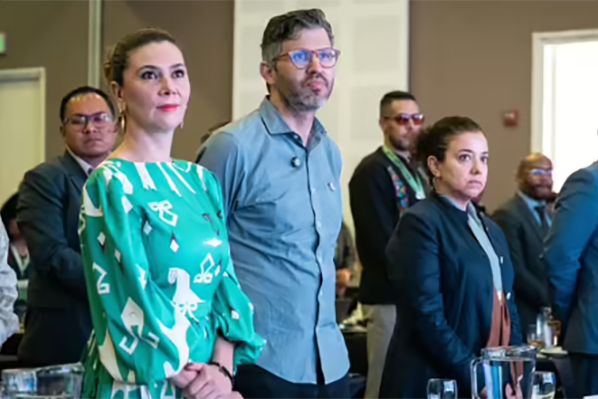
Countries in Latin America have championed South-South and triangular cooperation not only for sustainable development (particularly through regional integration and cooperation), but also for deepening relations with each other and with other regions. Agencia Presidencial de Cooperación Internacional de Colombia (APC Colombia), in close collaboration with the Ministry of Foreign Affairs (MOFA) of Colombia, convened parallel events and hosted the celebration of the South-South Cooperation Day in Colombia 10-12 Septmeber, in its capacity as Pro-Tempore President of the Community of Latin America and the Caribbean States (CELAC) and as the representative of the Group of Latin American and Caribbean Countries (GRULAC) at the UN High-Level Committee on South-South Cooperation (serving as Vice-Chair of the HLC Bureau).
The proceedings brought together government officials (vice ministers, ambassadors, directors of cooperation) among other development partners from more than 30 countries in Asia, Eurasia, Africa, and Latin America.
Convened under the theme of “Our North is the South,” the three-days of events brought together partners of Southern-led development cooperation, providing support that poses no burden; channeling innovative, locally-owned solutions to a wide range of challenges; and ensuring mutual benefits as well as deepening solidarity between partners.
Colombia Showcases Leadership in South-South and Triangular Cooperation at South-South Cooperation Day Commemoration
Opening the event, Dima Al-Khatib, Director of the United Nations Office for South-South Cooperation (UNOSSC), highlighted the region’s dynamic evolution. She noted that many countries historically seen as recipients of aid, including Colombia, are now among the world’s most vibrant economies and active development partners.
“Previously seen as recipients of aid, these countries have been transforming to become new development partners,” said Director Al-Khatib. She emphasized that Colombia exemplifies this transformation by addressing its development challenges – often during difficult periods – and emerging with strengthened, home-grown capacities. These capacities now enable Colombia and other nations in the region to play increasingly prominent roles in shaping regional agendas and defining their own development pathways.
Eleonora Betancur González, Director General of APC Colombia, echoed this sentiment, noting Colombia’s leading position as the largest implementer of bilateral South-South cooperation initiatives in Latin America. Since 2010, Colombia has led more than 1,400 initiatives spanning areas such as sustainable agriculture, energy transition, culture, and peacebuilding.
“This event was designed as a space for dialogue on solutions that deepen peace, close development gaps, and advance sustainable development,” the Director General said, underscoring the importance of collaboration in addressing shared challenges.
Vice Minister Mauricio Jaramillo Jassir stressed the need to ground international cooperation in local realities. “The best way to talk about international cooperation is by starting with what happens in the territories,” he said. “We cannot reach communities without listening and gathering their expectations about what our diplomacy should be… This is the essence of community diplomacy: building foreign policy based on the voices, needs, and knowledge of the people.”
The commemoration in Colombia highlighted the region’s pivotal role in advancing the 2030 Agenda for Sustainable Development through innovative South-South and triangular partnerships. As countries like Colombia continue to step into leadership roles, they demonstrate how locally driven solutions can create meaningful global impact, bridging gaps and fostering cooperation across regions.
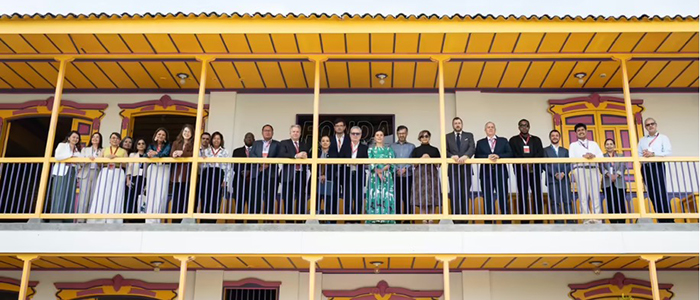
GRULAC Countries Discuss South-South and Triangular Cooperation in Colombia Roundtable
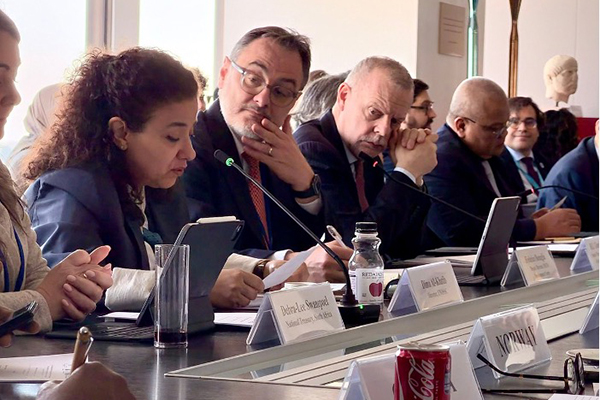
A high-level roundtable brought together representatives from the Group of Latin American and Caribbean Countries (GRULAC) to explore how South-South and triangular cooperation can advance regional development priorities. The Community of Latin American and Caribbean States (CELAC), a regional intergovernmental mechanism of 33 member states, was created in 2011 to provide a unified voice and structured approach to political dialogue, cooperation, and regional integration. CELAC facilitates cooperation in areas ranging from social development and education to energy, finance, family farming, culture, the environment, and nuclear disarmament.
GRULAC, comprising all Latin American and Caribbean countries, plays a key role in consensus-building on regional priorities. Its highest-level meetings are typically held at the Ambassadorial level and convened to address pressing regional issues, including in multilateral processes in Geneva, Rome, Vienna, and New York. Guyana currently chairs GRULAC.
The Colombia roundtable highlighted the mandate and functions of the UN General Assembly High-Level Committee on South-South Cooperation and the UN Office for South-South Cooperation (UNOSSC), providing a platform for GRULAC countries to share insights and recommendations. Participants discussed opportunities for leveraging South-South and triangular partnerships to support regional development objectives, enhance integration, and foster sustainable solutions tailored to the unique challenges and aspirations of Latin America and the Caribbean.
The event underscored Colombia’s active role in promoting South-South cooperation in the region, reflecting its growing position as a development partner and facilitator of international collaboration.
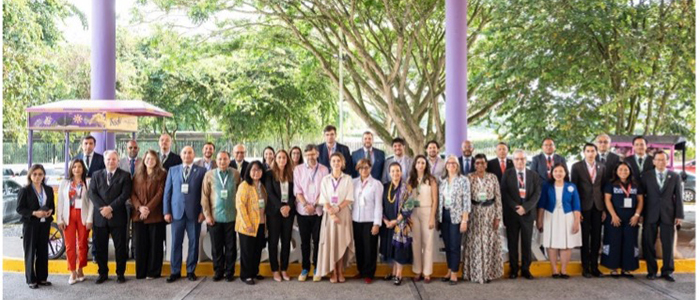
Emerging Development Partners Network Holds Second Annual Meeting in Colombia
The Emerging Development Partners (EDP) Network convened its second annual meeting in Colombia, bringing together countries from the Global South that are increasingly taking leadership roles in development cooperation. The gathering provided a platform for peer-to-peer dialogue, knowledge sharing, and collaboration to advance South-South and triangular cooperation across the region.
The meeting comes at a time when international cooperation faces “significant limitations,” with Official Development Assistance (ODA) declining while transboundary development challenges – such as climate change – grow, and geopolitical tensions strain traditional partnerships. Against this backdrop, countries whose economies have expanded in recent decades are stepping forward as new actors in economic, social, and environmental development arenas.
The EDP Network, first established in the Asia-Pacific region with support from UNESCAP, now serves as a platform for fostering collaboration among emerging development partners. The Colombia meeting introduced regional countries to the Network’s members, its various pillars of work, and strategies for advancing shared development priorities. Key objectives included developing a common agenda, identifying mechanisms for effective collaboration, and charting a roadmap to scale South-South and triangular cooperation initiatives.
EDP Network members include the Indonesian Agency for International Development (Indonesian AID); Thailand International Cooperation Agency (TICA); Technical Cooperation Council of the Philippines (TCCP); Azerbaijan International Development Agency (AIDA); Kazakhstan Agency of International Development (KazAID); and the Turkish Cooperation and Coordination Agency (TİKA). Key partners of the Network include the China International Development Cooperation Agency (CIDCA); Japan International Cooperation Agency (JICA); and the Deutsche Gesellschaft für Internationale Zusammenarbeit (GIZ).
The event underscored the growing influence of emerging development partners in shaping innovative, collaborative approaches to global development, demonstrating the potential of South-South and triangular cooperation to respond to complex development challenges effectively.
Read more:
SEGIB participated in the commemoration of the International Day for South-South Cooperation
Presa Latina: Colombia closes international event on South-South cooperation
Radiosurco: International event on South-South cooperation celebrated in Colombia