• Home
  • /
  • BAPA+40
  • /
  • Social Protection Systems – The case of Kenya (2019)

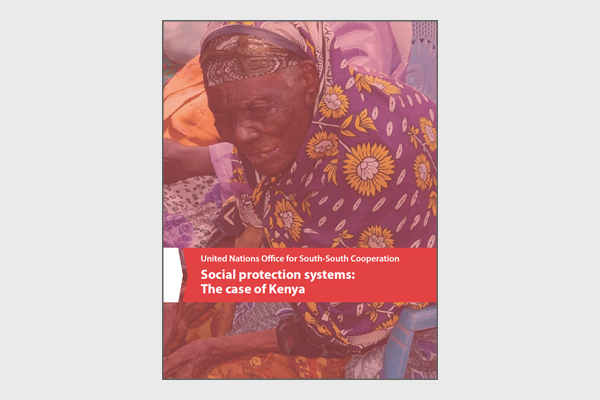
Social Protection Systems – The case of Kenya (2019)


For centuries, Africans have relied on their communities to meet their material, social and spiritual needs. Social Protection has been perceived through these lenses in rural areas in many African Countries. This continues to be the case. The modernization era that followed the post-colonial State has gradually introduced ideas of Social Protection based on a national scheme. Kenya was one of those countries in Africa that developed legislation on National Social Protection very early after independence. This was through the creation of the and the National Social Security Fund in 1965 and the National Hospital Insurance Fund in 1967. The Structural Adjustment Programs of the late 1980s and early 1990s however affected several countries in the sector of social protection. Government expenditure on social sectors dropped; many Africans became vulnerable and income and access to basic health severely decreased. Africans in urban areas were caught between the ‘lost paradise’ of community solidarity and the failing common national solidarity systems. Discussions around the need for social and human dimensions in the ‘triumphant’ capitalist era, gave some impetus to some progressive leaders in the South. President Lula of Brazil, by developing policies that catered to social sectors proved to the contrary that sound economic policies accommodate if not benefit from social and humane policies. Many African countries felt emboldened by the success of the Brazilian model and sent delegations to Brazilia to learn from their experience; South-South Cooperation at its best. Kenya embraced the fever and mood of the revival of social protection ideals to rethink, reenergize and modernize its social protection policy framework. It has been, in Africa, at the fore-front of this silent revolution of ‘national solidarity for national prosperity’. The Kenyan model of Social Protection is adapting and constantly integrating new dimensions. The latest is the current piloting of the Universal Basic Income experiment and more importantly the collaboration between the government and the private sector. This publication of the Kenyan model aims at sharing with other countries of the South what can and cannot work, considering several constraints common but also unique to several African countries. Our hope in supporting this work is that countries will take one or more aspects of this experience and possibly develop a better model for their own people.
ABOUT

Terms of Service

Privacy Policy

Disclosures

RESOURCES

Terms of Service

Privacy Policy

Disclosures

ENGAGE

Terms of Service

Privacy Policy

Disclosures

Copyright © UNOSSC/UNDP

wpChatIcon
wpChatIcon

Alliance Application Form

Submit an Expression of Interest and/or Demand Signal. UNOSSC reviews submissions on a rolling basis.

1. Official name of organization / institution / government entity (exclusions to apply) *
2. Country *
3. Region *
4. SDG *
Secondary SDG *
5. Partner category *
6. Website *
7. Brief description of your institution (max. 150 words) *
Name for the Lead *
Title for the Lead *
Email address for the Lead *
Name for the co-lead
Title for the co-lead
Email address for the co-lead
Section 3. Expression of Interest in the Alliance *
Additional information on proposed areas of engagement may be requested through the platform following initial review by the Alliance Secretariat.
Section 4. Due Diligence and Integrity Declaration *

Submission Note:

  • Submission of this Expression of Interest form does not automatically confer participation in the Alliance.
  • All submissions will be reviewed by the Alliance Secretariat, including basic eligibility screening and proportionate due diligence, as appropriate.
  • Participation in Alliance activities is determined based on relevance to articulated cooperation needs, alignment with Alliance principles, and integrity considerations.
  • Engagement under the Alliance is voluntary, non-binding, and facilitative in nature, and does not constitute funding approval, contractual commitment, or institutional membership.
  • The Alliance Secretariat may contact submitting entities for additional information or clarification during the review process.

Submission of Demand Form

Description of Demand

Indicate the type of support or cooperation requested through the Alliance.
Please briefly describe the challenge, gap, or priority. (Max. 300 words)

Thematic and Geographic Focus

Please indicate the main focus areas of your demand:

A. Thematic Areas (select up to three)
B. Geographic Focus (select all that apply)

Proposed Engagement Modalities

Please indicate how you would like to engage through the Alliance (select all that apply):

Expected Outcomes

Please indicate the main results you seek to achieve through this engagement. (Max. 200 words)
Examples:
• Capacity strengthened
• Partnerships established
• Sectoral or regional strategies co-developed
• Solutions piloted
• Knowledge generated
• Policies informed

Timeline and Readiness (if applicable)

1. Expected timeframe for engagement:
2. Current stage:

Additional Information

Please provide any additional information, documents, or links relevant to this submission.
(Max. 200 words or upload link)

Submission of Offer Form

Description of Contribution

Indicate the type of contribution your institution can provide and describe the expertise, resources, or solutions you may offer.
Please briefly describe your proposed contribution. (Max. 300 words)

Thematic and Geographic Focus

Please indicate the main focus areas of your interest:

A. Thematic Areas (select up to three)
B. Geographic Focus (select all that apply)

Proposed Engagement Modalities

Please indicate how you would like to engage through the Alliance (select all that apply):

Expected Outcomes

Please indicate the main results you aim to achieve through this engagement. (Max. 200 words)
Examples:
• Capacity strengthened
• Partnerships established
• Sectoral or regional strategies co-developed
• Solutions piloted
• Knowledge generated
• Policies informed

Timeline and Readiness (if applicable)

1. Expected timeframe for engagement:
2. Current stage:

Additional Information

Please provide any additional information, documents, or links relevant to this submission.
(Max. 200 words or upload link)

Organization Registration

Authentication & Due Diligence This prototype simulates identity verification, due diligence confirmation, and an authentication step before submission. *

First Name *
Last Name *
Email address *
Password *
Confirm Password *
Name of institution / organization *
Country / Region *
Organization Type *
Organization other *
Function / role *
Organization logo *
Maximum file size: 1 GB

Login

Login / email *
Password *
Remember me

Forgot password?

Connect form

Your name *
Email *
Organization / institution *
Job title / role *
Reason for connecting:
Short message

Scroll to Top