What Do We Know About Exchange for Development? (Norec, 2019)


This report by Norec does a cross-section of most external reports commissioned by Norec over the last 20 years to evaluate and refine its work models and approaches. It focuses in particular on the concept of learning organisations. It aims to summarize the success factors needed to develop institutional knowledge through the use of the NOREC participant exchange program. It is based on a desk review of NOREC source documents, especially the evaluations commissioned by NOREC since 2002, but also including user surveys and annual reports.The initial section traces the development of the review process, the issues raised and how NOREC responded. Four areas are then considered in greater depth to identify key areas of learning arising from the body of knowledge produced.

The main characteristics shared by organizations or partnerships that enable learning were found to be the development and implementation of policies, systems and processes which ensure effective planning of exchanges; matching of participants to the skills and exchange requirements; the capacity and matching of partners; and their shared values and shared commitment amongst their leadership.
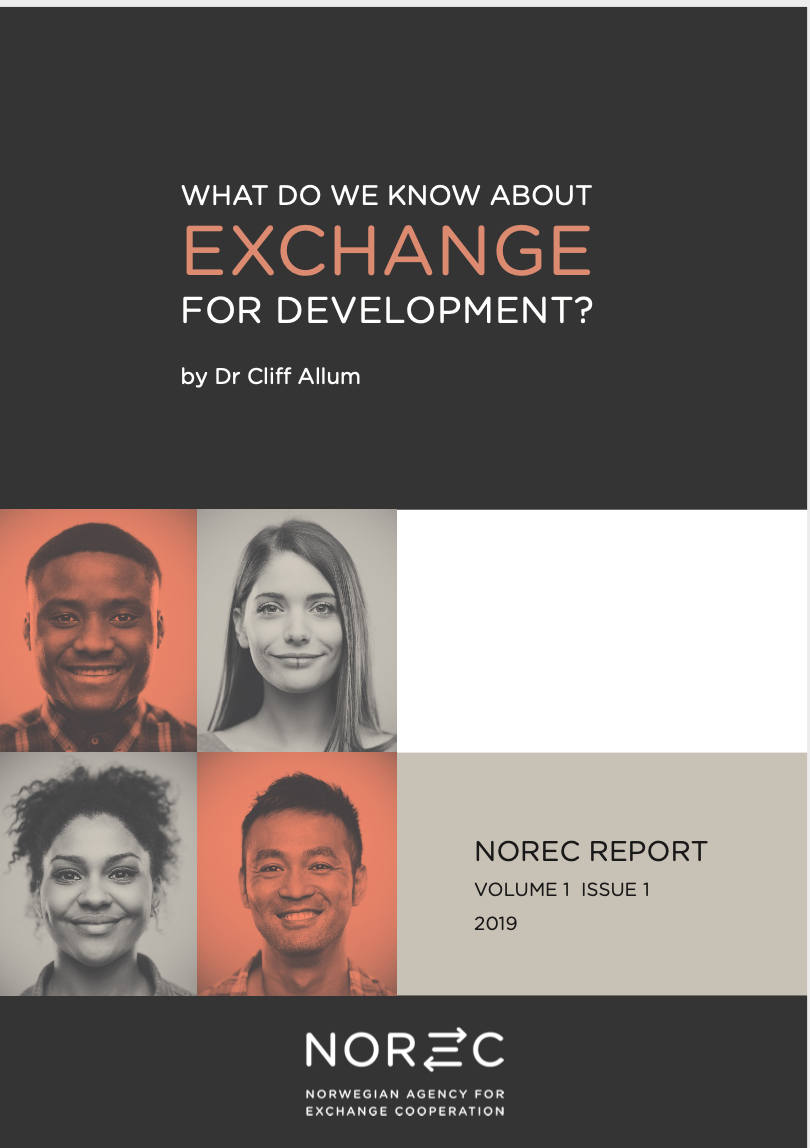
                Download PDF.
In respect of partner learning, this review found differences between the experiences in Norway and in the South in respect of hosting participants. While in both situations policies, systems and processes were important, the potential for learning from exchanges in Norway is not always realized and where successful appears to be linked to how hosting takes place beyond the workplace; while South-South models were more successful, benefiting from more balanced power dynamics, directly shared values and a focus on inter and intra organizational networks. The NOREC model has historically recruited participants from both within and outside partner organizations. It is concluded that the level of externally recruited participants affected the potential learning of sending partners from their returning participants. Directionality also appeared to be important with South-South embracing a higher level of employee participants and using network-based partner models, but there was also evidence of high staff turnover on return which has a negative effect. Post-placement support and commitment to the program and appropriate programme models that facilitate exchange alongside partner capacity were key factors in retaining participants. Overall, the paper concludes that there is a significant body of knowledge that has provided important learning opportunities for NOREC which the organization has positively addressed. It is recognized that while earlier reviews focused on how the exchange model operated and could be improved, later reviews have emphasized the programmatic level focusing on sectoral models and effective typologies of South-South exchanges. More recently, there has been an increasing focus on the contribution and impact of the exchange model at the different levels at which NOREC objectives are set. This has meant attention has been drawn to the potential tension in the model as to whether the focus is more on individuals, partners, or the wider community. This review suggests that embracing a ‘whole systems’ model could assist in engaging with these multi-layers simultaneously.

Connect with UNOSSC

Stay updated with the latest trends in South-South cooperation and access our vast repository of knowledge.

Copyright © UNOSSC/UNDP

Alliance Application Form

Submit an Expression of Interest and/or Demand Signal. UNOSSC reviews submissions on a rolling basis.

1. Official name of organization / institution / government entity (exclusions to apply) *
Organization logo
Maximum file size: 20 MB
2. Country *
3. Region *
4. SDG *
5. Partner category *
6. Website *
7. Brief description of your institution (max. 150 words) *
Name for the Lead *
Title for the Lead *
Email address for the Lead *
Name for the co-lead
Title for the co-lead
Email address for the co-lead
Section 3. Expression of Interest in the Alliance *
Additional information on proposed areas of engagement may be requested through the platform following initial review by the Alliance Secretariat.
Section 4. Due Diligence and Integrity Declaration *

Submission Note:

  • Submission of this Expression of Interest form does not automatically confer participation in the Alliance.
  • All submissions will be reviewed by the Alliance Secretariat, including basic eligibility screening and proportionate due diligence, as appropriate.
  • Participation in Alliance activities is determined based on relevance to articulated cooperation needs, alignment with Alliance principles, and integrity considerations.
  • Engagement under the Alliance is voluntary, non-binding, and facilitative in nature, and does not constitute funding approval, contractual commitment, or institutional membership.
  • The Alliance Secretariat may contact submitting entities for additional information or clarification during the review process.

Submission of Demand Form

Description of Demand

Indicate the type of support or cooperation requested through the Alliance.
Please briefly describe the challenge, gap, or priority. (Max. 300 words)

Thematic and Geographic Focus

Please indicate the main focus areas of your demand:

A. Thematic Areas (select up to three)
B. Geographic Focus (select all that apply)

Proposed Engagement Modalities

Please indicate how you would like to engage through the Alliance (select all that apply):

Expected Outcomes

Please indicate the main results you seek to achieve through this engagement. (Max. 200 words)
Examples:
• Capacity strengthened
• Partnerships established
• Sectoral or regional strategies co-developed
• Solutions piloted
• Knowledge generated
• Policies informed

Timeline and Readiness (if applicable)

1. Expected timeframe for engagement:
2. Current stage:

Additional Information

Please provide any additional information, documents, or links relevant to this submission.
(Max. 200 words or upload link)

Submission of Offer Form

Description of Contribution

Indicate the type of contribution your institution can provide and describe the expertise, resources, or solutions you may offer.
Please briefly describe your proposed contribution. (Max. 300 words)

Thematic and Geographic Focus

Please indicate the main focus areas of your interest:

A. Thematic Areas (select up to three)
B. Geographic Focus (select all that apply)

Proposed Engagement Modalities

Please indicate how you would like to engage through the Alliance (select all that apply):

Expected Outcomes

Please indicate the main results you aim to achieve through this engagement. (Max. 200 words)
Examples:
• Capacity strengthened
• Partnerships established
• Sectoral or regional strategies co-developed
• Solutions piloted
• Knowledge generated
• Policies informed

Timeline and Readiness (if applicable)

1. Expected timeframe for engagement:
2. Current stage:

Additional Information

Please provide any additional information, documents, or links relevant to this submission.
(Max. 200 words or upload link)

Organization Registration

Authentication & Due Diligence This prototype simulates identity verification, due diligence confirmation, and an authentication step before submission. *

First Name *
Last Name *
Email address *
Password *
Confirm Password *
Name of institution / organization *
Country / Region *
Organization Type *
Organization other *
Function / role *
Organization logo *
Maximum file size: 1 GB

Login

Login / email *
Password *
Remember me

Forgot password?

Connect form

Your name *
Email *
Organization / institution *
Job title / role *
Reason for connecting:
Short message

Scroll to Top