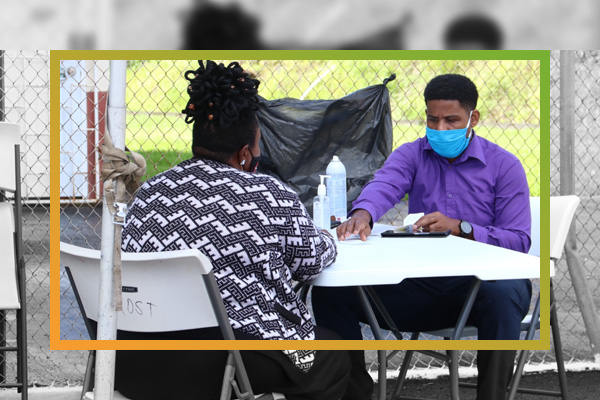
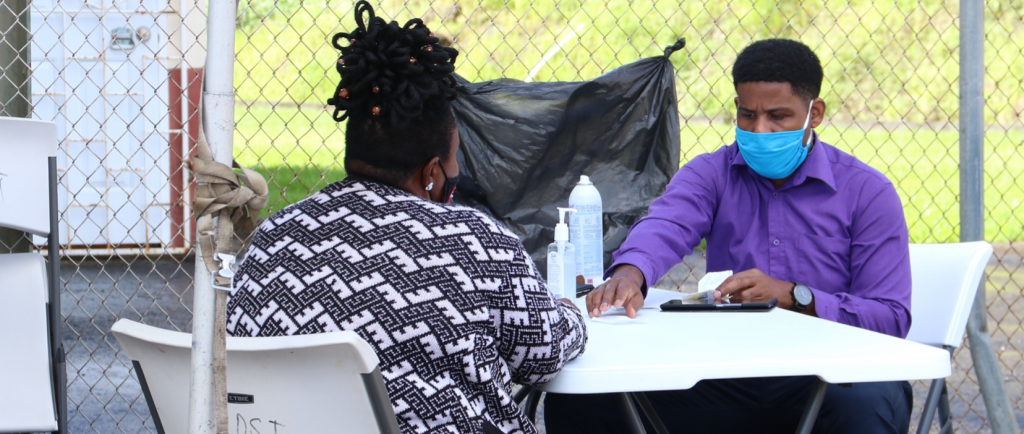
As quickly as the COVID-19 pandemic turned the world upside down, the Government of Saint Lucia, with the support of the India-UN Fund and other partners, launched a programme to increase the number of recipients of the national Public Assistance Programme. The aim of the year-long initiative, titled Human Security and Sustainable Development: A COVID-19 Response, was to deliver cash transfers to more than 3,000 women, men and children to provide access to food and other essential needs for a six-month period. The programme was implemented by the World Food Programme (WFP).
“WFP’s support and that of its partners come at an important time. For the Government of Saint Lucia, meeting the needs of those most affected by the pandemic is a priority. We want to ensure that Saint Lucians have the opportunity to prioritize food, health supplies, educational materials for children and other needs in this unprecedented time.”
Hon. Lenard Peter Montoute, Minister of Equity, Social Justice, Local Government and Empowerment
Saint Lucia’s proactive efforts to mitigate the spread of COVID-19, including border closures that shut down tourism, its principal industry representing 65 per cent of gross domestic product, took a toll on the socioeconomic health of the country and its people, and the impact was swift. Within a month of implementing the border and other restrictions, a rapid assessment by WFP revealed that food prices had escalated 45 per cent, 21 per cent of people were skipping meals or reducing how much they ate, and an estimated 53 per cent of workers had either lost their jobs or had their salaries reduced. The mood of the people was equally grim, with 94 per cent predicting a negative impact on their livelihoods.
With the resources from the India-UN Fund, the Government expanded the number of people receiving public assistance
by 2,983 individuals from 794 households across the country. Actively seeking to alleviate the impact among disabled and vulnerable individuals, the Government also was able to top up assistance being provided to 283 people living with HIV (from 79 households), bringing the total number of people benefiting from the support to 3,221.
Approximately 86 per cent of recipients used their cash primarily for food. The next –most– popular categories were covering utility bills and medical expenditures. Following the distribution of the funds, food consumption in 90 per cent of households rebounded to acceptable levels. For Shanet, a single mother of seven and small-scale farmer, the Government support was a lifeline for her and her children. “When the Government gives help, I do what the children need. I get them what they need, not what they want; I can maintain food supplies and things they need for school. They are grateful for it,” she said.
Shanet was not the only Saint Lucian grateful for the support. A post-distribution survey indicated a 92 per cent satisfaction rate among recipients. This project was instrumental in expanding the number of households assisted under the public programme. This, in turn, helped the Government to reach an additional 1,000 households eligible for longer-term funding as part of a separate multi-donor initiative.
This project also complemented another India-UN Fund project with the Ministry of Health and UNDP to bring two ventilators, along with vital protective equipment, to support the country’s COVID-19 response and reduce the impact that subsequent waves could have on the country.