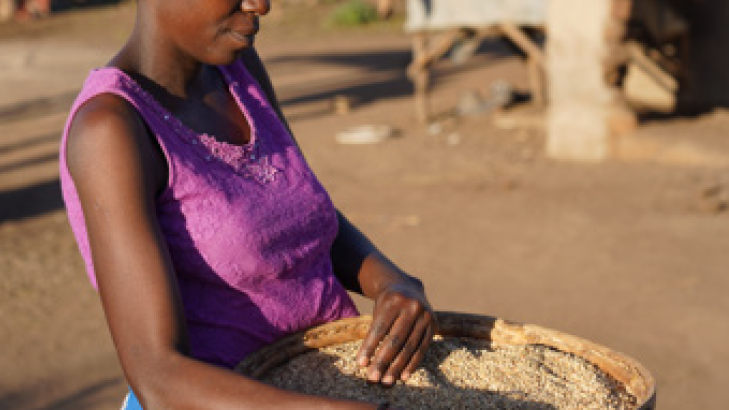
Climate-smart agriculture is reducing food waste and giving women hope in Zimbabwe


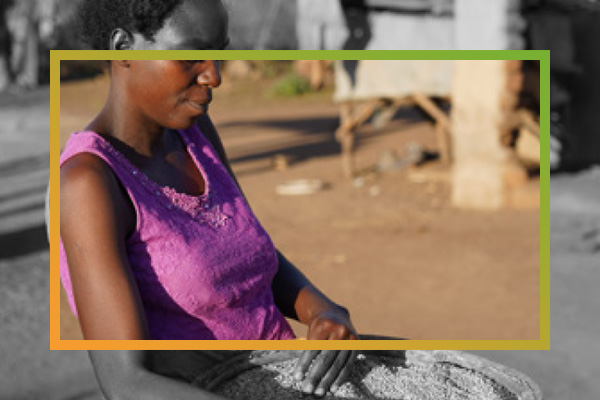
Munyangani managed to harvest her crop while most people in her village could not. 

It is estimated that 55.7 million people in Southern Africa are facing food insecurity and malnutrition owing to years of drought; rising food, fuel and fertilizer costs; and supply chain disruptions. In Zimbabwe, while the impact is generally spread across the country, it is especially challenging for women and girls. 

An integrated resilience-building initiative aimed at improving livelihoods, food security and nutrition is working to protect vulnerable communities from climate-related and other shocks by giving people the additional skills needed to withstand those shocks through seed/fertilizer inputs and skill-building. The Zimbabwe Ministry of Lands, Agriculture, Fisheries, Water and Rural Development, and the Department of Agricultural Advisory and Rural Development Services have partnered with WFP and FAO to implement a small-grains programme in Mangwe and Chiredzi Districts. The programme targets the most vulnerable people, who are also supported by the WFP Lean Season Assistance and Food Assistance for Assets programmes. The districts of Mangwe and Chiredzi benefit from these programmes owing to support from the India-UN Fund. The India-UN Fund project reaches 5,200 smallholder farmers and 40 agricultural extension officers in these two districts. One of them is Ms. Muhlava Munyangani, a 35-year-old mother of five. After her community faced one of the worst droughts in recent years, she managed to obtain some grain. 

From what we were taught by WFP and the seed packs, I managed to harvest 10 bags of sorghum. The most important thing I learned is that farming is proper planning. You need to plan for every situation, including a drought”

Ms. Munyangani added.

Cultivating sorghum and cowpeas, farmers learn agronomy methods using conservation agriculture principles, group development, collective marketing, post-harvest loss management and gender issues in agriculture. The idea is for them to produce high-quality grain that can be competitive on the market.

Through this initiative, women are empowered to address the underlying drivers of food insecurity; they are trained to grow different crops able to withstand severe drought, which is essential to helping them through the poor harvests. Investments in drought-tolerant varieties help to manage post-harvest losses. 

Traditionally, women used to sow small grains by scattering them over the field, which attracted pests and dramatically reduced the plant survival rate. Instead, they were taught to use ridge furrows, a traditional method of ploughing that helps to drain the field by allowing the excess water to flow through the furrows, thus reducing stress on plants from excess moisture. The proper seed variety suitable to the geographic area was identified, and the women were encouraged to use locally available organic manure from their compost. The farmers were supported with the rehabilitation and establishment of community warehouse infrastructure and post-harvest equipment to enable them to aggregate their commodities and meet the quality requirements. 

In July 2022, the communities of Chiredzi and Mangwe were supported with multi-functional threshers to improve farm mechanization and minimize the post-harvest losses associated with manual threshing processes among farmers. Since processing small grains is labour-intensive, farmers have not adapted their plantations despite understanding that small grains are suitable for their agro-ecological regions and in view of the impact of the climate crisis. While the Government of Zimbabwe is actively promoting the production of traditional grains, indications are that the labour-intensive nature of the processing can be a deterrent to community adoption. In view of this, the support provided by the India-UN Fund is addressing this challenge through the provision of mobile threshers, thereby strengthening Government efforts to promote drought-tolerant grains and their adoption by the supported beneficiaries and others in the district who will also be able to use the equipment at a cost. 

“Harvesting and post-harvest losses remain one of the major challenges that the Zimbabwe agricultural sector continues to face,” said Mr. John Basera, Permanent Secretary of the Ministry of Lands, Agriculture, Fisheries, Water and Rural Development during the handover ceremony in Chiredzi in July 2022. “Our aim is to reduce post-harvest losses from the current 20 to 25 per cent through mechanized harvesting and use of modern storage structures such as metal silos. The threshers that WFP is handing over today will go a long way to reduce such losses and reduce threshing and winnowing labour, which in most cases is undertaken by women and youths.” 
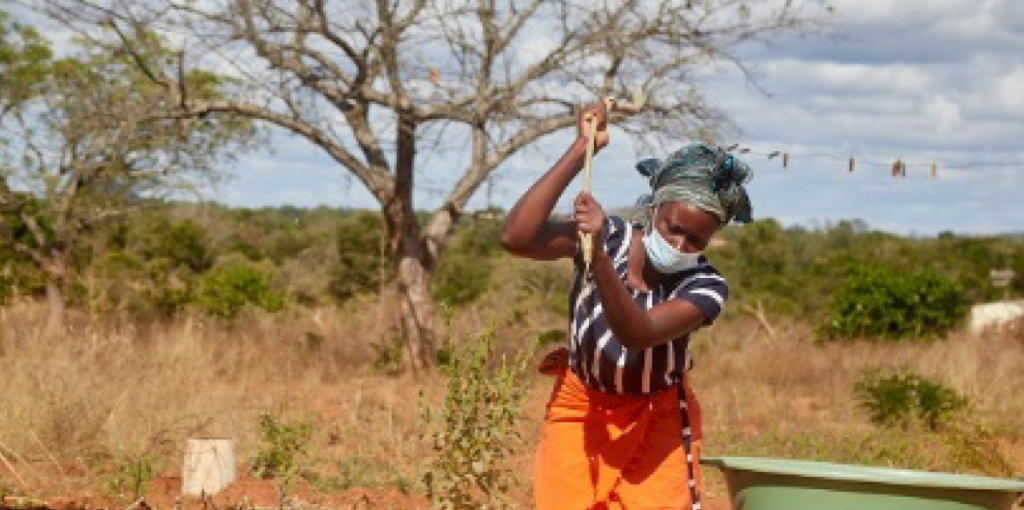
Manual threshing 

“What makes this programme particularly successful is the pool of resources and expertise within our respective organizations – all working towards developing the resilience of smallholder farmers,” said Ms. Christine Mendes, 

WFP Deputy Country Director. “WFP has been proud to support our partners through implementation, logistics and monitoring of the programme, helping to distribute drought-tolerant small grains, fertilizers and other agricultural inputs through our established programmes.” 

The Ambassador of India to Zimbabwe, H.E. Mr. Vijay Khanduja, commended the leadership by the Ministry and the project as a good example of South-South cooperation: “What we are witnessing here is a very good example of trilateral South-South cooperation being carried out through the India-UN Development Partnership Fund. The aim of the Fund is to support projects which contribute to the achievement of Sustainable Development Goals, as per the requirements of the recipient countries. The funding is provided in adherence to the principles of South-South cooperation, which place priority on national ownership and leadership, equality, sustainability, development of local capacity and mutual benefit.” 
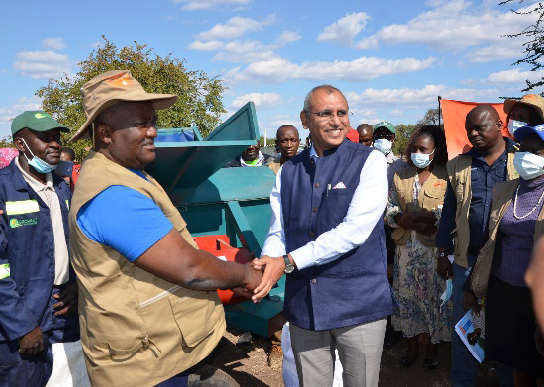

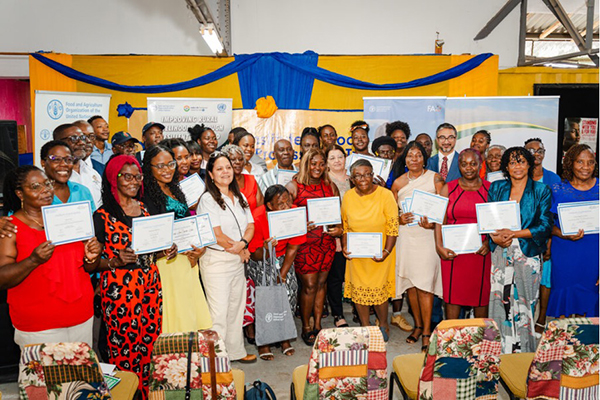
The handover ceremony 
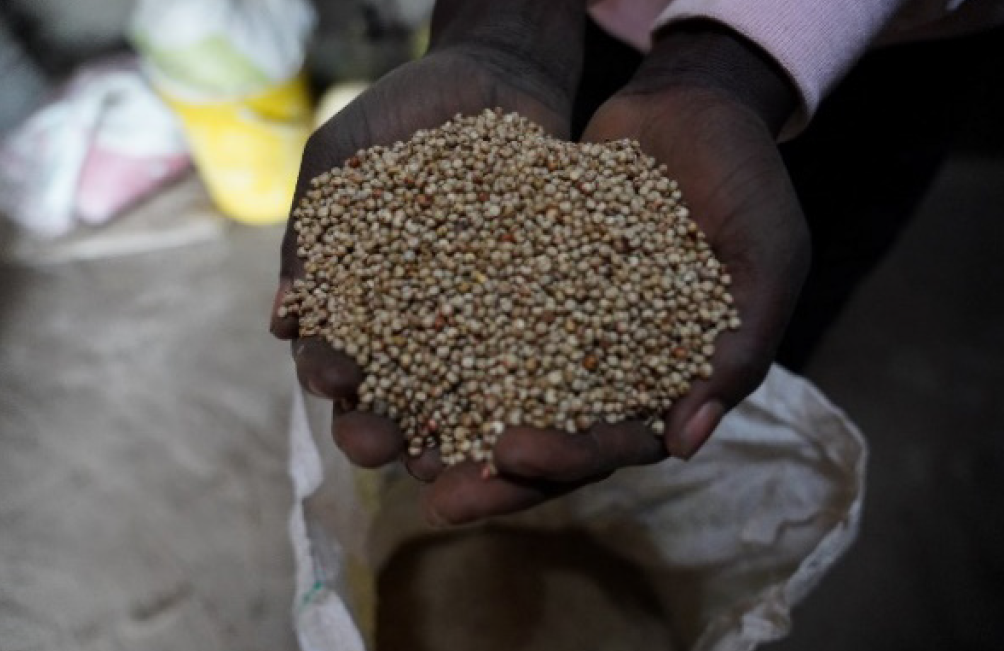
The production of small grains means that these women have the future in their hands 


For more information please contact Ms. Ines Tofalo, Trust Fund and Project Management Specialist at UNOSSC: ines.tofalo@unoscc.org

More India-UN Fund Stories


Related Post


  • All Post
  • ATCT Featured Publications POM
  • BAPA+40
  • Blog
  • Capacity Development Initiatives
  • CICETE Featured Publications POM
  • CIKD
  • Cities Clusters - Agriculture
  • Cities Clusters - COVID-19
  • Cities Clusters - COVID-19 Knowledge Products
  • Cities Clusters - DRR
  • Cities Clusters - E-commerce
  • Cities Clusters - Tourism
  • Cities Clusters - Tourism Knowledge Products
  • Cities Clusters - Transport
  • Cities Clusters - Waste
  • Cities Project
  • Cities Project COVID-19 Newsletters
  • Cities Project COVID-19 Response
  • Cities Project Knowledge Products
  • Classic (untouched)
  • Climate Action
  • COMSATS Featured Publications POM
  • COMSATS Featured Solutions POM
  • Converted from Divi
  • Converted from Mixed
  • Converted from WPBakery
  • COVID-19
  • COVID-19 Page Featured Solutions
  • DRR Knowledge Products
  • DRR News
  • Empty Post
  • Events
  • Featured Event UN-Habitat POM
  • Financing for Development
  • Financing Mechanisms
  • g7+
  • Gender Events
  • Gender News
  • Good Practices in SSTrC Series
  • Good Practices Publications
  • Good Practices Thematic Series & Special Editions
  • Good Practices Vol. 2
  • Good Practices Vol. 3
  • GSSDC
  • Highlighted
  • Highlighted Publications
  • IAEA Featured Solutions POM
  • IBRAF Featured Publications POM
  • IBSA Fund
  • IBSA Fund Annual Reports
  • IBSA Fund News and Stories
  • IBSA Fund Publication
  • IBSA Fund Story
  • ICGEB Featured Events POM
  • ICGEB Featured Publications POM
  • ICGEB Featured Solutions POM
  • ILO Featured Events POM
  • ILO Featured Publications POM
  • ILO Featured Solutions POM
  • India-UN Development Partnership Fund
  • India-UN Fund Publication
  • India-UN Fund Story
  • IsDB
  • IsDB Featured Publications POM
  • IsDB SCC
  • News
  • Norec Featured Publications POM
  • Norec Featured Solutions POM
  • Peace and Development
  • PGTF Publications
  • PGTF Story
  • PICA Featured News POM
  • PICA Featured Publications POM
  • PICA Featured Solutions POM
  • PIDF Featured Publications POM
  • Publications
  • Regional Updates
  • Research
  • ROK-UNOSSC Facility
  • SGP Featured Publication POM
  • SGP Featured Solutions POM
  • Solution
  • South South in Action
  • South-South Global Thinkers
  • South-South Ideas
  • South-South Ideas Series
  • South-South in Action Series
  • Southern Response to COVID-19
  • SSN4PSI Featured Publications POM
  • SSN4PSI Featured Solutions POM
  • Training
  • UN Day for SSC 2020
  • UN Fund for SSC
  • UN SSC Day Publications
  • UN-Habitat Featured Publications POM
  • UN-HABITAT Featured Solutions POM
  • UNCCT
  • UNEP Featured Publications POM
  • UNFPA
  • UNFSSC Publication
  • UNFSSC Story
  • UNIDO Featured Publications POM
  • UNIDO Featured Solutions POM
  • UNIDO POM Events
  • UNOCT Featured Publications POM
  • UNV
  • UNV Featured Publications POM
  • WB Featured Publications POM
  • WB Featured Solutions POM
  • Webinars
  • WFP Featured Events POM
  • WFP Featured Publication POM
  • WFP Featured Solutions POM
  • WIPO
  • Workshops and Seminars
  • Youth4South
  • z Across the Globe 1
  • z Across the Globe 2
  • z Across the Globe 4
  • z Across the Globe 5
  • z Across the Globe 6
  • z Across the Globe 7
  • z Across the Globe 8
  • z ES BAPA+40
  • z ES Eventos
  • z ES Noticias
  • z ES Noticias Destacadas
  • z ES Publicaciones
  • z ES Publicaciones Destacadas
  • z ES Serie Buenas Prácticas en la CSSyT
  • z ES Serie El Sur-Sur en Acción
  • z FR Actualités
  • z FR BAPA+40
  • z FR Événements
  • z FR Publications
  • z FR Publications en vedette
  • z FR Série Bonnes pratiques en CSST
  • z FR Série Sud-Sud en action
  • z Highlighted News
  • z Photos
  • z Videos
  • z ZH BAPA+40
  • z ZH Events
  • z ZH News

ABOUT

Terms of Service

Privacy Policy

Disclosures

RESOURCES

Terms of Service

Privacy Policy

Disclosures

ENGAGE

Terms of Service

Privacy Policy

Disclosures

Copyright © UNOSSC/UNDP

wpChatIcon
wpChatIcon

Alliance Application Form

Submit an Expression of Interest and/or Demand Signal. UNOSSC reviews submissions on a rolling basis.

1. Official name of organization / institution / government entity (exclusions to apply) *
2. Country *
3. Region *
4. SDG *
Secondary SDG *
5. Partner category *
6. Website *
7. Brief description of your institution (max. 150 words) *
Name for the Lead *
Title for the Lead *
Email address for the Lead *
Name for the co-lead
Title for the co-lead
Email address for the co-lead
Section 3. Expression of Interest in the Alliance *
Additional information on proposed areas of engagement may be requested through the platform following initial review by the Alliance Secretariat.
Section 4. Due Diligence and Integrity Declaration *

Submission Note:

  • Submission of this Expression of Interest form does not automatically confer participation in the Alliance.
  • All submissions will be reviewed by the Alliance Secretariat, including basic eligibility screening and proportionate due diligence, as appropriate.
  • Participation in Alliance activities is determined based on relevance to articulated cooperation needs, alignment with Alliance principles, and integrity considerations.
  • Engagement under the Alliance is voluntary, non-binding, and facilitative in nature, and does not constitute funding approval, contractual commitment, or institutional membership.
  • The Alliance Secretariat may contact submitting entities for additional information or clarification during the review process.

Submission of Demand Form

Description of Demand

Indicate the type of support or cooperation requested through the Alliance.
Please briefly describe the challenge, gap, or priority. (Max. 300 words)

Thematic and Geographic Focus

Please indicate the main focus areas of your demand:

A. Thematic Areas (select up to three)
B. Geographic Focus (select all that apply)

Proposed Engagement Modalities

Please indicate how you would like to engage through the Alliance (select all that apply):

Expected Outcomes

Please indicate the main results you seek to achieve through this engagement. (Max. 200 words)
Examples:
• Capacity strengthened
• Partnerships established
• Sectoral or regional strategies co-developed
• Solutions piloted
• Knowledge generated
• Policies informed

Timeline and Readiness (if applicable)

1. Expected timeframe for engagement:
2. Current stage:

Additional Information

Please provide any additional information, documents, or links relevant to this submission.
(Max. 200 words or upload link)

Submission of Offer Form

Description of Contribution

Indicate the type of contribution your institution can provide and describe the expertise, resources, or solutions you may offer.
Please briefly describe your proposed contribution. (Max. 300 words)

Thematic and Geographic Focus

Please indicate the main focus areas of your interest:

A. Thematic Areas (select up to three)
B. Geographic Focus (select all that apply)

Proposed Engagement Modalities

Please indicate how you would like to engage through the Alliance (select all that apply):

Expected Outcomes

Please indicate the main results you aim to achieve through this engagement. (Max. 200 words)
Examples:
• Capacity strengthened
• Partnerships established
• Sectoral or regional strategies co-developed
• Solutions piloted
• Knowledge generated
• Policies informed

Timeline and Readiness (if applicable)

1. Expected timeframe for engagement:
2. Current stage:

Additional Information

Please provide any additional information, documents, or links relevant to this submission.
(Max. 200 words or upload link)

Organization Registration

Authentication & Due Diligence This prototype simulates identity verification, due diligence confirmation, and an authentication step before submission. *

First Name *
Last Name *
Email address *
Password *
Confirm Password *
Name of institution / organization *
Country / Region *
Organization Type *
Organization other *
Function / role *
Organization logo *
Maximum file size: 1 GB

Login

Login / email *
Password *
Remember me

Forgot password?

Connect form

Your name *
Email *
Organization / institution *
Job title / role *
Reason for connecting:
Short message

Scroll to Top