Climate smart agriculture is reducing food waste and giving women hope in Zimbabwe
It is estimated that 55.7 million people in Southern Africa are facing food insecurity and malnutrition due to years of drought, rising food, fuel and fertilizer costs and supply chain disruptions. In Zimbabwe, while the impact is spread generally across the country, it is especially challenging for women and girls.
An integrated resilience-building initiative aimed at improving livelihoods, food security and nutrition is working to protect vulnerable communities from climatic-related and other shocks by giving people the additional skills needed to withstand these shocks through seed/fertiliser inputs and skills building.
Zimbabwe’s Ministry of Lands, Agriculture, Fisheries, Water and Rural Development (MoLAFWRD), Department of Agricultural Advisory and Rural Development Services (AARDS) have partnered with the World Food Programme (WFP) and Food and Agriculture Organization (FAO) to implement a small grains programme in Mangwe and Chiredzi districts. The small grains programme targets the most vulnerable of the population, who are also supported by WFP’s Lean Season Assistance (LSA) and Food Assistance for Assets (FFA) programmes. The entire initiative is supported by the India-UN Development Partnership Fund.
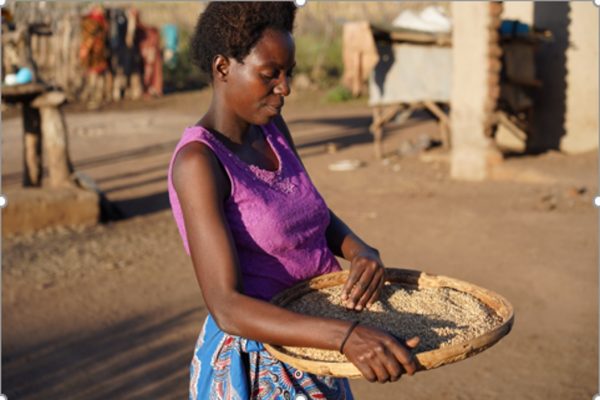
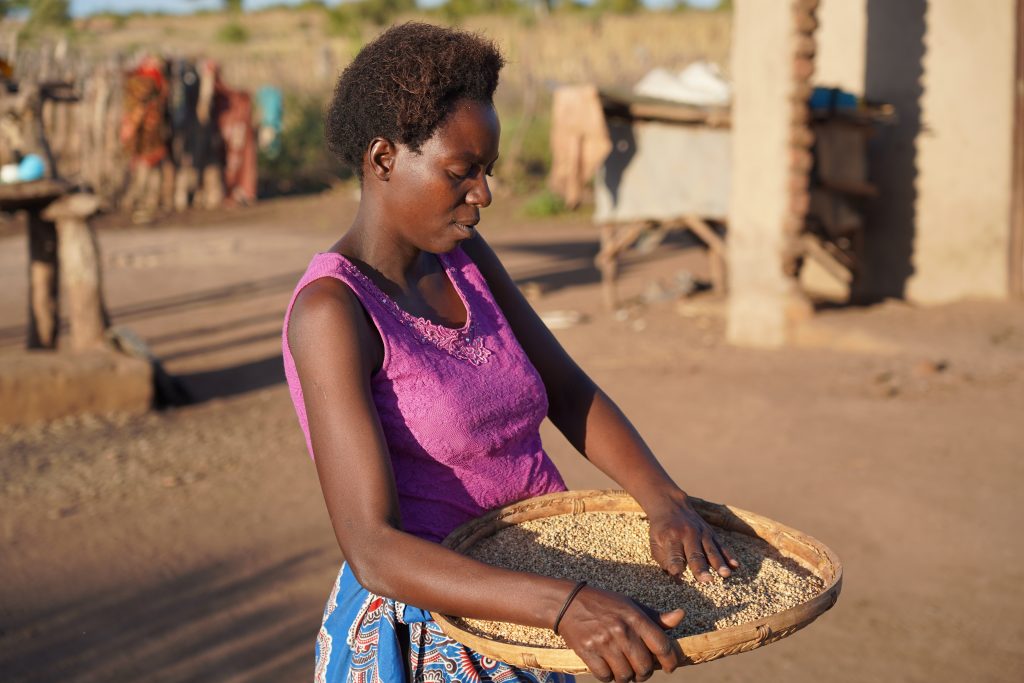
The India-UN Fund project reaches 5,200 smallholder farmers and 40 agricultural extension officers in these 2 districts. One of them is Muhlava Munyangani, a 35-year-old mother of five. After her community faced one of the worst droughts in recent, she managed to get some grain.
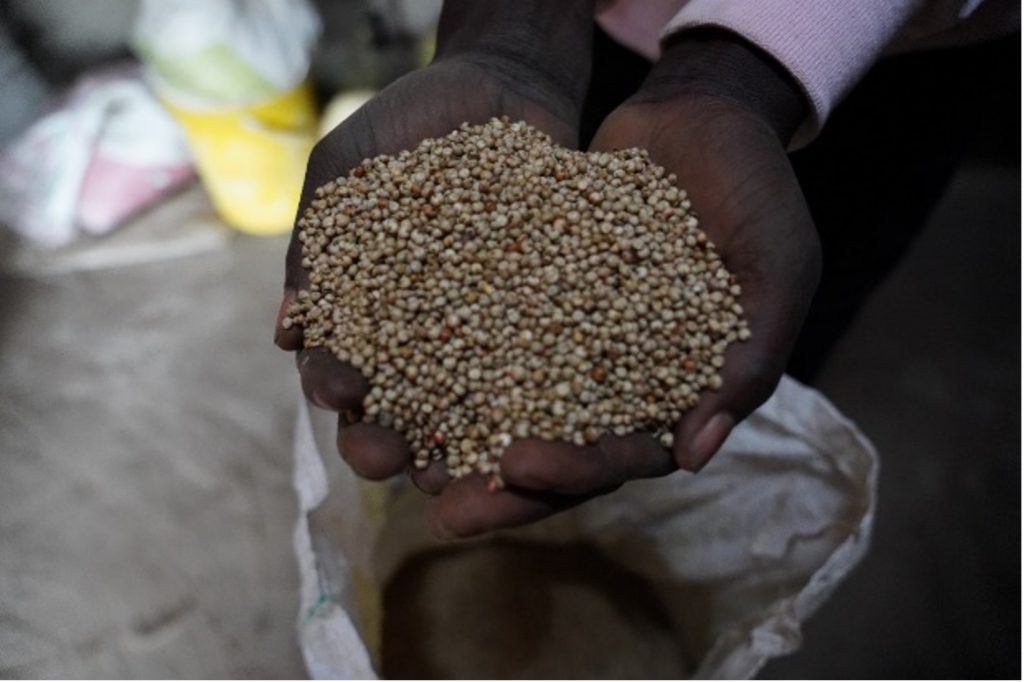
“From what we were taught by WFP and the seed packs I managed to harvest 10 bags of sorghum. The most important thing I learnt is that farming is proper planning. You need to plan for every situation including a drought,” she added.
Cultivating sorghum and cow pea, farmers learn agronomy methods using conservation agricultural principles, group development, collective marketing, post-harvest loss managed and gender issues in agriculture. The idea is for them to get high-quality grain that can be competitive on the market. Through this initiative, women are empowered to address the underlying drivers of food insecurity; they are trained to grow different crops able to withstand severe drought which is essential to helping them through the poor harvests. Investments in drought-tolerant varieties help manage post-harvest losses.
Traditionally, women used to sow small grains by scattering them over the field which attracted pests and dramatically reduced the plant survival rate. Instead, they were taught to use ridge furrows, a traditional method of ploughing which helps to drain the field by allowing the excess water to flow through the furrows thus, reducing excess moisture stress on plants. The proper seed variety suitable to the geographic area was identified. And the women were encouraged to use locally available organic manure from their composts. The farmers were supported with the rehabilitation and establishment of community warehouse infrastructures and post-harvest equipment to enable them to aggregate their commodities and attain the quality requirements.
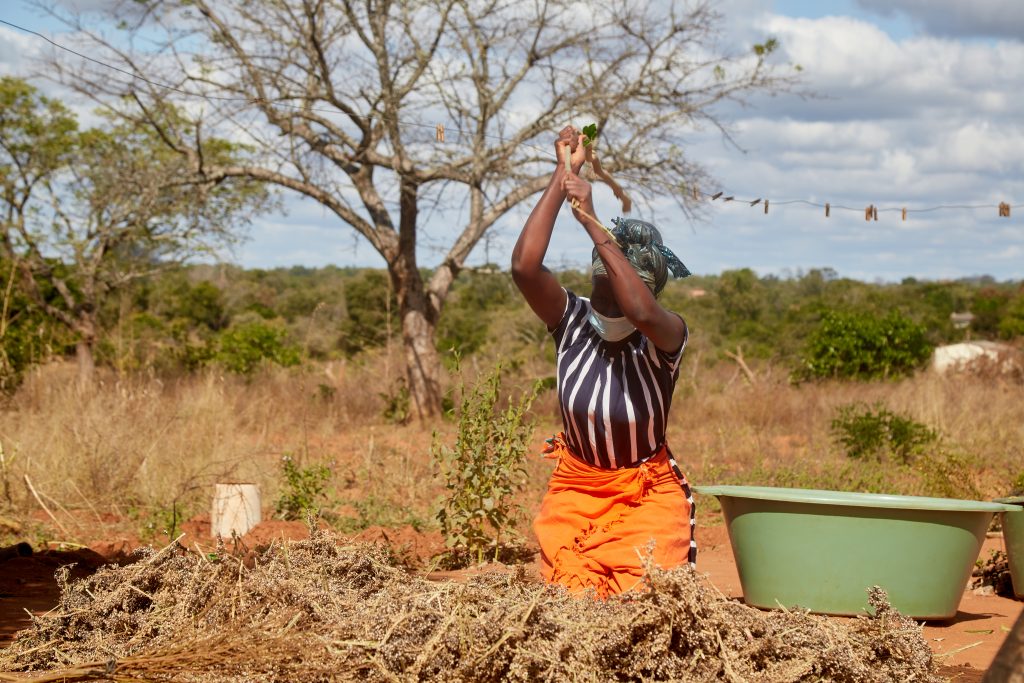
In July 2022, the communities of Chiredzi and Mangwe were supported with multi-functional threshers to improve on farm mechanisation and minimize the post-harvest losses associated with manual threshing processes among farmers. Since processing small grains is labour intensive, farmers have not adapted their plantations despite understanding that small grains are suitable under their agro-ecological regions and impact of climate crisis. While the Government of Zimbabwe is actively promoting the production of traditional grains, indications are that the labour-intensive nature in the processing can be a deterrent to community adoption. In view of this, the support provided by UN-India is addressing this challenge through the provision of mobile threshers, thereby strengthening Government efforts to promoted drought tolerant grains and their adoption by the supported beneficiaries and others in the district who will also be able to utilise the equipment at a cost.
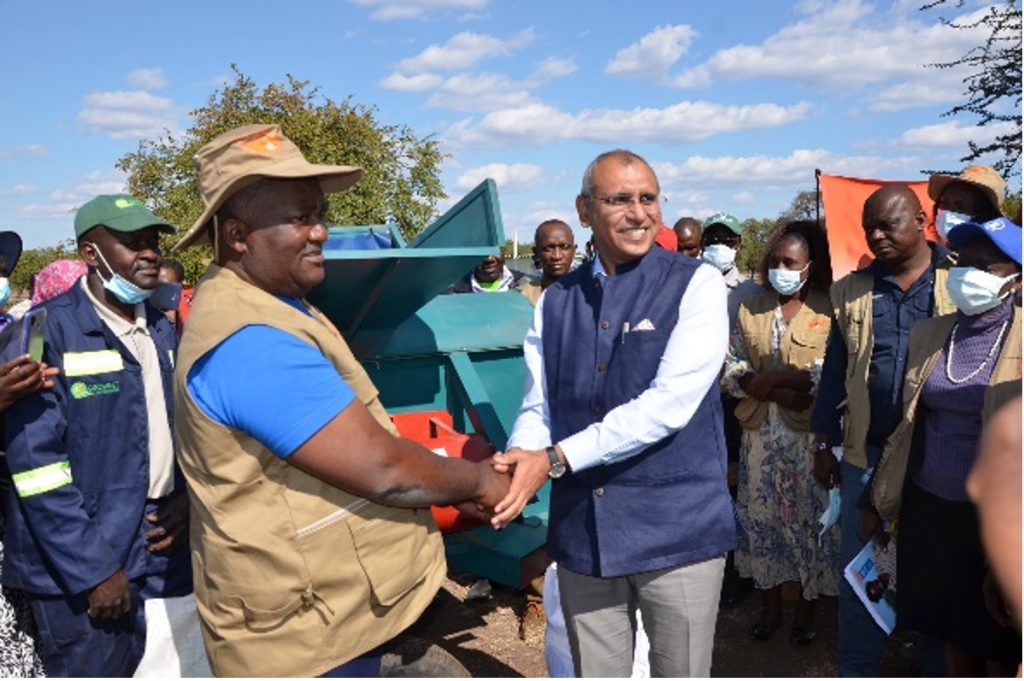
“Harvesting and post-harvest loses remain one of the major challenges Zimbabwe agricultural sector continues to face”, said Dr. John BASERA, the Permanent Secretary of MoLAFWRD during the hand-over ceremony in Chiredzi in July 2022. “Our aim is to reduce post post-harvest loses from the current 20-25% through mechanised harvesting and use of modern storage structures such as metal silos. The threshers WFP is handing over today will go a long way to reduce such loses and reduce threshing and winnowing labour which in most cases is rendered on women and youths.”
“What makes this programme particularly successful is the pool of resources and expertise within our respective organisations – all working towards developing the resilience of smallholder farmers,” said Christine MENDES, WFP Deputy Country Director. “WFP has been proud to support our partners through implementation, logistics and monitoring of the programme, helping to distribute drought tolerant small grains, fertilizers and other agricultural inputs through our established programmes.”
And the Ambassador of India to Zimbabwe, Mr. Vijay Khanduja commended the leadership by MoLAFWRD and the project as good example of South-South and triangular cooperation.
“What we are witnessing here is a very good example of trilateral South-South Cooperation being carried out through the India-UN Development Partnership Fund. The aim of the Fund is to support projects which contribute to the achievement of Sustainable Development Goals, as per the requirements of the recipient countries. The funding is provided in adherence to the principles of South-South cooperation, which place priority on national ownership and leadership, equality, sustainability, development of local capacity and mutual benefit.”
Produced and edited by UNOSSC/UNDP and WFP.