COVID-19 in Fragile Settings: Ensuring a Conflict-Sensitive Response


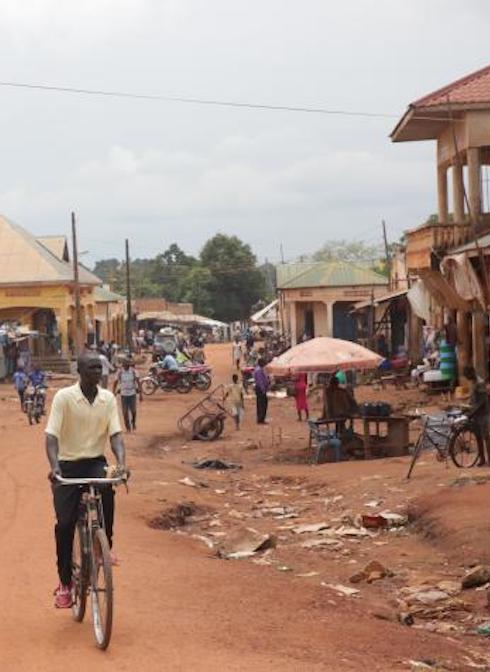
Violent conflict often exacerbates the spread of infectious diseases, as seen in the recent resurgence of polio in Syria, cholera outbreaks in the conflict zones in Yemen, and the persistence of Ebola in insecure eastern regions of the Democratic Republic of Congo (DRC). Between 2009 and 2017, in fact, there were 364 disease outbreaks in 108 refugee camps. Fragility and conflict reverse hard-won development gains and stunt opportunities for children, youth, and the poorest people. In the process, they deeply weaken health systems, leaving societies more vulnerable to disease outbreaks.

The global health emergency created by the coronavirus (COVID-19) is particularly concerning: it could become even more dire as it spreads to countries affected by fragility, conflict and violence (FCV). These countries are already seeing an increase in cases, and governments and international partners are taking unprecedented steps to save lives and mitigate the worst socio-economic impacts. As of late April 2020, the World Bank Group was already working to strengthen health systems and mitigate the pandemic’s risks  in nineteen of the most fragile settings across all developing regions, from the DRC, Mali and Niger, to Papua New Guinea, Haiti, Afghanistan, Yemen and the West Bank and Gaza.  Many more countries have requested support, and operations are being finalized quickly with three main aims during this unprecedented crisis:
To read the complete article, please click here.

  • To help countries implement emergency health operations and strengthen economic resilience;
  • T0 protect the poorest and most vulnerable households and to support business; and
  • To save jobs.

The United Nations COVID-19 Global Humanitarian Response Plan aims to fight the virus in the world’s poorest countries, and address humanitarian needs of the most vulnerable people. At the same time, the United Nations COVID-19 Response and Recovery Fund supports low- and middle-income countries to overcome the health and development crisis caused by the virus. In addition, the UN Secretary-General’s Peacebuilding Fund continues to provide timely and catalytic support to help prevent and mitigate conflict risks that may now be exacerbated by the pandemic.

Tackling COVID-19 is doubly hard in countries where social and economic conditions were already unstable — because of weak governance and state institutions, unequal access to services for vulnerable populations and, very often, community mistrust of government.  These countries may also face compounding challenges, including climate change shocks, forced displacement and food insecurity. It is important that countries’ immediate response and longer-term investments address these realities to avoid exacerbating existing sources of fragility and instead help build resilience, both to this crisis and future shocks.

The UN-World Bank joint study, Pathways for Peace: Inclusive Approaches to Preventing Violent Conflict, as well as the recent World Bank Group Strategy for FCV, provide a set of critical principles that can help guide country-level response efforts in those challenging settings.
ABOUT

Terms of Service

Privacy Policy

Disclosures

RESOURCES

Terms of Service

Privacy Policy

Disclosures

ENGAGE

Terms of Service

Privacy Policy

Disclosures

Copyright © UNOSSC/UNDP

wpChatIcon
wpChatIcon

Alliance Application Form

Submit an Expression of Interest and/or Demand Signal. UNOSSC reviews submissions on a rolling basis.

1. Official name of organization / institution / government entity (exclusions to apply) *
2. Country *
3. Region *
4. SDG *
Secondary SDG *
5. Partner category *
6. Website *
7. Brief description of your institution (max. 150 words) *
Name for the Lead *
Title for the Lead *
Email address for the Lead *
Name for the co-lead
Title for the co-lead
Email address for the co-lead
Section 3. Expression of Interest in the Alliance *
Additional information on proposed areas of engagement may be requested through the platform following initial review by the Alliance Secretariat.
Section 4. Due Diligence and Integrity Declaration *

Submission Note:

  • Submission of this Expression of Interest form does not automatically confer participation in the Alliance.
  • All submissions will be reviewed by the Alliance Secretariat, including basic eligibility screening and proportionate due diligence, as appropriate.
  • Participation in Alliance activities is determined based on relevance to articulated cooperation needs, alignment with Alliance principles, and integrity considerations.
  • Engagement under the Alliance is voluntary, non-binding, and facilitative in nature, and does not constitute funding approval, contractual commitment, or institutional membership.
  • The Alliance Secretariat may contact submitting entities for additional information or clarification during the review process.

Submission of Demand Form

Description of Demand

Indicate the type of support or cooperation requested through the Alliance.
Please briefly describe the challenge, gap, or priority. (Max. 300 words)

Thematic and Geographic Focus

Please indicate the main focus areas of your demand:

A. Thematic Areas (select up to three)
B. Geographic Focus (select all that apply)

Proposed Engagement Modalities

Please indicate how you would like to engage through the Alliance (select all that apply):

Expected Outcomes

Please indicate the main results you seek to achieve through this engagement. (Max. 200 words)
Examples:
• Capacity strengthened
• Partnerships established
• Sectoral or regional strategies co-developed
• Solutions piloted
• Knowledge generated
• Policies informed

Timeline and Readiness (if applicable)

1. Expected timeframe for engagement:
2. Current stage:

Additional Information

Please provide any additional information, documents, or links relevant to this submission.
(Max. 200 words or upload link)

Submission of Offer Form

Description of Contribution

Indicate the type of contribution your institution can provide and describe the expertise, resources, or solutions you may offer.
Please briefly describe your proposed contribution. (Max. 300 words)

Thematic and Geographic Focus

Please indicate the main focus areas of your interest:

A. Thematic Areas (select up to three)
B. Geographic Focus (select all that apply)

Proposed Engagement Modalities

Please indicate how you would like to engage through the Alliance (select all that apply):

Expected Outcomes

Please indicate the main results you aim to achieve through this engagement. (Max. 200 words)
Examples:
• Capacity strengthened
• Partnerships established
• Sectoral or regional strategies co-developed
• Solutions piloted
• Knowledge generated
• Policies informed

Timeline and Readiness (if applicable)

1. Expected timeframe for engagement:
2. Current stage:

Additional Information

Please provide any additional information, documents, or links relevant to this submission.
(Max. 200 words or upload link)

Organization Registration

Authentication & Due Diligence This prototype simulates identity verification, due diligence confirmation, and an authentication step before submission. *

First Name *
Last Name *
Email address *
Password *
Confirm Password *
Name of institution / organization *
Country / Region *
Organization Type *
Organization other *
Function / role *
Organization logo *
Maximum file size: 1 GB

Login

Login / email *
Password *
Remember me

Forgot password?

Connect form

Your name *
Email *
Organization / institution *
Job title / role *
Reason for connecting:
Short message

Scroll to Top