Halting deforestation key to improved livelihoods for Dominica’s indigenous region
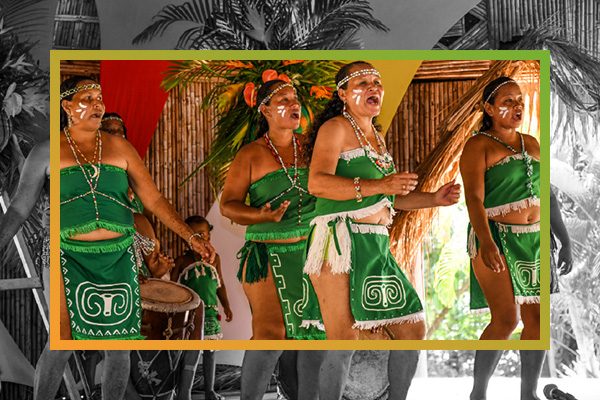
Nestled in a remote and mountainous area of Dominica’s Atlantic coast, the Kalinago Territory is home to the indigenous Kalinago people. The roughly 3,000 people living in the region share communal ownership of the Territory, comprised of mostly of poor-quality land that is susceptible to both soil erosion and deforestation which in turn has destroyed many of the area streams. It is among Dominica’s poorest regions.
In an effort to strengthen the livelihoods and resilience of the Kalinago people, with support from the India-UN Development Partnership Fund, the Government launched an integrated programme designed to strengthen sustainable agricultural production and practices; implement community reforestation programmes to protect livelihoods and water catchment areas; develop a comprehensive gender-sensitive tourism strategy and Kalinago brand; and boost institutional capacities of the Kalinago Council for inclusive decision-making and planning.
The 18-month project is facilitated by UNDP in partnership with the Ministry of the Environment, Rural Modernisation and Kalinago Upliftment and the Kalinago Council, with the support of the Ministry of Blue and Green and Economy, Agriculture and Food Security, and the Ministry of Tourism, International Transport and Maritime Initiatives.
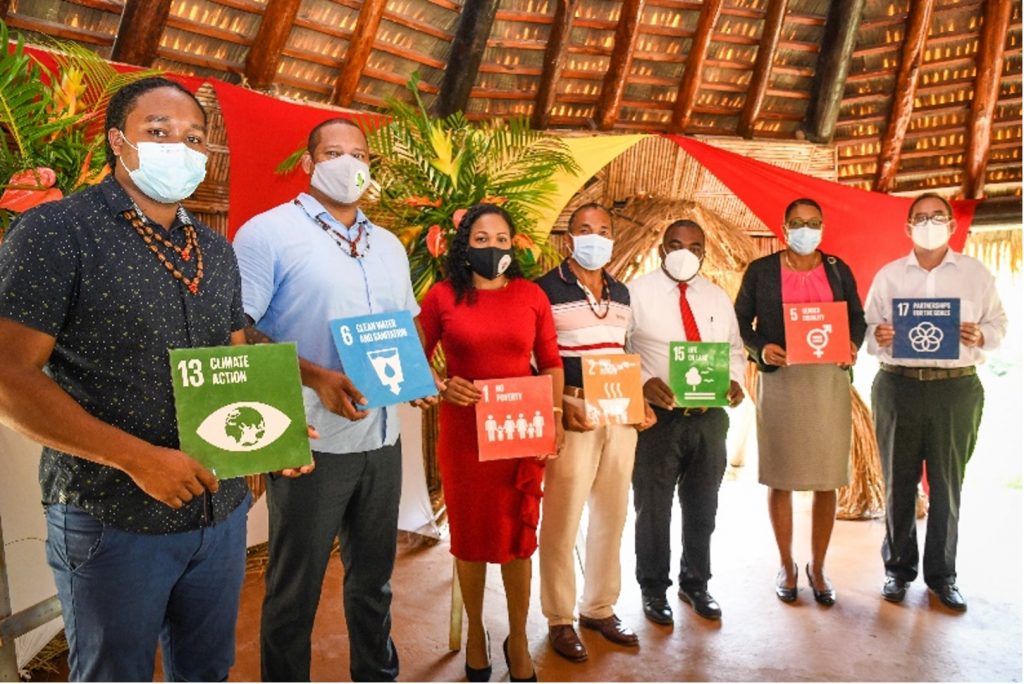
“The coining of the project here is very, very clear. It tells us something we have discounted a lot in the conversation about the Kalinago people…they are resilient; they have been able to sustain themselves for millennia and a project like this only magnifies it,” said Hon. Cozier Frederick Minister for Environment, Rural Modernisation and Kalinago Upliftment in launching the programme.
Deforestation is a critical issue confronting the Kalinago Territory, and as such the Government is providing support to demarcate some of the major activities important to the livelihood of the Territory such as agriculture, tourism, and social forestry to provide a management structure to decrease the risk of further deforestation. These activities include the planting of 2,000 trees donated by the Forestry Division and planted by members of the Kalinago Territory community under the National Employment Programme, as well as the construction of fifteen community green houses.
On the agricultural front, the project provides equipment and materials to support the final construction and implementation of a Climate Smart Agricultural Research Station. This included providing technical expertise for product development and the marketing of cassava and cassava value added products, a traditionally important crop in Kalinago culture. Small grants were also provided to support Kalinago farmers with cassava cultivation and product development.
In an effort to boost tourism, the partners designed a gender sensitive tourism strategy for the Kalinago Territory focusing on three areas: an indigenous tourism route/experience in the Territory that supports both culture and long-term business potential; a gender sensitive tourism infrastructure plan; and a Kalinago tourism brand package. Strengthening Kalinago Council’s ability to implement and manage is essential to making the integrated programme work efficiently. To this end, the programme supports the exchange of experiences and best practices by the participation of the Kalinago Council in regional and international forums and conferences on Indigenous People. In addition, the programme supports digitizing the Council’s archives to secure a historic record of its work.
Produced and edited by UNOSSC/UNDP and UNDP.