• Home
  • /
  • Handbook
  • /
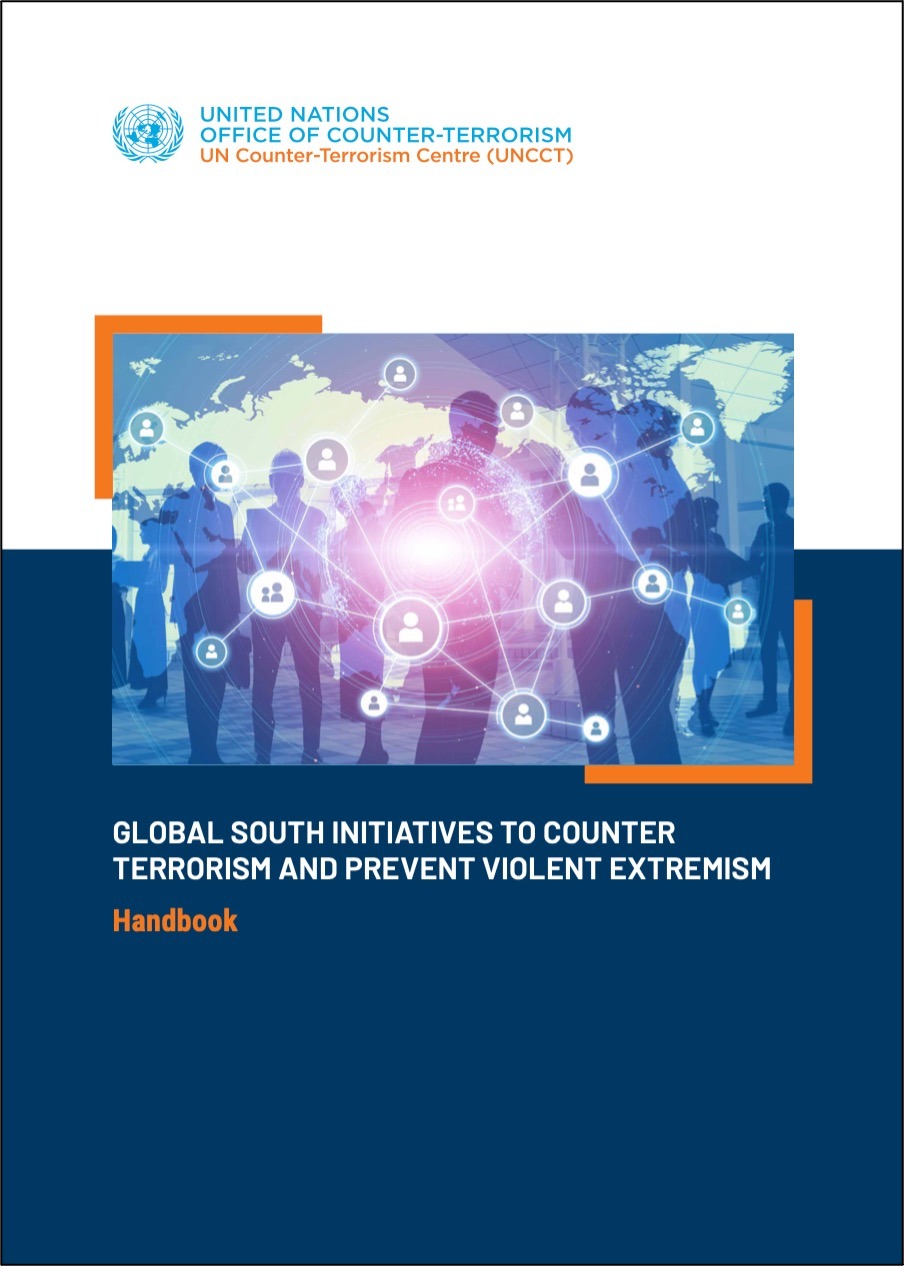
  • Handbook: Global South Initiatives to Counter Terrorism and Prevent Violent Extremism

Handbook: Global South Initiatives to Counter Terrorism and Prevent Violent Extremism


This handbook by the United Nations Office of Counter-terrorism (UNOCT) features different examples in which the Global South has played a central role in developing regional instruments and mechanisms in the field of CT/PVE, whether through locally developed solutions that address the root causes of conflict or by creating momentum for regional commitment to international instruments, in the spirit of multilateralism.

The United Nations Office for South-South Cooperation (UNOSSC) defines South-South cooperation (SSC) as a broad framework of collaboration among countries of the South in the political, economic, social, cultural, environmental and technical domains. This cooperation involves two or more developing countries collaborating on a bilateral, subregional, regional, intraregional or interregional basis.

There is a remarkable diversity of approaches and prescriptions within this “broad framework of collaboration” that vary from country to country as well as between regions and organizations.
Download PDF: Arabic | Chinese | English | French | Russian | Spanish

This diversity influences the way SSC is measured, understood, referenced and implemented in different regions (this will be addressed in subsequent sections of this publication). There are, nonetheless, several common traits, principles and comparative advantages that characterize SSC.

South-South cooperation is usually understood and implemented within the field of development cooperation. There is, however, increasing awareness of its potential in the peace and security domain. At the Ambassadorial-level meeting of the Peacebuilding Commission, in September 2019, the “shared commonality between the PBC’s approach to country-led engagements and the voluntary, participative and demand-driven nature of SSTC, and how PBC engagement is consistent with SSC principles” was underlined. It was also acknowledged that tracking SSC in the field remained a challenge.6 Although there is no mention of peace and security in the 1978 BAPA, the 2030 Agenda for Sustainable Development confirms the connection between peace and development, especially through Sustainable Development Goal 16, which is the outcome document of BAPA+40 underlines as a potential area for increased SSC impact.

This Handbook features various national and regional CT/PVE initiatives that have demonstrated results, as well as potential, for expansion. These initiatives, although not necessarily labeled or seen as SSC, offer valuable insights for other countries facing similar challenges and can contribute to accelerating the implementation of Sustainable Development Goals 16 and 17.8.
Connect with UNOSSC

Stay updated with the latest trends in South-South cooperation and access our vast repository of knowledge.

Copyright © UNOSSC/UNDP

Alliance Application Form

Submit an Expression of Interest and/or Demand Signal. UNOSSC reviews submissions on a rolling basis.

1. Official name of organization / institution / government entity (exclusions to apply) *
Organization logo
Maximum file size: 20 MB
2. Country *
3. Region *
4. SDG *
5. Partner category *
6. Website *
7. Brief description of your institution (max. 150 words) *
Name for the Lead *
Title for the Lead *
Email address for the Lead *
Name for the co-lead
Title for the co-lead
Email address for the co-lead
Section 3. Expression of Interest in the Alliance *
Additional information on proposed areas of engagement may be requested through the platform following initial review by the Alliance Secretariat.
Section 4. Due Diligence and Integrity Declaration *

Submission Note:

  • Submission of this Expression of Interest form does not automatically confer participation in the Alliance.
  • All submissions will be reviewed by the Alliance Secretariat, including basic eligibility screening and proportionate due diligence, as appropriate.
  • Participation in Alliance activities is determined based on relevance to articulated cooperation needs, alignment with Alliance principles, and integrity considerations.
  • Engagement under the Alliance is voluntary, non-binding, and facilitative in nature, and does not constitute funding approval, contractual commitment, or institutional membership.
  • The Alliance Secretariat may contact submitting entities for additional information or clarification during the review process.

Submission of Demand Form

Description of Demand

Indicate the type of support or cooperation requested through the Alliance.
Please briefly describe the challenge, gap, or priority. (Max. 300 words)

Thematic and Geographic Focus

Please indicate the main focus areas of your demand:

A. Thematic Areas (select up to three)
B. Geographic Focus (select all that apply)

Proposed Engagement Modalities

Please indicate how you would like to engage through the Alliance (select all that apply):

Expected Outcomes

Please indicate the main results you seek to achieve through this engagement. (Max. 200 words)
Examples:
• Capacity strengthened
• Partnerships established
• Sectoral or regional strategies co-developed
• Solutions piloted
• Knowledge generated
• Policies informed

Timeline and Readiness (if applicable)

1. Expected timeframe for engagement:
2. Current stage:

Additional Information

Please provide any additional information, documents, or links relevant to this submission.
(Max. 200 words or upload link)

Submission of Offer Form

Description of Contribution

Indicate the type of contribution your institution can provide and describe the expertise, resources, or solutions you may offer.
Please briefly describe your proposed contribution. (Max. 300 words)

Thematic and Geographic Focus

Please indicate the main focus areas of your interest:

A. Thematic Areas (select up to three)
B. Geographic Focus (select all that apply)

Proposed Engagement Modalities

Please indicate how you would like to engage through the Alliance (select all that apply):

Expected Outcomes

Please indicate the main results you aim to achieve through this engagement. (Max. 200 words)
Examples:
• Capacity strengthened
• Partnerships established
• Sectoral or regional strategies co-developed
• Solutions piloted
• Knowledge generated
• Policies informed

Timeline and Readiness (if applicable)

1. Expected timeframe for engagement:
2. Current stage:

Additional Information

Please provide any additional information, documents, or links relevant to this submission.
(Max. 200 words or upload link)

Organization Registration

Authentication & Due Diligence This prototype simulates identity verification, due diligence confirmation, and an authentication step before submission. *

First Name *
Last Name *
Email address *
Password *
Confirm Password *
Name of institution / organization *
Country / Region *
Organization Type *
Organization other *
Function / role *
Organization logo *
Maximum file size: 1 GB

Login

Login / email *
Password *
Remember me

Forgot password?

Connect form

Your name *
Email *
Organization / institution *
Job title / role *
Reason for connecting:
Short message

Scroll to Top