• Home
  • /
  • News
  • /
  • HLPF: Bridging the SDG-Financing Gap through South-South Cooperation

HLPF: Bridging the SDG-Financing Gap through South-South Cooperation


With rising aspirations linked to the Sustainable Development Goals (SDGs), commitments of developing countries have multiplied. However, at the operational level major challenges remain, including the effective management of capital inflows; domestic resource mobilization; and addressing the problems of capital flight. Developing countries are also challenged by the inadequacy of long-term development finance; poor infrastructure; inadequate industrialization and also in developing resilience to climate change. Emergence of new institutions to complement existing institutions is a crucial development in this regard.

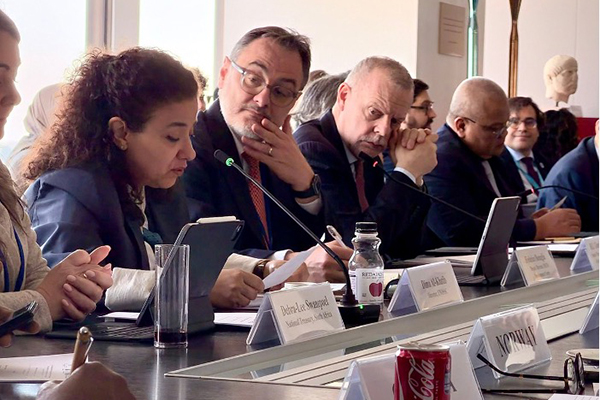
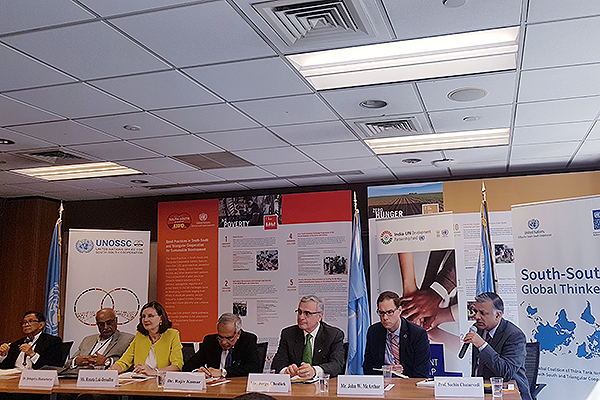
In this context, a side-event on “Financing of SDGs” was organized, under the South-South Global Thinkers Initiative, to discuss the challenges faced by developing countries with regards to capital flight; specific needs in areas like industrialization, SMEs, trade facilitation, capacity creation, addressing the gender gap, renewable energy and sustainable urbanization. The event was co-organized by the United Nations Office for South-South Cooperation (UNOSSC), the South Centre and an Indian think tank – Research and Information System for Developing Countries (RIS).

The newly adopted BAPA+40 Outcome Document helps increase the scope of South-South cooperation (SSC) by laying down the principles of SSC and recognizing important areas such as trade, investments, finance and technology transfer with further importance, clarity and diction. It also notes the urgency to tackle corruption and illicit financial flows that impede economic development, deepen income inequality, and reduce domestic resource mobilization for sustainable development in developing countries. To address these issues, greater South-South and triangular cooperation (SSC and TrC) have been encouraged, including the sharing of knowledge and best practices to prevent and combat corruption and illicit financial flows.The Outcome Document also mentions the need tocreate an enabling environment to strengthen Micro, Small and Medium Enterprises (MSMEs) and design implementable strategies to help them grow and thrive. It also recognizes the need to mobilize adequate resources from all sources – including public, private, domestic and international – for enhancing SSC and TrC.

Mr. Jorge Chediek, Director of UNOSSC and Envoy of the Secretary-General on South-South Cooperation, stressed the financing gap for implementation of the SDGs and noted that SSC can be the subject of action for governments, Civil Society Organizations (CSOs), private sector, NGOs, academia and a wide-range of stakeholders in mobilizing resources, knowledge and technical know-how.

Participants noted that currently there is a 5-7 trillion dollar financing gap for implementation of the SDGs of which 2 trillion is needed in developing countries. However, it was also acknowledged that the conversation globally on the lack of financing for SDGs hasn’t seen much progress in recent years. Some bottlenecks and challenges such as the lack of order in financing commitments; the changing landscape of development finance; systemic concerns on the poor state of the global financial architecture; and domestic resource mobilization were raised, among other important issues. There was general consensus that the global financial architecture is not built for purpose and remains one of the key barriers to adequate financing.

The role of multi-stakeholder engagement and innovations to address this gap were discussed at length. Innovative partnership funds such as the India-UN Development Partnership Fund were cited as effective ways of committing to the SSC and TrC agenda. The role of frugal innovations was also stressed, acknowledging that India has been a leader in this regard. Ms. Renata Lok-Dessallien, UN Resident Coordinator in India specifically pointed out that the role of the private sector and private philanthropy to step up to meet this gap in financing and innovation is extremely crucial. She also stressed on how modes of production, value chain and supply chains need to change and become more SDG focused.

The South is a highly heterogenous region and within the South, there has been the gradual development of a North that now has immense potential to lead by example. Dr. Rajiv Kumar, Vice-chairman of the National Institute for Transforming India (NITI) Aayog, stressed that there is great merit in assessing the capabilities that exist internally and asked what the South can do for itself. He also stressed that alongside the availability of financing, developing the ability to effectively spend that money is equally if not more important. The role of technology and big data in changing the needs of development finance still remain areas that have not been tapped into fully but may have tremendous opportunities for countries of the South. If used appropriately, the gains from technology and big data may lower the costs of development finance. For example, the application of big data in health sciences has lowered the costs of doing scientific research.

For more information, contact Ms. Shams Banihani, Knowledge and Research Specialist, at shams.banihani@unossc.org

Related Post


  • All Post
  • ATCT Featured Publications POM
  • BAPA+40
  • Blog
  • Capacity Development Initiatives
  • CICETE Featured Publications POM
  • CIKD
  • Cities Clusters - Agriculture
  • Cities Clusters - COVID-19
  • Cities Clusters - COVID-19 Knowledge Products
  • Cities Clusters - DRR
  • Cities Clusters - E-commerce
  • Cities Clusters - Tourism
  • Cities Clusters - Tourism Knowledge Products
  • Cities Clusters - Transport
  • Cities Clusters - Waste
  • Cities Project
  • Cities Project COVID-19 Newsletters
  • Cities Project COVID-19 Response
  • Cities Project Knowledge Products
  • Classic (untouched)
  • Climate Action
  • COMSATS Featured Publications POM
  • COMSATS Featured Solutions POM
  • Converted from Divi
  • Converted from Mixed
  • Converted from WPBakery
  • COVID-19
  • COVID-19 Page Featured Solutions
  • DRR Knowledge Products
  • DRR News
  • Empty Post
  • Events
  • Featured Event UN-Habitat POM
  • Financing for Development
  • Financing Mechanisms
  • g7+
  • Gender Events
  • Gender News
  • Good Practices in SSTrC Series
  • Good Practices Publications
  • Good Practices Thematic Series & Special Editions
  • Good Practices Vol. 2
  • Good Practices Vol. 3
  • GSSDC
  • Highlighted
  • Highlighted Publications
  • IAEA Featured Solutions POM
  • IBRAF Featured Publications POM
  • IBSA Fund
  • IBSA Fund Annual Reports
  • IBSA Fund News and Stories
  • IBSA Fund Publication
  • IBSA Fund Story
  • ICGEB Featured Events POM
  • ICGEB Featured Publications POM
  • ICGEB Featured Solutions POM
  • ILO Featured Events POM
  • ILO Featured Publications POM
  • ILO Featured Solutions POM
  • India-UN Development Partnership Fund
  • India-UN Fund Publication
  • India-UN Fund Story
  • IsDB
  • IsDB Featured Publications POM
  • IsDB SCC
  • News
  • Norec Featured Publications POM
  • Norec Featured Solutions POM
  • Peace and Development
  • PGTF Publications
  • PGTF Story
  • PICA Featured News POM
  • PICA Featured Publications POM
  • PICA Featured Solutions POM
  • PIDF Featured Publications POM
  • Publications
  • Regional Updates
  • Research
  • ROK-UNOSSC Facility
  • SGP Featured Publication POM
  • SGP Featured Solutions POM
  • Solution
  • South South in Action
  • South-South Global Thinkers
  • South-South Ideas
  • South-South Ideas Series
  • South-South in Action Series
  • Southern Response to COVID-19
  • SSN4PSI Featured Publications POM
  • SSN4PSI Featured Solutions POM
  • Training
  • UN Day for SSC 2020
  • UN Fund for SSC
  • UN SSC Day Publications
  • UN-Habitat Featured Publications POM
  • UN-HABITAT Featured Solutions POM
  • UNCCT
  • UNEP Featured Publications POM
  • UNFPA
  • UNFSSC Publication
  • UNFSSC Story
  • UNIDO Featured Publications POM
  • UNIDO Featured Solutions POM
  • UNIDO POM Events
  • UNOCT Featured Publications POM
  • UNV
  • UNV Featured Publications POM
  • WB Featured Publications POM
  • WB Featured Solutions POM
  • Webinars
  • WFP Featured Events POM
  • WFP Featured Publication POM
  • WFP Featured Solutions POM
  • WIPO
  • Workshops and Seminars
  • Youth4South
  • z Across the Globe 1
  • z Across the Globe 2
  • z Across the Globe 4
  • z Across the Globe 5
  • z Across the Globe 6
  • z Across the Globe 7
  • z Across the Globe 8
  • z ES BAPA+40
  • z ES Eventos
  • z ES Noticias
  • z ES Noticias Destacadas
  • z ES Publicaciones
  • z ES Publicaciones Destacadas
  • z ES Serie Buenas Prácticas en la CSSyT
  • z ES Serie El Sur-Sur en Acción
  • z FR Actualités
  • z FR BAPA+40
  • z FR Événements
  • z FR Publications
  • z FR Publications en vedette
  • z FR Série Bonnes pratiques en CSST
  • z FR Série Sud-Sud en action
  • z Highlighted News
  • z Photos
  • z Videos
  • z ZH BAPA+40
  • z ZH Events
  • z ZH News

ABOUT

Terms of Service

Privacy Policy

Disclosures

RESOURCES

Terms of Service

Privacy Policy

Disclosures

ENGAGE

Terms of Service

Privacy Policy

Disclosures

Copyright © UNOSSC/UNDP

wpChatIcon
wpChatIcon

Alliance Application Form

Submit an Expression of Interest and/or Demand Signal. UNOSSC reviews submissions on a rolling basis.

1. Official name of organization / institution / government entity (exclusions to apply) *
2. Country *
3. Region *
4. SDG *
Secondary SDG *
5. Partner category *
6. Website *
7. Brief description of your institution (max. 150 words) *
Name for the Lead *
Title for the Lead *
Email address for the Lead *
Name for the co-lead
Title for the co-lead
Email address for the co-lead
Section 3. Expression of Interest in the Alliance *
Additional information on proposed areas of engagement may be requested through the platform following initial review by the Alliance Secretariat.
Section 4. Due Diligence and Integrity Declaration *

Submission Note:

  • Submission of this Expression of Interest form does not automatically confer participation in the Alliance.
  • All submissions will be reviewed by the Alliance Secretariat, including basic eligibility screening and proportionate due diligence, as appropriate.
  • Participation in Alliance activities is determined based on relevance to articulated cooperation needs, alignment with Alliance principles, and integrity considerations.
  • Engagement under the Alliance is voluntary, non-binding, and facilitative in nature, and does not constitute funding approval, contractual commitment, or institutional membership.
  • The Alliance Secretariat may contact submitting entities for additional information or clarification during the review process.

Submission of Demand Form

Description of Demand

Indicate the type of support or cooperation requested through the Alliance.
Please briefly describe the challenge, gap, or priority. (Max. 300 words)

Thematic and Geographic Focus

Please indicate the main focus areas of your demand:

A. Thematic Areas (select up to three)
B. Geographic Focus (select all that apply)

Proposed Engagement Modalities

Please indicate how you would like to engage through the Alliance (select all that apply):

Expected Outcomes

Please indicate the main results you seek to achieve through this engagement. (Max. 200 words)
Examples:
• Capacity strengthened
• Partnerships established
• Sectoral or regional strategies co-developed
• Solutions piloted
• Knowledge generated
• Policies informed

Timeline and Readiness (if applicable)

1. Expected timeframe for engagement:
2. Current stage:

Additional Information

Please provide any additional information, documents, or links relevant to this submission.
(Max. 200 words or upload link)

Submission of Offer Form

Description of Contribution

Indicate the type of contribution your institution can provide and describe the expertise, resources, or solutions you may offer.
Please briefly describe your proposed contribution. (Max. 300 words)

Thematic and Geographic Focus

Please indicate the main focus areas of your interest:

A. Thematic Areas (select up to three)
B. Geographic Focus (select all that apply)

Proposed Engagement Modalities

Please indicate how you would like to engage through the Alliance (select all that apply):

Expected Outcomes

Please indicate the main results you aim to achieve through this engagement. (Max. 200 words)
Examples:
• Capacity strengthened
• Partnerships established
• Sectoral or regional strategies co-developed
• Solutions piloted
• Knowledge generated
• Policies informed

Timeline and Readiness (if applicable)

1. Expected timeframe for engagement:
2. Current stage:

Additional Information

Please provide any additional information, documents, or links relevant to this submission.
(Max. 200 words or upload link)

Organization Registration

Authentication & Due Diligence This prototype simulates identity verification, due diligence confirmation, and an authentication step before submission. *

First Name *
Last Name *
Email address *
Password *
Confirm Password *
Name of institution / organization *
Country / Region *
Organization Type *
Organization other *
Function / role *
Organization logo *
Maximum file size: 1 GB

Login

Login / email *
Password *
Remember me

Forgot password?

Connect form

Your name *
Email *
Organization / institution *
Job title / role *
Reason for connecting:
Short message

Scroll to Top