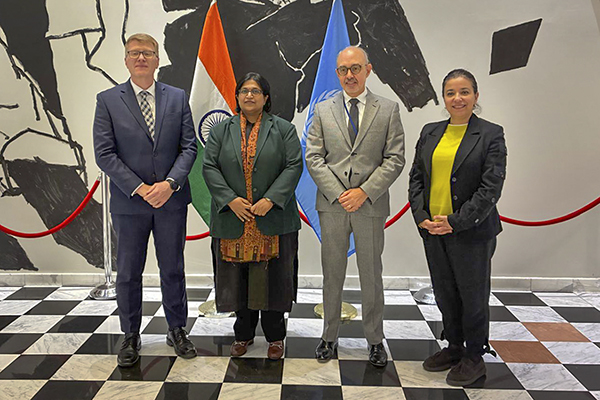
The Board of Directors of the India, Brazil and South Africa Facility for Poverty and Hunger Alleviation (IBSA Fund) convened 17 November 2025 at the Permanent Mission of India to the United Nations, reviewing progress across its global development portfolio and approving a new set of initiatives to advance South-South cooperation.
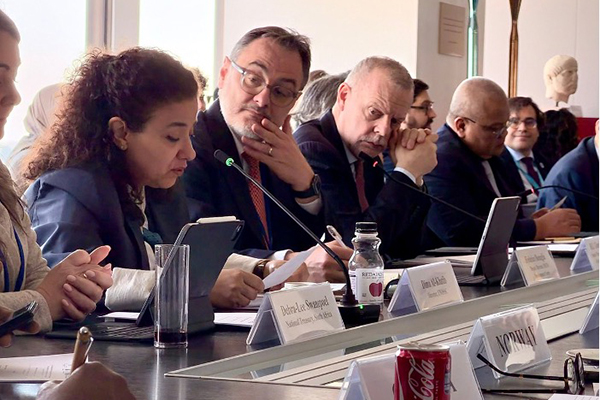
Chaired by H.E. Mrs. Yojna Patel, Deputy Permanent Representative of India, the meeting brought together senior representatives of Brazil and South Africa, along with Ms. Dima Al-Khatib, Director of the United Nations Office for South-South Cooperation (UNOSSC). In her briefing to the Board, Ms. Al-Khatib underscored the Fund’s growing focus on climate action, food systems transformation, and institutional strengthening – priorities that align with global discussions with COP30 takes place at the same time in Brazil.
Strong Performance Across a Diverse Portfolio
In 2025, the IBSA Fund sustained solid progress across 13 active projects valued at US$13.6 million, with over three-quarters implemented in Africa.
The Board welcomed continued emphasis on supporting countries in special development situations: more than 60 per cent of active projects are underway in Least Developed Countries (LDCs), Landlocked Developing Countries (LLDCs), and Small Island Developing States (SIDS). This, members noted, reaffirms the Fund’s core commitment to leaving no one behind.
Three projects – in the Republic of Congo, Senegal, and Palau – concluded implementation this year, with evaluations in progress. Meanwhile, ongoing initiatives continued delivering concrete results in climate-resilient agriculture, women’s economic empowerment, WASH system strengthening, and renewable energy deployment.
Highlighting IBSA Contributions to COP30
The Board welcomed a newly released brochure showcasing the IBSA Fund’s contributions to the COP30 Action Agenda. The publication highlights a selection of completed and ongoing IBSA Fund initiatives, representing more than US$9 million in investment. These projects are helping transform agricultural systems, expand renewable energy use, and strengthen climate resilience across vulnerable communities in the Global South.
New Projects Approved
The Board approved two new project proposals:
- Guatemala – Digital Inclusion and Rural Entrepreneurship: This initiative aims to expand digital access and stimulate rural entrepreneurship through technology-enabled community learning platforms.
- Timor-Leste – National Science, Technology and Innovation Policy: The project will support the development and implementation of a national STI policy, bolstering institutional frameworks through targeted expert support and South-South academic collaboration.