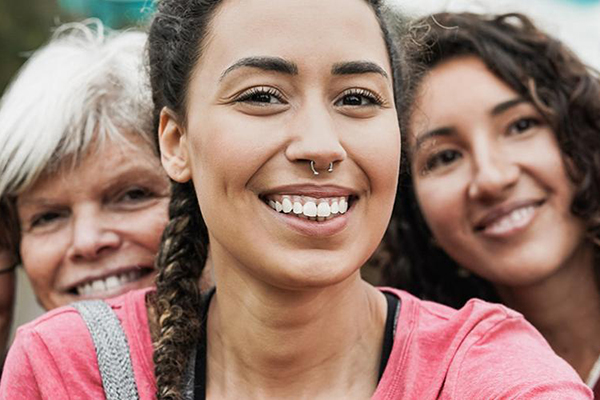
On the occasion of International Women’s Day, observed on 8 March under the theme “Rights. Justice. Action. For ALL Women and Girls,” two companion opinion pieces are presented below by Dima Al‑Khatib, Director of the United Nations Office for South-South Cooperation, and Sarah Hendriks, Director of Policy, Programme and Intergovernmental Division at UN Women. Together, the pieces reflect on the urgent need to advance women’s rights, strengthen access to justice, and accelerate concrete action through South-South and triangular cooperation to ensure progress for all women and girls.
 Op-Ed: Rights. Justice. Action for All Women and Girls through South-South and Triangular Cooperation
Op-Ed: Rights. Justice. Action for All Women and Girls through South-South and Triangular Cooperation
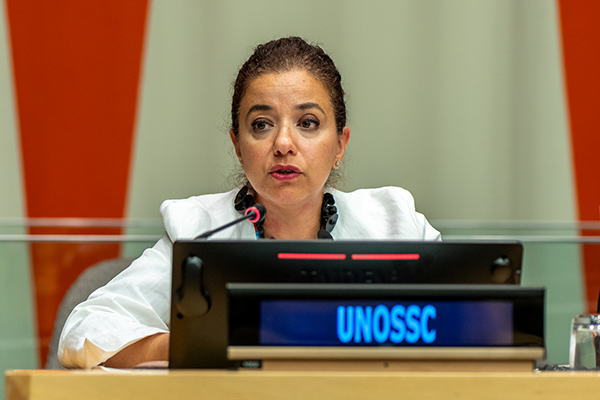
by Dima Al‑Khatib, Director of the United Nations Office for South-South Cooperation
Human rights and equal access to justice are foundations of a just, inclusive, and peaceful world. These are principles enshrined in the covenants, conventions, and instruments of the United Nations (UN). They are also among the ambitions of the Sustainable Development Goals (particularly SDG 5 and SDG 16), recognized as essential to the achievement or all other Goals. The protection of women’s human rights and women’s guaranteed access to justice remain far below global ambitions and commitments – especially for women in the Global South. The United Nations reports that women worldwide hold just 64 per cent of the legal rights of men, highlighting the persistent legal and structural barriers women and girls continue to face. These inequalities deny half of humanity their rightful place, and full contribution, in societies and economies. Women and girls of the Global South face particularly steep challenges, notably in countries facing persistent, interlocking development challenges and navigating polycrisis, including instability and conflict. They continue to bear the brunt of inequality’s impact. The Global South is elevating the need for strategic action on this front. The Declaration of the Third South Summit of the Group of 77, for example, recognizes that “gender equality and the full participation of women in all spheres are integral to building a just society for all” and called for the “effective and accelerated implementation of the Beijing Declaration and Platform for Action, and the gender-responsive implementation of the 2030 Agenda.” The Global South is also investing in efforts to address challenges, and UNOSSC has the privilege of channeling support from the South-South Trust Funds that it manages on behalf of partners, including Brazil, China, India, Portugal, Republic of Korea, Russian Federation, South Africa, among others; as well as channeling Southern solutions suited to contexts (over 960 efforts led by developing countries in the South-South Galaxy have gender components). South-South and triangular cooperation can do much more to propel action to advance women’s human rights and access to justice. In alignment with the Buenos Aires Plan of Action (BAPA)+40 and the Beijing Programme of Action, UNOSSC-led efforts include leveraging Southern experience and expertise for application by partners facing similar challenges. These exchanges and support build not only capacities, but also solidarity among the Global South. Solidarity among women from all points of the development compass is particularly crucial in these times of increasing complexities and geopolitical shifts. South-South and triangular cooperation is elevating voices and efforts of all women and girls where it matters most – in advancing human rights and access to justice as foundations of a just, inclusive and peaceful world.
Op-Ed: Rights. Justice. Action. For ALL Women and Girls
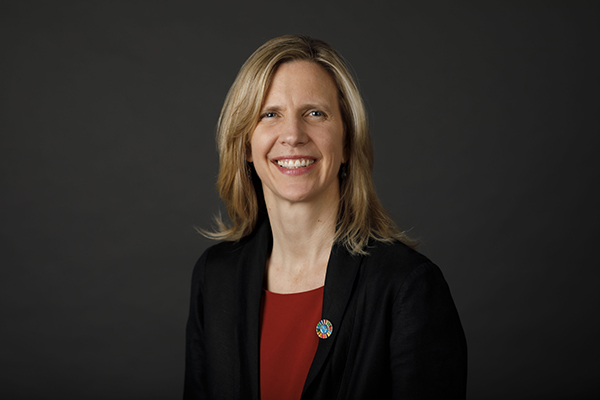
by Sarah Hendriks, Director of Policy, Programme and Intergovernmental Division at UN Women
This International Women’s Day, UN Women stands united with women and girls and partners worldwide in a resolute call: Rights. Justice. Action. For ALL women and girls. Access to justice and the protection of women’s human rights are central pillars of the Beijing Platform for Action. With progress toward Sustainable Development Goal 5 off track, the global community faces a clear choice: accelerate action or accept prolonged inequality. While many countries have advanced legal reforms, significant barriers remain. No country in the world has yet achieved full legal equality for women and girls. More than half of countries still do not define rape on the basis of consent. Nearly three quarters still allow child marriage in all or some circumstances. And in 44 per cent of countries, the law does not mandate equal pay for work of equal value. These gaps shape daily realities. Where justice systems fail to function effectively, impunity prevails. Property and inheritance rights are denied. Migrant women remain silent out of fear. Rural women lack affordable legal representation. Adolescent girls are excluded from decisions that determine their futures. Access to justice is the dividing line between commitments and lived equality in the lives of women and girls everywhere. Meaningful justice system reform requires institutional transformation. Discriminatory laws must be repealed and legal gaps closed so that rights are enforceable in practice. In the criminal context, police, prosecutors, courts, corrections, legal aid providers and social and health services must operate as a coordinated system so victims and survivors are not left navigating complex systems where many give up pursuing justice. Justice must be financed as a public good. And justice reform must be shaped with and by women. In this context, South–South and triangular cooperation serve as powerful accelerators. Countries across the Global South are generating legislative tools, institutional models, digital justice systems and community-based approaches that expand access for women and girls. These innovations should not remain isolated successes. Through structured peer exchange and catalytic partnerships, proven models can be adapted, scaled and institutionalized in diverse contexts. South-South cooperation strengthens ownership by grounding reform in comparable legal and development realities. When countries collaborate as equal partners, justice reform advances with greater legitimacy and durability. We know what works. The evidence is there. The question before us is whether we will confront impunity and invest in justice systems that deliver equality in law and in life, for women and girls everywhere.